Search results for Buddhism
Buddhism community
One keyword maps to one global community path.
People
Not Found
Tweets including Buddhism
Greek Buddhists existed centuries before Buddhism reached China.
This historical phenomenon is known as Greco-Buddhism. It emerged after Alexander the Great conquered parts of Central Asia and India in the fourth century BC.
The primary hub of this cultural synthesis was Gandhara, a region spanning modern Pakistan and Afghanistan. Greco-Buddhism flourished from the third century BC, while Buddhism did not firmly enter China until the first century AD during the Han dynasty.
The Edicts of Ashoka provide early proof of this connection. Written partly in Greek, these rock inscriptions confirm that Greek populations under the Mauryan Empire embraced Buddhism. Additionally, a Greek monk named Dharmaraksita was recorded as an influential Buddhist missionary during the third century BC.
Another milestone was the reign of the Indo-Greek King Menander I in the second century BC. His philosophical debates with the Buddhist sage Nagasena were recorded in the famous text Milinda Panha.
The Standing Buddha of Gandhara perfectly illustrates this artistic fusion. The statue blends Greek Hellenistic aesthetics with traditional Indian iconography. The facial features closely resemble the Greek god Apollo, and the hair is styled in realistic waves. Furthermore, the Buddha wears a heavy drape modeled after the Greek toga or himation rather than thin Indian robes.
Show more


Ronny Chieng to Harvard Class of 2026:
“I tried introducing my friend to Buddhism with Buddhism Made Simple. Instead of reading it, he asked AI to summarize it in 10 seconds. Believe it or not, he didn’t reach enlightenment.”
Speedrunning Buddhism misses the entire point.
The journey isn’t just how we acquire skills. The journey is the point.
AI gives you the summary. Real growth demands the struggle, the confusion, the reps. In the age of instant answers, choosing the harder path is how you actually build depth.
Maybe the real Harvard was the friends we made along the way, and the work we refused to outsource.
Resist the shortcut.
Show more


Do we live rooted in one fundamental reality, or floating in an undetermined world?
In this talk, philosopher Jessica Frazier explores what Hinduism and Buddhism can teach us about different ways of perceiving reality.
Frazier is a philosopher at the University of Oxford and Founder of the Journal of Hindu Studies.
Tap here to watch “Buddhism and the emptiness of reality” now.
Show more

Kalmykia, a Russian republic located in Southern Russia, is the only region in Europe where Buddhism is the predominant religion.
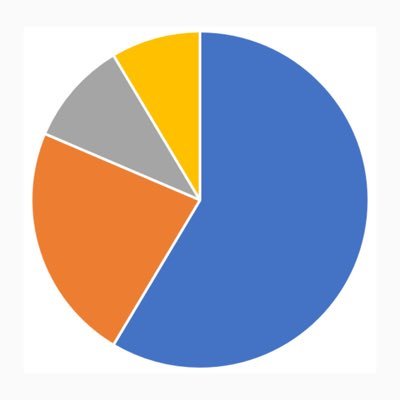
World population by religion
✝️ 28.8% (Christianity)
☪️ 25.6% (Islam)
⚪ 24.2% (Unaffiliated / non-religious)
🕉️ 14.9% (Hinduism)
☸️ 4.1% (Buddhism)
✡️ 0.2% (Judaism)
🟣 2.2% (Other)
Show more

Deeply saddened by the passing of Mr. Robert A. F. Thurman, an eminent scholar of Buddhism, a distinguished teacher and a lifelong friend of India. Through his works, he popularised Buddhist thoughts globally and also built enduring bridges of understanding between cultures. I fondly recall our meeting in New York City a few years ago, where we had an excellent conversation. My thoughts are with his family, friends and admirers in this hour of grief.
Show more


When I dress this set of Hanfu, I visited the world famous Longmen Grottoes, where Buddha and Bodhisattva statues are preserved from Wu Zetian Emperor (China's only female emperor) time.
I immediately dive into the peace of the Buddhism spiritual world. I feel I'm part of its universe, merging into the elements of ancient Chinese civilization.
Absolutely a life-changing experience.
#buddha# #tourists# #hanfu#
Show more


We live in an illusion, a simulation created by nonphysical electromagnetic waves collapsing into material reality, where your soul is trapped inside an energetic container that we call matter. There, it learns the lessons of Good and Evil necessary for its evolution. That is why the body is made of earth/dirt/matter, while the soul is made of fire, which is plasma.
In Hinduism and Buddhism, this is represented by the Bhavachakra, or Wheel of Life, which depicts samsara, the cycle of death and rebirth in which the soul is “trapped” until it escapes the wheel after acquiring the knowledge of Good and Evil and attaining wisdom. The three poisons at the center of samsara are actually the northern constellations Draco, Cygnus, and Ursa Major, constantly chasing one another in a circle, symbolizing both the passage of time and the endless, repeating cycles. The twelve outer sections represent the twelve zodiac constellations.
So yes, we live in an illusion, a simulation, but not an illusion created by AI, as in The Matrix. It is an illusion created by God for the purpose of the soul’s evolution.
Show more


India Responds to China’s “Cartographic Warfare”: 27 Arunachal Pradesh Locations Get Official Indian Names
🇮🇳🇨🇳
China has repeatedly tried to push its territorial claims over Arunachal Pradesh by assigning Chinese names to places in the region.
India has now responded in its own way.
The Survey of India has officially recorded standard Indian names for 27 important locations in Arunachal Pradesh, giving formal recognition to their names in India’s official mapping system.
The list includes 21 land areas, including the historically significant Longju, 4 mountain passes including Thagla Pass, which is closely associated with the events leading up to the 1962 India-China war, 1 lake named Sambho Sarovar, and the Sher Thapa Memorial, commemorating the Indian Army’s historical presence and sacrifices in the region.
This isn't about discovering new places. It is about officially documenting Indian names for locations that India considers part of its territory.
Why Arunachal Pradesh matters?
China refers to Arunachal Pradesh as “Zangnan” or “South Tibet” and continues to reject India's position on the boundary.
Tawang is particularly sensitive because of its deep connection with Tibetan Buddhism and its association with the Sixth Dalai Lama.
India maintains that its boundary follows the McMahon Line, agreed upon during the 1914 Simla Convention, while China rejects the agreement and the legitimacy of the line.
The bigger picture!
Maps may look harmless, but they can become powerful diplomatic tools.
China has repeatedly used the renaming of places to reinforce its territorial narrative. India is increasingly responding through what can broadly be described as “cartographic assertion” — reinforcing its position through official maps, administrative records and government documentation.
The strategy is essentially three-fold: diplomatic assertion by rejecting Chinese territorial claims, administrative assertion through continued governance and development across Arunachal Pradesh, and cartographic assertion by officially recording Indian names and representations of the region.
The message is clear: changing a name on a map does not change the situation on the ground.
For India, Arunachal Pradesh remains an integral part of the country, and Beijing’s unilateral renaming of places cannot alter that position.
Show more


Buddhist Saint Nichiren is Saved From Execution By UFO...🧐🤔
According to Nichiren's own account, he was sentenced to exile but was brought to Tatsunukuchi beach in Shichirigahama for execution. According to some traditional accounts, the execution was stopped at the final moment as "a brilliant orb as bright as the moon" arced over the execution grounds, terrifying Nichiren's executioners.
(For context, Nichiren was an extremely important figure in both the history of Japanese Buddhism and the Japanese nation as a whole)
I was reading "Wonders in the Sky," Jacques Vallee's collection of historical accounts of anomalous/UFO-type phenomena and came across this event. I thought some people might find it interesting.
Highly recommend the book btw! 500 different historical UFO events, complete with primary sources in many cases.
Show more
