Search results for CHIEF_DADDYY
CHIEF_DADDYY community
One keyword maps to one global community path.
People
Not Found
Tweets including CHIEF_DADDYY

My college friend Nakamura lives in Sasebo, a small city in southern Japan with a U.S. Navy base.
This fall, at his daughter's elementary school sports day, every adult on that field cried. Including the principal.
Next door to Nakamura lives an American Navy family. The father is Brandon. A chief petty officer from Alabama. Big, loud, kind. His ship is based in Sasebo.
Last spring, the ship left for a seven-month deployment.
Brandon left behind his wife, Amber, and their eight-year-old son, Jackson. Jackson goes to the local Japanese elementary school. He's the only American kid there.
On Jackson's bedroom wall, there was a paper chain. One link for every day until his father came home. Every night before bed, he cut one off.
Nakamura's own father died when he was six. He told me once that at every school sports day, there was an empty spot next to him. Everyone else had a dad. He had a space.
So when Brandon's ship left, Nakamura quietly took the spot.
He doesn't really speak English. He didn't need to. He taught Jackson to ride a bike in the parking lot. He played catch with him every Sunday. He checked his math homework, which was in Japanese, which Jackson's mom couldn't read. When Jackson had a bad day, Nakamura took him for ice cream and they sat there, not talking, two guys eating ice cream.
In Japan, every school sports day has a parent-child three-legged race.
Jackson was supposed to run it with his dad.
So Nakamura said he would run it with him instead.
On the day, Jackson's paper chain still had 47 links left.
At the starting line, Nakamura knelt down and tied his ankle to Jackson's with a white cloth. Jackson was trying hard not to look sad. All the other kids had their dads.
The teacher raised the starting pistol.
Then somebody near the school gate started to clap.
A man was walking across the field. White Navy uniform. Sea bag over his shoulder.
Brandon.
His ship had come back 47 days early. He had told exactly three people. His wife. The principal. And Nakamura.
Nakamura didn't say anything. He just knelt down, untied the cloth from his own ankle, and held it out to Brandon.
Jackson turned around.
He froze. For a long second, he didn't move at all.
Then, very quietly:
"Daddy?"
And he ran.
He was still half-tied to nothing, the white cloth flapping from his ankle. Brandon dropped the sea bag and went down on his knees on the dirt, and Jackson hit him so hard they both almost fell over.
Neither of them said a word. Brandon just held him, with his hand on the back of Jackson's head, rocking a little. His shoulders were shaking.
Nakamura says the whole field went silent. Four hundred Japanese parents, kids, teachers. Then he heard it. People crying. Grandmothers. Fathers with video cameras. The principal, into a microphone that was still on.
Then they ran the race.
Brandon and Jackson, tied together at the ankle. They fell down twice. They came in dead last.
Every single person on that field stood up and cheered like it was the Olympics.
Afterward, Brandon found Nakamura by the bleachers.
They can't talk to each other. Not really.
So Brandon reached into his pocket and pulled out a coin. A challenge coin from his ship. In the U.S. military, it's what you give someone when "thank you" isn't big enough.
He put it in Nakamura's hand and shook it. He held on for a long time.
Nakamura bowed. All the way down.
Brandon stood up straight and saluted him.
Nakamura keeps that coin in his wallet now. I asked him once why he did all of it. Eight months of bikes and homework and ice cream for somebody else's kid.
He looked almost embarrassed.
"I wasn't his father," he said. "I was just keeping the spot warm until his father came home."
That day, I think that field had two heroes on it.
One came home from the sea.
The other one had been there the whole time.
Show more
An American named Caleb lives in apartment 304 of my building in Tokyo. He's 29. From a small town in Kansas.
This spring, he stopped coming out.
He lost his job in February. In March, his fiancée moved out. He told me later that he spent most of April lying on the floor, scrolling through pictures of his friends back home. Weddings. Babies. New houses. Everyone moving forward except him.
He stopped opening the curtains. He ate cereal for dinner. His phone sat face-down on the counter. Forty-seven missed calls from his grandmother.
He didn't want anyone to see him like this. Especially not his family.
One morning, at six o'clock, I went down to take out the garbage, and there was an old American man sitting on the stairs outside 304.
Flannel shirt. Seed cap. A carry-on bag between his boots. He'd been there all night.
His name is Vern. He's 82. He's Caleb's grandfather.
When Caleb was little, he called his grandpa every Sunday night to talk about the Kansas City Chiefs. For twenty years, every Sunday. Then the Sundays stopped.
So Vern got on a plane in Wichita and flew across the Pacific Ocean. He didn't tell anyone in Japan he was coming. He didn't even know how the doorbell worked.
Caleb wouldn't open the door.
So Vern sat down on the floor outside it.
And he talked.
Wheat prices. The weather back home. The neighbor's dog that keeps getting into the chickens. The Chiefs. Mostly the Chiefs. For two whole days, through a closed door, an 82-year-old man talked about football to nobody.
On the third day, the door opened a crack.
"Grandpa," Caleb said. "The Chiefs lost. I checked."
"I know," Vern said. "I've been lying to you."
Caleb laughed. He said it was the first time he'd laughed in two months. It hurt.
Vern moved in for two weeks. He slept on a couch that was a foot too short for him.
Somebody told him the Japanese word for good morning is "ohayo." He heard "Ohio."
So every morning, an 82-year-old man from Kansas stood in my building's lobby and said "OHIO!" to every single person who walked by.
Everyone said "ohayo" back.
He believes, to this day, that Japan is a nation of Ohio fans.
Kansas is the Sunflower State. Vern had packed an entire bag of sunflower seeds in his suitcase, "for the neighbors." He handed them out to everyone in the building. The old lady on the second floor gave him rice crackers. They have been trading snacks ever since. Neither of them knows the other's name.
On day five, he tried to make biscuits in Caleb's toaster oven and set off the smoke alarm for the entire floor. He went door to door, bowing and saying "OHIO" as an apology.
Vern never lectured him. Never told him to cheer up. On the first night, he said just one thing.
"I'm not here to fix you. I'm here to sit with you."
And every morning, he stuck a note on the refrigerator. Same heading every time, in big block capitals.
STILL TRUE:
"The sun came up. You're my grandson. I'm here."
"The coffee in this country is too small. You're still my grandson."
"You got out of bed. That counts."
"You ate something that wasn't cereal. That counts double."
"You laughed at me this morning. Don't think I didn't hear it."
On day nine, Caleb found Vern's pill organizer in the bathroom. A big plastic one, the kind with a box for every day.
On the lid, in his grandmother's handwriting:
"VERN. TAKE THESE. OR I WILL KNOW."
He called his grandmother. She told him what Vern had made her swear not to say.
His heart is bad. Two stents. His doctor told him, flat out, no more long flights. Not at his age. It wasn't safe.
He came anyway.
Caleb found him in the kitchen, trying to work the rice cooker.
"You could have died on that plane," Caleb said.
Vern thought about it.
"Well," he said. "I didn't. And you didn't either. So I'd say we're both ahead."
Caleb sat down on the kitchen floor and cried like he was six years old. Vern lowered himself down next to him, slowly, knees cracking, and put one big hand on the back of his neck. He didn't say anything. He didn't have to.
On the morning Vern flew home, there was one last note on the fridge.
STILL TRUE:
"You are not the worst thing that happened to you.
Bad years end. I've had three. 1959, I lost my daddy. 1985, I lost the farm. 2003, I lost your Uncle Danny. I'm still here. I still laugh at stuff.
You are loved by people who would cross an ocean for you. I'm the proof.
Call your grandma."
When Vern came down to the lobby with his bag, he stopped.
The whole building was there. The old lady from the second floor. The salaryman from the fifth. Two kids in school uniforms. The building manager.
They had planned it.
All at once, very loudly, they shouted:
"OHIO!"
Vern stood there in the lobby and cried. Then he took off his seed cap, held it to his chest, and shouted it right back at them.
"OHIO!"
Caleb got a new job in August. He opens his curtains every morning now. Last week I heard him say "Ohio" to the lady on the second floor. She gave him a rice cracker.
The note is still on his fridge.
So if you're reading this on a hard night, here's what's still true.
The sun is going to come up.
You are not the worst thing that happened to you.
Bad years end.
Somebody out there would cross an ocean for you. Even if they haven't had to yet.
And call your grandma.
Show more

CHIEF of STAFF: As prophesied Stephen Miller has ascended to replace Susie Wiles (she wasn’t a big fan of mine). Kudos! Congrats! Wartime consigliere, check…

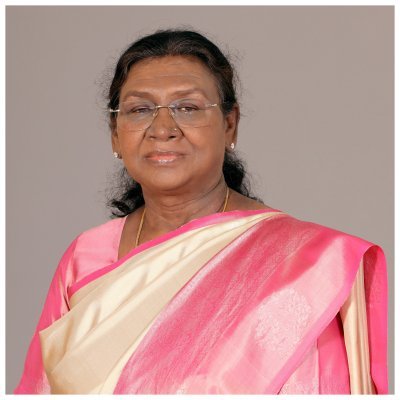
Chief of the Air Staff, Air Chief Marshal Ashutosh Dixit along with spouse Smt Archana Dixit called on President Droupadi Murmu at Rashtrapati Bhavan.


CHIEF OF STAFF OF THE IRANIAN ARMED FORCES: IRAN WILL COUNTER ANY TYPE AND LEVEL OF THREAT WITH AN IMMEDIATE, EFFECTIVE RESPONSE WHICH WOULD NOT BE LIMITED GEOGRAPHICALLY - PRESS TV

Chief of Staff of the Iranian Armed Forces: Iran will counter any type and level of threat with an immediate, effective response which would not be limited geographically - Press TV

Chief of Naval Operations Adm. Daryl Caudle joined thousands of football fans at Gillette Stadium Saturday for the 99th meeting between the U.S. Naval Academy Midshipmen and the University of Notre Dame Fighting Irish, participating in the ceremonial coin toss before one of college football’s most storied rivalries.
MORE:
Show more

Chief of Naval Operations Adm. Daryl Caudle and U.S. Naval Academy Superintendent Lt. Gen. Michael J. Borgschulte attend a pregame gathering at Gillette Stadium in Foxborough, Massachusetts, Oct. 31, 2026, ahead of the 99th meeting between the Navy Midshipmen and Notre Dame Fighting Irish.
The historic rivalry, dating back to 1927, celebrates nearly a century of football tradition, mutual respect and enduring ties between the two institutions.
Go Navy! Beat Notre Dame!
Show more



Chief international anchor Christiane Amanpour announces that she will leave CNN next June after a 43-year career at the network


Chief Keef released "Love Sosa" 14 years ago today.
