Search results for Librairie_Grand_Place
Librairie_Grand_Place community
One keyword maps to one global community path.
People
Not Found
Tweets including Librairie_Grand_Place

This year, the EF is decreasing its budget by roughly 40%, which entails some difficult decisions. The goal of the decreases was set out in the Treasury Management Policy last year: the EF is transitioning into being a long-term-oriented endowment-based organization, shifting from its pre-2026 average of spending ~15% of its remaining funds each year, toward a post-2030 target of ~5% per year.
Often, when an organization goes through something like this, people try to pretend that nothing of great value was lost, that it is an efficiency increase, that the only people cut are unproductive dead weight, and everyone else stopped partying, studied the blade, entered cracked S-tier beast mode, and this was sufficient to make up for the downside. I will not try to pretend this. I respect my EF colleagues far too much to pretend that there was not much that is lost. They are brilliant people. They are dedicated engineers of whom some have worked on the Ethereum protocol for nearly a decade. They have brought a bright light to the Ethereum ecosystem with their code, their words, their warmth as human beings and their actions. My dearest hope is that they find a path that brings them fulfillment and happiness whether inside Ethereum or outside. Hopefully many will be able to bring their excellent talents and mindset to the wider Ethereum ecosystem, or the even wider CROPS world.
Instead, I will try to explain what *are* some of the grand sacrifices being made. The Ethereum Strawmap is no small thing. It is an extremely ambitious undertaking seeking to replace and augment almost every part of the protocol - consensus, proofs, privacy, account model, state, and more. This is the third iteration of Ethereum, in the same way that the Merge was the second, even if the shipping style is less Big Bang and more one-piece-at-a-time. On top of this, the EF is increasing its role in the Access Layer. We are not compromising on Ethereum being a Deeply Impressive protocol, something worthy of its place in a world with quantum computing, rockets to Mars and powerful biotech and AI, and capable of meeting the challenges that this era will bring.
Some of the deficit will be recovered through more work happening outside the EF. But not all. So what are the grand sacrifices that will enable a leaner effort to accomplish all of this? I will give a few examples (though far from an exhaustive list):
* The multi-client model will shift in the direction of multiple clients existing less for _redundancy_, and more for _specialization_. Up to this point, redundancy has been the main security strategy: if one client has a bug, if it has less than 33%, the chain keeps going and does not even stop finalizing. We are increasingly exploring moving more pieces of the protocol to a different security strategy: AI-assisted formal verification. Some smaller pieces of Ethereum (eg. BLS libraries) have worked this way already for a long time. But soon many more parts of Ethereum will likely function on this model. This may greatly reduce resource requirements of shipping a large number of EIPs. The resources saved by client teams can ideally instead be used to better serve different specialized user needs, including EF Access Layer goals.
* PSE (Privacy and Scaling Explorations) is winding down as a unit. The number of people working on ZKPs for privacy and scaling is probably as high as ever, but they are working less on "exploration" and more on *implementing* ZKP-based privacy and scaling into the Protocol and Access Layer
* Devcon will likely over time become smaller-scale, somewhat more spartan, much lower-deficit than previous years, in addition to other changes in vision in line with the Mandate.
* Fewer beyond-Ethereum megaprojects coming from EF. As I announced earlier this year, I am taking on some of the responsibility of doing projects in this category that I consider valuable with my personal funds.
* EF institutional work is reducing in scope, specializing more specifically on creating replicable test cases of highly CROPS-friendly deployments, even if at smaller scale.
These do not explain all departures; in some cases they do not explain departures at all and rather explain _reduced need for new spending_. But they are a large part of the strategy at play.
In the longer term, I personally favor a "soft lean-and-done" approach to Ethereum: once the Strawmap is completed, generally stick to security fixes and small high-value changes, and have a much higher bar for considering new feature additions to the protocol. This allows Ethereum to remain capture-resistant without demanding very large budgets. Learn less from multimillion-line-of-code behemoth projects, more from bitcoin.
The past years have been a challenging era for Ethereum. However, the ecosystem is adapting, both inside the EF and outside, and I am confident that Ethereum is very well-positioned to succeed and thrive.
Show more


How to become a quant from 0 to $650k/year (PLAYBOOK):
by the end, you'll know how to:
- build the exact math foundation top firms actually test
- ship real projects that separate you from every other applicant
- land your first credential and use it to climb the staircase
- crack interviews at Citadel, Jane Street and prop shops
btw i was quantitative backend developer at Liquid Hedge Fund based in Dubai for almost a year, building systematic trading strategies across perp dexes and prediction markets (right now on a break, working on my own projects)
everything below is what actually got me here, in the order it actually worked
here's the full 5-stage roadmap:
---------------
Stage 1 (year 0): build the math foundation in the correct order
the biggest mistake is starting with finance textbooks or trading blogs
you don't need to know markets. you need to know math that markets run on
how to build it:
> probability first - Blitzstein & Hwang, free PDF from Harvard. chapters 1 to 6. conditional thinking is the entire skill
> statistics second - Wasserman, All of Statistics. how to tell signal from noise
> linear algebra third - Strang MIT 18.06, free at > OpenCourseWare. eigenvalues reveal what actually matters
> convex optimization fourth - Boyd & Vandenberghe, free from Stanford. every portfolio problem reduces to this
> stochastic calculus last - Shreve Vol 1 and 2. this is where Black-Scholes comes from
your first year should feel painful, slow, non-linear
most people quit here. that's why the field pays what it pays
metric to watch: can you derive Ito's Lemma from scratch on a whiteboard?
mistake to avoid: skipping layers because they feel abstract
---------------
Stage 2 (year 1): read the papers and implement each one from scratch
this is where I separated from every other backend developer trying to get in
the 5 papers that shaped every quant desk on Wall Street:
> Avellaneda & Stoikov 2008 (market making)
> Engle & Granger 1987 (cointegration)
> Heston 1993 (stochastic volatility)
> Fama & French 2015 (five-factor model)
> Cohen, Malloy, Pomorski 2012 (insider clusters)
read all five. twice. then implement each from scratch in Python. no frameworks
language stack that actually ships:
> Python for research, backtesting and 90% of quant work. pandas, polars, pytorch, cvxpy, statsmodels
> Rust for new systematic infrastructure. this is what Hyperliquid, prediction market engines, and next-gen HFT stacks are built in
> Go for execution infrastructure. broker connectivity, microservices, low-latency APIs
> C++ only if you're targeting elite HFT engineering. Jane Street uses OCaml specifically for their trading stack
the mistake most self-taught quants make is picking one language and defending it, real desks run POLYGOT.
Python for research, Rust or Go for execution
what this gave me:
1: real understanding of how each model breaks
2: code on GitHub that recruiters actually respected
3: the ability to explain any of these in an interview without notes
Heston was the one that changed my thinking. once I understood why volatility itself follows a stochastic process, options started making sense
metric to watch: can you code Heston from a blank file in under 4 hours?
mistake to avoid: reading 20 papers superficially instead of 5 deeply (VERY IMP)
---------------
Stage 3 (year 2): ship 6 real projects with working backtests
this is where most aspiring quants die silently
the 6 projects that will land your first interview:
> pairs trading bot on 5 cointegrated equity pairs
> options pricing engine with Heston implementation
> Fama-French factor decomposition scanner
> insider cluster detector using SEC EDGAR
> mean reversion scanner for S&P 500
> cross-exchange arbitrage scanner for perp DEXs
every project needed:
- clean GitHub repo with a proper README
- working backtest with real historical data
- honest documentation of what failed and why
- one paragraph explaining the math in plain English
the honest documentation is what actually got me noticed. I wrote a section called "what broke" in every README. two recruiters told me later that was the reason they DM'd me
metric to watch: how many recruiters DM you after posting these
mistake to avoid: hiding the projects where the math didn't work
---------------
Stage 4 (year 3): first credential and the interview grind
credential path (what worked for me):
> cold emailed 40 PhD students. 3 responded. 1 took me on
> TA'd a quantitative finance course at a local university
> contributed to open-source quant libraries on GitHub
> the title didn't matter. having real technical work to talk about mattered
interview prep:
- the Green Book (Xinfeng Zhou). 200 real interview problems. spend 15 minutes attempting each before looking at hints
- QuantGuide(dot)io for probability puzzles at interview difficulty
- Brainstellar for brain teasers
- Zetamac for mental math. target 50+ correct per minute before applying
- LeetCode Blind 75 with focus on dynamic programming
the interview is a filter. it's not testing your knowledge, it's testing how you think under pressure with incomplete information
metric to watch: how quickly you can solve fresh problems out loud
mistake to avoid: memorizing solutions instead of understanding patterns
---------------
Stage 5 (year 3-4): compete publicly and climb the staircase
organic applications alone hit a ceiling. now you layer
public competitions:
> Jane Street Kaggle ($100K prize + direct recruiter visibility)
> WorldQuant BRAIN (paid alpha signals + institutional pipeline)
> Citadel Datathon (winners fast-tracked to interview rounds)
the staircase (this is the part nobody tells you):
1: research lab or startup first
2: mid-tier prop shop second
3: elite fund like Citadel, Jane Street, or Two Sigma third
nobody jumps directly from zero to Jane Street. everyone climbs
attempting the vertical jump and failing doesn't mean the field is closed. it means you tried to skip stairs
metric to watch: interview conversion rate at each tier
mistake to avoid: applying to elite firms first, getting rejected and giving up
---------------
CONCLUSION
most aspiring quants die between the math foundation and the first credential because they think they need one more course, one more book, one more year
the truth is: the first 3 stages are slow, painful and non-linear
but they build the foundation that makes stages 4 and 5 feel like gravity
start with probability. read the 5 papers. ship 6 projects. then apply
no MIT. no Stanford. no finance degree required
Citadel entry level pays $336K to $642K. Jane Street average $1.4M. 5-year top prop $800K to $1.2M
the information asymmetry keeping most people out isn't intelligence. it's not knowing what the path looks like.
COMPLETE SUMMARY BELOW:
Show more


Libraries: free. AI: subscription.
Libraries: written by humans with expertise.
AI: trained on whatever was on the internet.
Libraries: staffed by professionals.
AI: confidently wrong.
Go to the library.
Show more

Libraries are citadels of knowledge and empathy—and they’ve played an extraordinarily important role in my life. I spoke with @SmithsonianSec Bunch about our shared love of books, A Promised Land, and the role storytelling plays in shaping our history.
Show more


Two libraries. One huge milestone.
cuelume + text-motion just crossed 90K weekly npm downloads.
Thank you for building with them.


Presidential libraries in America have a public function: to preserve a former leader’s papers. But they also have a more personal one: to let presidents present their achievements and justify their actions
Show more

“Presidential libraries reveal the extent to which America invests presidents with a quasi-imperial aura.” On “The Intelligence” @jonfasman visits Barack Obama’s
Show more

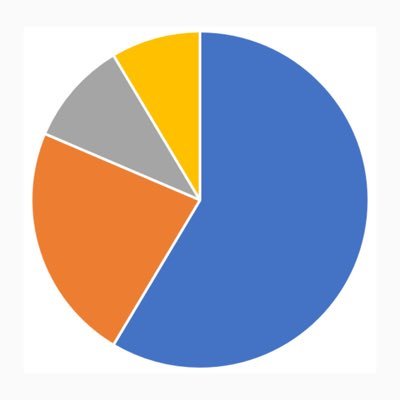
There are more public libraries in the US than McDonald’s locations

Use PyTorch-native libraries within the NVIDIA NeMo Framework to customize models to hit your exacting requirements for latency, speed, memory, and compute.
@NVIDIA's blog demonstrates how quantization-aware distillation (QAD) improves the Nemotron 3.5 Lightning model using NVIDIA Model Optimizer. We walk through the entire training pipeline, and show how QAD consistently outperforms post-training quantization (PTQ) compression on agentic benchmarks, ensuring high quality while reducing memory usage.
Read it here:
Show more


Where public libraries fall short, a centuries-old book lending system fills in the gap.
