Search results for NGC
NGC community
One keyword maps to one global community path.
People
Not Found
Tweets including NGC

Meet NGC 4631— the “Whale Galaxy” — drifting through the cosmos instead of the sea. 🐋
This edge-on view of this spiral galaxy allows astronomers to study how flat the stellar disk is and provide the clearest views of material located above or below the disk.
Show more

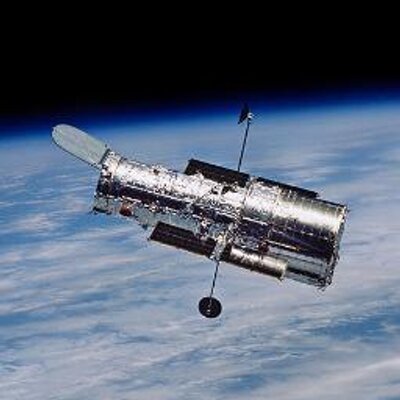
A pair of galaxies called NGC 6670 overlap in this Hubble image. They appear edge-on, and though they look very close to each other, the two galaxies' nuclei are actually 50,000 light-years apart!
NGC 6670 is ~400 million light-years away:
Show more




Now this is fascinating really the Cat’s Eye Nebula NGC 6543.
Three thousand light-years distant in Draco, a star not unlike our own has completed its final, rather elegant undressing.
Outer layers of gas cast off in measured pulses, forming these nested, luminous shells ionized and set aglow by the fierce remnant at its heart.
One of the most intricate planetary nebulae known. A cosmic eye that records its own exquisite demise.
Even the universe, it appears, understands the art of a memorable exit.
Show more

Some serious star power 🤩
The star cluster NGC 6791 is one of the oldest and largest open clusters known to exist.
At about 10 times larger than most open clusters, it's home to roughly 10,000 stars.
NGC 6791 resides about 13,300 light-years away:
Show more


"It's not going to suck itself"
@LauraLoomer


Back-to-back buckets by NAW 🔥🔥

Twinkle, twinkle little galaxy…
NGC 1827 is a low-mass galaxy that was captured as part of a Hubble observing program that will help scientists test predictions of cosmological models on smaller scales:
Show more

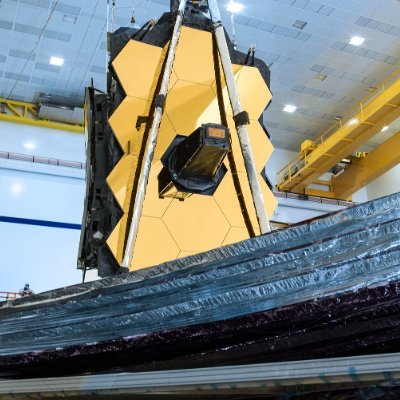
Brewing up new stars 🪄
Webb’s unique view of the stellar nursery known as NGC 7129 reveals numerous stars formerly hidden in this cosmic cauldron, helping astronomers study the star lifecycle in more depth.
Show more


Bizarre Pope prop bets for MLB postseason only bring more questions
