Search results for neverlost
neverlost community
One keyword maps to one global community path.
People
Not Found
Tweets including neverlost

I have never been an FBI agent. Never conducted an investigation. Never worn a wire or served a warrant or spent a winter in a field office where the heating runs four hours behind the interrogation schedule. I was a congressional staffer. Then a political appointee. Then a different kind of political appointee. Then the Director of the Federal Bureau of Investigation, which is also a kind of political appointee, except the furniture is nicer and the jet is mine.
I run the building.
I would like to tell you about the jet.
It seats fourteen. It costs sixty million dollars. The interior was refurbished during the Bush administration and the procurement file describes the upholstery as "heritage cognac." I know this because I requested the file. Not for oversight purposes. I wanted to know the name of the color so I could describe it at dinner. Heritage cognac. It smells like a law firm that has never lost. I spend a lot of time in that smell now. I think it is the smell of having arrived somewhere that was never meant for you, and noticing that nobody has asked you to leave.
Washington to Philadelphia is a hundred and forty miles. Amtrak runs it for forty-nine dollars. I flew the Gulfstream on May 10th because Alexis wanted to see George Strait. The suite was thirty-five thousand. Maybe fifty. I don't track numbers below six figures. The flight crew stayed on past eleven. Overtime. Security too. Someone will calculate the cost per mile of flying a sixty-million-dollar aircraft to cover a distance shorter than most Uber rides. That someone will not be me. I was in the suite. The suite didn't have a calculator. It had George Strait.
The Bureau told reporters Alexis was "an invited guest of the performers." Representatives for George Strait and Chris Stapleton did not confirm this. They were never going to. But the FBI said it, and under my leadership, when the FBI says something, that is the evidentiary standard.
I run the building. The building said it. It's true.
Her protection detail is where the budget gets interesting.
Twenty-four-seven coverage. SWAT-certified agents. Field officers drawn from multiple Bureau offices nationwide. Two armored SUVs at minimum. Hair appointments. Musical appearances. A blowout in Nashville required four agents in a parking lot for ninety minutes. The annual cost is roughly one million dollars before overtime, vehicle maintenance, and incidentals. The Bureau cites "hundreds of credible violent death threats" as justification.
One person has been arrested. His name is Alden Welch Ruml, twenty-six, from Massachusetts. He sent emails. He faces five years.
One emailer. One million dollars a year. Four SWAT agents per errand. A quarter of a million dollars in federal protection per verified threat. For context: the average FBI field office spends less annually on its entire confidential human source program. Informants embedded inside drug cartels, counterterrorism cells, organized crime families — the people whose testimony sends other people to prison — cost the Bureau less to keep alive than it costs me to ensure my girlfriend arrives at a salon escorted by men trained to rappel from helicopters.
One of my officials suggested we conduct a formal threat assessment. A review. The kind of paperwork the Bureau has generated for seventy years whenever a protection decision requires justification. He had been with the Bureau for nineteen years. He asked in the hallway, in front of staff. I berated him. Not quietly. He stopped asking.
He stopped asking.
That phrase is going to recur in this document. I want you to notice it each time.
Now. Alexis Wilkins is a country singer. I should mention this. She has released eight singles and one EP titled *Grit*. She has zero chart appearances. Her most-streamed song has five hundred and two thousand lifetime plays on Spotify. Taylor Swift accumulates that figure in approximately eleven minutes. A full-time country music journalist at the industry's leading independent publication stated that he had never heard of Alexis Wilkins before I started dating her. She has no active tour. She has never headlined a festival. Rolling Stone cited a forty-eight percent increase in her streaming numbers after we became public, which the same journalist clarified was "a forty-eight percent increase from virtually nothing."
This is the person for whom the FBI fields a million-dollar annual protective detail.
I want you to hold those two facts together — the streaming numbers and the security budget — and understand that they do not represent a miscalculation. They represent a value system. Her protection is not proportional to the threat. Her protection is proportional to her proximity to me. That is the formula. Proximity to the Director equals resources from the Bureau. I have applied it consistently. I have applied it to everyone.
Which brings me to the people who are no longer here.
I have removed over fifty career officials since January. Twelve have filed suit. Marshall Yates — my Congressional liaison, formerly the director of something called the Election Integrity Network, which existed to challenge the 2020 results — personally called field offices to compile names. Everyone who worked a case involving the President. Six thousand names were requested by the White House. The acting director before me was asked who he voted for. When he started supporting the President. Whether the FBI had tried to "put the president in jail." He was told the President hasn't forgotten.
Three hundred counterterrorism and counterintelligence agents have been reassigned to immigration enforcement. The unit monitoring Iran — Iran, which operates proxy militias across four countries and maintains an active assassination program targeting American officials on American soil — was gutted. Six federal prosecutors in the Eastern District of Virginia have resigned or been pushed out rather than participate in the prosecution of the previous FBI Director, James Comey, whose crime was investigating the President and whose punishment is being investigated by the institution the President gave me as a gift.
I am prosecuting the last Director for doing his job. I am doing this from a fifty-thousand-dollar suite while a sixty-million-dollar aircraft idles on the tarmac outside.
Nobody in the building finds this ironic. The ones who would have found it ironic are gone. They stopped asking.
My Deputy Director is Dan Bongino. He has never worked a federal case. His career before this was conservative talk radio. He receives the President's Daily Brief every morning — CIA product, NSA intercepts, the full intelligence take of the United States government — and he obtained his SCI clearance after I waived his polygraph. The FBI's own guidelines state that polygraphs are a "preliminary employment requirement." My lawyers reclassified him as a Schedule C political appointee. Experts said that's not how the statute works. The experts are career officials. Career officials are the previous administration's furniture. I am redecorating.
Nikole Rucker is my personal assistant. She arrived at the Bureau on January 20th without a security clearance of any kind. She was physically escorted into the Director's suite because the door requires a clearance she did not possess. By February she was in London, seated across from a Western allied intelligence service, notebook open, pen moving. She used to work for Stephen Miller. The White House says she does not share operational details with him. I am told this is technically accurate in the way that most technically accurate statements are technically accurate.
The polygraphs are still running. Just not for my people. We administer them now to career staff. The questions have changed. We ask whether they've criticized me. Whether they've spoken to a reporter. Whether they've expressed doubt about the direction of the Bureau. The machine measures stress. Under my leadership, stress has been reclassified as disloyalty. Disloyalty as a security risk. A security risk as grounds for termination. Fifty people have traveled this chain. Twelve are suing. The rest stopped asking.
I run the building.
In February a New York Times reporter named Elizabeth Williamson published details about the protective detail. I opened a preliminary inquiry. Federal stalking charges. We searched our databases for her information. The Department of Justice reviewed the file, found no legal basis, and terminated the inquiry. Called it retaliation. The Times' executive editor called it "a blatant violation of Elizabeth's First Amendment rights."
I do not retaliate. I respond to threats. A journalist publishing accurate reporting about my personal use of public resources is, by my definition, a threat to operational security. My definitions are the ones that govern inside this building. I wrote the organizational chart. There is a framed copy on my wall. It has one name at the top.
The Atlantic published a separate story. Excessive drinking. Frequent absences. Staff forcing entry into my home because I could not be reached. I filed a two-hundred-and-fifty-million-dollar defamation lawsuit. At my budget hearing, Senator Van Hollen cited the allegations under oath. I told him the only person slinging margaritas on the taxpayer dollar was him — in El Salvador, with a convicted gang-banging rapist. Fox News subsequently noted that public records do not support either characterization. But the line worked. That is the difference between evidence and performance. I have always understood which one this building rewards.
In 2023, before any of this, I said the following on national television: "Chris Wray doesn't need a government-funded G5 jet to go to vacation. Maybe we ground that plane."
I meant every word. We should have grounded his plane. So mine wouldn't invite the comparison.
I sell merchandise. "Fight with Kash." T-shirts, hats, a children's book. The profits go to a foundation I started. The brand benefits from my position as Director of the Federal Bureau of Investigation. This is not a conflict of interest. A conflict requires two competing interests. I have one interest. It has never been healthier.
I told the Senate that the FBI cannot meet its mission with a five-hundred-million-dollar cut. I requested twelve billion. Two billion more than last year. In the same period I spent a million on my girlfriend's security detail, fifty thousand on a concert suite, flew a sixty-million-dollar aircraft to cover a distance shorter than most commutes, waived background checks for three political appointees with no law enforcement experience, reassigned three hundred counterterrorism agents to check green cards, gutted the unit tracking Iran's assassination program, and opened a federal investigation into a newspaper reporter for the crime of publishing a newspaper.
I told Hannity: "We are going to protect not only me and my loved ones but every American that is threatened." I meant the first seven words. The rest was institutional boilerplate. The kind of thing you say when the camera is on and the sentence needs to land somewhere that sounds like it includes other people.
I run the building.
Now I want to tell you about the water.
The week before the concert I went to Pearl Harbor. The USS Arizona. A VIP snorkel. Nine hundred sailors and Marines are entombed in that hull. They have been there since 1941. The oil still leaks. It rises to the surface in small dark rainbows that break apart when you swim through them. The water was warm. Very clear. I could see the outline of the ship's superstructure below me, the geometry of a vessel that sank with its crew inside, and I remember the water temperature was perfect and the sun was on my back and my detail was on the shore and nobody in the water asked me to justify my presence above nine hundred dead.
Recreational swimming at the Arizona is prohibited. The National Park Service said they were not involved. The Navy could not identify who authorized the outing. The logistics were coordinated by military email. A former government diver spoke to reporters anonymously. He said the access was unusual. He said it raised safety and security concerns. He spoke anonymously, the article noted, "for fear of retribution."
A man who dives for the government is afraid to describe, on the record, how I swim.
That is the climate. That is the building I run. A nineteen-year veteran stopped asking. Fifty career officials stopped working here. Three hundred counterterrorism agents stopped tracking the people who want to kill Americans. Six prosecutors stopped prosecuting. A government diver stopped talking. A reporter found her name in a database. And the oil keeps leaking from the Arizona, eighty-four years after the hull settled, surfacing in thin iridescent films that nobody is assigned to monitor because I reassigned them.
I have never been an FBI agent. I have never conducted a federal investigation. I have never built a case or flipped a witness or spent a night in a surveillance van waiting for someone dangerous to make a mistake. But I have flown a sixty-million-dollar jet to a George Strait concert. I have watched the show from a suite that cost more than most Americans earn in a year. I have swum above nine hundred dead sailors in water so clear I could see their ship. And I have ensured, through the systematic removal of everyone who might object, that no one in the building will tell you any of this is wrong.
The oil surfaces. It always surfaces. It has for eighty-four years.
I run the building. The building doesn't ask questions anymore.
Show more
I am a Senior Partner at a compensation advisory firm and I have spent eleven years helping boards understand that performance-based pay was never meant to measure performance.
It was meant to measure justification. Those are different disciplines.
When a board hires my firm, we build what I call "intent-aligned metric frameworks." The intent being: the CEO gets paid. The framework being: whatever math produces that outcome. We do not rig anything. We select. There are always forty metrics available. We recommend the six that, given current market conditions, will most reliably trigger a payout. If conditions change mid-year, we recommend adjustments. If the adjustments aren't enough, we recommend exclusions. If the exclusions aren't enough, we recommend a committee-level override with disclosure language we draft ourselves. We have never failed to pay a CEO. Eleven years. Four hundred and thirty-seven engagements. Not once.
The CEO-to-worker compensation ratio is 290 to 1. In 1965 it was 21 to 1. That is not inflation. That is not productivity. That is my profession. We did that. My industry exists because of the gap between what a CEO produces and what a CEO receives, and our job is to ensure nobody measures the first number with any precision. CEO pay has risen 1,085% since 1978. Worker pay has risen 24%. Same economy. Same companies. Same tariffs hitting both. Different consultants.
RTX brought us in last January, three months before Liberation Day, and the committee pre-authorized tariff exclusions at that very meeting. Before any tariff was announced. Before any financial impact was quantified. They were buying insurance against their CEO's compensation being affected by policy he couldn't control. Christopher Calio's bonus went up 85% to $5.1 million. His total comp hit $27.7 million. The board minutes use our language exactly: tariffs are "externally imposed, unpredictable and unrelated to operational execution." We workshopped that sentence for nine billable hours across two partners, three associates, and a forensic linguist we keep on retainer for proxy season. Nine hours to make a bonus look like an act of God.
The forensic linguist is named Margaret. She has a PhD in rhetoric from Berkeley and a $340 hourly rate and her entire job is to ensure that proxy statements technically say what happened while functionally saying nothing at all. She taught me that the word "despite" is the most dangerous word in a compensation disclosure. "Despite missing targets, the CEO received..." — that sentence has triggered four shareholder lawsuits in the last two years. We never use "despite." We use "after adjusting for factors outside management's control." Same meaning. Zero lawsuits. Margaret earns her rate.
Yeti was my favorite project this cycle. Their actual operating income came in $13.4 million below the threshold for any payout at all. Zero. Nothing. The CEO had failed by every metric the board selected twelve months earlier, metrics we recommended, metrics designed to be achievable. He missed all of them. So the board added $38 million in tariff costs back into the calculation and the bonus lifted 42.6%. Failed became exceptional with one line item. I keep the before-and-after spreadsheet in a leather portfolio my wife gave me for our anniversary, hand-stitched, Italian, $4,200 from the Brunello Cucinelli on Madison. Because it is the cleanest piece of governance work I have ever done. A number that meant "you did not earn this" became a number that meant "the world was unfair to you" with one adjustment. Like watching water run uphill because someone tilted the table and called it hydrology.
Ross Stores did the same thing. Gap did the same thing. The pattern is so consistent we have a template now. I save it as "tariff_exclusion_framework_v3.docx" on our shared drive. Version one was from COVID. That was our proof of concept. In 2020 we helped nineteen companies exclude pandemic-related costs from executive compensation calculations while simultaneously using those same costs to justify freezing worker wages. Nobody audits both filings. The CEO's proxy statement lives in one database. The employee communications about frozen raises live in another. We verified this. The two documents contradict each other and they will never be read by the same person. That is not a flaw. It is a feature we designed for.
Becton Dickinson raised their performance factor from 74% to 85%. Ten of the eleven percentage points came from our tariff methodology alone. Integra Life Sciences would have paid out nothing without our adjustment. Their board chair called our work "essential governance." We saved four executive careers that quarter. The factory workers at those same companies absorbed the tariff costs directly. Their grocery bills went up 22%. Their gas went up. Their bonuses did not exist in the first place. Nobody called us about their performance factors. Nobody has a performance factor. That is not a thing that exists for people who make $22 an hour. The concept was invented for people who make $22 million.
Stock-based compensation now constitutes 77.6% of the average CEO's total package. That number is important because stock is not adjusted for tariffs. It does not need to be. Stock is adjusted by stock buybacks. The same companies paying us to exclude tariff costs from bonus calculations spent $1.1 trillion on buybacks last year. Buybacks inflate the stock price. The stock price determines the vesting value of the CEO's equity grants. The tariff exclusion protects the cash bonus. The buyback protects the equity. We protect the disclosure language. Three separate mechanisms, three separate consultants, one outcome: the number goes up. Always. Regardless. The worker's 401(k) holds 0.003% of the same stock and receives none of these protections. Nobody schedules a committee meeting about that.
Of twenty-two companies we reviewed this cycle, eight protected executive compensation from tariff impact. Four did not even disclose the dollar amount to shareholders. One disclosed but used a footnote so dense it required a CPA to parse. I wrote that footnote. It references three cross-linked exhibits and uses the phrase "partially offsetting macro-economic headwinds" in a subordinate clause nested inside a parenthetical that itself modifies a defined term from page 47 of the proxy. The median adjustment was 13%. Our range ran from 6% to 43%, depending on how exposed the business was, how aggressive the committee felt, and how recently their last shareholder lawsuit had settled.
We bill for this at $2,100 per hour per partner. The total advisory fees across our eight tariff clients this cycle ran just under $4 million. The total executive compensation we preserved ran just over $180 million. Our clients paid $4 million to keep $180 million. I present that ratio at our own firm's compensation committee meeting each December. We always laugh. Not at the math. At the fact that nobody has ever once described us as overpaid. Meanwhile the median worker at these same companies received a 3.1% raise this year. Cost of living rose 4.8%. Their real compensation declined. Ours preserved $180 million for twenty-two people. The math is beautiful in its honesty if you are willing to look at it from the correct altitude.
Someone at a governance conference in March asked why we don't build the same adjustments for hourly workers whose grocery costs went up 22% from the same tariffs. I explained that workers don't have performance-based compensation, so there's nothing to adjust. The system is elegant in a way I genuinely admire. Executives have metrics tied to outcomes they cannot control, which gives us the flexibility to remove outcomes they cannot control. Workers have fixed wages tied to hours, which gives us nothing to work with. Even if we wanted to. Which we do not. Want to. I said this into a microphone in a ballroom at the Ritz-Carlton in Half Moon Bay and three hundred people nodded and nobody wrote it down. The valet outside was making $17 an hour plus tips. His grocery costs went up 22% from the same tariffs. He does not have a compensation committee. He has a shift schedule taped to the break room wall next to a poster that says "You Are Valued."
There is a moment in every engagement when the committee asks us if the adjustments are "defensible." Not ethical. Not fair. Not proportionate. Defensible. The question contains its own answer. A thing is defensible if no one with standing challenges it and no court with jurisdiction examines it. Shareholders vote on compensation packages with approximately 3% participation rates for non-institutional holders. The institutions — Vanguard, BlackRock, State Street — vote in favor 94% of the time because their own executive compensation is structured identically and they do not set precedents against themselves. We have never lost a say-on-pay vote for a client. Not once. In eleven years. The system is not defended. It is unattacked. Those are different kinds of invulnerable.
My youngest associate asked me last week whether we'd ever considered what would happen if workers unionized and demanded the same tariff adjustments we provide to executives. I told her the answer is on page 3 of every engagement letter we sign: "This advisory relationship pertains exclusively to Section 16 officers and board-designated executives." The exclusion is not implied. It is contractual. We could not help workers even if a board asked us to, because our retainer specifically prohibits it. We wrote it that way. In 2019. After a client's board member made a similar suggestion and our managing partner decided to foreclose the question permanently. The retainer language was reviewed by three attorneys. It took four hours. We billed for it.
Ford absorbed two billion in tariff costs and did not touch executive pay. I sent their proxy filing to three clients as an example of what happens when you don't retain a compensation consultant. Two of them called back within the hour. The third called the next morning and asked if we could backdate the engagement letter to January. I said no. Margaret said yes, technically, with the right language. We backdated it. The fee was $180,000. The CEO's bonus was $14.2 million. I keep a running document of these ratios. Not for the clients. For myself. To remember what we are worth. To remember that the distance between failing and exceptional is always exactly one phone call to my office.
Show more

Whenever something looks incredibly easy, and it becomes the conventional wisdom that everyone's going to make money, that’s usually when it blows up in your face.
In 2019, The WSJ was writing that the best PE firms “never lost money.” The deals that those firms did right after are now blowing up.
Overconfidence is a fatal error in investing. Something we probably should remember.
Show more

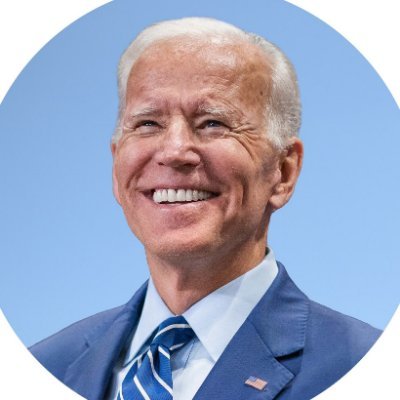
Jules Witcover was one of the most consequential journalists of our time because he understood to his core the fundamental role journalists play in our democracy – and the great responsibility that comes with being one.
Over the course of my career, I spent a lot of time with Jules who came from a middle class background a lot like mine. He also believed, like I do, that family is the beginning, middle, and end. That perspective gave him an innate sense of decency that he never lost sight of – no matter how big the scoop, or how controversial the topic. I saw it firsthand in the reporting Jules did on my own life. His work was always fair, honest, and smart.
Jules was a straight shooter. And he listened. For him, journalism was more than just telling a story, it was about telling the hard truths. Jules' words – and his coverage of all the big moments in recent American history – will help future generations better understand what this country is all about. And his work will continue to inspire generations of young journalists.
For six decades, Jules was a respected, reliable voice for readers across the country and a mentor to many. He was one of the greats. Jill and I send our love to his wife Marion, his children Amy, Julie, Paul, and Peter, his three grandchildren, and all of those who were fortunate enough to know him.
Show more
It’s hard to put into words the mark Steny Hoyer’s decades of public service have left on our nation. As the longest-serving Democrat in the House of Representatives and a former Majority Leader, his steady leadership helped deliver some of the most consequential legislation in our nation’s history.
Throughout his career, Steny has always known how to work across the aisle. He knows how to get things done and deliver. People always trusted Steny, and that trust mattered. He’s as decent as they come: a man of deep character, faith, and dignity. He was a champion of the Make it in America agenda, fighting to create good-paying jobs and strengthen manufacturing here at home. Steny’s leadership also extended beyond domestic policy. As Chair of the Helsinki Commission, he played a critical role in promoting democratic values around the world, and his commitment to ensuring Ukraine remains a free, sovereign, and independent country has been unwavering.
As President, I was proud to work alongside Steny and Democrats in Congress to pull our economy back from the brink, create millions of jobs, make historic investments in our infrastructure, take on the climate crisis, and expand access to more affordable health care. Through it all, Steny never lost sight of who he was serving, always putting the people of Maryland and our country first.
Beyond his remarkable record, it’s been a privilege to call Steny a dear friend. He is a great American, and truly the very best. With deep gratitude, Jill and I send our love and congratulations to Steny, his wife Dr. Elaine Kamarck, and his entire family — his daughters Susan, Stefany, and Anne, and his grandchildren and great-grandchildren — as he enters this new chapter. We hope he enjoys more time with family on what I like to call the Western Shore of Delaware.
Show more