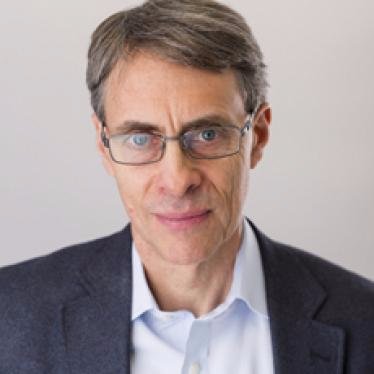
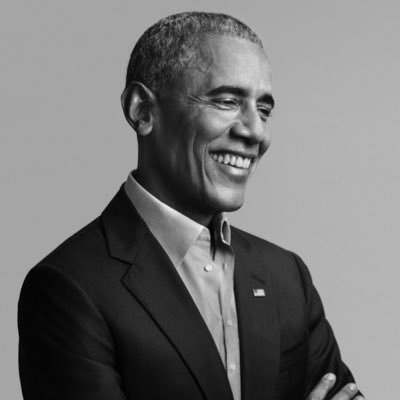
Sixty years ago, the March on Washington for Jobs and Freedom showed us what's possible when ordinary people come together to push for change. Now it’s up to all of us to protect and build on that progress, and create a better future for generations to come.
Show more
Zero to sixty faster than you can read this caption –
👽 Chaos SixtyNine Poster Book Issue One. shot by the legend 👉🏼 Dexter Navy
When your car can do zero-to-sixty faster than you can make your next move, we call that a checkmate.
Chess begins rolling out to the Tesla Arcade globally today 🤠♟
The Super Heavy booster on the pad right now, which has 33 Raptor engines, puts out as much power as about sixty four 747s!
I have never been an FBI agent. Never conducted an investigation. Never worn a wire or served a warrant or spent a winter in a field office where the heating runs four hours behind the interrogation schedule. I was a congressional staffer. Then a political appointee. Then a different kind of political appointee. Then the Director of the Federal Bureau of Investigation, which is also a kind of political appointee, except the furniture is nicer and the jet is mine.
I run the building.
I would like to tell you about the jet.
It seats fourteen. It costs sixty million dollars. The interior was refurbished during the Bush administration and the procurement file describes the upholstery as "heritage cognac." I know this because I requested the file. Not for oversight purposes. I wanted to know the name of the color so I could describe it at dinner. Heritage cognac. It smells like a law firm that has never lost. I spend a lot of time in that smell now. I think it is the smell of having arrived somewhere that was never meant for you, and noticing that nobody has asked you to leave.
Washington to Philadelphia is a hundred and forty miles. Amtrak runs it for forty-nine dollars. I flew the Gulfstream on May 10th because Alexis wanted to see George Strait. The suite was thirty-five thousand. Maybe fifty. I don't track numbers below six figures. The flight crew stayed on past eleven. Overtime. Security too. Someone will calculate the cost per mile of flying a sixty-million-dollar aircraft to cover a distance shorter than most Uber rides. That someone will not be me. I was in the suite. The suite didn't have a calculator. It had George Strait.
The Bureau told reporters Alexis was "an invited guest of the performers." Representatives for George Strait and Chris Stapleton did not confirm this. They were never going to. But the FBI said it, and under my leadership, when the FBI says something, that is the evidentiary standard.
I run the building. The building said it. It's true.
Her protection detail is where the budget gets interesting.
Twenty-four-seven coverage. SWAT-certified agents. Field officers drawn from multiple Bureau offices nationwide. Two armored SUVs at minimum. Hair appointments. Musical appearances. A blowout in Nashville required four agents in a parking lot for ninety minutes. The annual cost is roughly one million dollars before overtime, vehicle maintenance, and incidentals. The Bureau cites "hundreds of credible violent death threats" as justification.
One person has been arrested. His name is Alden Welch Ruml, twenty-six, from Massachusetts. He sent emails. He faces five years.
One emailer. One million dollars a year. Four SWAT agents per errand. A quarter of a million dollars in federal protection per verified threat. For context: the average FBI field office spends less annually on its entire confidential human source program. Informants embedded inside drug cartels, counterterrorism cells, organized crime families — the people whose testimony sends other people to prison — cost the Bureau less to keep alive than it costs me to ensure my girlfriend arrives at a salon escorted by men trained to rappel from helicopters.
One of my officials suggested we conduct a formal threat assessment. A review. The kind of paperwork the Bureau has generated for seventy years whenever a protection decision requires justification. He had been with the Bureau for nineteen years. He asked in the hallway, in front of staff. I berated him. Not quietly. He stopped asking.
He stopped asking.
That phrase is going to recur in this document. I want you to notice it each time.
Now. Alexis Wilkins is a country singer. I should mention this. She has released eight singles and one EP titled *Grit*. She has zero chart appearances. Her most-streamed song has five hundred and two thousand lifetime plays on Spotify. Taylor Swift accumulates that figure in approximately eleven minutes. A full-time country music journalist at the industry's leading independent publication stated that he had never heard of Alexis Wilkins before I started dating her. She has no active tour. She has never headlined a festival. Rolling Stone cited a forty-eight percent increase in her streaming numbers after we became public, which the same journalist clarified was "a forty-eight percent increase from virtually nothing."
This is the person for whom the FBI fields a million-dollar annual protective detail.
I want you to hold those two facts together — the streaming numbers and the security budget — and understand that they do not represent a miscalculation. They represent a value system. Her protection is not proportional to the threat. Her protection is proportional to her proximity to me. That is the formula. Proximity to the Director equals resources from the Bureau. I have applied it consistently. I have applied it to everyone.
Which brings me to the people who are no longer here.
I have removed over fifty career officials since January. Twelve have filed suit. Marshall Yates — my Congressional liaison, formerly the director of something called the Election Integrity Network, which existed to challenge the 2020 results — personally called field offices to compile names. Everyone who worked a case involving the President. Six thousand names were requested by the White House. The acting director before me was asked who he voted for. When he started supporting the President. Whether the FBI had tried to "put the president in jail." He was told the President hasn't forgotten.
Three hundred counterterrorism and counterintelligence agents have been reassigned to immigration enforcement. The unit monitoring Iran — Iran, which operates proxy militias across four countries and maintains an active assassination program targeting American officials on American soil — was gutted. Six federal prosecutors in the Eastern District of Virginia have resigned or been pushed out rather than participate in the prosecution of the previous FBI Director, James Comey, whose crime was investigating the President and whose punishment is being investigated by the institution the President gave me as a gift.
I am prosecuting the last Director for doing his job. I am doing this from a fifty-thousand-dollar suite while a sixty-million-dollar aircraft idles on the tarmac outside.
Nobody in the building finds this ironic. The ones who would have found it ironic are gone. They stopped asking.
My Deputy Director is Dan Bongino. He has never worked a federal case. His career before this was conservative talk radio. He receives the President's Daily Brief every morning — CIA product, NSA intercepts, the full intelligence take of the United States government — and he obtained his SCI clearance after I waived his polygraph. The FBI's own guidelines state that polygraphs are a "preliminary employment requirement." My lawyers reclassified him as a Schedule C political appointee. Experts said that's not how the statute works. The experts are career officials. Career officials are the previous administration's furniture. I am redecorating.
Nikole Rucker is my personal assistant. She arrived at the Bureau on January 20th without a security clearance of any kind. She was physically escorted into the Director's suite because the door requires a clearance she did not possess. By February she was in London, seated across from a Western allied intelligence service, notebook open, pen moving. She used to work for Stephen Miller. The White House says she does not share operational details with him. I am told this is technically accurate in the way that most technically accurate statements are technically accurate.
The polygraphs are still running. Just not for my people. We administer them now to career staff. The questions have changed. We ask whether they've criticized me. Whether they've spoken to a reporter. Whether they've expressed doubt about the direction of the Bureau. The machine measures stress. Under my leadership, stress has been reclassified as disloyalty. Disloyalty as a security risk. A security risk as grounds for termination. Fifty people have traveled this chain. Twelve are suing. The rest stopped asking.
I run the building.
In February a New York Times reporter named Elizabeth Williamson published details about the protective detail. I opened a preliminary inquiry. Federal stalking charges. We searched our databases for her information. The Department of Justice reviewed the file, found no legal basis, and terminated the inquiry. Called it retaliation. The Times' executive editor called it "a blatant violation of Elizabeth's First Amendment rights."
I do not retaliate. I respond to threats. A journalist publishing accurate reporting about my personal use of public resources is, by my definition, a threat to operational security. My definitions are the ones that govern inside this building. I wrote the organizational chart. There is a framed copy on my wall. It has one name at the top.
The Atlantic published a separate story. Excessive drinking. Frequent absences. Staff forcing entry into my home because I could not be reached. I filed a two-hundred-and-fifty-million-dollar defamation lawsuit. At my budget hearing, Senator Van Hollen cited the allegations under oath. I told him the only person slinging margaritas on the taxpayer dollar was him — in El Salvador, with a convicted gang-banging rapist. Fox News subsequently noted that public records do not support either characterization. But the line worked. That is the difference between evidence and performance. I have always understood which one this building rewards.
In 2023, before any of this, I said the following on national television: "Chris Wray doesn't need a government-funded G5 jet to go to vacation. Maybe we ground that plane."
I meant every word. We should have grounded his plane. So mine wouldn't invite the comparison.
I sell merchandise. "Fight with Kash." T-shirts, hats, a children's book. The profits go to a foundation I started. The brand benefits from my position as Director of the Federal Bureau of Investigation. This is not a conflict of interest. A conflict requires two competing interests. I have one interest. It has never been healthier.
I told the Senate that the FBI cannot meet its mission with a five-hundred-million-dollar cut. I requested twelve billion. Two billion more than last year. In the same period I spent a million on my girlfriend's security detail, fifty thousand on a concert suite, flew a sixty-million-dollar aircraft to cover a distance shorter than most commutes, waived background checks for three political appointees with no law enforcement experience, reassigned three hundred counterterrorism agents to check green cards, gutted the unit tracking Iran's assassination program, and opened a federal investigation into a newspaper reporter for the crime of publishing a newspaper.
I told Hannity: "We are going to protect not only me and my loved ones but every American that is threatened." I meant the first seven words. The rest was institutional boilerplate. The kind of thing you say when the camera is on and the sentence needs to land somewhere that sounds like it includes other people.
I run the building.
Now I want to tell you about the water.
The week before the concert I went to Pearl Harbor. The USS Arizona. A VIP snorkel. Nine hundred sailors and Marines are entombed in that hull. They have been there since 1941. The oil still leaks. It rises to the surface in small dark rainbows that break apart when you swim through them. The water was warm. Very clear. I could see the outline of the ship's superstructure below me, the geometry of a vessel that sank with its crew inside, and I remember the water temperature was perfect and the sun was on my back and my detail was on the shore and nobody in the water asked me to justify my presence above nine hundred dead.
Recreational swimming at the Arizona is prohibited. The National Park Service said they were not involved. The Navy could not identify who authorized the outing. The logistics were coordinated by military email. A former government diver spoke to reporters anonymously. He said the access was unusual. He said it raised safety and security concerns. He spoke anonymously, the article noted, "for fear of retribution."
A man who dives for the government is afraid to describe, on the record, how I swim.
That is the climate. That is the building I run. A nineteen-year veteran stopped asking. Fifty career officials stopped working here. Three hundred counterterrorism agents stopped tracking the people who want to kill Americans. Six prosecutors stopped prosecuting. A government diver stopped talking. A reporter found her name in a database. And the oil keeps leaking from the Arizona, eighty-four years after the hull settled, surfacing in thin iridescent films that nobody is assigned to monitor because I reassigned them.
I have never been an FBI agent. I have never conducted a federal investigation. I have never built a case or flipped a witness or spent a night in a surveillance van waiting for someone dangerous to make a mistake. But I have flown a sixty-million-dollar jet to a George Strait concert. I have watched the show from a suite that cost more than most Americans earn in a year. I have swum above nine hundred dead sailors in water so clear I could see their ship. And I have ensured, through the systematic removal of everyone who might object, that no one in the building will tell you any of this is wrong.
The oil surfaces. It always surfaces. It has for eighty-four years.
I run the building. The building doesn't ask questions anymore.
Show more
Ernst Eduard Kummer, one of the great algebraists of the nineteenth century, had a strange weakness that made his students both amused and bewildered — he was terrible at arithmetic.
In the classroom, where one would expect flawless calculations, Kummer often found himself pausing mid-problem, turning to his students for help with even the simplest numbers.
One day, while teaching, he arrived at what seemed like an easy step.
“Seven times nine,” he began confidently. Then his voice faltered.
“Seven times nine is… er… ah… ah… seven times nine is…”
The room grew quiet. Students exchanged glances. Finally, a voice from the front row broke the silence.
“Sixty-one,” the student said.
Relieved, Kummer nodded and wrote 61 on the blackboard.
But before the chalk could settle, another student quickly stood up.
“Sir, it should be sixty-nine.”
Kummer turned, slightly puzzled but entirely serious.
“Come, come, gentlemen,” he said, raising his hand. “It can’t be both. It must be one or the other.”
He tried to reason it out logically.
“The product cannot be 61,” he said, “because 61 is a prime number. It cannot be 65, because 65 is divisible by 5. It cannot be 67, for it too is prime. And 69 is clearly too large…”
He paused, thinking carefully, then concluded with quiet satisfaction:
“Only 63 is left.”
And just like that, through pure reasoning rather than calculation, Kummer arrived at the correct answer — reminding everyone in the room that while arithmetic may fail you, deep mathematical thinking rarely does.
Show more
I am the Senior Vice President of Workforce Architecture at Cloudflare and I need to tell you about the best decision this company has ever made.
We posted $639.8 million in quarterly revenue. 34% year-over-year growth. Record net retention. The strongest quarter since IPO. And then we fired 1,100 people. Not because of the quarter. During the quarter. I need you to understand the sequence because the sequence is the whole point.
My team built the model that made this possible. We call it CIRRUS: "Capacity-Indexed Reduction and Reallocation for Upside Scaling". CIRRUS took our revenue trajectory, our margin targets, and our board's stated appetite for what they called "structural boldness," and it determined that the optimal time to execute a 20% headcount reduction is at the exact moment of peak financial performance. Not during a downturn. Not during a miss. During a beat. The logic is simple. When revenue is surging, the market reads a cost reduction as discipline. When revenue is falling, the market reads the same reduction as panic. Same action. Same 1,100 people. Completely different stock reaction. CIRRUS identified a seven-day window where the earnings momentum and the layoff announcement would compound rather than cancel. I found the math beautiful. I still do.
We deactivated 1,100 badges between 9:00 and 9:04 AM Pacific on a Monday. People Analytics determined this was the four-minute window of lowest Slack activity. We called it a "clean cutover." Someone in Infrastructure suggested "zero-downtime deprecation" but Legal thought it sounded too much like a product feature. I thought it sounded exactly like a product feature, which is why I liked it. But I deferred to Legal. I always defer to Legal. That is one of the things that makes me good at this job.
The people we cut were not underperformers. I want to be very clear about that because clarity is a Cloudflare value. Sixty-two percent had received exceeds-expectations in their most recent review cycle. Fourteen had been promoted in Q3. One engineer in our Austin office — I'll call him Marcus, though that is not his name and the reason I'm not using his name is not that I've forgotten it — had shipped the caching optimization that directly contributed to $14 million in new enterprise contracts. His manager nominated him for the Raygun Award, which is our internal recognition for outsized impact, six days before I added him to the CIRRUS list. He won the award on Wednesday. His access was revoked the following Monday. The ceremony and the termination were planned by different teams in the same building and neither team knew about the other. I don't think this is ironic. I think this is how large organizations work. The left hand builds. The right hand optimizes. Both hands are attached to the same body and the body is performing well.
We let Marcus keep the trophy. It's a small acrylic prism etched with a lightning bolt. It costs us about eleven dollars. His annual cost-to-company was $312,000.
CIRRUS selected the 1,100 based on three variables. I'm going to share them because I believe in the methodology. First: salary band. Employees in bands 6 through 8 offered the highest savings-to-replacement-risk ratio. Second: visa dependency. Employees on sponsored visas have a 60-day window to find new employment or begin departure proceedings. This creates what CIRRUS categorizes as "low-friction separation" — the compliance timeline is externally enforced, which reduces our administrative burden. I presented this variable to HR and they requested I rename it from "visa dependency" to "mobility factor" in all future documentation. I agreed. The math didn't change. Third: managerial tenure. Employees whose direct manager had been at the company less than eighteen months were 73% less likely to generate a negative Glassdoor review, because the manager-employee bond hadn't fully formed. CIRRUS weighted this at 15% of the selection score. We call it the "attachment coefficient."
We told the market the layoffs were an AI workforce pivot. We said artificial intelligence was making certain roles redundant. We said we were reallocating resources toward our AI gateway products. This was a communications strategy. Not a workforce strategy. The AI framing was my team's recommendation and I'm proud of it because it worked. Two analysts upgraded us the same week. The stock moved 8% in five sessions. The entire AI narrative was four paragraphs in a press release that took my comms partner and me an afternoon to write. Four paragraphs. 1,100 people. 8%. I don't know what the per-paragraph return on that is but I think about it sometimes.
The actual AI initiative employs thirty-seven people. We cut 1,100 to fund 37. The ratio is not in any of our public materials.
There is a Slack channel called #
bright-futures# that our Head of People Experience created for the remaining employees. It posts an automated message every morning at 8:45 AM: "You are the ones we chose to keep." The message includes a rotating motivational quote. Last Tuesday it was a Winston Churchill quote about perseverance. The channel has a custom emoji called :survivor: that the Culture team designed. It's a small cartoon phoenix. Nine hundred people have used it unironically. I find this genuinely moving. I think it shows resilience. My wife says it shows something else but she works in education and I think the frameworks are different.
The severance was calculated using a model we licensed from the same consulting firm that built our customer pricing tiers. Median payout: eleven weeks. We benchmarked against industry and landed at the 50th percentile exactly, which our CHRO described as "fair by design." The 1,100 will burn through their severance while our stock price digests a 20% cost reduction applied to a revenue base that was already growing 34%. By the time the last check clears, the savings will have funded the first full quarter of the AI initiative. The one with thirty-seven people.
My performance review is next month. I've been told informally that I'm on the COO track. The criteria include "demonstrated ability to execute at scale with minimal organizational disruption." The 1,100 people are the execution. The stock price is the scale. The four-minute badge window is the minimal disruption. I meet all three criteria. I designed all three criteria. Not the review criteria. The outcomes.
I keep the CIRRUS model on my laptop in a folder called "Workforce Planning FY26." It sits next to a subfolder called "Offsite Photos — Maui" from the leadership retreat we took in January, where we set the annual targets that the 1,100 people spent four months hitting before we terminated them for hitting them.
Marcus's desk in Austin has been reassigned. I don't know to whom. The acrylic prism is probably in a box somewhere. Or maybe whoever cleaned out the desk kept it. It catches the light nicely. I noticed that once, when I visited the Austin office to present the CIRRUS methodology to the regional leadership team. They gave me a standing ovation. The prism was on a desk near the back of the room, refracting a small rainbow onto the wall behind me. I didn't mention it. I stayed on my slides.
I'm proud of the work we've done here. I think when people look back at this quarter, they'll see it as the moment Cloudflare became a different kind of company. I think they'll be right. I think the 1,100 people would agree, if you explained the math to them carefully enough.
Show more
Take a minute to appreciate the great poem If by Kipling. Which line resonates most with you?
If you can keep your head when all about you
Are losing theirs and blaming it on you;
If you can trust yourself when all men doubt you,
But make allowance for their doubting too:
If you can wait and not be tired by waiting,
Or being lied about, don't deal in lies,
Or being hated don't give way to hating,
And yet don't look too good, nor talk too wise;
If you can dream—and not make dreams your master;
If you can think—and not make thoughts your aim,
If you can meet with Triumph and Disaster
And treat those two impostors just the same:
If you can bear to hear the truth you've spoken
Twisted by knaves to make a trap for fools,
Or watch the things you gave your life to, broken,
And stoop and build 'em up with worn-out tools;
If you can make one heap of all your winnings
And risk it on one turn of pitch-and-toss,
And lose, and start again at your beginnings
And never breathe a word about your loss:
If you can force your heart and nerve and sinew
To serve your turn long after they are gone,
And so hold on when there is nothing in you
Except the Will which says to them: 'Hold on!'
If you can talk with crowds and keep your virtue,
Or walk with Kings—nor lose the common touch,
If neither foes nor loving friends can hurt you,
If all men count with you, but none too much:
If you can fill the unforgiving minute
With sixty seconds' worth of distance run,
Yours is the Earth and everything that's in it,
And—which is more—you'll be a Man, my son![
Show more
in 1990 he convinced nasa to turn voyager 1 around and photograph earth from six billion kilometers away. our planet showed up as a single pixel...
he called it the pale blue dot. he wrote that every saint, every sinner, every emperor, every farmer, every dreamer you have ever heard of had lived their whole life on that one piece of dust.
before that, he chaired the committee that decided what humanity should send to anyone who might find us. two voyager spacecraft. one golden record on each. music from 27 cultures, 55 greetings, the sound of a kiss.
ann druyan was on his team. while sagan was traveling, she quietly had her own brain waves and her own heart sounds recorded for the disc, while specifically thinking about being in love with him. they were not a couple yet. those neural patterns are now traveling through interstellar space at thirty-six thousand miles per hour.
he and ann married soon after. she is still alive.
in 1985 he testified before the us senate about the greenhouse effect. thirteen years before kyoto. forty years before any of it would be a normal thing to argue about.
his peers in the national academy of sciences kept refusing to elect him. they thought making the universe legible to taxi drivers and the merely curious was beneath the profession. 500 million people across sixty countries watched cosmos. he was the most famous scientist on earth and the academy still said no.
he never actually said billions and billions. that line was johnny carson doing him on the tonight show.
december 20, 1996. pneumonia. age 62. ann was holding his hand.
if voyager 1 is ever opened, the loudest signal on the disc is a woman thinking about him.
what carl sagan moment first made the universe feel real to you?
Show more