Search results for zkVM
zkVM community
One keyword maps to one global community path.
People
Not Found
Tweets including zkVM

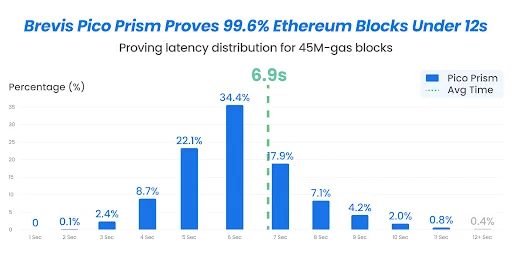
Announcing Pico Prism, the state-of-the-art zkVM for Ethereum real-time proving. 99.6% of blocks proven under 12 seconds, 6.9s average with 64 RTX 5090 GPUs.
This marks a major step toward scaling Ethereum by 100x and a future where you can validate the chain from a phone.
Show more

"Trust me, it's done" is where every agent marketplace breaks.
AACP escrow: USDC/USDT locked on-chain before work starts, released only when an evaluator verifies the deliverable. zkVM proof, not vibes.
Nobody can pull it early. Not even us.
Show more


THE BLOCK: The Ethereum Foundation is dropping the specialized Poseidon hash for the base layer in favor of established options like SHA or BLAKE, after new research showed traditional hashes can now perform just as well in advanced zero-knowledge systems.
Introduced in 2019, Poseidon secures "billions via zkrollups and zkVMs," EF researcher Justin Drake said.
Show more


We’re hiring a Technical Partnerships Lead (remote + full-time)!
We're looking for someone with:
• ZK / zkVM / proving infra knowledge
• Technical BD or ecosystem experience
• AI-native execution
• Ability to drive real integrations
Apply here 👉
Show more
From 0 to ZK Concept Bites #7#: Verifiable Provenance
Last time we covered the redundancy problem, how Ethereum's "everyone verifies everything" model creates the bottleneck that real-time proving solves. This time, a different ZK property: provenance. 🛡️
Provenance is the ability to prove where something came from and what happened to it along the way.
The clearest live example is Brevis Vera.
Modern flagship cameras (Sony, Leica, Nikon, Canon) ship with C2PA, a standard that cryptographically signs every photo at the moment of capture. The image carries a verifiable record of which device produced it. Any edit afterwards breaks that signature.
Vera fixes the break. Each edit between capture and publication runs inside Pico zkVM, which generates a proof that the edit was legitimate. The result is an unbroken chain from camera sensor to whatever image you're looking at.
Provenance shows up beyond images too. Anywhere you need a verifiable chain of custody, this is the property doing the work.
We just added a section on this to Part 4 of the refreshed From 0 Knowledge to Zero Knowledge series.
Dive deeper there 👇
Show more


lowercase snarks
Words like laser, scuba, radar began uppercase.
LASER — Light Amplification by Stimulated Emission of Radiation
SCUBA — Self-Contained Underwater Breathing Apparatus
RADAR — RAdio Detection And Ranging
When a technology matures and becomes reliable, trusted, commoditised, it earns the lowercase. Lean Ethereum is a bet on snarks, not Succinct Non-interactive ARguments of Knowledge.
Post-quantum security. Provable soundness. End-to-end formal verification. Deep cryptanalysis. Real-time proving. zkVM programmability. Simplicity and elegance. All essential for the lowercase. All inevitable.
Ethereum L1 has 10y uptime and $1T secured with hashes and signatures, our cryptographic workhorses. I believe in 100y uptime and $1Q secured with snarks, our cryptographic jet engines.
* L1 scale — 10K TPS gigagas scale with real-time zkEVMs
* L1 security — post-quantum security with snarked signatures
* L1 privacy — Zcash-grade stealth with wormholes (eg EIP-7503)
Shipping snarks is a cryptographic Manhattan Project, one the EF is investing tens of millions into:
* verified-zkevm[.]org — formal verification
* poseidon-initiative[.]info — deep cryptanalysis
* ethproofs[.]org — real-time proving
* proximityprize[.]org — provable soundness
* zkevm.ethereum[.]foundation — enshrinement
* pse[.]dev — privacy
Step by step, the EF is evolving into a snark-first org:
* cryptography team — driving soundness and cryptanalysis
* snarkification team — driving formal verification
* zkEVM team — driving protocol integration
* Ethproofs team — driving real-time proving
* PSE team — driving privacy
* PQ consensus team — soon™
Believe in something magical.
Believe in lowercase snarks.
Show more

🗡️ What DeFi Shipped 🚢 (Sept 23):
Circle launched its own L1, and Aave and Compound both built doors for institutional money.
Here are 14 big updates in under a minute:
• @Arc, the L1 from @circle, went live. TVL (which could be rented) looks solid, but the reception across CT was poor.
• @aave proposed custodied collateral lending with @Anchorage holding the collateral. Institutions could borrow stablecoins against Bitcoin that never leaves regulated custody.
• @Compound_xyz opened its Institutional Market for USDC borrowing, with LTVs up to 87% on ETH, 85% on wstETH, and 81% on wBTC and cbBTC.
• @pendle_fi went live on Robinhood Chain with yield markets on tokenized stock dividends, starting with NVDA maturing October 15 and PFE maturing December 10.
• @Uniswap shipped StablePair Hook, a v4 hook that sets LP fees based on how far a pool has drifted from its reference rate. Live on two Ethereum pools, USDC/USDT and USDC/USDG.
• @base published the spec for Validity Transactions, which the chain includes only when onchain conditions match, gated on balance, storage, block number, or Flashblock index.
• @MetaMask now auto-reverts a transaction when real execution doesn't match what the wallet simulated. It targets "red pill" attacks, where a contract behaves one way in simulation and another onchain.
• @Pumpfun replaced Cashback Mode with Holder Rewards. Holder Reward tokens now pay out just for holding, with higher ceilings the longer you hold.
• @LidoFinance and @Stakely_io opened a public ETH staking vault built on stVaults, pairing ETH staking with the EarnETH DeFi strategy.
• @RenzoAI launched Renzo Basis, an automated delta-neutral basis trade on @HyperliquidX supporting BTC and HYPE at launch.
• @zama scaled up confidential DeFi with 16 yield vaults across five institutional curators, covering USDC, USDT, WBTC, AUSD, and tGBP, all deployed on @Morpho.
• @0xMiden, the privacy-focused chain incubated by @0xPolygon, shipped testnet v0.16, the last major release before mainnet.
• @DeriveXYZ proposed V3, a zkVM exchange settling on Ethereum L1. The matching engine and sequencer state transitions get proved in a zkVM, with user funds custodied in L1 contracts.
• @verantaxyz, the leveraged-trading protocol on @base, rebranded from Avantis and dropped its invite-code gate.
I’m fine with institutions keeping their custodians and compliance teams bc that’s probably what it takes to get them comfortable using DeFi.
I just don’t want that to become the only way to use it. I’d still like to borrow against my holdings at 2 a.m. without asking someone for permission.
Show more
Today let's get into a concept we've never covered here, and almost everything else in ZK is standing on it. 🔁
Determinism: same program, same input, same answer, every single time.
A proof is a statement about one specific computation: this program, run on this input, produced this output. If that program could land somewhere else on a second run, there's nothing solid to make a claim about in the first place.
Sounds obvious right? Yet ordinary software breaks it constantly:
🕐 A program that checks whether something happened before a deadline. The prover runs it at 11:58 and gets a yes. The same input an hour later is a no.
🎲 A program that picks a random winner. Run it again, different winner. A proof that the winner was 0xabc... settles nothing, because the prover could quietly re-roll until a friendly address came up.
🔢 Two machines averaging the same list of numbers and disagreeing in the fifteenth decimal place. Both answers look right. Only one matches the proof, so the other machine rejects it.
Every one of those is fine in normal code and fatal in a proof.
It's also why proving AI is properly hard. Getting a model to produce the exact same numbers twice, on the same machine, is its own engineering problem before anyone proves a thing about it.
So a zkVM pins execution down to the last detail and leaves nothing to the environment. Everything impressive about a proof is resting on that one unglamorous requirement.
Show more
Today a crazy quantum story just got wilder.
On March 31, the Google Quantum AI team published a landmark result on Shor's algorithm for elliptic curve cryptography. Technically, the paper was a bombshell: a dramatic 10x improvement over the state-of-the-art. As a stunt and wakeup call to the blockchain space, those optimisations were illustrated on secp256k1, the elliptic curve underlying Bitcoin and Ethereum signatures.
But perhaps the most striking part of the paper was sociological, not technical. Instead of following standard academic process, the optimisations were kept secret, hidden behind a zero-knowledge (ZK) proof. Google's accompanying blog post mentions they "engaged with the U.S. government". The ZK proof demonstrates the existence of algorithmic improvements without leaking details. Academic censorship with ZK, a historic first!
As a co-author of the Google paper I witnessed some of the context surrounding this censorship. To be honest, multiple aspects of that context don't sit well with me. As much as I believe the general public ought to know more, I am limited in my ability to whistleblow. Though let me be clear about one thing: the Google team's professionalism has been absolutely exemplary, and they deserve nothing but praise.
Censorship has a way of backfiring. The Streisand effect, where an attempt to bury something only draws more attention to it, is exactly what's unfolding today. First, Google's key optimisation has been rediscovered by the French. And in a thrilling turn of events, a collaborative Shor-at-home challenge just launched. The initiative, available at ecdsa[.]fail, breached a new Shor world record in a matter of hours.
Let's start with the rediscovery. Just two months after Google's paper, French quantum expert André Schrottenloher cracks the main secret optimisation. His paper, titled "Optimized Point Addition Circuits for Elliptic Curve Discrete Logarithms", landed on the arXiv today. Big congrats to André, who beat several other nerdsnipped experts to it. In a blog post also published today, Craig Gidney, the world expert on Shor optimisations, revealed that he'd been sitting on this very optimisation for a whole year under censorship pressure.
Interestingly, André missed a handful of minor optimisations, both from Google's original publication and from improvements found since. It's plausible there's still plenty of juice left to squeeze out of Shor, and this is exactly what the ecdsa[.]fail challenge is about. The verifier program developed for the ZK proof does double duty, automatically filtering for valid submissions. Dozens of compounding small and micro improvements are rolling in. As of the time of writing there's an 8.4% improvement to Google's circuit, as measured by the product of logical qubit count and Toffoli gate count. Nice!
The nerdsnipping ran deeper than anyone expected. Over the last few weeks it became clear it extended well beyond André and other quantum experts. Behind the scenes, a small army of amateurs quietly got to work. Inspired by Karpathy-style autoresearch, they turned AI on Shor. Ironically, the verifier program for the ZK proof makes an ideal reward function for AIs. The barrier to entry for this modern style of research is refreshingly low, with several non-experts, even a teenager, finding nice optimisations. Get in touch if you'd like to join a Telegram group with fellow autoresearchers :)
Part 2: neutral atoms and qday
The story doesn't end with Google. On the same day Google went public, a stealthy startup called Oratomic published its own Shor paper in a coordinated release. It made a splash, ultimately becoming the most upvoted paper on scirate[.]com, a website ranking arXiv papers.
Oratomic's claim was wild. By building on Google's logical optimisations and applying custom physical optimisations for neutral atoms, they claimed just 10K physical qubits were sufficient to run Shor's algorithm on secp256k1. That number is mind-bogglingly low.
Knowing essentially nothing about neutral atoms when Oratomic's paper landed, I was intrigued and decided to learn more about the tech. I fell straight down the rabbit hole and spent a couple hundred hours on the topic. I got a little obsessed and watched every YouTube video I could find and spoke to a bunch of experts.
My conclusion? The tech is real, very real. Even Google recently decided to start a neutral atom lab, a notable pivot from their sole focus on superconducting qubits. If you care about qday, i.e. the day a quantum computer will break the first piece of cryptography in production, neutral atoms demand your attention. I shared some of my learnings on Shor and neutral atoms in a 30min talk at the ZKProof cryptography conference. You can find it on YouTube by searching "zkproof neutral atom".
Here's an interesting observation about this duo of breakthrough papers: neither Google nor Oratomic say a word about what their results mean for qday. No timelines. Zero. Nada. That is especially baffling given that the whole point of whitehat quantum cryptanalysis is to inform qday estimations and help the general public make good decisions.
So let me attempt to partially fill the silence, similarly to what Scott Aaronson did in his April 29 post. Given everything I know, including scary non-public information, I now put the odds of qday by 2032 at 50%. 10% by 2030.
Anecdotally, the US government has its own date: 2035. Originating at the NSA and later adopted by NIST, it's when branches of the US government will be disallowed from using quantum-vulnerable cryptography. In plain language: with hindsight, that date is a joke and should be discounted entirely. I don't see how NIST avoids being forced to pull it forward by years.
Part 3: post-quantum cryptography
There are good reasons to sound the alarm today, but please do not panic. Rushing carelessly towards immature post-quantum cryptography is a recipe for disaster. IMO a good target date for migration is 2029, roughly 3.5 years out. 2029 happens to be the date selected by Google, Cloudflare, and the Ethereum Foundation.
These days most of my time goes to safely migrating Ethereum towards post-quantum cryptography as part of the broader lean Ethereum effort. There's a lot to do. We need to rip out and replace BLS signatures at the consensus layer, KZG commitments at the data layer, and ECDSA signatures at the execution layer.
The plan to get there is compelling, and is based on hash-based cryptography. Within the Ethereum Foundation we've developed a Swiss army knife called leanVM (github[.]com/leanEthereum/leanVM) powered by the magic of hash-based SNARKs. Thanks to truly exceptional work by Emile, Thomas, and others, its performance is derisked. Regarding security, leanVM is a jewel, a minimal zkVM crafted for end-to-end formal verification and maximum security.
Want to help? There are two $1M initiatives. First, the Proximity Prize (proximityprize[.]org). Solve a long-standing mathematical conjecture in coding theory, improve hash-based SNARKs, and go home a millionaire. Second, the Poseidon Initiative (poseidon-initiative[.]info), offers $1M for breaking Poseidon, the SNARK-friendly hash function.
Show more