Search results for Hearts_Chase
Hearts_Chase community
One keyword maps to one global community path.
People
Not Found
Tweets including Hearts_Chase

Heart-stopping moment wild elephant chases terrified farmer through field


Heart and hustle from No. 15
@Chase || Play of the Game


Coinbase Wallet Rebrands to Chase 'Anything, Anywhere' Trading as Robinhood Chain Heats Up


With the passing of Richard Scolyer, we have lost one of our brightest lights and one of our biggest hearts.
As the joint 2024 Australian of the Year, Professor Scolyer took his place in the national spotlight with determination and purpose as he very publicly dealt with his glioblastoma, an aggressive form of brain cancer.
Every day, this remarkable man – the cancer specialist who became his own subject – took us into his confidence, and he lifted us all in the process.
Richard’s journey was difficult and confronting. “My uncertain path”, as he termed it with characteristic understatement.
Yet it was one he travelled with courage, determination, and a grace that never ceased to be remarkable. The way he shared it with us was an act of profound generosity. He showed us what it means to hope, and to keep searching for solutions. He showed us how to stand firm against fear and stay true to yourself.
Now Richard’s journey is done, yet his legacy will always be with us. The recently established Richard Scolyer Chair at the Chris O’Brien Lifehouse proudly bears his name. And one day when a cure is found, Richard’s name will be spoken.
The hearts of all Australians go out to his wife, Dr Katie Nicholl, and their children, Emily, Matthew and Lucy.
And may Richard Scolyer rest in peace.
Show more


My cat Provolone has a specific vendetta against my Peloton, sitting directly on the console the second I start pedaling, and I didn't understand the pattern until my husband pointed it out from the couch.
"He only does it when you're actually trying," he said. "Watch, do an easy ride."
I did an easy ride. Provolone stayed on the windowsill, unbothered, barely glancing over.
I switched to an interval class the next morning, out of spite mostly, wanting to prove him wrong. Forty seconds into the first sprint, Provolone was already crossing the room at a dead sprint of his own, launching onto the console and sitting directly on the resistance display like he was personally vetoing the effort.
"He thinks you're in danger," my husband said, entirely serious. "Cats read heavy breathing and fast heart rates as distress. You sound like you're being chased by something. He's coming to check."
I didn't believe that until I found an actual study confirming something close to it — cats responding to labored human breathing as a potential emergency, especially cats bonded closely enough to notice a baseline.
I've started narrating my workouts out loud now, mid-sprint, just to reassure him. "I'm fine, buddy, this is on purpose."
He doesn't seem convinced. He still comes every single time, sits on the display, waits out the interval like a tiny, disapproving lifeguard.
My husband finds this hilarious. I've started doing easy rides more often than I probably should, mostly just for the peace.
Show more

A little girl was given a second heart to save her life.
More than a decade later, doctors removed it.
And the heart they once believed would never recover kept beating on its own.
At just 8 months old, Hannah Clark was diagnosed with severe dilated cardiomyopathy. Her heart had grown dangerously enlarged and was too weak to pump enough blood through her body. Doctors feared she had only a short time left to live.
A conventional transplant seemed like the only answer, but infant donor hearts were incredibly rare. That's when renowned surgeon Sir Magdi Yacoub proposed an unusual solution.
Instead of replacing Hannah's failing heart, surgeons would leave it inside her chest and add a donor heart alongside it.
The procedure, known as a "piggyback" transplant, meant two hearts would beat together. The donor heart would do most of the work while Hannah's own heart got something it had never had before:
A chance to rest.
In 1995, when Hannah was just 2 years old, the surgery was performed successfully. The donor heart carried the load, Hannah regained her strength, and she began living the childhood her family once feared she would never have.
But the biggest surprise came years later.
Medical scans revealed that Hannah's original heart, once considered beyond saving, had gradually recovered. Freed from constant strain, it had rebuilt its strength and was functioning normally again.
Unfortunately, another battle had begun.
To prevent rejection of the donor heart, Hannah needed lifelong immunosuppressant drugs. Over time, those medications weakened her immune system and contributed to a serious cancer-related condition.
Doctors faced an impossible choice:
Continue the drugs and risk the cancer worsening.
Reduce them and risk losing the donor heart.
Then they revisited an idea that once seemed unthinkable.
What if Hannah no longer needed the donor heart at all?
After extensive testing, surgeons concluded that her original heart had recovered enough to support her body on its own.
In February 2006, doctors performed a groundbreaking operation.
They removed the donor heart.
For the first time in 11 years, Hannah was living with only the heart she had been born with.
The surgery was a success.
Her original heart took over completely, pumping strongly and steadily. Within days, she was out of the hospital. Without the donor heart, she no longer needed anti-rejection medication, allowing her immune system to recover and better fight her illness.
What made Hannah's story extraordinary wasn't just that a transplant saved her life.
It was that the transplant eventually became unnecessary.
The donor heart acted as a bridge, giving her own heart the time it needed to heal itself.
Her case changed how doctors think about heart recovery, especially in young patients, and helped inspire new approaches that support failing hearts rather than immediately replacing them forever.
Today, Hannah's story remains one of medicine's most remarkable examples of resilience.
A heart that was once thought to be dying wasn't finished after all.
It simply needed time, support, and a second chance.
Show more

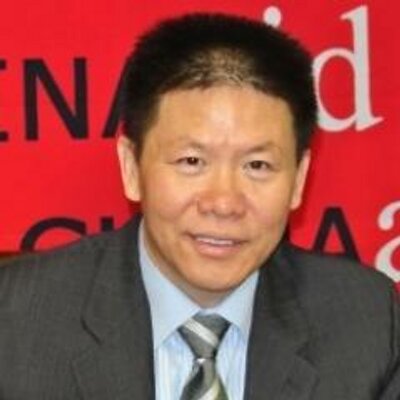
ChinaAid Welcomes Release of Pastor Ezra Jin to US, Calls for Freedom for All Prisoners of Faith
MIDLAND, Texas — July 5, 2026 — ChinaAid welcomes with profound gratitude the release of imprisoned Chinese house church pastor Ezra Jin (Pastor Jin), who arrived safely in Los Angeles on July 4, 2026, after being released directly from detention in China.
According to information received by ChinaAid from trusted sources, Pastor Jin was released from detention and transported to the United States in an extraordinary diplomatic arrangement. Chinese officials reportedly informed him that his release resulted from discussions between U.S. President Donald J. Trump and Chinese President Xi Jinping, and was presented as a goodwill gesture coinciding with America’s Independence Day.
Pastor Jin had spent months in detention because of his Christian faith and ministry. His unexpected freedom is an answer to countless prayers offered by Christians around the world and demonstrates once again that sustained international advocacy can save lives and restore freedom.
“We rejoice with Pastor Ezra Jin, his family, and the global Body of Christ on this remarkable Independence Day miracle,” said Rev. Dr. Bob Fu, Founder and President of ChinaAid. “We thank Almighty God for hearing the prayers of His people. We are deeply grateful to President Donald Trump, Secretary of State Marco Rubio, and all U.S. officials who worked tirelessly behind the scenes to secure Pastor Jin’s freedom. Their unwavering commitment demonstrates that principled leadership and persistent diplomacy can make a life-saving difference.”
Dr. Fu continued:
“While we celebrate Pastor Jin’s freedom, our hearts remain with the countless pastors including 8 other jailed pastors and coworkers from Zion Church, priests, bishops, house church Christians, Uyghur Muslims, Tibetan Buddhists, Falun Gong practitioners, and other prisoners of conscience who remain unjustly imprisoned by the Chinese Communist Party. We respectfully call on President Trump and his Administration to continue making religious freedom and the release of all prisoners of faith a top priority in every engagement with Beijing. True progress in U.S.-China relations must include freedom for those imprisoned simply because they choose to believe.”
ChinaAid also expresses its appreciation to members of Congress, international religious freedom advocates, churches, and countless individuals around the world whose prayers and advocacy helped keep Pastor Jin’s case before senior U.S. officials.
As Americans celebrated the 250th anniversary of the Declaration of Independence, Pastor Jin’s arrival on American soil serves as a powerful reminder that the universal longing for religious liberty transcends national borders.
ChinaAid will continue to advocate tirelessly until every prisoner jailed for peacefully exercising his or her faith is released.
“Freedom for Pastor Jin is a tremendous victory,” Dr. Fu added. “But our work is not finished until every prisoner of faith is free.”
Media Contact:
ChinaAid Association
Email: media@chinaaid.org
Show more

BREAKING STORY:
ChinaAid Welcomes the Release of Pastor Ezra Jin to the United States, Calls for Freedom for All Prisoners of Faith
MIDLAND, Texas — July 5, 2026 — ChinaAid welcomes with profound gratitude the release of imprisoned Chinese house church pastor Ezra Jin (Pastor Jin), who arrived safely in Los Angeles on July 4, 2026, after being released directly from detention in China.
According to information received by ChinaAid from trusted sources, Pastor Jin was released from detention and transported to the United States in an extraordinary diplomatic arrangement. Chinese officials reportedly informed him that his release resulted from discussions between U.S. President Donald J. Trump and Chinese President Xi Jinping, and was presented as a goodwill gesture coinciding with America’s Independence Day.
Pastor Jin had spent months in detention because of his Christian faith and ministry. His unexpected freedom is an answer to countless prayers offered by Christians around the world and demonstrates once again that sustained international advocacy can save lives and restore freedom.
“We rejoice with Pastor Ezra Jin, his family, and the global Body of Christ on this remarkable Independence Day miracle,” said Rev. Dr. Bob Fu, Founder and President of ChinaAid. “We thank Almighty God for hearing the prayers of His people. We are deeply grateful to President Donald Trump, Secretary of State Marco Rubio, and all U.S. officials who worked tirelessly behind the scenes to secure Pastor Jin’s freedom. Their unwavering commitment demonstrates that principled leadership and persistent diplomacy can make a life-saving difference.”
Dr. Fu continued:
“While we celebrate Pastor Jin’s freedom, our hearts remain with the countless pastors, priests, bishops, house church Christians, Uyghur Muslims, Tibetan Buddhists, Falun Gong practitioners, and other prisoners of conscience who remain unjustly imprisoned by the Chinese Communist Party. We respectfully call on President Trump and his Administration to continue making religious freedom and the release of all prisoners of faith a top priority in every engagement with Beijing. True progress in U.S.-China relations must include freedom for those imprisoned simply because they choose to believe.”
ChinaAid also expresses its appreciation to members of Congress, international religious freedom advocates, churches, and countless individuals around the world whose prayers and advocacy helped keep Pastor Jin’s case before senior U.S. officials.
As Americans celebrated the 250th anniversary of the Declaration of Independence, Pastor Jin’s arrival on American soil serves as a powerful reminder that the universal longing for religious liberty transcends national borders.
ChinaAid will continue to advocate tirelessly until every prisoner jailed for peacefully exercising his or her faith is released.
“Freedom for Pastor Jin is a tremendous victory,” Dr. Fu added. “But our work is not finished until every prisoner of faith is free.”
Media Contact:
ChinaAid Association
Email: media@chinaaid.org
Show more

