Search results for ISHIGAKI
ISHIGAKI community
One keyword maps to one global community path.
People
Not Found
Tweets including ISHIGAKI


📢Tickets now on sale!!!🤩
Ishigaki MUSIC FESTIVAL 2026
🗓️Date:2026/9/19 (Sat)
📍Venue:Morioka Castle Ruins Park and 8 other venues
🎟️eplus
#ishigakifes#
!!CAUSION!! Admission is not guaranteed for tickets purchased through unauthorized resale sites.
Show more


Real diplomacy is rooted in local communities. Deputy Chief of Mission Aaron Snipe recently visited Ishigaki and Miyako to meet with local residents, hear their perspectives, and experience the rich culture of Okinawa's southern islands.
Our commitment to these islands is long-term. U.S. Embassy Tokyo is working to expand community college exchanges, English learning programs, and sister city partnerships to strengthen the enduring ties between our communities and ensure they continue to thrive for generations to come.
Show more


Just spent a week in Okinawa and it’s easy to see why they live so long.
Bitter gourd and sea grapes are ubiquitous, you eat them every day. Nutrient dense and low calorie.
Beef and pork are both high quality, Okinawa is famous for Ishigaki and Motobu wagyu and Agu pork. The pork in particular was the best I’ve had.
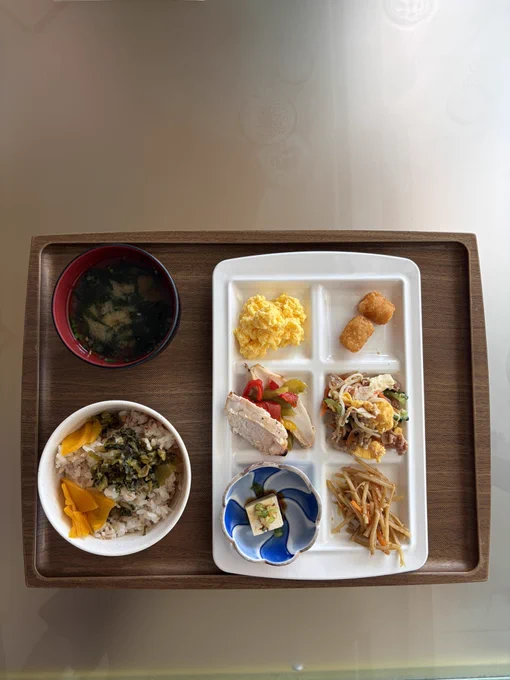
Like the rest of Japan, meals are balanced. Modest carbs, fermented vegetables, soup. Even my hotel breakfast was the healthiest I’ve had at a hotel in a long time.
That plus the fairly laid back lifestyle compared to mainland Japan, with beautiful beaches, no heavy traffic, warm weather all year round.
Could see myself living here.
Show more




Okinawa was a kingdom long before it became part of modern Japan.
That history is easy to miss if all you know about Okinawa is beaches, coral reefs and warm weather. The islands spent centuries developing their own culture, political system and traditions, and you still feel that difference today.
The Ryukyu Kingdom was established in 1429 and lasted until 1879. Its location between Japan, China and Southeast Asia made it an important trading center, and those connections shaped the architecture, food, music and customs of the islands.
Shuri Castle was the center of the kingdom. It sits above Naha and looks very different from the castles most people associate with Japan. The red walls and curved stone fortifications reflect the mix of influences that reached Okinawa over the centuries.
In 1609, forces from Japan’s Satsuma domain invaded the Ryukyus. The kingdom survived, but under Satsuma control while continuing its relationship with China. That arrangement lasted until Japan formally abolished the kingdom in 1879 and created Okinawa Prefecture.
You can still find remains of that older world around the main island. Okinawa has hundreds of gusuku sites, the stone-walled castles and fortified settlements built by local rulers. Nakijin Castle and Katsuren Castle are two of the best-known examples.
Shuri Castle has had a much harder time surviving. It was heavily damaged during the Battle of Okinawa in 1945, rebuilt decades later and destroyed again by fire in 2019. Reconstruction has been underway since.
Okinawa also happens to be the birthplace of karate. The exact origins are complicated, but it grew out of local fighting traditions mixed with influences from China and elsewhere in Asia. From Okinawa it spread to mainland Japan and eventually around the world.
The islands sound different too. The sanshin, a three-stringed instrument traditionally covered with snakeskin, is closely tied to Okinawan music. Shisa statues sit on rooftops and beside gates all over the islands, and the food has its own character as well. Pork is more common than many first-time visitors expect. Goya champuru, made with bitter melon and tofu, is one of the best-known local dishes, and awamori has been made here for centuries.
The landscape changes quickly once you leave Naha. Northern Okinawa is covered in subtropical forest, especially around Yanbaru. Farther out, islands like Ishigaki and Iriomote have coral reefs, mangroves and a slower pace than the main island.
The beaches are a big reason people come here, but the war history is just as important.
The Battle of Okinawa in 1945 lasted about three months and killed more than 200,000 people, including a huge number of Okinawan civilians. Towns and cultural sites were destroyed across the island. The Okinawa Prefectural Peace Memorial Museum and Peace Memorial Park are worth visiting if you want to understand what the battle meant for the people who lived here.
After the war, Okinawa remained under U.S. administration until 1972, when it was returned to Japanese control. That period still shapes parts of modern Okinawa.
So I wouldn’t think of Okinawa as just Japan’s beach destination.
Spend time in Naha. Walk around Shuri. Visit one of the old gusuku sites. Eat Okinawan food. Listen to the sanshin. Learn a little about karate where it began. Go north into Yanbaru. Spend some time by the water.
And make room for the harder parts of the history too.
Okinawa has been a kingdom, a trading center, a battlefield, a U.S.-administered territory and part of modern Japan. Once you know that, the islands make a lot more sense.
That’s the kind of place I write about in my newsletter. Somewhere that looks interesting at first and gets better once you know the story behind it.
If you like travel with some history behind it, subscribe to the Timeless Traveler.
Show more


She is Ishigami Village's bravest warrior, the Lioness 🔥
Kohaku new set available 😉

