Search results for KOTARO
KOTARO community
One keyword maps to one global community path.
People
Not Found
Tweets including KOTARO

My cousin's son, Kotaro, is deaf.
For his first year of junior high, he laughed one second late at every joke.
He would watch everyone else laugh first. Then he would laugh too. So nobody would know he hadn't heard it.
He had been doing it since he was six. He was very good at it.
Only one person ever noticed. An American.
Kotaro was the only deaf student at his school, in a small town in the mountains of northern Japan. Nobody there knew sign language. He got by reading lips.
Then, in the spring of 2021, everyone was wearing masks.
No lips. No words. For a thirteen-year-old who couldn't hear, the world went silent a second time.
That April, a new assistant English teacher arrived. Hannah. 23. From a small farm town in Wisconsin. Her Japanese was terrible.
She had grown up with snow, so the mountain winters didn't scare her. What scared her was the silence. Nobody to talk to. Every night alone in a tiny apartment, eating convenience store rice balls, wondering why she had come.
In the staff room, the teachers would laugh at something. Hannah would watch them, and then laugh one second late. So nobody would know she hadn't understood.
That's how she saw him.
A boy in the front row, watching his classmates' faces. Waiting. Then laughing. One second late.
She knew exactly what that felt like.
That night, she bought a book on Japanese Sign Language. It's a completely different language from American Sign Language. She was now learning two foreign languages at the same time.
Every night, she practiced in front of videos. Her elderly neighbor later told my cousin that for two months, she believed the American girl was fighting mosquitoes.
The next morning, Hannah walked up to Kotaro and signed, "Good morning."
Except she got it wrong. She signed, "Delicious morning."
Kotaro laughed out loud.
It was the first time anyone at that school had ever heard him laugh.
After that, they made a deal. Every day at lunch, she would teach him English. He would teach her to sign.
One day, Hannah told him a secret. Slowly, with her clumsy hands.
"In the staff room, I laugh one second late too."
Kotaro looked at her for a long time.
Then he showed her a sign. Two index fingers, side by side.
"Same."
A girl from his class saw them signing at lunch, and sat down. Then five kids. Then twelve. By winter, all 31 kids in his class could sign. Badly. Loudly. With their hands flying everywhere.
They gave Hannah a sign name. Two hands opening wide, like the sun coming up over the mountains.
Then, one afternoon in February, the class made a rule. Nobody remembers who suggested it.
From now on, every joke goes to Kotaro first.
That day, someone signed a joke across the classroom. Kotaro read it, and he laughed.
First.
For the first time in his life, he was the first one laughing.
And 30 kids watched him, and then laughed one second late.
That night, he came home and told his mother about his friends. Their names. What they said at lunch. Who was funny. She went into the kitchen so he wouldn't see her cry. In thirteen years, he had never talked about friends.
Hannah stayed three years. All of junior high.
In March 2024, it was Kotaro's graduation.
Japanese graduations are very quiet. Each name is called. Each student walks to the stage in silence. Nobody cheers.
When the principal called his name, Kotaro stood up and walked to the stage.
Behind him, 400 students and parents raised both hands in the air and waved them.
That is how deaf people applaud.
There was no sound in that gym. Not one.
Kotaro reached the stage and turned around. And he saw it. A whole gym full of hands, moving like leaves in the wind. For him.
His mother covered her face.
And in the very back, against the wall, Hannah was crying so hard she could barely move her fingers. But she signed it anyway, big, so he could see it from across the room.
"I'm proud of you."
Kotaro is eighteen now. He's in university, studying to become a teacher for deaf children.
My cousin once asked Hannah why she did all of it. Why a girl from Wisconsin would spend three years learning a language nobody in her own country speaks, for one boy she had just met.
Hannah looked confused, like it was a strange question.
"Because nobody should have to laugh a second late," she said.
On her last day, all 31 kids came to the airport.
Japanese airports are quiet places. So they didn't shout. They didn't cry out loud. They just stood together at the security gate and signed goodbye. All of them. At the same time. Without making a single sound.
Hannah says it was the loudest thing she has ever heard.
Show more

Catch @kitaro_cos's merchandise at Anime Fest! 's official merch booth, coffytiam located at Level GF on 26th July!
More merch will be available at the booth so come over and browse in person!
Show more


Today Kyivstar CEO Oleksandr Komarov took part in a workshop on Ukraine’s digital economy at the Ukraine Recovery Conference 2026, highlighting the country’s resilience, innovation, and long-term growth.
Digital transformation is not a by-product of recovery. It is one of the engines driving recovery, creating a more modern, competitive economy. Today, Kyivstar’s evolution from telecom operator into digital ecosystem is providing the foundations for home-grown innovation like @uklon and Helsi to scale and thrive - leading from the front across industries like healthcare, mobility and delivery.
During the workshop, Oleksandr outlined VEON’s belief that continued investment into digital infrastructure in Ukraine is the key to unlocking further transformation - where sovereign AI services, data centers, cloud services, and resilient networks are treated as critical infrastructure for recovery.
@TwiyKyivstar
Show more


FGO - SCATHACH
📸:@ketaro_ovn

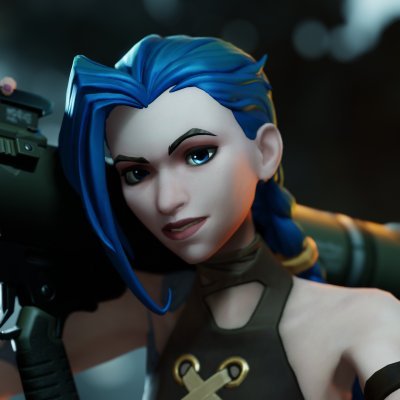
2 MORE MINI SEASON TEASERS!
(via @KATARO333 & @SpriteGardenG)


Ahead of the Ukraine Recovery Conference, Kyivstar CEO Oleksandr Komarov joined a European Business Association panel to make the case for Ukraine as an investment-ready market for global capital.
As the first Ukrainian company to list its shares on a US stock exchange, Kyivstar has shown that global investors will back Ukrainian business. Its growth story goes beyond connectivity, spanning a digital ecosystem that includes ride-hailing through Uklon, digital health through Helsi and as well as other services.
Oleksandr said that encouraging signs in governance and transparency are emerging, and that further progress on rule of law and gradual liberalization of capital movement has the potential to unlock larger investment flows. Through its "Invest in Ukraine NOW!" initiative, Kyivstar continues to tell Ukraine's story to the world.
@TwiyKyivstar
Show more


Thank’s for my xrp bonus
@NoneStronghold @PandiSibu @titojonathan_ @Mint__Ninja @MuckAboutFC @jamesdempsey96 @Inko94330383 @SerdarSErdar319 @Azemos3 @Exe______ @arunkenz @serkangezen10 @Arslanwattoo35 @rdeet @waterbe40131307 @lolaperola42 @Kotaosu02
Show more

Miyu Tomita defended the humor in Even the Student Council Has Its Holes! after criticism of its erotic scenes.
The voice actress for Komaro Michinoku told Animate the series’ racy jokes can be exaggerated but never feel vulgar.
From her perspective as a woman, she said they are woven in so naturally that they often do not register as that kind of joke.
Tomita added that the show balances those moments with touching episodes, and that her raspy take on Komaro, initially a worry, ended up one of the character’s most liked traits.
Show more


NEXT MINI SEASON's OFFICIAL TEASERS
"Have you seen the treasure? Join the hunt"
Seems to be an Anime Pirates Mini-Season, and Luffy to be the Captain - Spotted Spain (Madrid) by @KATARO333
Show more
