Search results for Moon_in_the_Ocean
Moon_in_the_Ocean community
One keyword maps to one global community path.
People
Not Found
Tweets including Moon_in_the_Ocean

Elon Musk built a second internet above the first one.
Nobody asked him to.
Thousands of satellites orbit at 550 kilometers. Moving at 25 times the speed of sound. Talking to each other through lasers in the vacuum of space.
Musk: “Thousands of satellites providing low latency, high-speed internet throughout the world.”
Before Starlink, satellite internet lived at 36,000 kilometers. Geostationary orbit. Signals traveling a tenth of the way to the moon before bouncing back. The lag made it barely functional.
Musk dropped the altitude by 98%.
One decision rewrote the physics of an entire industry.
But the altitude wasn’t the real play.
Musk: “There are laser links between the satellites. It forms a laser mesh. The satellites can communicate between each other and provide connectivity even if the cables are cut.”
Every internet connection you’ve ever used runs through cables. Fiber optic lines buried in soil. Dragged across ocean floors. Threaded through chokepoints that every military maps before anything else.
A single anchor drop can black out a country. An earthquake can sever a continent.
The entire digital world hangs from threads in the mud.
Musk built a network that doesn’t touch the ground.
No cables. No trenches. No ocean floor. No single point of failure.
A constellation of machines whispering to each other through light at the edge of the atmosphere.
The men who tried before him weren’t fools. Gates backed Teledesic at the height of Microsoft’s power. Motorola built Iridium with the best engineers alive.
Both paid someone else to reach orbit.
Both went to zero.
Musk owned the rocket.
SpaceX made launch reusable. Built the satellites in-house. Flew them on its own rockets. Owned every inch of the chain from factory floor to orbit.
That isn’t a cost advantage.
It’s a moat no one can cross without first building a rocket company from scratch.
Starlink passed 10 million subscribers as a side project. Every telecom executive on Earth watched it happen. Not one of them can explain the architecture underneath.
They think he built a better satellite company.
He built the only network that survives when the ground gives out.
And the ground always gives out.
Show more




🌝Full Moon Festival Greetings
Under the autumn sky, the full moon rises, and the Full Moon Festival is here.
To celebrate this special festival, the BrownDust2 bunnies have been busy preparing delicious treats!
Celia and Morpeah are pounding rice cakes, while Loen greets you with freshly steamed goodies.
Eclipse added a dash of flavor with a sip of rice wine!
Thank you, as always, for your amazing support and love.
We’ll continue doing our best to bring you even more joy and adventure.
May this Full Moon Festival fill your heart, just like the glowing moon in the sky!
With love,
The BrownDust2 Team
Show more


The countdown begins for Artemis II. For the first time since the end of Apollo in the 1970s, NASA will send four humans beyond low Earth orbit, slingshotting around the moon in a critical test of what’s next for human exploration. 🔗
Show more


Elon Musk: "I think if we operate with extreme urgency, then we have a chance of making life multi-planetary. It’s still just a chance, not for sure. If we don’t act with extreme urgency, that chance is probably zero
The rate of innovation is not going to be constant; it’s either going to increase or it’s going to slow down. If you look at American access to space with a crew, we were able to go to the moon in ’69. Then with the Space Shuttle, we could only go to low Earth orbit. Then the Space Shuttle retired, and for almost a decade, America had no access to space with people
So this is a pretty bad trend, it's trending to zero. We need a very strong trend in the other direction in order to have any chance whatsoever of making life multiplanetary. So that's the reason for the extreme sense of urgency."
Show more


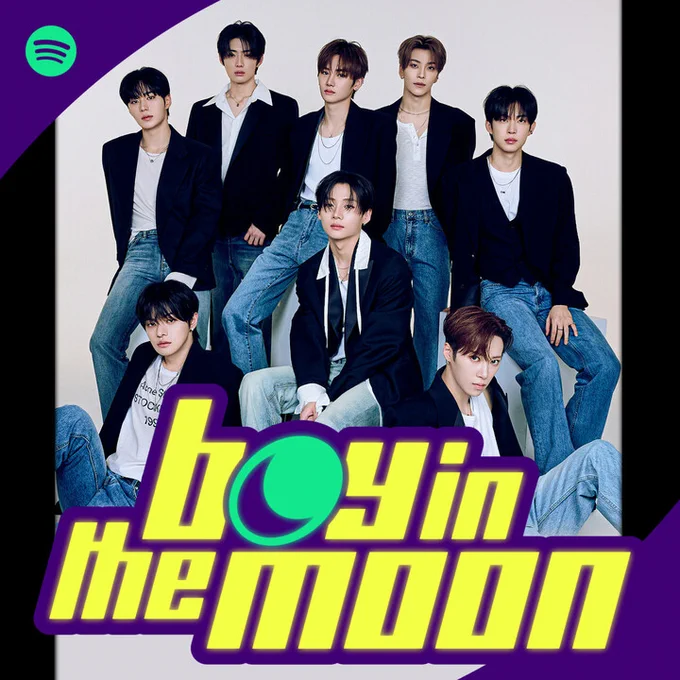
ENHYPEN is featured on the cover of @SpotifyJP "Boy in the Moon" Playlist Give 'Loose' a listen on @Spotify
🎧
🫠
#EN_Loose#
Show more


‘ddok ddok ddok’ on the cover of Spotify’s Boy in the Moon playlist 🌙✨
Thank you for the support @SpotifyKR @Spotify !
🔗
#BOYNEXTDOOR# #보이넥스트도어# #BND#
#똑똑똑# #HOME#
Show more


ALPHA DRIVE ONE is on the cover of Spotify’s [Boy in the Moon] Playlist!
🏎
#ALPHADRIVEONE# #ALD1#
#알파드라이브원#
#FORMULA# #ALPHADRIVEONE_FORMULA#
@SpotifyKR @SpotifyKpop
Show more

A Trip to the Planets: Willy Ley Narrates the Solar System in a 1963 Educational Film
In 1963, as the Space Race gained momentum, a short educational film brought the solar system into American classrooms.
A Trip to the Planets, a 15-minute production from Encyclopedia Britannica Films, was narrated by Willy Ley.
I was in an AV department at my school when I first discovered this film and watched it frequently. It helped cement my love for educational films and emotional guidance films. Today I own one of the largest private collections with 100s of films, many never digitized.
This film used animation and model photography to guide students on an imaginative journey through the planets, their sizes, distances, and the forces that govern the solar system.
Willy Ley was already a leading voice in popular science by this time. A pioneer from Germany’s early rocketry movement and consultant on the 1929 film Woman in the Moon, he had written influential books such as The Conquest of Space with Chesley Bonestell.
Ley in more recent history is labeled a collaborative part of the German government during World War II, he was not.
He appeared in Disney’s “Man in Space” television specials and wrote regularly for science fiction magazines.
His calm, knowledgeable style made complex topics accessible, which is why the film makers chose him to narrate this classroom short.
The film presented basic astronomy concepts in an engaging way. It explained planetary orbits, relative sizes and distances from the Sun, and the role of asteroids and meteors.
Animation illustrated gravitational forces and motion, while models helped viewers picture the planets themselves. The “trip” framing turned a science lesson into a visual adventure suitable for elementary and middle school students. It served both as an introduction for beginners and a refresher for those who had studied the topic before.
This production arrived at a key moment. After Sputnik and President Kennedy’s Moon goal, schools needed materials that built scientific literacy and excitement.
A Trip to the Planets fit perfectly into astronomy units. Ley’s narration added warmth and authority, making the solar system feel real and reachable rather than abstract.
Today the film is largely forgotten. Physical copies are rare, and online versions have mostly disappeared. Yet it played a quiet but real role in science education.
Before spacecraft sent back detailed images of other worlds, films like this helped students visualize the planets through careful models and clear explanation.
It carried forward the same spirit Ley had promoted for decades: that understanding the solar system was the first step toward exploring it.
A Trip to the Planets captures a specific era in science communication. It helped an entire generation look upward with curiosity and confidence.
In an age of high-resolution mission imagery, the film remains a reminder of how far we have come and how we first learned to see the planets clearly.
It also shows how far we have drifted from teaching wonderment and curiosity. Nothing has replaced these films and this path has been abandoned.
Show more
