Search results for Neuroscience
Neuroscience community
One keyword maps to one global community path.
People
Not Found
Tweets including Neuroscience

As neuroscience informs better #FutureWork# office design, @ryanjmullenix says employers should create spaces with varying noise, energy and interaction levels at #WSJFutureFest#


NEURALINK RIVAL PRECISION NEUROSCIENCE RAISES $250 MILLION
Brain-computer interface startup Precision Neuroscience closed an oversubscribed $250M Series D, co-led by Bill Ackman’s Pershing Square and the Ackman Oxman Institute.
The round brings total funding to ~$430M.
Precision, co-founded by former Neuralink co-founder Ben Rapoport, is developing its Layer 7 brain interface to let people with paralysis control digital devices using their thoughts.
The company has now completed 100+ patient procedures across 18 major medical centers.
Show more


Physics-based models bridge neuroscience and robotics! 🧠
Researchers from @CarnegieMellon University from NeuroMechatronics Lab started with a biomechanics model initially developed at West Virginia University to understand how coordinated muscle forces produce movement.
The model examines forces and mechanics at the mechanical level, how neurons activate muscles, muscles generate forces, and forces move limbs.
They used @MathWorks @MATLAB's Simscape Multibody to build and simulate these mechanical systems.
Extended the approach to lower limbs. Investigated motor pathologies. Asked how biological neural networks organize themselves to perform sensorimotor computations, leading to work on Artificial Physics Engines.
The human body is a mechanical system governed by physics, but movement is controlled through interacting layers. Neurons coordinate muscles. Muscles generate forces. Forces move limbs. To understand movement, you need to model the entire chain from neural activity to motion.
Applied the same thinking to robotic control. Developed new neural network architectures for predicting and controlling motion in complex robotic systems. Physics-based simulations using Simscape Multibody train and evaluate these networks, providing the mechanical environments needed to test how neural controllers actually move real systems.
EMG (electromyography) captures muscle activity signals. Decode those signals and you get intuitive control interfaces.
A participant with spinal cord injury can use EMG from their arms to control a virtual hand, visualizing intended movement even when the limbs won't respond.
The same approach extends to exoskeletal systems. EMG-based remote control. Movement intention becomes action through a device instead of paralyzed limbs.
🔗 That’s an awesome project, read more about it here:
~~
♻️ Join the weekly robotics newsletter, and never miss any news →
Show more


BILL ACKMAN INVESTED IN NEW PRECISION NEUROSCIENCE ROUND: NYT

A case report published in Frontiers in Neuroscience describes something that, by everything we thought we knew about Alzheimer's, should not have been possible.
An 80-year-old woman. Ten years of Alzheimer's. Five years reduced to single syllables. Chronic incontinence. Dependent on caregivers for nearly everything. This is the stage of the disease we consider irreversible — the lights, we assume, are simply gone.
Her family gave her a single high dose of psilocybin — 5 grams of mushrooms.
She slept for about 19 hours. Then she woke up.
And she began to talk. For hours. She told autobiographical stories. She recalled memories no one had heard from her in years. She recognized family members. She cracked jokes. Her mobility, her communication, her bladder control — functions lost for years — temporarily returned.
Then, over the following days, it faded again.
Let me be clear about what this is and isn't, because a story this extraordinary demands honesty. This is a single case report. One patient. Not a trial. It was not placebo-controlled. We cannot rule out coincidence or other factors. Nobody should try this — high-dose psilocybin in a frail 80-year-old is genuinely dangerous, and it is not a treatment. The authors themselves call for rigorous studies.
But here is why it stops me cold, and why it matters far beyond one woman.
We have long assumed advanced Alzheimer's represents permanent destruction — that the abilities are gone because the neurons that held them are gone. This case suggests something different and profound: that some of those capacities may not be destroyed, but disconnected. Locked behind broken network connectivity that psilocybin — which acts on serotonin receptors, drives neuroplasticity, and temporarily reorganizes how brain regions talk to each other — briefly reopened.
The person was still in there. The door was just shut.
I've written about this same pattern elsewhere in medicine — psychedelics unlocking function that disease had hidden rather than erased. The recurring theme of this era: what we called permanent may sometimes be dormant.
This one case proves nothing. It does something arguably more important. It asks a question we didn't know we were allowed to ask:
How much of an aging, failing brain is truly gone —
and how much is simply waiting to be switched back on?
Show more


The Asia-Pacific Computational and Cognitive Neuroscience Conference (#APCCN2026#) is coming soon! 📅27–28 July
📌MD6 LT35, NUS
✅FREE registration is required
Come and join us! You can check the conference schedule here:
@HelenJuanZhou
Show more


Eli Lilly is expanding heavily into neuroscience with a deal valued at $2.8 billion upfront to acquire AtaiBeckley. The deal could reach up to $3.8 billion if milestones are met.
Show more

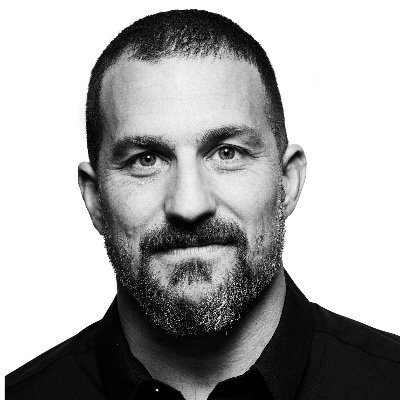
Dr Ralph Adolphs, neuroscience professor from Caltech and one of the world’s experts on biology of emotion and emotion regulation is a daily practitioner of deliberate cold exposure… here is why.
Show more


It is interesting to think about machine consciousness but I feel we need much more neuroscience and neurotechnology to make progress in consciousness research. Currently we are very limited in empirical work.
Show more

Bía Sleep is backed by sleep experts and built on 40 years of neuroscience. By using real-time neurofeedback Bía helps calm a racing mind, optimize deep sleep, and wake you up strong and ready to take on the day.
Rise and Shine with Bía 🌞
Show more
