Search results for OutdoorRecreation
OutdoorRecreation community
One keyword maps to one global community path.
People
Not Found
Tweets including OutdoorRecreation

Thank you @SteveDaines, @SenAngusKing, @MartinHeinrich and @SenMikeLee for advancing the America the Beautiful Act. Continued investment in the Legacy Restoration Fund means stronger outdoor recreation infrastructure and better access for all.
#RecreationalBoating# #AmericaTheBeautifulAct# #LegacyRestorationFund# #OutdoorRecreation# #NMMA#
Show more

🌊 Clearer information means better access to America’s public waters.
NMMA applauds passage of the bipartisan MAPOceans Act, which will modernize federal marine data and make information about access, navigation, fishing regulations and waterway restrictions easier for boaters and anglers to find and use. 🚤🎣
The legislation also advances NMMA’s Waterways Access Initiative to protect and improve Americans’ ability to enjoy the nation’s public waters.
👏 NMMA thanks Senators Ted Cruz and Angus King and Representatives Russell Fry and Mike Levin for championing the legislation.
Learn more at
#MAPOceans# #BoatingAccess# #RecreationalBoating# #OutdoorRecreation#
Show more

Access to the water starts with the infrastructure that makes it possible.
With a $40 billion maintenance backlog across federal lands, Congress must act to protect and expand access to the places where millions of Americans boat, fish and enjoy the outdoors.
NMMA urges the recreational boating community to contact Congress today and call for passage of the bipartisan America the Beautiful Act. Together, we can strengthen recreation infrastructure, support local economies and preserve reliable access to public lands and waters for generations to come.
Make your voice heard Boating United :
#BoatingAccess# #OutdoorRecreation# #MarineIndustry#
Show more

Access to our nation’s waterways doesn’t happen by accident. It takes ongoing collaboration between industry leaders, policymakers and regulators to protect and expand recreational boating opportunities.
This week at the California Boating Congress in Sacramento, discussions focused on some of the most pressing issues facing boating in the state, including:
⚓ Protecting boating access
🌊 Combating aquatic invasive species like the golden mussel
📊 Understanding the recreational boating industry’s economic impact
🤝 Strengthening collaboration between industry and government
NMMA also shared insights on the current state of the recreational boating industry and California’s significant economic footprint, which generates an estimated $17.3 billion annually.
#Boating# #RecreationalBoating# #MarineIndustry# #Advocacy# #BoatingAccess# #PublicPolicy# #California# #OutdoorRecreation#
Show more

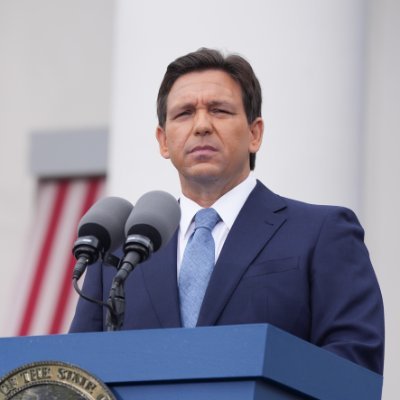
Florida’s freshwater springs are an important part of our natural heritage. They support wildlife, attract visitors, and offer great opportunities for outdoor recreation year-round.
That’s why I was proud to announce $100 million for a total of 45 projects to restore Florida’s springsheds and expand our state’s clean water supply. These strategic investments will build on the progress we’ve made in protecting our natural resources and improving water quality in communities across Florida, so that we can leave this state to God better than we found it.
Show more

Florida’s per-capita tax burden is one of the lowest in the nation.
Since I became governor, we have enacted billions of dollars in tax cuts. This year’s hunting, fishing and camping sales tax holiday—ongoing through December 31—will provide Floridians with even more tax relief. We are proud to protect Floridians’ Second Amendment rights while helping hunters, anglers, and sportsmen keep more of their hard-earned money.
Visit for a full list of items you can purchase tax-free for all your outdoor recreation needs.
Show more


Some of life’s best memories are made adventuring with family and friends outdoors. As we head into the summer season and recognize Utah’s first Adventure Safe Day, it’s a good reminder that preparation, responsibility, and thoughtfulness help make every outdoor recreation opportunity fun and safe.
Show more

I was glad to speak at the Florida Restaurant and Lodging Association’s Fall Board Meeting & Gala today in Clearwater. Hospitality is essential to our state’s economy, and since I became governor, Florida has hit record after record in tourism.
@FRLAnews has been a great partner to the State of Florida, especially when it comes to disaster response. Since Hurricane Isaias made landfall, FRLA has assisted with feeding displaced Floridians and encouraged more than 76,000 lodging establishments to relax pet policies and waive pet fees for evacuees. FRLA also secured lodging for strike teams that are canvassing affected areas to help small businesses reopen as soon as possible.
Today, I was proud to announce that @VISITFLORIDA is awarding $1 million to the Northwest Florida Tourism Council to resume their successful marketing campaign following Hurricane Isaias. This investment comes from a dedicated disaster recovery budget that is set aside to help Florida’s tourism industry. The returns are proven to be great: For every dollar invested in this strategic tourism marketing effort in 2024-2025, Northwest Florida generated $58.95 in total economic impact.
Recovery efforts are still underway, and the safety of residents and visitors remains our top priority. We will coordinate with local partners to ensure that the marketing campaign timeline reflects their readiness to welcome tourists to enjoy Northwest Florida’s world-class beaches, outdoor recreation, and natural beauty.
Show more


A Simple Hike Turns Terrifying for a Hawaii Couple and Their 100-Pound Dog
What began as an ordinary outing on one of Oahu’s popular trails quickly became a test of endurance, resourcefulness, and unexpected kindness for a Hawaii couple and their large dog. JD and Aimee set out on the Waimano Trail expecting a straightforward day hike. Instead, they found themselves lost after dark, without food, water, cell service, or a charged phone—and with their 100-pound dog, Smokey, so badly injured he could no longer walk on his own.
The Waimano Trail winds through dense forest and offers scenic views, but like many Hawaiian trails, it can become disorienting once the light fades. JD and Aimee had not anticipated how quickly evening would close in or how the terrain would challenge their pet. Smokey’s paws suffered serious damage during the outing—cuts and abrasions severe enough that every step became painful. The couple tried everything they could think of. JD attempted to carry the heavy dog himself, but Smokey’s size made it impossible to manage for long. Hours passed with no other hikers in sight. Their phone battery had already died, and there was no signal anyway. Hunger, thirst, and growing worry settled in as the night stretched on.
Just when the situation felt most bleak, help arrived in the form of 12-year-old David King and his mother, Christine. The pair had just completed a long hike of their own. David was working on requirements for a Boy Scout merit badge, and the outing had already left him tired—he had played a soccer game earlier that day. Still, when they came upon the stranded couple and saw Smokey’s condition, they stopped without hesitation.
The injured paws told the story clearly: this dog needed help getting out. JD explained the failed attempts to carry Smokey. David, drawing on knowledge passed down from his older brother, an Eagle Scout, suggested an idea that would prove decisive. They would build a simple stretcher. Using two sturdy tree branches as poles and their own shirts as the supporting surface, the group improvised a carrier. Christine was initially doubtful that the makeshift device would hold a dog of Smokey’s weight, but Smokey climbed onto it without resistance. The plan worked.
What followed was a slow, exhausting three-mile journey back to the trailhead. JD, Aimee, David, and Christine took turns carrying the stretcher. Whenever Smokey gathered enough strength, he walked short stretches on his own, giving the human rescuers brief rests. David, already fatigued from the soccer game and the earlier hike, continued to pitch in without complaint. The group moved carefully through the remaining darkness, focused on getting everyone—especially the injured dog—to safety.
At last they reached the trailhead. Smokey received prompt medical attention for his paws and, in time, recovered fully. The physical ordeal ended, but the experience left a lasting impression on everyone involved.
In the days that followed, David reflected on the encounter with a maturity beyond his years. He encouraged other hikers to prepare more carefully: bring sufficient food and water, study the route in advance, and respect how quickly conditions can change on island trails. Helping the couple, he said, simply felt good. Knowing he had been able to make a difference when someone needed it most gave him a quiet sense of satisfaction.
The story highlights several quiet truths about outdoor recreation in Hawaii. Trails that feel manageable in daylight can become hazardous after sunset. Dogs, even experienced ones, can suffer injuries that leave owners with limited options. And sometimes the most effective help comes from people who happen to be in the right place at the right time—armed not with specialized gear, but with practical knowledge and willingness.
David’s quick thinking, rooted in Scout training and family example, turned a potentially dangerous night into a successful rescue. The improvised stretcher of branches and shirts was simple, yet it allowed four people to share a burden that one person alone could not manage. Christine’s initial skepticism gave way to practical support once the idea proved workable. JD and Aimee’s persistence in keeping Smokey moving, even in short bursts, helped conserve everyone’s energy.
For David, the episode became more than a merit-badge hike. It became a real-world application of the values Scouting emphasizes: preparedness, resourcefulness, and service to others. For the couple, it was a reminder of how vulnerable hikers can become when plans go awry and how grateful they can feel when strangers choose to help rather than walk past.
Smokey’s recovery closed the most immediate chapter of the ordeal. The dog that could not walk three miles on injured paws was eventually able to return to normal activity. The people who carried him, however, carried something else as well: the knowledge that a frightening night on the Waimano Trail had ended not in tragedy, but in cooperation and care.
In the end, a hike that was supposed to be simple became a story of resilience. A tired 12-year-old Scout, a supportive mother, a determined couple, and an injured dog found their way out together—one careful step, and one shared stretch of trail, at a time.
Show more
