Search results for Peace_Tree
Peace_Tree community
One keyword maps to one global community path.
People
Not Found
Tweets including Peace_Tree

Last night I planted an olive tree at Gracie Mansion with Palestinian families from Gaza.
May peace be our future.

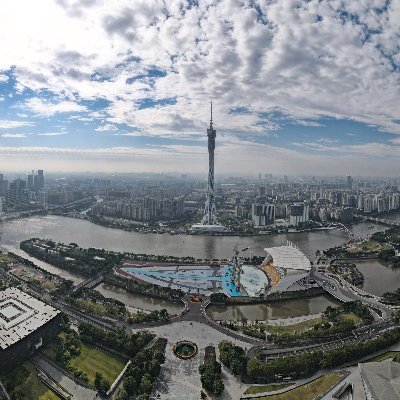
On June 15th, wind and morning light, birds and trees, with the splendor of summer flowers and the joy of cicadas chirping, slowly spread out. A new week, may you go as your heart wills, and be at peace with whatever comes your way.
Show more


🍰 BrownDust2 | Olstein's Birthday
🎉 Happy birthday to Olstein, the Hermit Fiend Scholar who loves cats more than fiends! 🎉
"See these claw marks on the tree? Looks like the neighborhood cats were stretching here.
If you follow the fur in this grass, you’ll find the rest of the pride...
Oh? This parchment—is it for me?
A birthday present… I’ll gladly accept it.
It’s perfect—I've been needing more pages for my cat... ah, fiend research notes."
It’s Olstein’s birthday!
He may play the serious scholar, but his eyes light up at every sign of a cat—no matter how much he tries to hide it.
Just for today, let’s let him enjoy his secret hobby in peace.
Send Olstein a birthday wish—your kind words will be the perfect start to his new parchment!
#HappyBirthday# #Olstein#
Show more


Scissors hand 1,300 years ago:✌️
In 2019, archaeologists found the Tang Dynasty tomb of Guo Xing in Taiyuan, Shanxi.
Inside the murals, several figures are clearly throwing the exact “scissors hand” we use in photos today: At least four of the eight “figures under trees” painted on the coffin platform strike the pose.
But here’s the twist: experts say it probably did NOT mean “victory” or “peace.” That modern meaning came much later—the victory sign only became famous in WWII, and the peace sign took off in the 1960s.
Archaeologist Pei Jingrong says some scholars think the Tang gesture was a blessing, but there’s still no agreed explanation.
Show more


"ZENONIA 2: The Lost Memories" has been announced to receive a Steam port by Com2us Holdings.
Story: After Regret sealed away Ladon, who had sought to destroy the world, four warriors became the "Four Holies" and stood guard over the seal. Their efforts restored peace, but the desires buried in the human heart soon began to stir again.
Seeking to purify humanity, the World Tree scattered its petals across the land. That night, everyone lost their memories. In time, that night came to be known as the "Holy Night."
With their memories gone, monsters grew stronger, and the world fell into chaos once more.
Zavkiel, the Great Guardian, says that gathering the four "Tear Crystals" that fell from the World Tree on the Holy Night can restore the lost memories and drive back the monsters.
Four heroes, each with a different past and purpose, set out at Zavkiel’s request.
As the pieces of memory fall back into place, forgotten truths—and the source of the ominous presence spreading across the world—begin to reveal themselves.
#ZENONIA# #ZENONIA2#
Show more


The wonderful use of wormwood Dragon Boat Festival green wormwood, green leaves carry the breeze, hang the house to avoid disasters and evil, and store a light fragrance in the bag. It is not only a unique plant and tree custom in summer, but also a thousand-year-old custom rooted in the folk. It allows us to isolate the heat with the fragrance of plants and trees, and carries the promise of peace with the four seasons with a small incense bag.#DragonBoatFestival# #Wormwood#
Show more


CIA Director Visit to Russia, Reasons, and Forecast
(General Access)
ICOD-1110, 08/28/2026
BLUF:
On Tuesday, August 25, 2026, CIA Director John Ratcliffe made a surprise visit to Russia to meet with his Russian counterpart, Russian Foreign Intelligence Service Director Sergei Naryshkin. While Russian news and official outlets characterized the meeting as 'contacts' with their U.S. intelligence counterparts, declining to elaborate on what was said, amidst increased Russian hybrid and direct actions against European nations, U.S. news outlets were told by U.S. and European officials that the meeting was set to warn Russia against attacking a NATO partner, urge them to reenter Russo-Ukrainian peace talks, and distance themselves from Iran. This has prompted many to double down on reports that Russia may have been planning a direct military action against a NATO member state in the near term.
Key Points:
- U.S. President Donald J. Trump personally dispatched Director Ratcliffe to Russia, keeping both his counterparts in Europe and some top U.S. officials and administration aides in the dark on the matter. This caused a general scramble of diplomatic communications and wider speculation when Ratcliffe's C-17 was seen flying into Russia.
- Intelligence suggested that Russia may have been preparing a direct, albeit limited, action against ba NATO member state.
- Two primary rundowns of what was communicated to Russia have come out:
• That NATO Article 5 commitments remain robust (in effect warning Russia against attacking a NATO member state), that Russo-Ukrainian peace/ceasefire processes should be restarted, and that Russia must distance itself from Iran.
• That the primary purpose of the meeting was to communicate Russia's inability to decisively win a largely stalemated war with Ukraine. (various casualty, industry, and other metrics were reportedly cited.)
- Hybrid actions indirectly attributed to the Russians and/or directly traced to them have increased notably in the past months with a number of notable incidents, including a potential clandestine sabotage mission against a German military facility, stopped by Serbian authorities; cyberwarfare activities against France; and numerous drones shot down and drone impacts in both Romania and the Baltics.
- ISR was increasingly active around the Russian exclave of Kaliningrad in the days/week leading up to the visit.
Analyst Comment
Additional reports that Russian President Vladimir Putin may be pushed to execute a limited tactical nuclear strike have been factored into this assessment but do not weigh heavily on our I&W tree.
Assessment:
The aforementioned dynamic, coupled with the largely stalemated battlefield dynamic of the ongoing Russo-Ukrainian War, has led some to believe that, seeking to implement an 'escalate to deescalate' strategy, Russian President Vladimir Putin may be looking to escalate against NATO as a means to cause a fracture within NATO and possibly expose NATO's Article 5 defense clause as largely a bluff, which would in turn aid in his primary venture of the war in Ukraine. As mentioned in the "Key Points" portion of this assessment, there are two prevailing characterizations of the intelligence meeting on the 25th, but that does not mean both cannot be true at the same time, as the Trump administration has been keen to publicly isolate Iran economically and diplomatically and realize a U.S.-brokered settlement of the Russo-Ukrainian War, while simultaneously, Russian actions against NATO member states have been increasing. Additionally, the meeting this past week with the policy heads of NATO member states, including U.S. Under Secretary of War for Policy Elbridge Colby, where key new and to-be-renewed NATO force model and policy frameworks were set to be discussed, also likely plays some part in the timing of the meeting.
Key Judgement:
- It's currently highly unlikely that Russia is seeking to use tactical nuclear weapons on the battlefield in Ukraine in the near-term, as Russian tactical nuclear use, from a doctrinal perspective, is meant to forestall a significant collapse of Russian forces on the battlefield, something that is not currently happening.
- A Russian attack on a NATO member state is currently unlikely in the near-term, as Russian readiness is not currently at a level to withstand the potential NATO response should Article 5 be implemented. Additionally, per Western news outlets, Baltic intelligence agencies currently assess the likelihood of such a move by Russia against them in the near-term as low.
- As assessed in previous assessments, barring significant concessions, it's still unlikely that Russian president Vladimir Putin will seriously reenter talks to end the ongoing Russo-Ukrainian war.
- Barring a more robust European response to Russian hybrid actions, it's unlikely that a warning alone, even that from the CIA director, will avert Russia from its current course of action as it relates to grey-zone operations against nations that support Ukraine.
END
Show more


THE PREACHER WHO SURVIVED BEING SKINNED ALIVE. THE MOUNTAINS FINALLY TOOK HIM.
They sewed him into a wet animal skin and left him in the sun to die slowly as it tightened around his body. He survived. They packed cloth full of scorpions and leeches against his skin. He survived that too. They tied him to a tree overnight as bait for wild animals in the mountains. He survived. Then one spring morning in 1929, he walked into the Himalayas alone, and nobody ever saw him again.
Sundar Singh was born in 1889 into a wealthy, landowning Sikh family in Punjab, India. His mother took him weekly to sit at the feet of a Hindu holy man in the forest, hoping to raise a devoted son. When she died, Sundar was only fourteen, and grief turned to rage. He hated the missionaries in his town, mocked their faith, and one day bought a Bible and burned it page by page in front of his friends to prove his contempt.
The peace he expected never came. Weeks later, hollowed out by despair, he decided he would end his life unless the "true God," whoever that was, showed up before dawn. That night, he said, a light filled his room and he saw Jesus Christ standing before him, asking why he had persecuted Him. By morning, sixteen-year-old Sundar Singh was a Christian.
His family's response was immediate and brutal. His father disowned him. His own brother tried to poison him. The community that had once respected his family now treated him as a traitor. Rather than retreat, Sundar made a decision that stunned everyone who knew him: he put on the plain yellow robe of a Hindu holy man and chose to live as a barefoot, homeless preacher of Christ, walking from village to village with no possessions, no salary, and no home to return to.
He became known across northern India as "the apostle with the bleeding feet." His robe offered no protection against the snow. He was stoned. He was arrested. He once slept in a roadside hut and woke to find a cobra had shared the space with him through the night.
But it was Tibet that called to him most. Closed to missionaries, fiercely Buddhist, and hostile to any foreign faith, Tibet had defeated nearly every attempt to bring the gospel across its border. Sundar Singh crossed it anyway, for the first time at just nineteen years old, and then returned almost every year that followed.
The persecution there went far beyond stones. In the Tibetan town of Rasar, he was arrested, tried, and sentenced to death for preaching. His executioners sewed him into a freshly skinned, still-wet yak hide and left him in the open sun, knowing the hide would shrink as it dried, crushing the person inside. Villagers later said he was found alive, the yak skin split open, with no explanation anyone could give. On another occasion, he was thrown into a dry well filled with the remains of previous prisoners and left to die in the dark. Two nights later, he said, a rope was lowered down to him and he was pulled out, though he never saw who had done it. Other accounts describe him bound to a tree overnight in wolf territory, packed in cloth filled with stinging insects, and other things few missionaries anywhere in history have endured and lived to describe.
He kept going back.
By his thirties, Sundar Singh had preached across India, Tibet, Nepal, and eventually Europe, America, Australia, and beyond, drawing enormous crowds wherever he spoke. Yet the very hardship of his Tibet journeys had worn his body down long before old age had any right to. Friends who saw him in his last years described him as prematurely aged, frail, and exhausted in a way that alarmed them.
In April 1929, against the advice of nearly everyone close to him, Sundar Singh set out on what he intended to be one more journey into Tibet. He reached a small town called Kalka at the foot of the Himalayas, a worn, aging figure in a yellow robe among the pilgrims beginning their own climbs into the mountains.
He was never seen again.
No body was ever found. No grave exists. No witness ever came forward with a final account. Whether he collapsed from exhaustion on a mountain path, was killed by those still hostile to his preaching, or simply reached the high mountains he loved and was lost to the snow, no one has ever been able to say. Nearly a century later, it remains one of the enduring unsolved mysteries in modern mission history.
A man who survived being sewn alive into an animal skin, left for dead in a well of corpses, and bound out as bait for wolves, was finally taken, quietly and without a trace, by the very mountains that had always called him home.
Show more


In May 1962, the only Japanese pilot who ever bombed the United States mainland during World War II stepped off a plane in Brookings, Oregon, with a 400-year-old samurai sword hidden inside his suitcase.
In September 1942, Imperial Japanese Navy pilot Nobuo Fujita had launched from submarine I-25 in a tiny floatplane and dropped incendiary bombs on the forests outside Brookings. Nobody was hurt, and rain put the small fires out.
Twenty years later, the young Americans of the Brookings Jaycees, many of them U.S. combat veterans, invited their former enemy to their town Azalea Festival.
Fujita packed his family's 400-year-old katana for a terrifying reason. He silently vowed that if angry Americans pelted him with rotten eggs, he would draw that ancestral blade and commit traditional seppuku right there to apologize with his life.
Instead, American World War II veterans stepped forward, looked him in the eye, and shook his hand with warm smiles.
Moved to tears by the grace of small-town Americans, Fujita handed over the 400-year-old sword that had guarded his family for sixteen generations as a pledge of eternal peace.
When a timber recession hit Brookings in 1985, Fujita paid 15,000 dollars from his own pocket to fly three Brookings high school students to Japan. And when he died at age eighty-five, his daughter buried part of his ashes beneath an Oregon redwood tree.
Only a truly great nation can disarm a samurai with an outstretched hand.
Show more


This is an impressive newspaper interview by @WilliamClouston, the SDP's candidate in Clacton. William and I would probably disagree on some of the economics, but on everything else he is spot on. Intelligent, sober, grown-up politics.
Why would you be a good MP to the people of Clacton?
The Social Democratic Party (SDP), is the only national political party with a developed policy platform standing against Reform in Clacton.
We’re the party of the patriotic state, which is exactly what Clacton’s electorate demands: we support strong control of the borders and national pride, while also believing in a robust government that nationalises utilities, invests in infrastructure, and brings industry back to Britain.
Whereas Reform lacks political direction, we are crystal clear on our plans for government and want to fix the long-term, structural challenges facing our country: migration, under-investment, a degraded public realm, and deindustrialisation.
What are the main issues Clacton faces?
The caricature we see of Clacton in the press is completely inaccurate – both in terms of the idea of it being economically destitute or socially atomised, and in terms of the idea of there being just one “Clacton”. Clacton-on-Sea is the biggest town in the constituency at 55,500 people, but there are another 30,000 people living in adjacent towns like Frinton-on-Sea, Walton-on-the-Naze, and Jaywick. These are all very distinct towns, with their own needs and issues.
In terms of issues common to the whole constituency, I think there’s an underinvestment in the public realm, poor economic connectivity with the rest of the country, and a shortage of consistent, quality social care.
Firstly, on the public realm, there’s some real work to be done on making sure public spaces are consistently well-maintained and orderly. The landscapes of the area is stunning, and it has a lot of beautiful housing stock. However, it’s undermined by the road and streets they often lead on to. Often there’s not been too much thought put into the basics like planting trees on the streets for shade and beatification, or on properly planning the road network out to stop congestion. These are subtle things, but for a tourism-heavy constituency it’s critical that Clacton gets this right.
Secondly, on economic connectivity, the town is really underserved in terms of road and rail links. If you want to travel to or from Clacton by a main road, your only option is through the A12-A120 junction near Colchester- that means a route that’s usually riddled with delays. On rail, all but a couple of trains a day are the same hourly service to London Liverpool Street. This lack of options makes Clacton too inconvenient for many tourists and commuters – the first resulting in reduced income for the hospitality firms the constituency relies on, and the second resulting in a real shortage of dentists, doctors, and nurses for many of Clacton’s residents.
The lack of dentists, doctors, nurses, and carers has been told to me consistently on the street and the doorstep during this campaign. Social care is particularly worrying to many people, given the patchiness in quality and coverage that’s available – Clacton’s would be a great beneficiary for one of the SDP’s proposed policies, a National Care Service that guarantees national resourcing for comprehensive social care.
How would you sum up your campaign in three words?
“You already agree.”
The SDP’s mix of economic and social policies is pretty much bang-on the position of the average Brit. We believe in a strong state that takes on crime and criminals, controls the border, and takes real pride in our country. But we also believe the government must roll up its sleeves and invest in infrastructure, ensure care for the sick and old, and make sure that Britain protects its manufacturing sector and industry.
What do you think of Andy Burnham as PM?
I have no idea what Andy Burnham wants to achieve as PM. He’s not explained what he wants to do in real terms, and only speaks in terms of fuzzy platitudes and folksy PR spin.
I think the Labour party is in a bind, and is incapable of fixing the troubles facing this country. Since 1997, the Migration Observatory has noted that total net migration has stood at 9.5mn people. That’s nearly 1 in 7 of the official population count. Simply put, you can’t have a social democratic state – or a nation-state with a basic sense of a shared culture or trust – if you allow mass migration of this scale to continue. The moment you suggest this, however, you’re met with shrill rage from the Labour backbenches.
Open-border utopianism – and seeming contempt for their own constituents – seems to be a prerequisite for the Parliamentary Labour Party. But another prerequisite is an inability to do basic maths. Government debt is on an unsustainable trajectory, and one of the main drivers of this is an exploding entitlements bill.
In real terms, the amount spent on the state pension per claimant has soared from £6,000 in 1997 to £10,800 in 2024. Spending on disability and incapacity benefit jumped from 1% of GDP in 1991 to over 2.5% of GDP in 2025. As a result, public sector net debt has exploded from 36% of GDP in 2007 to 95% in 2025 – it’s costing us up to £130bn per year just to service the interest of this higher debt, and that’s going to only grow unless we pull down unsustainable spending. But the Labour Party will not hear this, even if you’re suggesting reallocating this spending to things that will generate growth like railways, roads, or power stations.
You can’t govern with such immature, unserious people.
How do you differ from other candidates in Clacton?
We’re the only national party with a developed political programme who are standing in this election, with a full manifesto at the last general election. We also have fully developed green papers on some of the major political topics of our time, like energy or the state of the public finances.
Our main project is to offer real, fully-formed solutions to the challenges facing the country – motivated by our principle that the country should be led by a patriotic state.
What are the main policies you would look to implement if you were the MP for Clacton?
I’m under no illusion: as a single MP, you can’t really do much in a legislative sense in terms of bills passed. And neither can Nigel Farage, given his party currently has only a handful of MPs in the Commons.
My job as MP Clacton would be to champion the policies that the people of Clacton voted for and that are in the SDP manifesto. However, the most important thing as an MP would be to hold the government’s feet to the fire at parliamentary debates, challenging their de facto uncontrolled system of mass migration, failure to invest in infrastructure, spinelessness to our radicalised judiciary, and inability to get the basics right on things like energy, water, and rail.
In terms of particular policies, Clacton stands to benefit significantly from the SDP’s proposed National Care Service: a universal, comprehensive care service that will provide access to acute, nurse-led intermediate, and long-term care. For Clacton, with its larger share of older residents, a National Care Service would offer significant peace of mind for many households.
What’s the best night out in Clacton?
I’ve really enjoyed my meals at the Mangiare Ristorante at Frinton-on-Sea. It’s a great Italian restaurant: the food is fantastic and the team is incredibly friendly. In terms of drinking at the pub, I’ve had a lovely time at the Old Lifeboat House at Clacton-on-Sea.
What would you tell President Trump if you could speak to him directly?
I think he must ask himself what his priorities are and what he wants to achieve from his presidency. The Iran War is one of the worst disasters in American military history, and it happened entirely because of a complete failure by him to look at his intelligence brief or consider how it might impact the rest of his presidency. His failure and flip-flopping on tariffs is another case in point, as was his idiocy around the Greenland Annexation push. Trump seems to just do things because it feels good in the moment for his ego – if I had his ear for a moment, I’d tell him that if he wants any sort of legacy then he must reign this in immediately.
What would your dream role be if you were asked to join the government?
I’m campaigning as leader of the SDP party, so my dream role would be to serve as Prime Minister so we had full latitude to implement our policy platform.
But if the SDP were asked into a coalition, and if the terms were right, then I would probably choose Housing Minister. I’ve enjoyed a forty-year career in town planning and commercial property development, so Housing would allow me to put my expertise to best possible use – and allow me to ideally oversee a proper resurrection of state housebuilding capacity.
If you could change one thing about the UK more broadly, what would it be?
An end to short-termism in public life. Building and maintaining a country is hard, and requires you to think in timeframes beyond a single election – it can take decades for the consequences of a decision to be felt. Mass media and social media both have compressed our timelines down to the order of weeks, days, and hours. Many people in public life aren’t interested in making the country better, but in taking part in a vapid never-ending circus of outrage and “gotchas”. These people must go.
Show more