Search results for SAY_KANNY
SAY_KANNY community
One keyword maps to one global community path.
People
Not Found
Tweets including SAY_KANNY
Wrestling legend Kenny Omega says 'My Hero Academia' is one of the greatest superhero stories ever told
"I would go so far as to say it's one of the greatest final seasons to a series that I've ever seen"
Show more


13 years ago today, Ye's now-iconic Zane Lowe BBC Radio 1 interview was released 🎙️
"If you're a Kanye West fan, you're not a fan of me. You're a fan of yourself."
Fresh off ‘Yeezus,’ Ye spent an hour talking about music, fashion, design, his bigger ambitions and where he saw himself going next, while famously declaring himself “the number one rockstar on the planet.”
Ye also predicted that people would look back at the interview years later and say, “He called that.”
Moments from the interview later became memes, including Ye’s reaction to Lady Gaga being named Polaroid’s creative director 😭
Show more


When a Japanese teenager flies home after a year inside an American family, the program waits twelve months. Then it calls the parents with one question:
"Has your child had any problems readjusting to life in Japan?"
My aunt Tamaki has made that call for twenty-three years.
The parents are supposed to say no.
Almost none of them say no.
There is a little box on her form for the answer. Two lines. In twenty-three years, nobody has stayed inside the box.
Here are a few.
"He wears shorts in February. We live in the mountains. The neighbors think we can't afford pants. In January, one of them left a pair at our door. Folded. With a note. 'For the boy.'" (Mother. Son's year: Minnesota)
"He fixed our toaster. Then the neighbor's bicycle. Then the neighbor's neighbor's sliding door. He is seventeen and he wears a tape measure on his belt. To dinner. On Sundays there's a line outside our apartment. I sent a son to Michigan. They sent back a hardware store." (Father. Son's year: Michigan)
"She still wears the sweatshirt from her high school in Idaho. Every day. When they lose on Friday night, she doesn't speak at breakfast on Saturday. They went two and seven last fall. It was a very quiet autumn." (Father. Daughter's year: Idaho)
"Every time she pays at the register, she asks, 'How are you today?' And then she waits for the answer. That cashier has worked at our supermarket for 22 years. Nobody ever waited. Now she hides the best bananas under the counter for my daughter. Like contraband. Last week the cashier asked my daughter how SHE was. My daughter had to go stand in the rice aisle for a minute." (Mother. Daughter's year: Oregon)
"He stands up every time his grandmother walks into the room. She's 87. Nobody has stood up for her since her wedding. Now she leaves the room and comes back in. Four times during one TV drama. She put on lipstick for the fourth one." (Mother. Son's year: South Carolina)
"Every Saturday she takes a guitar to the old people's home down the street. She knows four chords. Every song she plays is the same four chords. They request songs anyway. There's a man there, 91, who stopped talking to anyone years ago. Now he claps. On the wrong beat. Loudly. The nurses say it's the most he has moved in a year. They have stopped correcting the beat." (Mother. Daughter's year: West Virginia)
"At the airport, he shook my hand. Firm. He looked me in the eye like I was a man he respected. He's sixteen. I told him I needed the bathroom. I stood in there a while. A stranger asked if I was all right. I said, 'My son is home.' He didn't understand. I didn't explain." (Father. Son's year: Wyoming)
And then there's the call Tamaki didn't write down.
There wasn't a box big enough.
Kanna, seventeen, spent her year with the Dorseys, in a farm town in Indiana. Every night at dinner, the Dorseys did something called high-low. Everybody says the best part of their day and the worst part. Nobody is allowed to skip.
The youngest Dorsey's high was always dessert. Mr. Dorsey's low, every single night for eleven months, was the lawn.
On her first night, Kanna tried to skip. They waited. So she said her low was that she missed her mother. Then she couldn't stop crying, at a table full of strangers, over a casserole.
Craig Dorsey passed her the rolls.
"That's a good low, kiddo. Means you've got a good mom."
There was one rule, he told her. Nobody fixes anybody's low. You just say, "Thanks for telling us."
Kanna brought high-low home.
Her family thought it was the strangest thing America had done to her. Her grandmother's high was the weather. Every night. Her little brother's low was having to do high-low. And her father, an office worker, 51, said the same thing every night, in the tone of a man reading out stock prices:
"High: nothing. Low: nothing."
Four months of that.
Then one night in November:
"High: nothing."
He stopped.
"Low."
He put his chopsticks down. He looked at the soy sauce bottle like it might help him.
"I don't have a job."
He had lost it in August. Twenty-eight years at one company, then one meeting. For three months, he had put on his suit every morning at 7:10, picked up his briefcase, said "I'm off," and spent the day on a bench by the river. He came home at 6:30. He even complained about the trains.
In Japan, some men do this. They will sit on a bench for months before they'll say it at the dinner table.
Nobody moved. His wife stopped breathing. His son put his game face-down on the table.
Kanna had no idea what you say to that. So she reached for the only thing she had. The Indiana rule.
"Thanks for telling us, Dad."
Then her grandmother reached over and put her hand on top of his. She's 83. She had not held her son's hand since he was in grade school.
And she said her high.
"Tomorrow you can stay home and watch my programs with me."
Nobody at that table had seen him cry before. Or laugh at dinner. Both happened at once. It made a sound nobody could identify.
He found a new job in February. Smaller company. Less money. Longer train.
That night:
"High: everything."
"And low?"
He thought about it.
"Your grandmother is upset I won't be home for her programs."
When Kanna told the Dorseys, Craig wrote back that his high that night was a man in Japan he has never met.
His low was still the lawn.
"So yes," Kanna's mother told Tamaki. "We have a problem. Dinner takes an hour now. Please send more children to Indiana."
So, America.
The high-low at dinner. Waiting for the cashier's answer. Standing up when Grandma walks in. You think it's small. You think it's corny. Your teenagers roll their eyes so hard you can hear it.
We sent you one of ours for a year. She came back corny.
And a man in Japan got up off a bench.
Stay corny, America. It travels.
Show more
Every man in a small town in Oklahoma has one crooked sideburn.
The left one.
On purpose.
Let me explain.
My wife's uncle Kenichi is a barber. In 1989, in Osaka, he cut the hair of an American woman who was teaching English there. He did it badly. She came back four times to complain.
They got married in 1990. She took him home to her town in Oklahoma. Population: about 4,000.
He opened a barbershop on Main Street. Within a month, the whole town was calling him Kenny.
Here is what Oklahoma did not know about Japanese barbers.
In Japan, a man's haircut takes an hour. The cut. The shampoo. A hot towel. A shave. Your face, your forehead, and your ears. Yes, the ears. Then a shoulder massage. Then a small bow.
Kenny's first customer was a cattleman named Dub. He asked for "just a trim."
Fifty-eight minutes later, Dub sat up, touched his own ear, and said:
"Son. Nobody has ever touched my ears. Not even my wife."
He tipped twenty dollars and drove straight to the feed store to tell everybody.
By Friday, men were driving in from Tulsa for the ears.
Thirty-five years later, here is what Kenny says Oklahoma taught him about running a barbershop.
The TV stays on the Weather Channel. Nobody watches it. Everybody needs it on.
The three chairs by the window are not for customers. They are for men who are not getting a haircut. One of them has been not getting a haircut since 1997.
Never cut a boy's hair the week of homecoming without written permission from his mother.
Never say a word about the Sooners in front of a Cowboys man. Or the other way around. If you're not sure who you're cutting, talk about the weather. It's on.
When a little boy gets his first haircut, save a lock of it in an envelope for his mother. Kenny has filled over a thousand envelopes. Some of those boys are grandfathers now.
Then, four years ago, Kenny's hands started to shake.
Parkinson's. He was seventy.
The haircuts started coming out wrong. Mostly the left sideburn. Crooked, every time.
Kenny did what a Japanese man does. He taped a sign in the window.
"I am very sorry. My hands are not good anymore. I will close at the end of the month. Thank you for 31 years."
Nobody let him close.
That Saturday, there was a line out the door.
Dub was first. He sat down and said, "Ears, too."
Kenny's wife stood behind him and held his wrist for the ears. She still does.
The left sideburn came out crooked. Dub looked in the mirror for a long time.
"Perfect," he said.
It kept happening. The pastor. The bank manager. The sheriff. Every one of them walked out with one crooked sideburn. Not one of them fixed it.
Last fall, a young guy from the city opened a fancy barbershop out on the highway. He offered a free "cleanup" to anybody from Kenny's shop.
Nobody went.
A teenager at the gas station explained it to him. "Nah, man. That's a Kenny."
Homecoming week, the high school football team came in. All 44 boys. With 44 signed permission slips from 44 mothers.
In the team photo, every single boy has one crooked sideburn.
The left one.
In Japan, a crooked haircut is a mistake.
In that town, it's a membership card.
Kenny is 74. He still cuts hair three days a week. His wife still holds his wrist for the ears.
Dub is 88. He says the ears are still perfect.
He would know. Nobody else has ever touched them.
Show more

.@samlansky has such a wondrous way with words, and I’ve loved reading his pieces for over a decade. If you’ve ever been around him, you know he’s just the best type of person: Curious. Interested. Hilarious. Intriguing and intrigued. I have tRuSt iSSueS when it comes to interviews but I couldn’t be happier that I did this one with him. I was blown away to see quotes from people I adore and admire like Stevie Nicks, Greta Gerwig, Shonda Rhimes, Phoebe Bridgers, Natalie Maines, Kenny Chesney, and Lucian Grainge. I was so happy he spoke to fans Madison and McCall who were so eloquent, loyal, and kind. I’m really reflecting on this year, and all the years that led up to it. Can’t say thank you enough times. 🥲
Show more



say "hi" to me 💖
👉

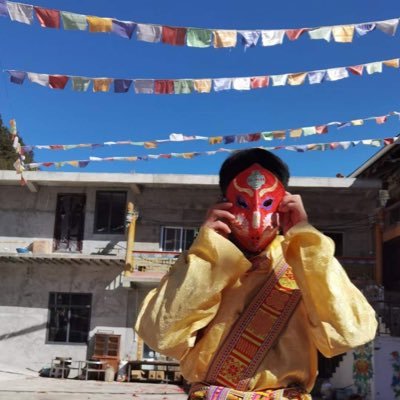
Say Hi to the Lhasa Spring Team!
We are a global online editorial team, from Tibet to Dharamshala and from North America to Europe. From China to India, from the desert to the highland pasture!
Show more


Say Now release their new EP ‘Say what you see,’ executive produced by PinkPantheress.


Say hello to our little cell: Mexican drug lord nicknamed 'El Tony Montana' gets 22.5 years in US prison
