Search results for TimePerception
TimePerception community
One keyword maps to one global community path.
People
Not Found
Tweets including TimePerception

dWeb education session: Capturing our time - capturing human existence (part 1)
#TimePerception# #PhilosophyOfTime# #AttentionEconomy# #HumanExistence# #InformationOverload# #TimeAnxiety# #FutureOfHumanity# #MeaningfulLiving# #FeelingBehindInLife#
Show more


📹 In an endless video stream, nobody knows which moment will matter later. This model takes that problem head-on.
Title: OneStreamer: Unifying Perception, Memory, and Proactive Response in Streaming Video Interaction
URL:
🧠 Overview
A streaming video LLM that turns what it observes into reusable factual memory while deciding when to speak up on its own. At just 4B parameters it takes the top score on all eight streaming video benchmarks tested.
🔥 The problem it solves
Keeping past visual tokens around makes them compete with recent observations for limited context, which weakens real-time perception. Keeping only the recent window throws away distant events instead. On top of that, "stay silent" labels dominate the supervision, so learning when to respond gets drowned out.
💡 Methodology
The key move is rethinking proactive generation as more than producing user-facing answers: it is also the act of converting evidence into reusable factual records.
・PHCM keeps the visual window short but writes observations out as time-anchored text records, which stay in context long after the source frames are gone
・PSTL keeps supervision at every output anchor while sampling only representative state-change and state-persistence positions
📊 Results
・72.1 on OVOBench and 48.7 on ProactiveVQA, beating the 11B MOSS-VL-Realtime with a 4B model
・On the memory metric ASI it beats full-history retention by 4.0 points while still winning on real-time perception
・PSTL supervises just 27.5% of state tokens yet outperforms dense supervision; random selection at the same 27.5% gains nothing, so it's the choice of positions that matters
・Context length drops 93.1% versus full history, and time to first token falls from 4.560s to 0.124s
#VideoUnderstanding# #MultimodalLLM#
Show more

🚨 BREAKING:
A Boston Dynamics spinout just emerged from stealth, and it's building something no one else in robotics is focused on.
Dynamic Creatures was co-founded by Marc Theermann, former Chief Strategy Officer at Boston Dynamics, and Farbod Farshidian, former research leader at the RAI Institute.
Their mission? To build interactive character robots that create genuine moments of wonder for people.
Characters that move naturally through guest environments, understand the context of an encounter, and respond to an individual in real time.
Dynamic Creatures is @BostonDynamics' official entertainment and hospitality partner, and is already working with a major theme park and retailer on guest-facing character experiences.
The technology stack is called SnowJay, an integrated AI and robotics platform combining learning-based control, real-time perception, behavioral programming, character design and costuming into a single operating system for interactive characters.
The business model is smart too. Platform-based characters deploy in months rather than years, with leasing options that remove the large upfront capital requirement for operators.
The company is backed by Eniac Ventures, Kindred Ventures, Heliad Sunshine Lake and Bluegrass Ventures.
😇 I am also a proud angel investor in Dynamic Creatures alongside one and only Marc Raibert.
This is exactly the kind of company I want to back in robotics!
🔗 Here's the news:
~~
♻️ Join the weekly robotics newsletter, and never miss any news →
Show more


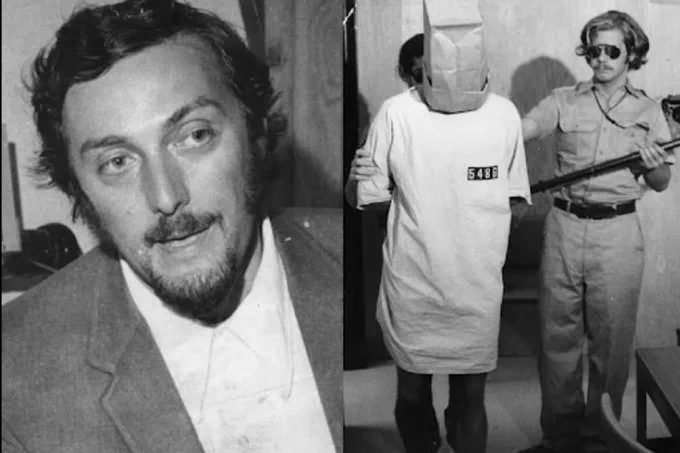
Before the famous Stanford Prison Experiment, this crime experiment was crazy!
Philip Zimbardo became famous worldwide for the controversial 1971 Stanford Prison Experiment, only one part of his work in psychology.
His research also explored shyness, military environments, time perception, and factors that can lead ordinary people toward harmful behavior.
The prison study had students act as guards and prisoners in a simulated jail planned to last two weeks. It deteriorated rapidly as some student guards grew authoritarian and abusive.
In 1969 Zimbardo placed an apparently abandoned car in a crime-ridden New York City area and a wealthy California neighborhood.
The difference was immediate. In New York, people began taking parts almost at once; within about ten minutes the car was heavily damaged and stripped. In California nobody seemed interested, and it remained untouched for a week.
Zimbardo then damaged the California car himself so it looked vandalized. Once residents saw it in that state, others began attacking and stealing from it. The findings later became associated with “broken windows” theory: obvious signs of disorder can make further crime seem acceptable or even encourage it.
The idea later influenced controversial policing based on the belief that leaving small signs of neglect or vandalism visible can contribute to more serious offenses.
Show more

$NVDA UNVEILS JETSON ORIN NANO 2
NVIDIA introduced a new entry-level edge AI computer for robots, delivery and inspection drones, and vision systems.
Jetson Orin Nano 2 delivers 78 TOPS of AI compute with 8GB of memory and an 8-core Arm CPU. It offers 2x the inference performance of Orin Nano Super in the same form factor, while using 40% less power to deliver the same performance in 15W mode.
It can locally run optimized LLMs and vision-language models including Nemotron, Cosmos, Gemma 4 and Qwen 3.
Cognex, Doosan Bobcat and Matic are among the first adopters, while Alphabet’s Wing plans to evaluate it for real-time perception and reasoning in delivery drones.
The module and developer kit are expected in the first half of 2027.
Show more


Why are Apple and Google maps of Europe surprisingly inaccurate? Is this the eve of the Physical AI revolution? Apple is paying people to map the world's cities on foot. Equipped with backpacks fitted with 360-degree cameras, individuals map streets, pathways, and remote locations unreachable by vehicles. Through this work, mapping data for pedestrian-accessible areas is updated.
Europe's urban architecture forms a "perfect storm" for traditional mapping techniques: most medieval old towns remaining in Europe—such as Venice, Paris, and Prague—are filled with dense alleyways, archways, arcades, and soaring vaulted passages. These spaces are exceptionally cramped and vertically intricate. Traditional "vehicle-mounted scanning" methods—which rely on car-mounted LiDAR and satellite GPS—struggle to build accurate spatial databases due to severe signal blockages and signal drift caused by multipath interference.
CityAI believes that for Physical AI (embodied intelligence, autonomous delivery vehicles, and AR spatial computing) to truly take root in Europe and around the world, AI must possess a "digital twin" capable of sensing physical laws and spatial structures in real time. Traditional maps are static, whereas Physical AI demands "real-time perception." In Europe, cumbersome road construction, frequent seasonal open-air markets, and temporary pedestrian zones render map data collected even a month or a year ago instantly obsolete.
Show more
