Search results for You_are_the_best_of_my_life
You_are_the_best_of_my_life community
One keyword maps to one global community path.
People
Not Found
Tweets including You_are_the_best_of_my_life

Notes like this are the best part about starting a company:
Hello Brian & Dharmesh,
I joined HubSpot in March 2013 as one of the early DubSpot team and after 13 incredible years this is my last month. Many times I've heard Brian talk about building a company that your grandkids can be proud of. I am writing this email partly to give you an insight into the incredible impact you've had on my life and partly because I imagine it is difficult for your family to appreciate the impact HubSpot has had on so many like me. I hope you share this with your family.
I joined HubSpot at 26 yrs old as a Level 1 Sales Rep. I was early in my sales career, highly motivated and eager to learn. HubSpot gave me an opportunity I couldn't have imagined and I didn't fully appreciate until later. I worked hard, learnt fast and chased targets. I moved to Manager and later moved to Sales Director.
In January 2014, Nisha Anand joined as a Level 1 Support Rep. We met, fell in love and got married. She also worked hard, learnt fast and chased promotions. She is now a Principal Solutions Engineer on UK Corp.
Financially HubSpot has transformed our lives but it is more than that. Our friends are HubSpotters. At our Wedding there were tables of HubSpotters. There are family and friends in Leitrim and Belfast that still cannot explain what HubSpot does but they follow it in the news, check the stock price and ask us "what's happening at the big American company?". HubSpot is part of our life story.
At every step of our lives HubSpot has been there:
- We timed our Wedding so we could take our sabbaticals for our Honeymoon.
- We sold HUBS shares to buy our first home
- When Covid hit we continued progressing our careers working from home
- We used tuition reimbursement to up-skill and learn at Harvard, UCD and Oxford.
- We used the Temporary Mobility policy to work from London for 1 month during fertility treatment. It worked and we got pregnant.
- When our twins girls arrived 10 weeks early and spent a month in hospital, HubSpot supported us. I had 6 weeks for Paternity leave plus used my 2nd sabbatical to be there for my family
- My wife took 12 months of maternity leave plus her 2nd sabbatical and returned to continue progressing her career and recently triggered another promotion.
- We sold HUBS again to move into a bigger home.
My father tells me that I have spent one third of my working career at HubSpot. It is almost impossible to explain the impact HubSpot has had on my life. What an amazing company. I hope you and your family are incredibly proud of what you have built.
For the rest of my life I will be grateful to you and HubSpot.
Wishing you and your family all the best in the future.
Show more

12years with GOT7💚
us GOT7 & IGOT7 are really growing up together
i saw alot of IGOT7 now getting married build a family , had kids
some been with us from young age and now became a full adult
some even had our music as a childhood
through these time we've been sharing each other almost every steps in our life
like me myself show you every single steps from 17 till now that i'm 29
i hope we all can continue sharing alot of moments & memories
and always be there for each others like we always were
till the last day we can sing & dance for you guys
till the day we all build a family
not just as a artist but as a human being
i hope i can share with you all till the last day
having IGOT7 for almost half of my life are truly a blessing
and also having a 6 brothers for life are the best thing ever happened to me
i'm truly thankful for everything that we built together
God bless you all💚
Show more


The past 7 years have been the best years of my life. Nothing is coming to an end, just the beginning. The seven of us are going to continue to bring you guys the best version of us till the end. #GOT7FOREVER#
Show more

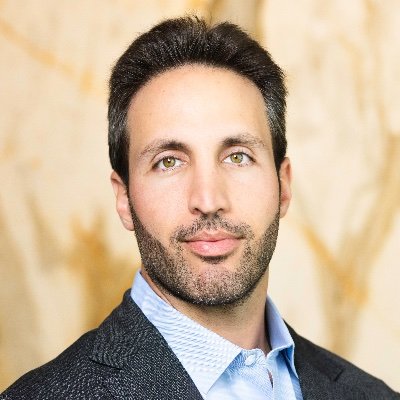
0/ A personal update
I have decided to step back from @multicoin. It's a bittersweet moment for me because my time at Multicoin has been some of the most meaningful and rewarding of my life. That said, I am excited to take some time off and explore new areas of technology.
After nearly a decade in crypto, I’m more confident than ever that crypto is going to fundamentally rewire the circuitry of finance. I believe the Clarity Act will unlock a tidal wave of new entrants and spur adoption unlike anything we’ve seen. I remain bullish on crypto, specifically Solana, and intend to continue making personal investments in the space and supporting Multicoin portfolio companies. Moreover, I will continue to serve on the board of @zama, and I will continue in my role as Chairman at Forward Industries (@FWDind). More on Forward in next tweet.
It goes without saying that I also remain bullish on Multicoin. My partners @tushar_jain, Brian Smith, @johnrobertreed, @mattshap1, @xethalis, @SpencerApplebau, and @shayonsengupta are some of the best investors and operators in the world. I am excited for them to continue to drive the crypto ecosystem and Multicoin forward for many years to come.
To all of our portfolio founders, LPs, and industry partners—thank you for the opportunity to work with you.
For reference, here is the letter we shared with LPs today
Show more
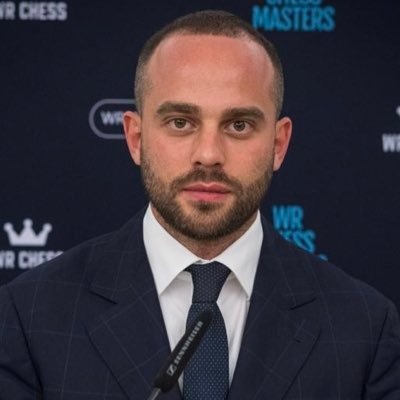
Some of the most important lessons in my life didn’t come from business meetings or boardrooms. They came from sport.
My father introduced me to boxing at a young age - not just how to throw a punch, but how to control myself.
Discipline. Respect. Self-control. Focus under pressure.
Later, I trained in karate, and over time developed a real passion for MMA. What always struck me was this: the best fighters are usually the calmest people in the room. They understand control, responsibility, and limits.
Combat sports teach something many people forget: strength is not aggression. Real strength is discipline.
You learn to stay composed when emotions rise.
You learn to respect your opponent.
And you learn that success comes from consistency - not excuses.
It took me time to realise that the same principles apply far beyond combat sports.
In chess, like in fighting, the biggest mistakes happen in moments of lost control.
One second of impatience. One emotional decision. And the position changes completely.
Different arena - same discipline.
These lessons have stayed with me in business, leadership, and everyday life.
Sport builds character.
Combat sports reveal it.
Chess tests it.
Show more


If you want to stop impulse trading, a quick hack is to just go date people.
I’m not joking. This actually works.
(unless you’re married then just ignore this)
I discovered this by accident during a phase where I was making absolutely dogshit trading decisions.
Since then, “go date someone” has basically become an external part of my trading system.
Because impulse trading isn’t really about charts or setups. It’s about getting trapped inside a sick mental tunnel against yourself.
Your attention locks onto one anchor, usually the chart, and your emotions start looping. Greed, anxiety, hope, regret, all feeding each other.
Once you’re in that state, using pure mental power like “discipline” or “strong willpower” to pull yourself out is almost impossible.
It's like trying to tell yourself to stop thinking about a pink elephant.
The more you try NOT to think about it, the more… you think of a pink elephant!
I tried everything to break the cycle. Strict rules. Trading journals. Even stupid sticky notes on my desk screaming “DON’T DO IT”.
Obviously, getting brutally liquidated multiple times did toughen my mentality. But that’s NOT something you can strategically repeat or rely on. It’s too destructive.
Anything lighter, anything that doesn’t seriously fuck up your life, never worked consistently for me.
Then something unexpected happened.
A friend set me up on a blind date right in the middle of a trading day. I was pissed at first. I was still pulling out my phone every 10 minutes, checking charts like a maniac.
Then she casually asked, “btw, are you into techno?”
My brain just stopped. For the first time in weeks, I completely forgot about the charts. 3 hours straight.
The dopamine hit from human connection completely overrode my trading obsession.
Think about it like this.
When you try to suppress trading urges (aka human nature), it's like pushing a beach ball underwater.
It ALWAYS pops up with more force.
So instead of trying to FIGHT human nature, you GO WITH IT.
STOP trying to kill the desire. STOP trying to erase the energy.
You REDIRECT the same energy to something else.
JUST CHANGE THE TARGET.
This isn't about willpower.
It's about understanding that your brain needs something engaging to focus on. And faces are literally more engaging to our brains than charts could ever be.
I started scheduling dates strategically during my most impulsive trading periods.
My trading account literally grew more when I was actively dating because I made fewer emotional trades.
The best part is you don't even need successful dates.
Just the act of getting out and connecting with someone new (and someone you like😉) breaks that obsessive cycle.
For married folks, maybe schedule intense social activities instead.
Anything that FORCES you out of your trading bubble works.
The truth is, we all know WHEN we're entering that dangerous trading mindset.
We just IGNORE the warning signs.
So next time you feel yourself getting sucked into chart-watching obsession, close the laptop and go on a date.
Your portfolio will thank you.
And hey, you might just find someone special in the process😉
Trading discipline through dating might sound ridiculous.
But it's literally become an essential part of my trading system.
Show more


During Consensus, I was asked several times about the story of ethereum:0xf280b16ef293d8e534e370794ef26bf312694126 as far as we were aware. Many people were pleasantly surprised by how we managed to exit our position without damaging the community. This is the summary.
When we set up the process for accepting crypto donations at @stjude, we set the criteria that we would convert the assets donated as soon as reasonably possible. St. Jude Children's Research Hospital is focused on leading the way that the world understands, treats, and defeats childhood cancer and other life-threatening diseases. While we (the crypto industry) may wish the world would leap forward and be more on-chain, that isn't how it currently exists and we need dollar denoted currencies to run the hospital.
Nearly 2 years ago, .5% of ASTEROID was sent to the St. Jude ETH wallet. We didn't have a way to readily convert it into US Dollars, so we left it in the wallet.
Due to external factors, the token went from a market cap of ~$20k to over $150M. Our position fluctuated between $500k and $1M in valuation. I had several messages asking if what we were going to do, and I responded to a few that we were figuring it out.
The next 48 hours were a whirlwind of approvals, but I knew two things. We would need to go to a DEX (a first for our mission) and that we would need to avoid hurting the community. Leadership understood and gave approval for the approach and we proceeded.
Some people may disagree with how we did it, but I believe it to be the best option out of the ones that we had. Over 2 days, we proceeded to exit the position in 12 varying sized tranches. During the entire process, we kept an eye on liquidity of the token and did our best to ensure it never dropped below $3.5M and that the Net Buy pressure didn't exceed $75k.
We exited the position with over 290 ETH valued at ~$676k. Thank you to the ethereum:0xf280b16ef293d8e534e370794ef26bf312694126 community that came together on this asset. These monies will go a long way in support of the life saving mission of St. Jude.
Disclaimer: Discussion of a token is not an endorsement of the token, do your own research. Opinions expressed are solely my own and do not express the views or opinions of my employer. For media outlets, please reach out directly.
Show more
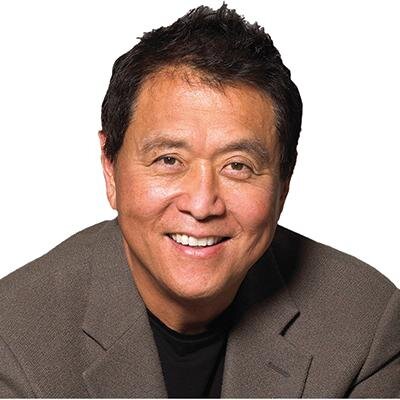
INVESTOR SECRET: “lf you want to be a rich investor you have to see the future.”
Seeing the future today is EASY for two reasons.
1: The National Debt will only go up because governments will only keep printing fake money.
That means inflation will keep going up which means savers of dollars keep losing.
2: The war in Iran is a HOLY WAR, Christians and Jews against Muslims. That war will never end which means the price of oil will only go up, causing more inflation.
As I have said for years, “The biggest losers will be those who drink the Kool-Aide: “Go to school, get good grades, get a job, pay taxes, save money, and invest for the long -term in a 401k or RRSP fill with a well/diversified portfolio of stocks, bonds, mutual funds, and ETFs
Biggest lie is US Bonds are safe.
In this global oil, debt, bond, money, banking and inflation crisis, the only thing that keeps you safe is YOU and the financial education YOU CHOOSE to put between your ears.
For most of my life, I knew if something could be printed, it was fake.
BEST Safe INVESTMENTS:
That means real gold, real silver, oil, food, Bitcoin, and Ethereum are for me, the safest investments for 2026.
To me, thatincludes college degrees such as Bachelor Degrees and MBA’s
Please do not believe me. What is real to you.
Take care.
Show more

Two years ago, I wrote this post on the possible areas that I see for ethereum + AI intersections:
This is a topic that many people are excited about, but where I always worry that we think about the two from completely separate philosophical perspectives.
I am reminded of Toly's recent tweet that I should "work on AGI". I appreciate the compliment, for him to think that I am capable of contributing to such a lofty thing. However, I get this feeling that the frame of "work on AGI" itself contains an error: it is fundamentally undifferentiated, and has the connotation of "do the thing that, if you don't do it, someone else will do anyway two months later; the main difference is that you get to be the one at the top" (though this may not have been Toly's intention). It would be like describing Ethereum as "working in finance" or "working on computing".
To me, Ethereum, and my own view of how our civilization should do AGI, are precisely about choosing a positive direction rather than embracing undifferentiated acceleration of the arrow, and also I think it's actually important to integrate the crypto and AI perspectives.
I want an AI future where:
* We foster human freedom and empowerment (ie. we avoid both humans being relegated to retirement by AIs, and permanently stripped of power by human power structures that become impossible to surpass or escape)
* The world does not blow up (both "classic" superintelligent AI doom, and more chaotic scenarios from various forms of offense outpacing defense, cf. the four defense quadrants from the d/acc posts)
In the long term, this may involve crazy things like humans uploading or merging with AI, for those who want to be able to keep up with highly intelligent entities that can think a million times faster on silicon substrate. In the shorter term, it involves much more "ordinary" ideas, but still ideas that require deep rethinking compared to previous computing paradigms.
So now, my updated view, which definitely focuses on that shorter term, and where Ethereum plays an important role but is only one piece of a bigger puzzle:
# Building tooling to make more trustless and/or private interaction with AIs possible.
This includes:
* Local LLM tooling
* ZK-payment for API calls (so you can call remote models without linking your identity from call to call)
* Ongoing work into cryptographic ways to improve AI privacy
* Client-side verification of cryptographic proofs, TEE attestations, and any other forms of server-side assurance
Basically, the kinds of things we might also build for non-LLM compute (see eg. my ethereum privacy roadmap from a year ago ), but for LLM calls as the compute we are protecting.
# Ethereum as an economic layer for AI-related interactions
This includes:
* API calls
* Bots hiring bots
* Security deposits, potentially eventually more complicated contraptions like onchain dispute resolution
* ERC-8004, AI reputation ideas
The goal here is to enable AIs to interact economically, which makes viable more decentralized AI architectures (as opposed to non-economic coordination between AIs that are all designed and run by one organization "in-house"). Economies not for the sake of economies, but to enable more decentralized authority.
# Make the cypherpunk "mountain man" vision a reality
Basically, take the vision that cypherpunk radicals have always dreamed of (don't trust; verify everything), that has been nonviable in reality because humans are never actually going to verify all the code ourselves. Now, we can finally make that vision happen, with LLMs doing the hard parts.
This includes:
* Interacting with ethereum apps without needing third party UIs
* Having a local model propose transactions for you on its own
* Having a local model verify transactions created by dapp UIs
* Local smart contract auditing, and assistance interpreting the meaning of FV proofs provided by others
* Verifying trust models of applications and protocols
# Make much better markets and governance a reality
Prediction and decision markets, decentralized governance, quadratic voting, combinatorial auctions, universal barter economy, and all kinds of constructions are all beautiful in theory, but have been greatly hampered in reality by one big constraint: limits to human attention and decision-making power.
LLMs remove that limitation, and massively scale human judgement. Hence, we can revisit all of those ideas.
These are all things that Ethereum can help to make a reality. They are also ideas that are in the d/acc spirit: enabling decentralized cooperation, and improving defense. We can revisit the best ideas from 2014, and add on top many more new and better ones, and with AI (and ZK) we have a whole new set of tools to make them come to life.
We can describe the above as a 2x2 chart. There's a lot to build!
Show more


Last year I nearly shut down Blueprint.
My reasoning was that in the grand game of existence, getting our societal goals right is the only thing that matters. In the long arc of time, it wouldn't matter if I built a longevity company.
I wanted to invest all of my energy into Don't Die. Maybe I'm naive, however it seems obvious to me that when your species is giving birth to superintelligence, your sole concern becomes survival.
Not because you're scared or fear what may come, but because you realize that superintelligence is big. Bigger than any of us can imagine and happening faster than our intuitions allow us to model. This is a hard concept for Homo sapiens to understand because we are not good at understanding our limitations of knowing.
In the void of not knowing, the one thing that we each know to be true is that none of us want to die right now. When tomorrow arrives, that will be true about the next day too. Don't Die is not about immortality. It's about the most basic observation of intelligent life, we want one more breath.
Just as Homo erectus, a million years ago, with an axe in their hand, was unable to articulate our modern world, we are once again Homo erectus relative to AI. We may experience a million years of relative progress in the next 10, 20 or 50 years.
Given this, Kate and I have cycled through this problem hundreds of times over the past few years. How can we get the world aligned around Don't Die? Committed to the idea that in spite of our many differences, we share a planet and a common interest in tomorrow.
Basically, how can we make existence profitable and die unprofitable.
We saw the problem as two-fold. One practical and one spiritual.
Practically, we need things to work in the world: clean water, transportation, energy, security, stable institutions, communications and health care.
Spiritually, we need purpose, existential explanations, and hope. We also need progress and adventure: solve aging, abundant AI, creative joy and expression and things to build.
We decided to build on both fronts. Blueprint would be the practical, a company aligned to Don't Die. A group of humans that labor together to help other humans thrive as their sole objective. To hold ourselves to a standard of making existence profitable and die unprofitable, for ourselves.
To never let profit corrupt this goal. Sounds simple until you take stock of how many companies make their living on making humans die. Sometimes this is done openly and other times it's hidden in a mesh of poorly aligned incentives that are invisible.
This is not an esoteric philosophical argument, death is measurable in a biological system. You can get clever and find arguments ("does this mean we shouldn't have children?") but we know death and life when we see it.
On the spiritual side, we think that 2027-28 is the breakout time for Don't Die. Maybe we're off by a year or two, but we think it's soon. We believe that AI will create several societal shocks, none of which we will predict accurately, but will leave the world feeling unmoored.
Hopefully it won't be catastrophic, but will be a cold water dunk we need to awaken us to the realization that no one really wants to die right now and that our current societal systems that profits from death are ill suited for this moment.
That in our most sober moments, when at funerals, or after a near-death experience, we see clearly, even if for a few minutes.
Above all, we care about life more than anything else. All else fades away in those moments. We see with crystal clarity that all the other stuff that had us entranced wasn't that important after all.
I write this for two reasons.
First, to invite you to build Don't Die in the practical world. Capitalism (profit and loss) is a good system that has done society well. In whatever you're building, align your and your organization's efforts with a loyalty to acting in people's best long term interests. Don't do things that cause other people to die, commit self harm, or create societal harm. This doesn't mean being paternalistic, it means using your best judgement about how you'd want someone else to treat you if the roles were reversed.
Second, to ready yourself for the new philosophy that will be arriving shortly. One that prioritizes our shared existence and vitality above all other goals.
Don’t Die is the foundation. Immortalism is what we’re going to build. Again, not for selfish reasons, but because we understand that we are warriors and caretakers of intelligent life in this part of the galaxy and we take on this responsibility with honor and nobility.
Show more