Search results for doi日记
doi日记 community
One keyword maps to one global community path.
People
Not Found
Tweets including doi日记


Tsubaki Factory Member Introduction — Vol.10 💚
Fuka Doi — loves tomatoes so much ♥ and has a fluffy angel smile!
▶️ Watch the full video on our Facebook!
@tsubakifac_uf
#TsubakiFactory# #FukaDoi# #HelloProject# #Jpop#
Show more


Following an investigation by FBI New York, @NYC_DOI, and @EDNYnews, Lori Zeno, the former executive director of Queens Defenders, a nonprofit legal services organization, and Rashad Ruhani, a former employee of the Organization, were sentenced for their roles in a scheme to embezzle hundreds of thousands of dollars from Queens Defenders.
Read more at:
Show more


On August 7, 1985, the National Space Development Agency of Japan (now JAXA) announced that Mamoru Mohri, Chiaki Mukai (then Chiaki Naito), and Takao Doi would be Japan’s first-ever astronauts to fly aboard NASA’s Space Shuttle. Selected from a competitive pool of 533 applicants, these three pioneers would go on to lay the foundation for Japan’s future manned space activities. The landmark announcement marked a monumental first step for Japan as it stepped boldly into the era of space exploration.
Show more

Thank you for supporting Hello! Project.
We are pleased to announce that:
Mihane Ishii(15)
Yu Murata(13)
Fuka Doi(13)
Will be joining Tsubaki Factory.(@tsubakifac_uf)
more info
#TsubakiFactory# #newmembers# #japaneseidol# #Helloproject#
Show more


I wish the judges would get out of matts rectum! Beth to win. #doi# #dancingonice#

🚨JUST IN🚨
Federal prosecutors are looking
to DISMISS a felony vandalism charge against former U.S. Olympian David Hearn after he was accused of damaging the reflecting pools in Washington, D.C.
U.S. Attorney Jeanine Pirro stated that the Department of the Interior had provided only “barebones” reports at the outset and withheld records detailing significant problems with the coating’s installation.
"Had DOI been forthcoming with the information clearly in its possession, the government would not have sought a grand jury indictment," according to the DOJ.
After the indictment, the DOI provided new documents that the damage to the Lincoln Memorial Reflecting Pool was the result of flawed installation by the contractor.
This would have created reasonable doubt.
According to U.S. Park Police, on June 19 he grabbed and pulled at a loose section of the pool’s coating and continued even after a National Park Service employee instructed him to stop.
They claimed the damages he allegedly caused exceeded $1,000.
Show more

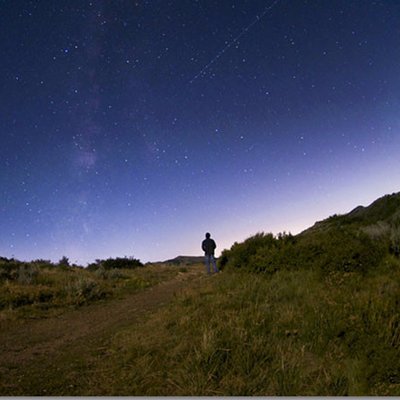
A fresh quantum cosmological framework indicates that existence may unfold in perpetual exact cycles.
For many years researchers in cosmology have confronted the troubling Boltzmann brain paradox. In an unbounded, cooling cosmos random quantum fluctuations would far more readily generate isolated conscious minds complete with illusory histories than produce genuine universes populated by evolved beings.
Consequently every recollection you hold could have crystallized mere moments earlier through pure statistical chance.
Quantum cosmologist Sean Carroll together with collaborators, has advanced a contrasting picture. Rather than transient accidental entities within a lifeless expanse, observers may inhabit a precisely periodic quantum cosmos that recurs without end.
In their mid-2026 study Carroll, Nadiia Diachenko and Saakshi Dulani identified a mathematical pathway within quantum theory that permits a stable repeating universe. Through precise alignment of energy eigenvalues the model sidesteps the predominance of random Boltzmann brains, moving smoothly from low-entropy expansions resembling the Big Bang through contractions and back again. Should the proposal prove correct, each dialogue, choice and cherished recollection has already occurred infinitely often and will continue to do so indefinitely.
Although the notion of endless recurrence may appear imposing, it supplies an orderly scaffolding for existence and affirms that consciousness constitutes a durable aspect of the cosmos.
[Carroll, S. M., Diachenko, N., & Dulani, S. (2026). Toward a phenomenologically acceptable quantum cyclic universe. arXiv. DOI: 10.48550/arXiv.2605.30405]
Show more

Researchers engineered specialized yeast to transform discarded plastic into consumable cookies.
A group based at Southern Illinois University Carbondale is addressing plastic pollution alongside food shortages through an unusual approach. Employing oxidative hydrothermal dissolution, the scientists apply heat to decompose used plastic bottles together with sweetcorn plant residues into forms that microbes can process.
The resulting material is supplied to CRISPR-modified yeast strains that convert it into proteins, lipids, and a vanilla-like sweetness. After additional ingredients are incorporated, the blend is shaped via 3D printing into cookies known as µBites, redefining the idea of sustainable cuisine.
Although the scientists are still seeking official clearance to sample the products themselves, the idea has generated both interest and doubt. Observers such as Jason Hallett of Imperial College London contend that producing food from plastic lacks commercial viability and cannot meaningfully address worldwide plastic accumulation, especially amid concerns regarding microplastics and genetic modification. The inventors counter that regardless of whether plastic-based cookies become commonplace, the work represents an essential advance toward reshaping societal responses to plastic refuse.
[Jayakody, L. N. (2024). Next-generation 3D-printed nutritious food derived from waste plastic and biomass. Trends in Biotechnology, 42(6), 799–800. DOI: 10.1016/j.tibtech.2024.04.004]
Show more
