Search results for starship
starship community
One keyword maps to one global community path.
People
Not Found
Tweets including starship

Starship Was Engineered Backward From One Objective:
Moving millions of tons to Mars at the lowest possible cost per ton to build a self-sustaining civilization.
Five first-principles decisions make it possible:
- Produce propellant on Mars. Methane and oxygen made from local CO2 and water ice via Sabatier. No Earth return fuel required.
- Use 301 stainless steel. 67× cheaper than carbon fiber and survives both cryogenic propellants and 1,700°C reentry without heavy shielding.
- Refuel in orbit. Tankers reset the rocket equation, enabling 100–150 ton payloads to Mars.
- Belly-flop reentry. Maximize drag area so the atmosphere does most of the braking.
- Full reusability. Both stages fly again rapidly. Marginal cost collapses to propellant only.
This is the minimum architecture that makes multi-planetary life feasible.
Show more


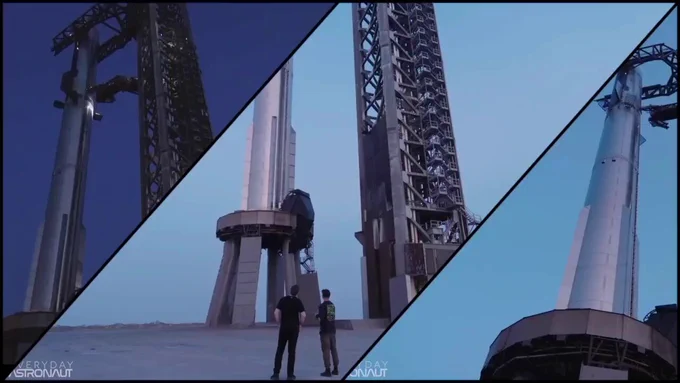
Starship is the largest flying object ever built.
This is the factory where it happens — and Elon Musk giving an inside tour of SpaceX’s Starbase factory


Starship roaring into the sky, pushing humanity closer to becoming a multi-planetary species 🚀


Starship The largest flying object ever made

Starship isn't just the next rocket.
It's the foundation for a future where millions of people can live and work beyond Earth.
With unprecedented payload capacity, rapid reusability, and a design built for deep space, Starship has the potential to do for space travel what the jet engine did for air travel.
The journey to a multiplanetary civilization starts here. 🚀
Show more


Starship Entertainment’s IDID Is Ready to ‘FLY’


Starship’s bellyflop landing is engineering at another level

Starship Entertainment’s IDID Is Ready to ‘FLY’

Starship V3 executing a precision-controlled splashdown in the Indian Ocean
A giant stainless-steel skyscraper falling back from space, flipping vertical, lighting its engines, and touching down in the ocean with absurd control
This is the kind of thing that used to look like science fiction
Now SpaceX is doing it in the real world
Show more


Starship flip and landing burn at the end of its twelfth flight test
