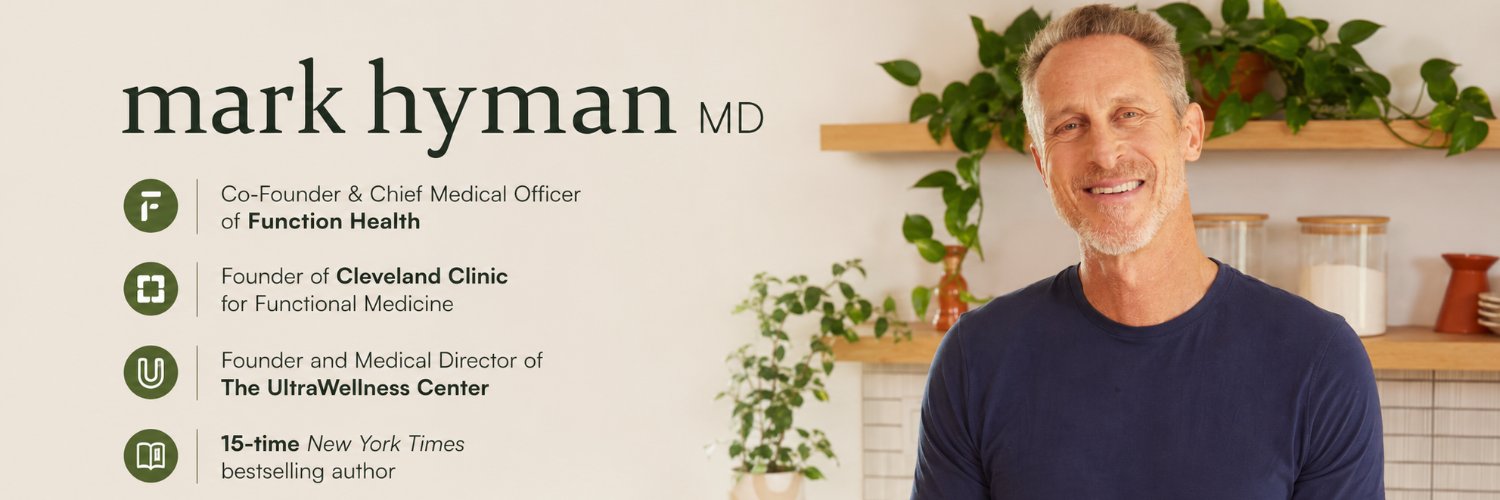

Mark Hyman, M.D.
@drmarkhyman
15X NY Times bestseller. Tackling the root causes of chronic illness and our broken food & health system. Co-Founder & CMO @function
参加 December 2008
1K フォロー中 1.5M ファン
We hear a lot about improving gut health through food, probiotics, and supplements. But after more than a decade of major advances in microbiome research, the picture has become both more promising and more complex including about gut bacteria, biological symptoms
In this episode, I’m joined by gastroenterologist and neuroscientist Dr. Emeran Mayer to explore how our understanding of the gut-brain connection has evolved—and what we may still be getting wrong.
0:00 Introduction and Dr. Emeran Mayer’s background 1:07 The impact of gut health on disease and current treatment approaches
2:17 The microbiome problem in America and research evolution
4:03 Challenges and limitations in microbiome research 5:13 Traditional and novel interventions for gut health 6:25 Future of bioengineered probiotics and research funding
8:09 Functional medicine approaches and case study 9:40 Bridging gaps in gastroenterology and historical context
12:24 Flaws in reductionist science and traditional medicine insights
14:09 Microbiome’s role in overall health and physiology 19:25 Microbial metabolites and modern challenges to gut health
21:10 Human biology vs. microbial adaptation and caring for the microbiome
22:59 The Mayer Model for microbiome health
29:04 Brain-gut communication
31:33 AI’s potential in advancing microbiome research 36:22 Aging and its effects on the microbiome
46:03 Practical steps for microbiome health: prebiotics and polyphenols
55:44 Factors harming the microbiome and using it for treatment
57:45 Gut-body communication and influence on traditional medicine
1:00:25 Future directions: research, applications, and health policy
1:02:56 Final thoughts on holistic health and The Mayer Model
もっと見る








