
Julian Gewirtz
@JulianGewirtz
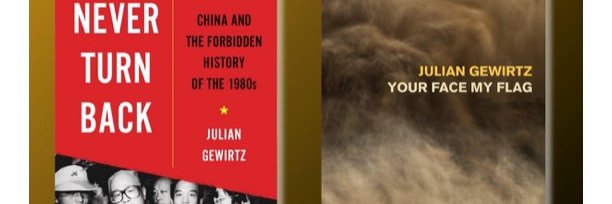
Former NSC Senior Director for China & State Dep China Coordinator | Now at Columbia SIPA | Wrote Never Turn Back: China & the Forbidden History of the 1980s &c
가입 May 2013
987 팔로잉 중 13.6K 팬
The fraught relationship between the Chinese government and China’s AI companies is one of the most undercovered stories in the wider AI race.
Not because of any doubt about the ultimate balance of power. In China no one questions who will ultimately win the struggle between state and corporate power.
The new probe of DeepSeek and Moonshot over distillation-linked data breaches is the latest example, and one of the highest-stakes instances yet. (
As Dan Wang and I wrote in the NYT over the summer, we tend to think about AI as a race between the United States and China, but there is another contest unfolding inside both countries: between the public power of governments and the private power of ambitious AI companies. (
That contest looks very different in China than in the United States. Beijing is much more capable of compelling its companies to comply. But that does not mean the relationship is frictionless—or that the eventual shape of Chinese AI regulation is settled.
Chinese AI companies are acutely aware of what happened to fintech and the broader tech sector beginning in 2020. Beijing, meanwhile, wants both rapid AI development and much tighter control over the risks it creates.
That is the tension to watch. Xi Jinping has long insisted that development and security are "two sides of the same coin" and can reinforce each other. AI may force it to confront the possibility that, sometimes, they don’t.
더 보기










