搜索结果 Centi
Centi 贴吧
一个关键词就是一个贴吧,路径全站唯一。
用户
未找到
包含 Centi 的推特

东京BAR CENTIFOLIA|火焰与冰雕的调酒艺术 隐匿于东京港区麻布十番写字楼6层的BAR CENTIFOLIA,是由传奇调酒师驹井优三打造的预约制高端酒吧,以震撼火焰表演、钻石级冰雕技艺与百年匠心,成为全球调酒爱好者的朝圣之地,仅设少量吧台位与私密桌位,完全预约制保障专属体验,是东京夜生活的隐秘奢境。
原作者:@调酒师驹井优三
显示更多


RWA 上链的可能性主要集中在三个方向:
1)稀缺性资产(比如SPCX 这种pre IPO资产)
2)高波动率资产(美股韩股台股大宗商品贵金属
3)收益型资产,本质是解决优质金融产品的门槛问题
Monad×Centifuge这次上的三个产品分别是代币化证券,AAA级担保债务凭证,多元化信贷策略。
上的这三个其实挺有代表性的,三类产品历史收益率大概分别在 3%-4%,6%-7%,8%-10%。
当然,这几个风险等级也是依次递增的,但比链上策略会好很多,毕竟以rwa资产做底层+托管。
我们已经几乎能够在链上交易所有高波动资产,很快我们就会能够在链上持有所有高收益资产
Crypto正在接管银行,券商和资产管理公司
Gmonad
显示更多

New RWAs are coming to Monad via @Centrifuge
The first are tokenized Treasury bills (JTRSY) and AAA CLOs (JAAA) from Janus Henderson, alongside Apollo’s diversified credit strategy (ACRDX)
Investors hold tokenized fund shares with direct claims on the underlying assets and in-kind redemption rights
Centrifuge is also launching deRWA wrappers — deJTRSY, deJAAA, and deCRDX — freely transferable tokens designed for seamless integration across the Monad DeFi ecosystem, with 24/7 access and onchain liquidity
显示更多


《从福布斯富豪榜看财富流动趋势》
今天关于 @cz_binance 被杀猪榜放进前20的消息又满天飞了,按之前的调性大概率等CZ睡醒又要开始辟谣,哈哈。
不想露富是华人常见心态,但从我等吃瓜群众看,作为Crypto唯一杀入前列的代表,还是乐得看到CZ给Crypto挣了脸的。
顺便分析了一下这次的富豪榜比例情况:
▶️科技(互联网 / AI / 软件 / 芯片)约35–40%
代表:Elon Musk、Jeff Bezos、Mark Zuckerberg
▶️金融与投资 约15–20%
代表:Warren Buffett、对冲基金、PE
▶️零售 / 奢侈品 / 消费 约10–15%
▶️制造 / 工业 约10%
▶️重工业、汽车、制造 能源 / 矿业 约5–8%
▶️石油、天然气 房地产 约5–7%
可以看出财富结构正在发生代际变化,世界在不知不觉间已经通过财富流向告诉大家是如何变迁的。
~~~~~~~~~~~~~~~~~~~~~~~~~~~
我摘出几个有意思的地方:
1、AI正在成为新的财富发动机。
榜单前列里很多财富增长都来自 AI 或 AI相关科技公司,Musk,Larry Page,老黄等人财富增长很大程度来自 AI浪潮带动的科技股上涨。例如 Alphabet 股价上涨直接推动 Page 和 Brin 财富大幅增加。
过去十年最赚钱的是移动互联网,未来十年最赚钱的可能是AI基础设施。
2、超级富豪财富增长速度极端惊人
榜单还有一个很震撼的数据:
全球亿万富豪数量已经超过 3400人,总财富达到 约20万亿美元,而且仍在持续增长。
更夸张的是:
全球最富的10个人一年财富增加接近6000亿美元。
财富向极少数人快速集中的速度进一步加快了,科幻小说里一个人掌握全球99%财富的故事好像真有可能发生?
3、财富结构正在发生代际变化
老钱逐渐被科技钱取代,比如奢侈品巨头Bernard Arnault 逐渐被科技创始人压制。现在的超级富豪基本都是科技公司创始人or控制人,平台型企业掌控者
而不是传统的:地产 石油 制造业
4、超级富豪“百亿俱乐部”正在爆炸增长
centibillionaire(千亿美元富豪)数量暴增。全球已经有 18位财富超过1000亿美元的人,这个群体的总财富接近 3.6万亿美元
这在十年前几乎是不可想象的。
很多机构都预测全球第一位 trillionaire(万亿富豪)可能在2030年前出现。
~~~~~~~~~~~~~~~~~~~~~~~`
此外,国人比较熟悉和感兴趣的富豪情况:
1、卖水的赢了搞互联网的,首富还是“水王”
钟睒睒(农夫山泉)依然稳坐中国首富。在全球互联网寒冬和电商内卷下,水王靠着刚需和极致的现金流控制力,依然压过张一鸣和马化腾。
2、老黄代表华人之光席卷全球
随着AI浪潮,英伟达(Nvidia)CEO黄仁勋身价疯涨,目前已进入全球前10(甚至前8)。对于中文读者来说,他是全球科技圈最受瞩目的华人面孔,也是AI时代的绝对教父。
3、“出海三杰”的进击:赚全球的钱
张一鸣(TikTok)、黄峥(拼多多/Temu)、许仰天(Shein)。这三位是典型的“中国供应链+全球化运营”的赢家,反映了中国互联网出海的强大生命力。
4、房地产时代的终结,新能源/半导体的崛起
曾经榜单前列的王健林、杨惠妍等地产巨头排名大幅缩水甚至掉队。取而代之的是雷军(小米造车成功)、曾毓群(宁德时代)。
资源型财富已经被科技型财富压过去了。
~~~~~~~~~~~~~~~~~~~~
说回Crypto,CZ 的财富变化,本质上是整个加密市场周期的一个晴雨表。
Forbes 在计算 CZ 财富时主要参考是Binance股权估值,而非 $BNB 币价和其他链上资产。
现在已经是加密熊市, $BNB 价格从顶峰已经跌落50%,但CZ的身家反而上涨。我问了一下AI,这可能与熊市了反而头部交易所的市场份额会上升有关。
在2018熊市、2022熊市、现在这个阶段,Binance 的市场份额反而往往会上升,因为原因很简单:熊市会淘汰很多熬不下去的平台。头部交易所反而会趁机吸收流动性用户,进而提高了市场份额。
表单上其实还有其他Crypto富豪,比如 Coinbase的 @brian_armstrong (100-130亿,大约200名), @saylor 老爷子(70-100亿美元,大约300-400名区间)。
但Forbes评估时候不看链上财富,所以Crypto富豪的资产往往是被低估的。
希望未来有更多加密富豪上榜吧,给咱们行业也长长脸。
最后附上福布斯榜单原链接,感兴趣的可以自己再去挖掘一下:
显示更多


《吻我之前,先把灯关了》
"Turn Off the Lights Before You Kiss Me"
据专家研究分析,恐怖片和爱情动作片,好莱坞惊险片都能刺激大脑分泌多巴胺,我现在把它们都放在一起了,那是不是应该双倍快乐来了。
According to expert research and analysis, horror movies, romantic action films, and Hollywood thrillers can all stimulate the brain to release dopamine. Since I’ve combined them all together, does that mean I’m in for a double dose of happiness?
grok imagine prompt:
"Turn Off the Lights Before You Kiss Me"
15 seconds, 9:16 vertical format, first-person perspective, recorded on a smartphone, single continuous take.
[Realistic Cinematography]
The footage is captured entirely by the rear-facing camera of the smartphone held by the male protagonist; no other cameras are involved.
The male protagonist holds the phone in his right hand, using the primary (1×) rear lens—providing a field of view equivalent to approximately 26mm—at 1080p resolution and 30fps. The device is positioned between his chest and chin (at a height of roughly 1.45 meters), aimed toward a woman standing in the bathroom doorway. His left hand occasionally enters the frame to operate the light switch.
The smartphone itself—its body, back panel, camera module, screen, or flash—is never visible in the shot. Only the light cast by the phone onto the subject, her clothing, and the walls can be seen. There are no mirrors present; this is not a mirror-based selfie.
The footage retains the raw, authentic texture of smartphone video—no beauty filters, color grading, or cinematic effects. Skin details such as pores, fine beads of sweat, stray hairs, and natural skin-tone variations are visible. There is slight digital noise in the shadows, and brief motion blur occurs during rapid hand movements or moments of physical instability.
Subtle camera shake stems from the holder’s breathing and wrist movements. Changes in proximity are achieved through actual physical steps or the subject pulling the holder closer; there is no digital zooming, automated panning, reverse-angle cutting, or slow motion. The focus remains primarily on the woman’s face, with only momentary hesitation when the distance shifts abruptly—there is no persistent out-of-focus effect.
[Characters and Attire]
The woman in the doorway (@80130fc6-f744-4f61-9faf-f630a1eb8638) is 28 years old. Her appearance—including her black hair styled in an updo, purple floral hair accessory, earrings, long-sleeved Japanese-style (wafuku) garment in purple (@d7529a1b-8cdb-41e5-816e-c59aa4051803), and dark-colored *obi* (sash)—is consistent with the video uploaded by the user. Her clothing remains intact; the neckline stays in place, and she does not scratch her own chest or tug at her garments.
Leaning slightly against the doorframe, she keeps her shoulders relaxed and lowered, her neck elongated, and her legs positioned one in front of the other—creating a natural, subtle S-curve in her posture. She gazes toward the male protagonist with half-lidded eyes and a faint, inviting smile, as if beckoning him closer.
From the very beginning, her right hand holds a small pinch of fabric from the male protagonist’s left cuff. This point of contact—her right hand gripping his left cuff—is situated in the lower-left portion of the frame and must remain visible. Because she is only holding the fabric rather than clamping down on his wrist, he retains the freedom to lift his left hand and operate the light switch.
Initially, her left hand is concealed between her body and the doorframe. The grayish-white fingers that appear later belong to this same hand; the creature possesses only two hands throughout the entire sequence.
The real girlfriend is located in the hallway behind the male protagonist. She is present only as a voice calling out from off-screen; she is never shown on camera, and no second female face appears.
【Environment and Space】
The scene takes place at the entrance to a bathroom in an old apartment building late at night. The setting—featuring aged off-white tiles, a worn wooden doorframe, a standard wall-mounted light switch, and a towel hanging inside the bathroom—conveys the lived-in, weathered feel of an old residence, rather than a ruin.
The woman is positioned slightly to the right of the frame’s center, with the open bathroom door behind her.
The light switch is located on the wall to the left, approximately thirty centimeters from the male protagonist’s left hand. It is visible from the start and does not suddenly appear later.
Behind the male protagonist lies a hallway. The bathroom door remains open inward; the camera angle stays consistent throughout, the door does not move on its own, and the room’s layout remains unchanged.
At the start, the woman’s face is about sixty centimeters from the camera. After she gives a gentle tug on his cuff, the male protagonist shifts forward slightly, reducing the distance to approximately forty-five centimeters. The distance closes further only during the final dragging motion.
【Ambient Lighting】
At the beginning, a warm-white overhead light in the bathroom is on, illuminating the woman’s head, shoulders, and the doorway, while the hallway remains dim.
The LED flash on the back of the smartphone is illuminated from the very first frame; it remains on and in the same position throughout the entire 15-second duration. Up close, the face is illuminated by the harsh, direct light of a standard mobile phone; small shadows form beside the nose and under the chin, and there are localized highlights on the fabric of the clothing—no artificial "beauty" fill lighting is applied.
The only light the male lead turns off is the overhead bathroom light.
Once the overhead light is extinguished, the bathroom background remains dim and does not brighten on its own. The phone’s light continues to illuminate her face and the hand gripping the sleeve cuff. The camera’s auto-exposure adjusts only slightly, failing to brighten the dark bathroom to a daylight-like state.
When the "mask" (the outer layer of the face) is peeled back, it is illuminated by the same mobile phone light as the rest of the face. The space deep behind the shell remains dark, and the exposed eyeball shows only natural, subtle reflections—it does not emit its own light.
[The "False Face" Effect]
The horror stems from a thin, pliable, artificial layer being peeled back from within—it is not a case of natural skin being torn or a mouth stretching into an impossible, elongated shape.
A grayish-white hand—with only two or three fingertips visible—emerges from the corner of her mouth, hooks onto the lower edge of the "mask," and peels half of the face upward and to the side.
The "mask" has a distinct thickness and flexibility; the cheek and part of the area beside the nose fold back, rather than stretching into long, tubular, funnel-like, or tongue-like shapes.
Behind the peeled-back section lies a deep, dark cavity containing a normal-sized human eye, which turns to look directly at the camera.
The other half of the woman’s face remains intact, establishing the premise that there is an artificial layer on the outside, with something else concealed beneath it.
There is no blood, gore, exposed muscle, black ooze, or liquid-like melting effect. The grayish hand does not reach in from off-screen; its fingertips must first emerge from within the corner of the mouth.
[Strict 15-Second Timeline]
0–4 Seconds | Gripping the sleeve, an invitation to draw closer.
The woman leans sideways against the doorframe, looking first into the male lead’s eyes, then glancing briefly toward the light switch on the left.
With her right hand, she grasps the male lead’s left sleeve cuff—positioned at the bottom-left of the frame—and gives it a gentle tug toward herself. The fabric of the cuff pulls taut, prompting the male lead to take a small step forward; the camera moves in tandem with his approach. She lifts her chin slightly and says in a low voice:
“The lights are too bright.”
Her tone is intimate, with a suppressed smile playing at the corners of her mouth. There is no sign of a monstrous visage, nor does she glance toward her own mouth beforehand.
Her right hand continues to hold the same spot on his sleeve; she does not shift her grip to his lapel.
4–7 seconds | Flipping the switch; the background darkens
The male protagonist reaches out with his left hand toward a light switch already visible on the left side of the frame. She keeps her grip on his left sleeve, causing her right arm to extend naturally as he moves—she neither lets go nor suffers any "clipping" (graphical glitching).
His fingertips press the switch, producing a distinct *click*.
The bathroom overhead light goes out, and the tiles, towels, and the space behind the woman grow noticeably darker. Her face remains illuminated by the fill light from a mobile phone.
The male protagonist’s left hand pulls away from the switch and returns to the space between them. The camera tilts slightly with the movement, then steadies.
7–9 seconds | A warning from behind
From about two meters behind the camera, the man’s actual girlfriend calls out urgently, in an identical tone:
“Don’t turn off the light!”
The woman in front of him says nothing; her lip movements do not correspond to this warning.
As the male protagonist begins to turn, the camera shifts slightly to the side—but the hand gripping his sleeve suddenly tightens, holding him in place.
Her smile vanishes. Her eyes glance past the camera toward the space behind the man, then return to the lens. Her knuckles whiten as she grips the sleeve, causing deeper creases to form in the fabric.
9–12 seconds | Half of her face is peeled back from within
Two or three grayish-white fingertips emerge from the inner corner of her mouth.
The fingertips hook onto the lower edge of the "shell" of her face, slowly peeling it upward and outward. The corner of her mouth and her cheek—forming a single, thin, pliable layer—fold back together; the lips do not stretch or elongate independently.
Half of the artificial face is lifted away, revealing an eye in the darkness beneath that shifts to look directly at the camera. The intact half of her face remains visible alongside the eye revealed from within. For a brief moment, the camera steadies, allowing at least half a second to take in the details:
Fingers emerge from within the face; the "shell" of the face begins to fold back, revealing another eye underneath.
The woman’s right hand maintains a firm grip on the man’s left cuff—she cannot let go, even as she peels back the face.
The only sounds are the dry, grating friction of the mask and the man’s sudden, sharp intake of breath.
12–15 seconds | The grip shifts into a forceful tug.
The man immediately grabs the woman’s right wrist—the one holding his cuff—and tries to pry it away. The point of contact is clearly visible; he does not reach for the grey, peeling fingers.
The creature’s right arm suddenly retracts toward the bathroom, yanking the cuff hard.
The sequence must be clear:
The cuff goes taut → the man’s left arm is pulled straight → his body stumbles forward → the camera (held in his right hand) is dragged closer.
The camera moves from about 45 centimeters away to roughly 15 centimeters, accompanied by a sudden dip and tilt—this is not a smooth, controlled zoom.
The partially peeled-back face, the unblinking eye beneath, and the greyish-white fingers now dominate the frame. The other half of the face remains "normal," preserving its original appearance.
In the final half-second, the man collides with the wooden doorframe, producing a dull thud. The camera jerks to the side; the edge of the facial shell sweeps across the lens, partially obscuring the view.
The recording ends abruptly while the struggle is still underway. No fade to black, no additional dialogue, and no new creatures appear.
[Ambient Audio]
Captured via a mobile phone microphone: close-range speech, the friction of fabric at the cuff, the sound of a light switch, the hum of a bathroom exhaust fan, the distant ambient noise of the city, heavy breathing, and the final impact against the doorframe.
The exhaust fan continues to run independently; it does not stop when the overhead light is switched off. The background sounds maintain a sense of spatial distance—they are not suddenly muted for the sake of a "jump scare."
The opening line, "The light is too bright," comes from the woman in front of him.
The mid-sequence line, "Don't turn off the light," clearly originates from behind the man; the woman in front does not move her lips.
There is no further dialogue—no sinister laughter, voice-over narration, heartbeat sound effects, or pre-recorded horror audio cues. [Mandatory Continuity]
The only camera is the mobile phone through which the audience is viewing the scene; the phone itself is never visible within the frame, nor is there any additional camera operator.
The male protagonist holds the phone in his right hand; he uses his left hand to flip the light switch, then immediately grabs the monster’s right wrist.
The monster’s right hand remains firmly gripping the same spot on the male protagonist’s left cuff; its left hand lifts a portion of the "false face" from underneath.
Do not generate a third hand, swap left and right hands, or have the monster’s hand shift its grip from the cuff to the female protagonist’s own clothing.
Once the bathroom light is turned off, it remains off; the mobile phone’s light source (fill light) stays on.
The positions of the door and the light switch remain fixed.
Changes in distance must be achieved through physical movement (stepping or dragging); do not use digital zoom.
The "false face" should be lifted, not stretched like rubber; do not generate long tongues, tubular mouths, an elongated jaw, or a melting face.
显示更多


data center问题的终极解决方案,是在全世界找一块地方:
- 靠近港口,允许中国组装的server在港口卸载
- 对印度工程师和中国土木老哥免签,允许frontier labs独家100%控股子公司印度devops工程师驻场,允许土木老哥快速建大楼、水、电、网等等全部基建
- 挨着天然气或者石油,天生能持续爆稳定能源,保持低电价
- 有个强有力的李光耀式治理模式,愿意长期全力支持data center建设,为基建扫清一切障碍
- 政府集体高薪精英化,决策正确,运转高效廉洁,异化成一个专门为data center business搞定一切的服务系统
- 国际环境稳定,常年美国驻军,高层在文化上亲近中国,同时有大规模北美欧洲澳洲留学的政府中层
- 民众混吃等死,集体通情达理,愿意让度部分舒适和自由,换取全民混吃等死吃全球第一data center垄断特权带来的全民UBI
想来想去,有潜力能通过改造符合以上所有条件的地方,全世界只有一个。
显示更多

The Centrale Montemartini
罗马一间由废弃的发电厂改造成的艺术博物馆
situated on the Via Ostiense just in front of the ex General Market, on the left bank of the river Tiber, is an extraordinary example of industrial archaeology converted into a museum.
显示更多



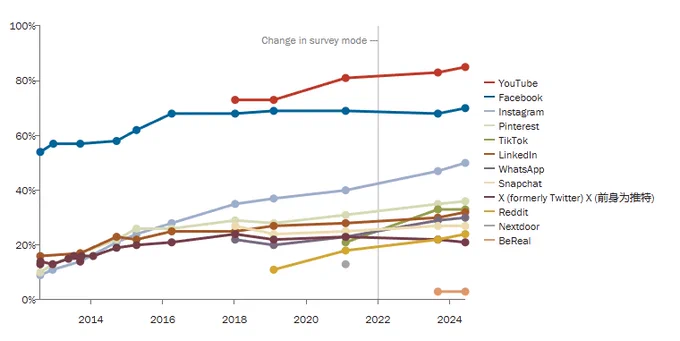
Pew Center的调研报告:美国用户的2024年社交媒体使用率排名
YouTube - 85%
Facebook - 70%
Instagram - 50%
Pinterest - 36%
TikTok - 33%
LinkedIn - 32%
WhatsApp - 30%
Snapchat - 27%
Reddit - 24%
X(Twitter) - 21%
BeReal - 3%
显示更多

Hyperliquid Policy Center 正呼吁美国证券交易委员会(SEC)将空投排除在证券定义之外。其主张包括:将 SEC 于 2026 年 3 月提出的立场写入规则,即免费空投不构成“金钱投资”,因而不属于投资合约;将该规则扩展至已公布的空投,包括周期性或定期分发,前提是网络已可正常运行、资格基于使用或贡献(如交易、验证、提供流动性、治理),且空投并非融资手段。其认为,投资需有形且可识别的对价,空投属奖励而非投资。
显示更多


Gate 首发上线: $CENT @Incentiv_net
🔹 交易对: $CENT / $USDT
🔹 交易时间:10月12日 17:00 (UTC+8)
🔹 0 手续费闪兑开始:10月12日 18:00 (UTC+8)
🔹 HODLer Airdrop 第342期:34,482,759 $CENT 免费空投等待领取
🔹 仅需持有 1 $GT 即可参与,VIP 用户最高享“无上限” 参与特权
立即免费领取:
立即交易:
更多详情:
显示更多
