Search results for Broken_Room
Broken_Room community
One keyword maps to one global community path.
People
Not Found
Tweets including Broken_Room


Recently, we received some player feedback:
“Someone keeps grabbing Lightning in the room, then starts chasing everyone down. It’s impossible to play!” ⚡🐍
At first, we were confused.
Our first reaction was: wait… is someone cheating?
Then we checked.
Nope. Not a hack.
What made it even crazier was that some players actually recorded videos showing exactly how they could grab Lightning again and again, then use it to hunt down other players.
At that moment, as developers, we honestly had a small breakdown.
The game wasn’t broken.
The players had evolved too fast.
Some high-level players now understand PumpSnake’s map, item spawns, movement rhythm, and chase routes to an absolutely ridiculous level.
They’re not playing Snake anymore.
They’re hunting. 😵💫
But here’s the problem:
When a few skilled players master the Lightning mechanic too hard, new players might enter a room, barely understand what’s happening, and get wiped out in seconds.
That’s not very friendly to beginners.
So this time, we’re making an adjustment:
⚡ The Lightning item will be removed from the map
🪲 The Lightning Buff will now come from in-game beetles
⏱️ As compensation, the Lightning Buff duration will increase from 15s to 20s
This is not about nerfing skilled players.
Good players can still dominate through mechanics and prediction.
But we want Lightning to become a little more random, give new players more room to adapt, and add more uncertainty to every match.
Now, whether you get Lightning or not is all about luck.
But once you get it…
Go ahead and start the killing spree!!!😈
#pumpsnake# #web3# #gamefi#
Show more

hermes agent is already the best on local models. but i'm working on more edges to make it fly even harder.
before that, if your agent keeps crashing on local inference here's what to check:
> max_turns: default is tuned for fast frontier models. bump from 30 to 50. slow local models need more breathing room per agentic loop.
>gateway_timeout: raise from 600 to 1200. local inference at 12-17 tok/s will timeout silently and look like crashes.
> context accumulation: auto-reset is off by default. your session grows until you /reset. long convos choke the agent. reset between major tasks.
if you're running anything under 20 tok/s locally, these three settings are the difference between "broken" and "flying." tune your config before you blame the tool.
Show more

Kids growing up in chaos have the same brain scars as soldiers coming home from war.
Let that sink in.
Neuroscientists studying children raised in unstable households, the constant fighting, the screaming, the neglect, the abuse, found something nobody wanted to see.
Their brains looked like combat veterans.
Same wiring. Same damage. Same survival mode burned into the tissue.
A child who never knew what mood mom would be in. A kid who flinched at footsteps in the hallway. A teenager who learned to read a room before learning to read a book.
Their nervous systems were never resting. They were deployed.
Hypervigilance. Shrunken hippocampus. Overactive amygdala. The exact signature you find in a soldier who spent a year dodging IEDs.
Except these kids weren't in a war zone.
They were just home.
And here's the part that hits hardest, the brain doesn't know the difference between a battlefield and a kitchen full of yelling. Threat is threat. The body keeps the score either way.
So if you grew up walking on eggshells and still feel like you're bracing for something you can't name, you're not broken.
You came back from a war nobody acknowledged.
Show more

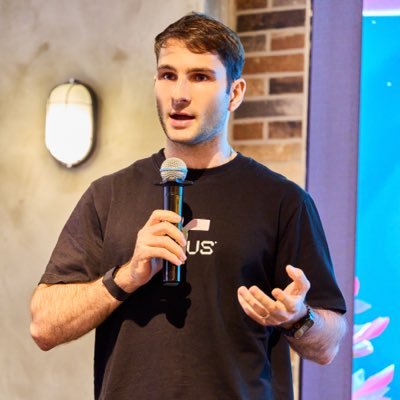
In my first investor meetings, I was the quiet one in the room.
I didn't bring commanding energy, nor rehearsed one-liners. Just someone trying to be straight about what I was building and why.
What I didn't expect was that this would actually work.
What showed was the ability to grasp complex topics fast and explain them back clearly. When a hard question came in, I didn't get flustered but I broke it down and answered it straight.
Over a few meetings, I think they started to see something else too: that I was an operator. Someone who would organize, execute, and not leave loose ends.
But the thing that closed it was commitment. I showed I would go the extra mile because I was performing conviction and because I genuinely would.
They could feel the difference.
I've since read a lot about what makes a great fundraiser.
The charisma, the timing, the nervous system regulation when the room is ready to write a check. All real. But there's another path nobody talks about enough.
Investors don't just back ideas. They back people they believe will figure it out.
And "will figure it out" doesn't always look like confidence. Sometimes it looks like depth.
The person who does the homework, follows through on the small things, shows up the same whether there's a deal on the table or not.
I wasn't the loudest founder in the room. But I think they felt like no obstacle between now and the outcome they wanted would stop me from grinding through it.
That's its own kind of conviction. Quieter than most people describe it. But the investors who've worked with me longest recognized it the moment they saw it.
You don't have to change who you are to raise. You have to make the thing that's true about you impossible to miss.
Show more

Ernst Eduard Kummer, one of the great algebraists of the nineteenth century, had a strange weakness that made his students both amused and bewildered — he was terrible at arithmetic.
In the classroom, where one would expect flawless calculations, Kummer often found himself pausing mid-problem, turning to his students for help with even the simplest numbers.
One day, while teaching, he arrived at what seemed like an easy step.
“Seven times nine,” he began confidently. Then his voice faltered.
“Seven times nine is… er… ah… ah… seven times nine is…”
The room grew quiet. Students exchanged glances. Finally, a voice from the front row broke the silence.
“Sixty-one,” the student said.
Relieved, Kummer nodded and wrote 61 on the blackboard.
But before the chalk could settle, another student quickly stood up.
“Sir, it should be sixty-nine.”
Kummer turned, slightly puzzled but entirely serious.
“Come, come, gentlemen,” he said, raising his hand. “It can’t be both. It must be one or the other.”
He tried to reason it out logically.
“The product cannot be 61,” he said, “because 61 is a prime number. It cannot be 65, because 65 is divisible by 5. It cannot be 67, for it too is prime. And 69 is clearly too large…”
He paused, thinking carefully, then concluded with quiet satisfaction:
“Only 63 is left.”
And just like that, through pure reasoning rather than calculation, Kummer arrived at the correct answer — reminding everyone in the room that while arithmetic may fail you, deep mathematical thinking rarely does.
Show more


Humanoid robotics is the bull thesis of the next decade, and almost nobody can buy it.
Figure, Physical Intelligence, 1X, Apptronik, Unitree, Agility, and most leading humanoid robotics companies remain private.
Access runs through a small set of institutional funds, while the cycle that could define the labor force of the next century is being underwritten without retail in the room. XMAQUINA built the fix: a decentralized ecosystem that opens robotics capital markets to broader participation.
The companies being built today will define what physical labor looks like for the next fifty years. If access stays locked behind Sand Hill term sheets and prime-broker desks, robotics becomes one of the most consequential wealth-creation cycles of our lifetimes and one of the most exclusive.
The people who saw it coming, who use these systems, and who will work alongside them should not be forced to watch from the sidelines. That is the outcome XMAQUINA exists to prevent.
We're excited to have @XMAQUINA launch on Virtuals Protocol. The infrastructure that opened the agent economy to anyone with a wallet now brings that same access model to robotics.
The bull thesis of the next decade should not stay private.
Show more


In September 1997, Apple was 90 days from bankruptcy, the stock was at $3.30, and Michael Dell had publicly said the company should be shut down and the money returned to shareholders.
Steve Jobs had been back for 8 weeks. No title. No salary. Technically just an advisor.
He walked on stage that month, slept three hours the night before and gave a 16-minute speech that almost nobody has watched.
It is the speech that saved Apple.
He did not show a product. He did not show a chip. He did not show a roadmap. He spoke about one idea.
Marketing is about values.
Not features. Not specs. Not megahertz. He said the world had become so noisy that no company on Earth was going to get a chance to tell people more than one thing about itself. So you had to be very clear about what that one thing was.
Then he said the line almost nobody quotes from that morning.
Even a great brand needs investment and caring if it is going to retain its relevance and vitality. The Apple brand had clearly suffered from neglect.
He admitted on stage, to his own employees, that the company they worked for had stopped caring about the thing that made it matter.
Then he ran the ad.
Here is to the crazy ones. The misfits. The rebels. The troublemakers. The round pegs in the square holes. The ones who see things differently.
When the tape stopped, the room was silent for a few seconds. Then they stood up.
The thing he did next is what most people miss when they tell this story.
He had personally called Yoko Ono to get permission to use John Lennon. He had called the estates of Einstein, Gandhi, Picasso, Edison, Amelia Earhart, Martin Luther King. Almost none of them had ever appeared in an advertisement before. Almost all of them said yes to Apple specifically, when they had said no to everyone else who had ever asked.
He said on stage that morning that he did not think any other company on Earth could have run that campaign.
He was probably right.
The campaign broke on Sunday night during the network premiere of Toy Story on ABC. The ad ran twice. Print followed in the Wall Street Journal, the New York Times, USA Today. Billboards went up in five cities. Buses with Rosa Parks' face on them started driving through Manhattan.
Apple did not announce a new computer that quarter. They announced who they were.
18 months later they shipped the iMac. 3 years later the iPod. 6 years later the iTunes Store. 10 years later the iPhone.
The most valuable company in the history of capitalism was rebuilt on a 16-minute talk where the founder did not show a single product.
Everyone quotes the Stanford commencement speech from 2005. The one about staying hungry and staying foolish. That one made him a philosopher.
The 1997 speech is the one where he saved the company.
He told his employees the company had lost its soul. He told them what the soul was. He told them they were going to spend a fortune reminding the world.
Then he walked off stage and went to work.
The difference between a company that dies and a company that becomes the most important company in the world is sometimes one person, on three hours of sleep, willing to stand in front of his own team and say we forgot who we are.
The crazy ones changed things because somebody believed they could.
That somebody was him.
Show more


