Search results for Cardology
Cardology community
One keyword maps to one global community path.
People
Not Found
Tweets including Cardology

At the European Society of Cardiology Congress this weekend:
• Novartis drug successfully lowered signs of inflammation in mid-stage study
• AstraZeneca shared details on the surprise failure of its “silencer” drug
Read more takeaways here:
Show more


Alnylam’s $ALNY heart drug troubles take center stage at a cardiology conference
#ESC26# kicks off tomorrow morning, where we will get full data from the failed CARDIO-TTRansform study of eplontersen. Important Alynylam read-thru...
Show more

A 25-year-old scientist is taking on one of cardiology's biggest challenges: helping the heart repair itself after a heart attack.
When a heart attack blocks blood flow, heart muscle cells in the affected area can die within hours. Unlike tissues such as the skin or liver, the heart has very little ability to regenerate. Instead, the damaged area is replaced with scar tissue, which can't contract like healthy muscle. Over time, this loss of function can weaken the heart and increase the risk of chronic heart failure.
Pilar Ferrer, a biologist and graduate of Favaloro University in Argentina, is developing an experimental hydrogel through her startup, Amnova Biotech. Inspired by the amniotic membrane—a placental tissue already used in regenerative medicine—the gel is designed to be injected into damaged heart tissue, where it serves as a supportive scaffold that may encourage the body's own repair processes rather than leaving behind only scar tissue.
So far, studies in sheep have shown encouraging results, including smaller areas of damage and improved heart function after treatment. While these findings are exciting, they're still in the early stages. Human clinical trials are not expected to begin until around 2028, and many therapies that succeed in animals ultimately fail to produce the same results in people.
If future research confirms its effectiveness, this regenerative strategy could represent a major shift in how heart attack damage is treated. Would you be interested in seeing treatments that focus on rebuilding heart tissue instead of simply managing permanent scarring?
Show more


One of the most heartbreaking patterns I see in my cardiology practice is not medical—it's emotional. Especially in Persian and Jewish families, I meet extraordinary mothers who love their children so deeply that they slowly sacrifice their own joy, health, friendships, and identity. They believe that if their child is suffering, they too must suffer. They wear misery as proof of love. But the unintended consequence is devastating: the child doesn't just carry their own pain—they begin carrying the unbearable weight of believing they have destroyed their mother's life. Few burdens are heavier than a son or daughter thinking, "Because of me, my mother will never be happy again." That isn't love; it's guilt masquerading as devotion.
Rabbi YY Jacobson puts it beautifully: "One suffering person doesn't help another suffering person. The greatest gift you can give your children is for them to know, 'Mommy is actually doing well. Mommy is enjoying life.' Empathy doesn't mean I become miserable. Empathy means I believe in your strength, I stand beside you, and I remind you that hope is still alive." That wisdom echoes the Torah. We are not called to become martyrs for those we love; we are called to become sources of light. The strongest mother is not the one who suffers the most, but the one whose joy gives her children permission to heal. Dance. Laugh. Take care of your health. Continue living fully. Your happiness does not diminish your love for your children—it may be one of the greatest gifts you ever give them.
Show more
I want to tell you why I brought this test into my practice.
After more than two decades in cardiology, I've learned that the most painful sentence in medicine isn't "you have cancer." It's "we caught it too late." I've watched patients survive their heart disease — do everything right, transform their numbers, add years to their life — and then be taken by a pancreatic or ovarian cancer that nobody was looking for, because no screening test for it existed. Those losses stayed with me. They're the reason I've spent months studying the science behind multi-cancer early detection, and the reason the Galleri test is now available in my office.
Here's what it is: a single blood draw that screens for a signal from more than 50 cancers — most of which have no routine screening in this country. It works by reading the molecular fingerprint that tumors shed into your bloodstream, and when it detects something, it also tells us which organ the signal most likely came from, so we know exactly where to look. I chose this particular test after reviewing the whole field, and I chose it for one reason above all: it is the only multi-cancer test that has been studied prospectively in more than 142,000 people who felt completely healthy — the hardest and most honest way to test a screening tool.
Who should consider it: adults 50 and older, and anyone at elevated risk at a younger age — a strong family history of cancer, a known genetic predisposition, a significant smoking history, chronic liver disease, obesity or long-standing metabolic disease, or a prior cancer diagnosis. It is not a replacement for your mammogram, colonoscopy, or other standard screenings — please keep every one of those. It's an additional layer, aimed at the cancers we currently don't look for at all.
And here is the whole point, in one sentence: for most cancers, early is curable and late is not. Survival for many of the deadliest cancers falls from 80 or 90 percent when caught early to single digits once they've spread. Same disease, same treatments — the only thing that changed is when we found it. That window is everything, and this test is a chance to find it while the window is still open.
Please read the full article I've written below. I've laid out exactly how the technology works, what the trials actually showed — including their limitations, because you deserve the honest version — and how to think clearly about whether this is right for you. Then, if you'd like to discuss it, ask us at your next visit or call the office. I'd rather have this conversation with you now than have a different one later.
Show more
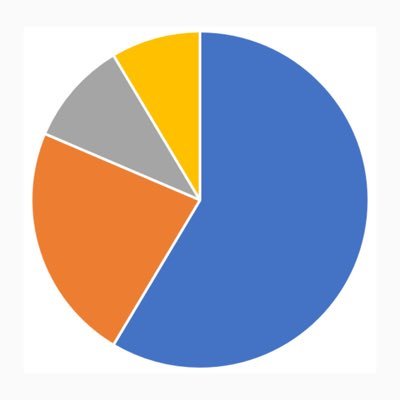
Extra sleep on the weekend can prevent heart attacks and reduces heart disease risk by 20%.
A study presented at the European Society of Cardiology Congress found that people who catch up on sleep during the weekend had a 20% lower risk of heart disease, especially among those who are sleep-deprived during the week.
Show more

We're making waves at SOLACI 2026 in São Paulo, Brazil 🌊
✅Training Village
✅National Live Case
✅Thematic session
We're all set for Latin America's premier gathering for interventional cardiology, bringing together experts committed to advancing patient care through education, collaboration, and innovation.
We can't wait to connect and introduce you to the new Shockwave C2 Aero. Até lá! 👋
#SOLACI2026# #ShockwaveIVL# #InterventionalCardiology# #ShockwaveC2Aero# #LiveCase#
Presenting physicians are paid consultants of Shockwave Medical.
US Rx only. Safety Info:
Product availability may vary by country.
Show more

For Healthcare Professionals Only: Dziękuję, Poland! What inspiring days of clinical exchange.
Last week, our latest device made its debut at the 2nd Kashubian-Pomeranian Interventional Cardiology Workshop, bringing together a highly engaged community of interventional cardiologists.
The first clinical use, led by Dr. Michał Hawranek (@HawranekMichal), lays the groundwork for the rapid adoption of next‑generation #ShockwaveIVL# technologies in Poland and further progress in calcium modification.
It was a pleasure to connect and exchange valuable perspectives on how this innovation can support daily practice and advance calcium modification. Together, we’re shaping what’s next in calcium treatment.
For professional use only. US Rx only. Safety Info: Product availability may vary by country.
Show more


🚀 First case. New possibilities. #ShockwaveC2Aero# now in Poland.
Join us on 19-20 June at the 2nd Kashubian-Pomeranian Interventional Cardiology Workshop to explore insights from the first Shockwave C2 Aero case in Poland and discuss how this technology is advancing calcium modification in clinical practice.
Ready to rethink calcium treatment? Let’s take on the toughest lesions, together.
Register now:
US Rx only. Safety Info: Product availability may vary by country.
Show more
