Search results for My_Youth_for_14Years_is_IU
My_Youth_for_14Years_is_IU community
One keyword maps to one global community path.
People
Not Found
Tweets including My_Youth_for_14Years_is_IU

HAPPY IU 14th Anniversary🎉
⠀
#IU# #아이유#
#IU_14th_Anniversary#
#IU_14th_UAENA#
#My_Youth_for_14Years_is_IU#
#14년째_내_청춘은_아이유#


Never slept better and feeling reseted. Brand new me and brand new usage for all ChatGPT Work and Codex users. Regaining my youth one button press at a time.
Happy Thursday

Some dreams don’t disappear. They just get rewritten by the people who need you more.
I spent years of my youth chasing a life as a guitarist. Fingerstyle was my passion. I put in the hours, earned respect for the craft, and thought music would be what my life revolved around. Then my daughter Madeline was born, and everything changed.
She’s 13 now. She’s had seizures since she was six months old. She’s non-verbal, and her development has been severely delayed. I remember crying the first time she walked... she was eight. I wasn’t sure she ever would. I still have this recurring dream where I hear her say “I love you.” Most people take those words for granted. I still hope to hear them one day. In the meantime she shows me in her own way. She’ll sit next to me, grab my hand, give me big wet kisses on the cheek, and laugh. Those moments are everything.
Early on, my wife and I had to make a hard decision about our lives and hers. Madeline needs care around the clock...lifting, bathing, feeding, managing seizures, everything. It takes a tremendous amount of physical strength and constant presence. My wife had the opportunity to become a special education teacher. We decided she would be the one to work, and I would stay home to care for Madeline. It wasn’t an easy choice. It meant one income, giving up the career path I thought I’d have, and accepting that our roles would look very different from what most people expect. We believed it was the best way to give Madeline what she needs and still provide for our other three kids. Looking back, it was the right decision for our family, even if the cost has been high.
The truth is, this life is beautiful and brutal at the same time. I’ve been changing diapers for 13 years straight with no end in sight. With only one of us able to work, the financial strain has been constant. I’ve given up meals so my family could eat. I’ve set aside the life I thought I was building so I could be present for the one I actually have. I’m not perfect. I’m tired. I’m scared about the future... about who will care for Madeline when I’m gone, about how we’ll keep everything together. I don’t always have answers. I’ve learned to accept the tears that come with this life. Some things are simply outside our control.
What we lack in money we try to make up for in love. My wife and I have given everything we have to give. Right now, though, the financial weight has become too much. We’re asking for help so we can build a little more security for our family.
If you’ve ever had to trade one dream for another, or if you’ve ever made a hard decision about who stays home so someone else can be cared for, you understand. We’re not looking for a handout. We’re trying to keep going for the people who need us.
If you’re able and willing to support us, I’d be deeply grateful.
Cash App: $CarlosTrujilloGuitar
Venmo: @Carlos_Trujillo_Guitar
Thank you for reading. It means more than I can say.
#SpecialNeeds#
#Christianity# #prayer#
Show more


My sister does tea duty for my nephew's youth baseball team.
In Japan, that's a mom job. Every Saturday and Sunday, the mothers take turns in aprons, pouring barley tea for the coaches and cutting lemons for the boys.
And for the last two years, standing in the row of tiny mothers in aprons, there has been one six-foot-four welder from Wyoming.
His name is Travis. He's 41.
He has a red beard, burn scars up both forearms, and a laugh you can hear from the outfield. His apron says "KISS THE COOK." The mothers have never once asked what it means. He has never once offered to explain.
Travis met a Japanese nurse named Mika online. He flew to Japan eleven times in one year. Then he quit his job, sold his truck, and moved to a city where he could not read a single street sign, to marry a woman and her eight-year-old son.
The son's name is Kaito.
Kaito's real father had left when he was four. Packed a bag on a Tuesday. Never called.
So when a giant American moved into their small apartment, Kaito did the only thing that made sense to an eight-year-old who had already been left once.
He refused to need him.
He called him "Travis-san." Politely. Like a substitute teacher. He didn't look at him at dinner. He didn't answer when Travis said goodnight in his terrible Japanese.
Travis didn't push. He just stayed.
Mika works the early shift at the hospital. So on weekends, it was Travis's job to make Kaito's lunch for baseball.
In Japan, a lunch box is not just lunch. Mothers get up at five to make little works of art. Rice shaped like animals. Hot dogs cut into tiny octopuses. Faces made of seaweed. The boys compare them at lunch like baseball cards.
Travis watched YouTube videos for a week.
His first lunch had a rice ball the size of a softball. The octopus hot dogs looked like they had lost a fight. The seaweed face was supposed to be smiling. It looked frightened.
At lunch, the other boys laughed so hard one of them fell off the bench.
Kaito didn't eat a bite.
He brought it home, still full, and dropped the whole thing in the kitchen trash.
Travis found it that night.
He stood there for a long time, looking down at it.
Then he took it out, washed the box, dried it, and set it on the counter.
And the next morning at five, he made another one.
He never said a word about it.
My sister says you could tell which lunch was his from across the field. Every Saturday and Sunday, for two years. The rice balls got smaller. The octopuses got braver. He learned to cut seaweed with a pair of nail scissors, holding his breath, his tongue sticking out of the corner of his mouth.
Those hands could weld two pieces of steel together so they would never come apart.
Every weekend, at five in the morning, they were trying to cut a smile out of seaweed.
And every lunch had a note, in Japanese, written in big careful letters.
"がんばて"
He was trying to write "ganbatte." Do your best. It's what Japanese parents write. But he always left out one tiny letter. So it said "ganbate." It was wrong. Every single time.
Kaito knew. He never told him.
Two years went by like that. Lunches and silence.
Then one Sunday last fall, after a game, a boy on the team said it. The thing kids say when they find the soft spot.
"Your real dad didn't want you. That's why you got the American."
Kaito didn't cry. He hit him.
That night, at home, he finally said all of it. At Travis. Two years of it.
"You're not my dad. My real dad left. You're going to leave too. Everybody leaves. Just go."
Mika started to say something. Travis put a hand up. Gently.
Then he got down on one knee in the hallway. All six-foot-four of him. So his eyes were level with the boy's.
And he said it in Japanese. Badly. The accent all wrong. Words he must have looked up a long time ago, and kept somewhere, for exactly this.
"どこにも、いかない."
I'm not going anywhere.
Kaito slammed his door.
And Travis stayed on his knee in the hallway for a long time.
At two in the morning, Kaito woke up and heard something through the thin apartment wall.
A low voice. In the kitchen. Saying Japanese words over and over. Slowly. Getting them wrong. Starting again.
Travis, with a textbook and a pencil, at the kitchen table, at two in the morning. Practicing.
Kaito lay in the dark and listened until the voice stopped.
In February, Kaito's school held a ceremony called Half Adulthood. In Japan, when children turn ten, halfway to twenty, they write a letter to their parents and read it out loud in front of the class.
Travis came. He sat in the back, in a tiny plastic chair made for a ten-year-old, his knees up near his chest. He didn't understand a word of what anyone was saying. He clapped for every kid anyway.
When it was Kaito's turn, he stood up and read his letter in Japanese. To his mother. Thank you for working so hard. Thank you for raising me.
Then he stopped.
He turned the paper over.
And he started reading again. In English.
Slow. Careful. Every word practiced.
"Travis.
You make the worst lunches in Japan.
The rice balls are too big. The octopus hot dogs look scared.
You spell ganbatte wrong. Every time.
You made me 211 lunches.
I threw the first one away. You washed the box. You made another one.
I am sorry.
I'm not going anywhere either.
Thank you, Dad."
The room was silent.
Then, in the back, a six-foot-four welder from Wyoming folded forward in a tiny plastic chair, put his huge scarred hands over his face, and shook.
The mothers of the fourth grade passed tissues down the row to him. One by one. Hand to hand. Until there was a little pile of them in his lap.
He didn't use any of them. He just held them.
The next morning, Travis came into the kitchen at five to make lunch, like always.
But there was already a lunch box on the counter.
Kaito had gotten up at four.
The rice ball was lopsided. The octopus hot dogs had no legs. The seaweed face was a little crooked. It was the first lunch he had ever made in his life.
And on top was a note, in Kaito's handwriting.
"がんばて"
Spelled wrong.
On purpose.
The same way. Missing the same tiny letter.
My sister asked Kaito about it at practice. Why he didn't spell it right. He's ten. He knows how.
Kaito shrugged, like it was obvious.
"That's how we spell it at our house."
Show more

Democrat Nominee for U.S. Senate in Texas James Talarico: “I have a special place in my heart for LGBTQ youth.”
Vote Republican tomorrow to keep Talarico out of the U.S. Senate.
Show more

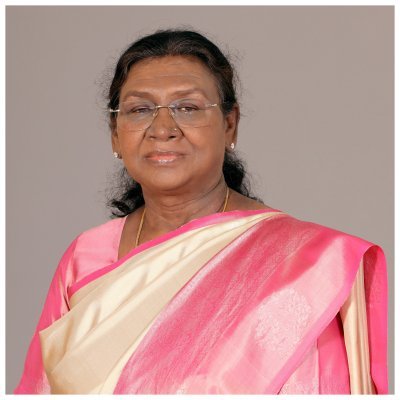
My heartiest congratulations to all the members of Team India on winning Women’s T20 Asia Cup Championship 2026. They played superbly as a team throughout the tournament, winning all the matches. They have done the country proud. They are a source of great inspiration for our youth, especially our daughters. I am sure, they will script many more inspiring chapters of success and excellence.
Show more

He was sixteen years old.
Stepan Chubenko was a goalkeeper. He played for the youth team of FC Kramatorsk. He dreamed of being a professional footballer. He took care of the children at the local orphanage with his friends, bringing them toys and books and sweets. He had a girlfriend. They had talked about getting married someday.
In the summer of 2014, three russian-backed militants tortured him for a week and shot him three times in the head in a village near Donetsk.
His killers offered to spare his life if he would side with the so-called “Donetsk People’s Republic.”
He refused.
Read the full story on my Substack:
Show more


A historic new frontier for India’s space journey!
At 11:30 AM today, Skyroot Aerospace will undertake the maiden orbital launch of Vikram-1, India’s first privately developed launch vehicle.
This four-stage rocket is designed to provide rapid and on-demand launch services. This mission highlights the talent, determination and entrepreneurial spirit of our youth. It also shows how our space-sector reforms are unlocking new opportunities for innovation and enterprise.
My best wishes to the entire Skyroot Aerospace team for a successful launch. May Vikram-1 soar high, create history and inspire a generation of innovators.
I urge all Indians, especially my young friends, to follow this historic mission and join in wishing Team Skyroot success using #IndiaWithVikram1#.
@SkyrootA
Show more


"Oh, they trying to take my job!" 🥹
@KarlTowns continues to inspire the next generation, hosting his youth basketball camp in New York for the second straight year!
