Search results for ScientificResearch
ScientificResearch community
One keyword maps to one global community path.
People
Not Found
Tweets including ScientificResearch

China’s 16th Arctic Ocean Expedition: Ice‑station operations underway aboard Xue Long 2. Drilling and sampling on sea ice to unlock Arctic Ocean mysteries.
#ArcticOcean# #ScientificResearch#
Show more


Scientific Paper Explains the Possible Existence of Reptilian Humanoids...
Famous chemist Ronald Breslow PhD has recently released a paper explaining the possibility that an ancient advanced Reptilian civilizations exists. The paper was published by the American Chemical Society.
(American Chemical Society) - "New scientific research raises the possibility that advanced versions of T. Rex and other dinosaurs — monstrous creatures with the intelligence and cunning of humans — may be the life forms that evolved on other planets in the universe."
"We would be better off not meeting them", concludes the study, which appears in the Journal of the American Chemical Society.
Later edit -- The paper was withdrawn from the website, about one month after I have posted this article, and linked it to their work: "This paper was withdrawn on May 16, 2012 (J. Am. Chem. Soc.2012, 134, 8287)."
Show more

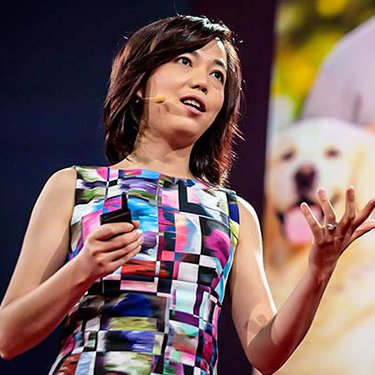
Scientific research is fundamental to advancing civilization and helping people globally to solve the most critical problems, from medicine to materials, from brain science to physics, and much beyond. This is only possible when scientists have access to the best tools of the time to conduct scientific research, including having access to AI-based tools.
Show more

@drfeifei Scientific research tools must transition from static models to autonomous agents capable of executing complex, multi-step experimental workflows.

🧪Can AI agents take a scientific paper and write a meaningful follow-up to it?
We introduce Into the Unknown, an AI agent benchmark of 15 open scientific research problems. Each problem comes from a scientist currently or formerly at US DOE National Labs:
@LosAlamosNatLab @SandiaLabs @BerkeleyLab @AmesNatLab @PPPLab @Livermore_Lab
Show more


We're deepening our commitment to scientific research and technological discovery by committing $150 million to the Genesis Mission.
We'll also make Claude and our technical support available to more than 15 federal agencies.
Show more


#AI# is increasingly used in the scientific research process. So does publishing need to change to keep up? Jiachen Liu argues that the PDF should be replaced with a different communication method designed with AI in mind. Do you agree?
Show more


A single 24GB GPU can now run a 35B scientific research agent that spawns sub-agents and checks its own evidence.
Sage-A1.5 is 35B / ~3B active, and its official Q4_K_M is just 21.7GB.
Here are the new Sage-A1.5 model stats
🧠 35B MoE / ~3B active
💾 official Q4_K_M → 21.7GB
🎮 fits a single 24GB GPU at moderate context
📚 256K native context
👁️ multimodal
🔓 Apache 2.0
And it's specifically trained as a long-horizon research agent.
So it is designed to
🔎 use tools/search/code
🤖 spawn parallel sub-agents
✅ inspect its own evidence
🔄 change direction when research stalls
No separate critic model required for its verification mode.
These are the full-precision benchmark results
PinchBench
Sage-A1.5 → 90.0
Kimi K3 → 88.2
GLM-5.3 → 86.6
GPT-5.6 Sol → 87.3
FrontierScience-Olympiad
Sage → 81.0
Kimi → 69.0
GLM → 67.0
GPT → 73.0
SWE-Pro
Sage → 61.2
Kimi → 63.3
GLM → 64.6
GPT → 64.6
⚠️ Those benchmark scores are from the BF16 checkpoint, not the Q4.
But the same model now has an official 21.7GB GGUF with llama.cpp / Ollama / LM Studio support.
Link in ALT
Show more


The Agentic Scientist: Orchestrating Coding Agents for Automated Scientific (Co-)Discovery
Blog:
GitHub:
arXiv:
Since 2024, we’ve used The AI Scientist as a way to test how far AI alone can take scientific research, from v1 to v2 to the paper published in Nature earlier this year. The Agentic Scientist is the next step in that line of work, built for the era of coding agents.
Coding agents such as Codex and Claude Code now carry out long software tasks on their own. Handing them a research problem, however, tends to produce a strong hyperparameter optimizer rather than a scientist: scores go up, but ideas stay narrow, and the reasons for the gain are rarely examined.
The Agentic Scientist makes the research loop explicit. It wraps off-the-shelf coding agents in a scaffold that controls what they see, what they write, how they are evaluated, and how results are handed to the next stage.
Parallel workers test hypotheses against rubrics defined before any experiment runs, share successes and failures through a common memory, and then ablate the winning program to generate evidence.
We used an early version of the system to study Error Diffusion, a biologically motivated alternative to backpropagation. Our researchers set the question and the rubric, chose directions at each stage, and verified the results, references, and claims before submission. The resulting paper was accepted as an oral presentation at ALIFE 2026. In autonomous runs, the system also raised Doc-to-LoRA retrieval accuracy from 52% to 98% on multi-needle tasks and designed a learned evolution strategy that improves over its CMA-ES reference on unseen tasks.
Alongside it we release AutoIllustrate, a pipeline for scientific figures that keeps an editable file as the source of truth, so every diagram can be corrected by hand.
Humans define the question and the standards of evidence; agents expand the experiments researchers can run. We call this Co-Discovery, and we are releasing both systems as open source for the community to build on.
Show more


The @ENERGY Office of Science's facilities make our world-leading scientific research possible.
Join a virtual town hall on Sept. 17 to give input on the future of these facilities:
Show more
