Search results for SkillCoin
SkillCoin community
One keyword maps to one global community path.
People
Not Found
Tweets including SkillCoin

The address is live. 🔍
The GoPlus Growth Fund is officially co-established by @fourdotmemezh and @SafuSkill — backing quality builders in the OpenFour ecosystem.
📍 GoPlus Growth Fund:
0xf03d7e44f71abb9780c36704d5cab97fb731c153
As promised — disclosed before the first buy.
Every move from here is public:
→ Every buy, every LP, every wallet — verifiable on BscScan
→ The fund holds forever. No exits. No trimming. No selling.
→ Allocations go to GitHub-verified builders with real momentum and real users.
This is a joint commitment from and SafuSkill: an ecosystem fund built by a security company, backed by a launch infrastructure that's opening up to builders.
Verifiable, not promised.
Watch the address. Watch what we buy. 👀
#GoPlusGrowthFund# #SkillCoin# #OpenFour#
Show more

We’re putting money where the mechanism is.
Introducing GoPlus Growth Fund — with $50K initial deployment
to support quality projects in the @SafuSkill × @fourdotmemezh OpenFour ecosystem.
Here’s what makes it different from every other “ecosystem fund”:
🔸 Not for profit.
The fund doesn’t exit. Doesn’t trim. Doesn’t sell.
Every position is held forever.
🔸 Fully on-chain.
Independent address. Public dashboard.
Every buy, every LP, every wallet — verifiable on BscScan.
🔸 Supports organic growth only.
We allocate to projects with real momentum,
verified builders, and real users — not artificial pumps.
🔸 Real builders only.
GitHub-verified creators.
No farming. No theater.
After deep allocation, projects can choose:
→ Burn the tokens — deflationary signal
→ Or pair them as LP — liquidity for the long run.
Either way, the fund never sells.
This is what an ecosystem fund looks like
when a security company builds it.
Verifiable, not promised.
Address disclosed before first buy.
Stay tuned.
下一个时代的生态基金,长这样。
#GoPlusGrowthFund# #SkillCoin# #OpenFour#
Show more

👀 just announced OpenFour —
a new engine for reward mechanisms behind every launch.
We're the team building one of them out.
@SafuSkill is now live on @fourdotmemezh OpenFour
with Goplus SkillRoyalty.
Every Skill Coin you launch shares its trade fees:
→ 70% to the verified creator (GitHub-authenticated)
→ 15% to real users (download + usage verified)
→ 15% to ecosystem
Automatically. On-chain. Forever.
Not a grant. Not a one-time reward.
A continuous revenue stream tied to every single trade.
Real creators. Real users. No sybil. No farming.
Because GoPlus built it — and security is what we do.
Skill Coin is how creators finally get paid
for what people actually use.
Built on OpenClaw + Hermes.
Powered by @GoPlusSecurity.
(Goplus Creator Incentives mode also accessible via SafuSkill — native integration coming soon.)
下一个时代的资产,长这样。
#SkillCoin# #SkillRoyalty# #OpenFour#
Show more


AI Skills Fest is live and it’s your chance to skill up for free.
Swipe to find your AI skilling persona, choose your playlist, and start skilling.
Finish an AI Skills Fest playlist by June 12 to earn a free Microsoft certification exam voucher and a Credly badge for LinkedIn.
Show more


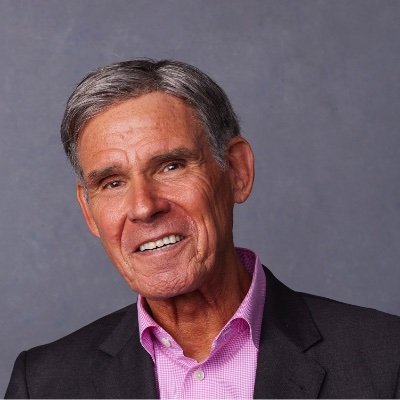
AI is changing medical practice, as @RBMD1982 points out @nytopinion
But there are certainly concerns regarding deskilling and never-skilling among younger physicians, trainees, and students (w/@AdamRodmanMD)
"Now, the chatbot in my pocket reassures me that I will always know enough, or have access to the cloud-based intelligence that generally does."
Show more


We got a spike in users earlier today because we accidentally went viral on the OSRS subreddit (r/2007scape) 😅
Things that Codex added to the game today:
- lots of content moderation lol
- Varrock + Falador
- A task system for skilling
- A dueling system where you can stake (improving)
- First 1000 players to get to 50 total level get a party hat
Show more


CHEGG $CHGG Q2’26 EARNINGS HIGHLIGHTS
🔹 Revenue: $51.8M (Est. $49.5M) 🟢; -51% YoY
🔹 Adj. EPS: -$0.02 (Est. -$0.05) 🟢
🔹 EBITDA: $9.1M (Est. $5.5M) 🟢
🔹 Net Loss: $3.0M
Q3 Guide:
🔹 Revenue: $43M-$44M (Est. $48.3M) 🔴
🔹 Gross Margin: 48%-49%
🔹 EBITDA: $1M-$2M (Est. $6M) 🔴
Segment Net Revenue:
🔹 Chegg Skilling: $17.5M; +2% YoY
Other Q2 Metrics:
🔹 Gross Margin: 55%
🔹 Non-GAAP Gross Margin: 57%
🔹 Free Cash Flow: $6.4M
🔹 Cash & Investments: $72.3M
Capital Return:
🔹 Share Repurchases: $1.7M
🔹 Remaining Authorization: $120.7M
Comments:
🔸 “we outperformed our expectations on revenue, adjusted EBITDA, and cash”
Show more

Had an excellent meeting with Dr. Navinchandra Ramgoolam, the Prime Minister of Mauritius. We met at the start of the year during the AI Summit and now we have the chance to meet in Seychelles.
We discussed ways to strengthen the India-Mauritius partnership. The progress being made across every area of our Enhanced Strategic Partnership is a matter of satisfaction for us. A number of projects are being implemented under our Special Economic Package.
We also discussed the way ahead with regard to sectors such as capacity building, skilling, defence, energy, cyber security and more.
@Ramgoolam_Dr
Show more


Skills that leaders identify as key to long-term organizational performance—judgment, problem understanding, creative thinking, and more—are the ones that they consider most at risk due to AI.
When this skill attrition occurs across thousands of people simultaneously, the business's collective intelligence quietly degrades. This is “distributed de-skilling”—a collective erosion of human skills that undermines organizational intelligence and resilience over time.
Here are six strategies to mitigate de-skilling risk:
Show more

At Microsoft Build 2026, we’re introducing new ways for developers to learn and demonstrate skills in the tools they use every day.
Today, we’re announcing:
• Microsoft Pro Badge (private preview), a first-of-its-kind credential that sets a new standard for recognizing real-world skills and verified proficiency demonstrated through everyday work.
• Co-authored skilling experiences with Anthropic in AI Skills Navigator.
Learn in flow. Build across stacks. Get recognized for what you do.
Then build further at AI Skills Fest, earn certification opportunities* and compete in an AI hackathon*.
*Terms and conditions apply
Learn more:
Show more
