Register and share your invite link to earn from video plays and referrals.

Lyle Morris
@LyleJMorris
Senior Fellow for Foreign Policy and National Security at @AsiaPolicy’s Center for China Analysis. Previous @DeptofWar; @RANDCorporation; @NBRNews; @CSIS.
2K Following    21.3K Followers
Live-fire drills will be conducted in parts of the #Taiwan# Strait, according to Zhangzhou Maritime Safety Administration. Anyone in the know, please confirm/add to the points below: July 23 Zone (5-point polygon) — approximately centered at 23.65°N, 117.55°E July 24 Zone (4-point rectangle) — approximately centered at 23.58°N, 117.47°E Both zones are located in the Taiwan Strait/East #China# Sea region, north of Taiwan. The July 24 zone is positioned slightly southwest of the July 23 zone. These are PLA-announced restricted areas for #military# exercises during the specified 12-hour windows (06:00-18:00 local time).
Show more
China begins two days of live-fire drills in Taiwan Strait
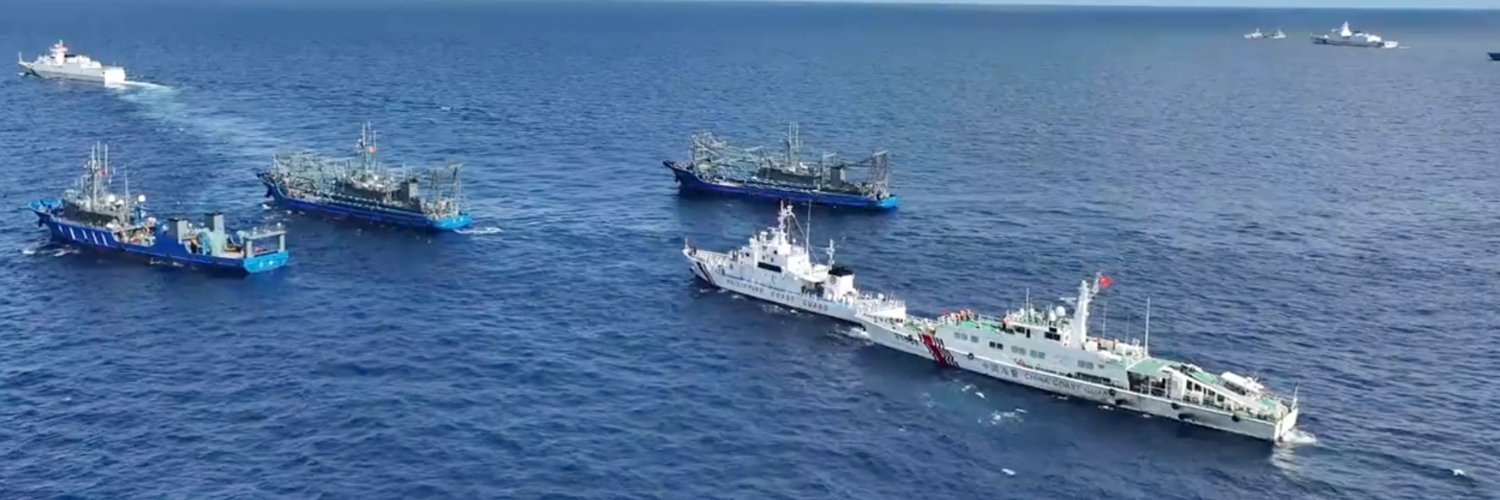
Reminder China’s claim of a reef as territory is invalid under UNCLOS, and the Philippines has every right to position its ships within its own EEZ.
This is due to China’s rapid nuclear buildup, and more recently, the PLAN’s SLBM test.
Defense Minister Shinjiro Koizumi has urged Japan to more openly debate nuclear weapons' role in the country's defense, a rare instance of a sitting Cabinet member broaching the highly contentious issue.
Show more
I first met Xi Jinping in 1986, when he was vice mayor of Xiamen. Great to speak with @ezraklein about China, its leadership, and the years that shaped its direction. My full interview with the @nytimes is out now.
Show more
Interesting. News of this has been scrubbed from the PRC MND website and PLA Daily. It's like it didn't happen. Are they purged already?
Important changes to the CMC: 1) Zhang Shuguang (张曙光), promoted to General, and takes over as head of CMC Discipline Inspection Commission and director of the CMC’s supervision committee, replacing Zhang Shengmin. 2) Wang Gang (王刚) promoted to General, and new Commander of the PLA Air Force. That means Zhang Shengmin will retire soon and Zhang Shuguang will likely become new Vice Chair of CMC. Wang will likely be part of new CMC lineup in 2027. Other recent developments, Defence Minister Dong Jun and General Han Shengyan, commander of the Central Theatre Command, were pictured on Monday seated next to each other at a gala marking the 105th anniversary of the Communist Party’s founding. It was the first time they had been pictured alongside other senior PLA commanders. This could be an indication that both Dong and Han may be on track to become CMC members as well. If I were to guess, new CMC leadership could include Zhang, Wang, Dong, Han, and Yang Zhibin, who was appointed commander of the Eastern Theatre Command in December.
Show more
New Xinhua photo of the SLBM launch looks like the JL-2. OSINT followers?
The Global Times, and China, by extension, has bought into Waltz's theory that more nukes make the world safer. 🤦‍♂️
Editorial from Global Times today on China's nuclear submarine - take it for what you will "The Stronger China's Strategic Nuclear Forces, the More Secure Regional Peace Will Be" Editor's Note: As China continues to strengthen its strategic deterrence system—including its "nuclear triad"—it will fundamentally break the dangerous logic that "whoever holds absolute military superiority can pressure others at will." As for those voices with ulterior motives, or those with guilty consciences, whether they feel nervous or afraid, this is something they will sooner or later have to accept and get used to. China's nuclear capability development has once again reached a milestone moment. On July 6, a People's Liberation Army Navy strategic nuclear submarine successfully launched a submarine-launched strategic missile carrying a training simulation warhead toward relevant high seas waters in the Pacific Ocean, accurately landing in the designated area. The last such launch took place in 2024, when China conducted a land-based intercontinental ballistic missile test launch in relevant high seas waters of the Pacific. Two years later, the new-type submarine-launched strategic missile test proceeded smoothly as planned, marking a significant enhancement in the overall deterrent effectiveness of China's "nuclear triad" strategic forces. This not only demonstrates to the outside world that China has both the resolve and the capability to firmly safeguard national sovereignty, security, and territorial integrity, but also provides a strong guarantee for peace and stability in the Asia-Pacific region. Regarding the specific model of the submarine-launched strategic missile tested—a subject of great external interest—analysts widely believe it is highly likely to be the JL-3. This missile has a range exceeding 10,000 kilometers and was officially unveiled at the 2025 military parade marking the 80th anniversary of victory in the War of Resistance. This successful test comprehensively verified the operational reliability of the entire weapons system, demonstrating extremely strong strategic deterrent capability. In international military activities—particularly in the field of strategic weapons testing—giving advance notification of launch plans to relevant countries is an important measure for maintaining peace and stability in the international situation. During the Cold War, the US and USSR conducted thousands of missile weapons tests, but rarely gave advance notice. Since the end of the Cold War, notifications by some countries—even nuclear powers—have remained confined to bilateral notification mechanisms. International law does not even stipulate a dedicated diplomatic notification obligation. However, according to foreign media reports, relevant countries received a public maritime advance warning from China a full day ahead, as well as diplomatic notification before the launch on the 6th—a goodwill gesture by China aimed at proactively reducing the risk of misjudgment. China's approach in this regard is open, reasonable, and lawful, fully demonstrating the sense of responsibility befitting a major power. Strategic nuclear capability is one of the areas that best embodies the principle of "using force to deter war." As is widely known, submarine-launched strategic missiles are a critical component of the strategic nuclear deterrence system and are recognized as a key force for second-strike nuclear capability. This is because sea-based nuclear forces possess strong survivability, ensuring that no country can completely destroy another nation's nuclear forces through a first strike. As the only one of the five nuclear weapons states to have pledged no first use of nuclear weapons, China's strengthening second-strike capability means a greater role in "using nuclear weapons to deter the use of nuclear weapons"—this is the fundamental path to breaking the nuclear deterrence and nuclear blackmail of certain countries, and a crucial element in preventing nuclear war. Beneath the surface of the Asia-Pacific's sustained rapid growth in recent years, various undercurrents are stirring. In the Taiwan Strait, external forces are colluding with "Taiwan independence" forces, increasing the risk of regional war. In the South China Sea, countries from outside the region regularly conduct reconnaissance and patrols, continually stirring up maritime disputes. The United States is also building various "minilateral" security mechanisms in the Asia-Pacific, attempting to create Cold War-style divisions, with small cliques like AUKUS further highlighting the risk of nuclear proliferation. In addition, Japan has completely abandoned its "exclusively defense-oriented" policy, with "new-style militarism" continuously growing and delusions of nuclear possession stirring. Some have never abandoned a "salami-slicing" style of risk-taking mentality, betting that China "wouldn't dare to actually act." The root of this mentality lies precisely in blind faith in and worship of America's strategic nuclear strike capability. China's continued strengthening of its strategic deterrence system—including its "nuclear triad"—will fundamentally break the dangerous logic that "whoever holds absolute military superiority can pressure others at will," causing forces outside the region and their regional dependents to abandon their scheme of forcing China to compromise through extreme military pressure and first-strike tactics, thereby reducing at the source the risk of large-scale conflict erupting in the Taiwan Strait, the East China Sea, the South China Sea, and elsewhere. We have noted that although China gave advance notification to relevant countries, there remain some discordant voices internationally—mainly from Australia, New Zealand, Japan, and some Western media. But for the most part, these are just grumblings from certain functional departments, and overall the volume seems to have decreased considerably compared to 2024. This, on one hand, shows that China's approach is beyond reproach, and on the other hand, demonstrates that China's peaceful practices in recent years have earned broad trust from the international community. China's display of nuclear capability is necessary yet restrained, and China consistently maintains its nuclear forces at the minimum level required for national security needs. China's nuclear policy has always maintained a high degree of stability, continuity, and predictability, which is conducive to safeguarding global strategic stability. As for those voices with ulterior motives, or even those with guilty consciences, whether they feel nervous or afraid, this is a situation they will sooner or later have to accept and get used to. History has already proven that the weaker and poorer China is, the more war-torn the Asia-Pacific becomes, while the stronger and more prosperous China grows, the more conducive it is to regional peace and prosperity. The successful test launch of this submarine-launched strategic missile is a powerful footnote to China's efforts to shore up its security bottom line and firmly walk the path of peaceful development amid a complex external environment. It sends a clear signal to the world: China has both the resolve and the capability to safeguard its core interests, while also being willing to contribute to strategic stability in the Asia-Pacific and the world at large through transparent, restrained, and responsible means.
Show more
Many operational details of China's latest submarine missile test remain unconfirmed. With that in mind, I wanted to share a few preliminary observations in case they are helpful in informing our collective analysis. A short🧵:
Show more
Pleased to be quoted in @AP and @washingtonpost on China's test launch of an SLBM. Thanks to @catecadell and @huizhong_wu for the opportunity!
Important changes to the CMC: 1) Zhang Shuguang (张曙光), promoted to General, and takes over as head of CMC Discipline Inspection Commission and director of the CMC’s supervision committee, replacing Zhang Shengmin. 2) Wang Gang (王刚) promoted to General, and new Commander of the PLA Air Force. That means Zhang Shengmin will retire soon and Zhang Shuguang will likely become new Vice Chair of CMC. Wang will likely be part of new CMC lineup in 2027. Other recent developments, Defence Minister Dong Jun and General Han Shengyan, commander of the Central Theatre Command, were pictured on Monday seated next to each other at a gala marking the 105th anniversary of the Communist Party’s founding. It was the first time they had been pictured alongside other senior PLA commanders. This could be an indication that both Dong and Han may be on track to become CMC members as well. If I were to guess, new CMC leadership could include Zhang, Wang, Dong, Han, and Yang Zhibin, who was appointed commander of the Eastern Theatre Command in December.
Show more
Excited to share this @WarOnTheRocks piece I've been contemplating and working on for a while now: "The Blind Spots in Chinese Military Studies." My contention is the authoritative textbooks and sources published by the PLA are dwindling or becoming outdated in the face of organizational reforms and data restrictions. The result is a community that is increasingly speculating or inferring Chinese military strategy from woefully outdated doctrinal texts, despite valiant efforts to stitch together incomplete pictures from a paucity of sources. This leads to the current challenge facing PLA watchers: deducing how the PLA will bridge the divide between military strategy and campaign-level and tactical-level operations based on outdated texts. Western analysts resort to using partial sources on particular issues to interpret the PLA's collective, authoritative guidance on the key principles of strategy and operational warfighting. This is a demanding task with a high degree of difficulty, and reasonable Western analysts can come to different conclusions. Less capable analysts are likely to mirror-image or get it wrong. I advocate restoring the Open Source Enterprise — formally called the Foreign Broadcast Information Service — back into the public domain. This can be done by empowering existing U.S. government platforms with the capability and experience to support a reconstituted FBIS — such as the Library of Congress — to revive taxpayer-funded open-source intelligence-gathering of translations of foreign military and political news, articles, and textbooks, in particular related to the PLA. This of course will not fundamentally solve the problem, but it will help. Thanks to David M. Finkelstein, @jwuthnow, Lonnie Henley, Dennis Blasko, Phil Saunders, Ken Allen, Chad Sbragia, Joshua Arostegui, and @NathanMBM for their helpful comments on previous drafts.
Show more
PLA Watch #24# is live! This issue focuses on ongoing efforts to hone “combat effectiveness” and cultivate “political reliability” throughout the PLA. We also examine a recently concluded 40-day combat training mission of the Liaoning task force – one of the longest deployments on record – which included accusations from China that the Japanese military “interfered” with PLA operations. @AsiaPolicy
Show more
While our rapid response & combat readiness drills are going on, @MoNDefense detected #China’s# third aircraft carrier #Fujian#, CV-18, transiting through the #Taiwan# Strait. Our team took a clean shot of it. 📸 @mna_roc
Show more
Still time to sign up for tomorrow morning's @AsiaPolicy webinar on takeaways on Taiwan from the Trump-Xi summit in Beijing, with @DavidMSacks1, Shao Yuqun and Chung-min Tsai. A lot to talk about!
Show more
We didn't get many specifics about what Trump and Xi discussed regarding Taiwan, Iran, and nuclear issues. We got a lot more when President Trump met with reporters on board Air Force One. A long 🧵 on what Trump said and why I was both relieved and confused with some of his remarks. First, below is my transcript of the conversation, and then with my initial thoughts. Broader Taiwan 2:11-3:03 Q: Can I ask you about Taiwan? What did President Xi say to you about Taiwan? And are you still going to approve the arms sale? Trump: President Xi and I talked a lot about Taiwan. He thinks they cannot have anything to do with what they are doing. He’s very much against what they are doing. We talked about Taiwan, we talked about Iran a lot. I think we have a very good understanding on both. On Taiwan, he does not want to see a fight for independence because that would be a very strong confrontation. And I heard him out. I didn’t make a comment on it. I heard him out. I have a lot of respect for him. Iran 3:03-3:34: Trump: On Iran, he (Xi) feels very strongly that they can’t have a nuclear weapon. He said that very strongly. They cannot have a nuclear weapon, and he wants them to open up the Strait. But as he said, they closed it and then you closed them (with a smile). That’s true, we control the Strait. And they’ve (China) done no business in the last two and half weeks, which is approximately 500 million dollars a day. So I think we are doing well on all fronts. Risk of Conflict over Taiwan 3:39-4:36 Q: President Xi said that there was a risk of conflict with the U.S. over Taiwan. What is your response to that? Trump: I don’t think there’s a conflict, I think we’ll be fine. He doesn’t want to see a war. And you have two things. You have the Iranian situation. On that I think we agree almost entirely, other than he’s a buyer and we’re not. We don’t need it. And on Taiwan, he doesn’t want to see a movement towards independence. He says look, we’ve had it for thousands of years, and then at a certain period of time it left, and then we get it back, and then the Korean War, a lot of things happened. But, no, on Taiwan, he feels very strongly. I made no commitment either way. Taiwan Arms Sales 4:36-4:59 Q: What about the arms sales to Taiwan Trump: I’ll make a determination over the next fairly short period of time. I have to speak with the person who is right now, you know who he is, that’s running Taiwan. Chinese Pressure on Strait of Hormuz 5:00-6:10 Q: Did President Xi make any firm commitment to put pressure on the Iranians to reopen the Strait of Hormuz? Trump: I’m not asking for any favors. Because when you ask for favors, you have to do favors in return. We don’t need favors. We’ve wiped out their armed forces, essentially. We have a blockade that’s so effective that’s why we did the ceasefire. We really did the ceasefire at the request of other nations. I wouldn’t have really been in favor of it, but we did it as a favor to Pakistan who are terrific people. Q: Is it your instinct that Xi will put pressure (on Iran)? Trump: I didn’t ask him to put pressure because I don’t need favors. I think he will. I think automatically he would like to see if opened up. He gets about 40% of his oil through the Strait. We get none. U.S. in Decline/Thucydides Trap 6:12-7:20 Q: You said on Truth Social that president Xi had made a reference to the decline of the U.S. We didn’t hear him say that. Maybe it was something he said to you in private. What was it first of all that he said that prompted you to tweet that? Trump: He made a statement. It might not have been from him. But from somebody. But he talked about the decline. But he said very publicly that the U.S. was declining, for the last four years, and he said what President Trump has done in the last 15-16 months has been virtually a miracle. He said, we have the hottest country anywhere in the world right now. But he said it was a declining country under Joe Biden. He said we had a seriously declining country. Which we did, with people pouring in from all over the world from prisons and everything else. He said what president Trump has done has been a virtual miracle. China Nuclear Weapons/Arms Control 8:06-9:33 Q: You said in January that you were going to bring up the expansion of their nuclear program. They’ve got 600 weapons now but the Pentagon’s estimate may be going to 1500. Did that come up? Did you succeed in getting them into any form of arms control? Trump: We brought it up. De-nuclearization. We talk about it all the time. With Russia, and with China. It did come up. We did discuss it. Q: What did you conclude? Trump: I got a very positive response. We are going to be together four times. Q: I’m trying to understand what he committed to, if anything. Trump: I don’t want to say anything that he committed to. But we have a very good understanding. You know the concept of de-nuclearization… Q: De-nuclearization or just an extension of START? Trump: No, de-nuclearization. Q: In other words, building down? Trump: And you bring Russia into it also. But the concept of that is something that would be very good. Six Assurances and U.S. Consulting with China over Taiwan Arms Sales 18:54-20:20 Q: On Taiwan, you said you were going to check with the President of Taiwan. But the 1982 assurances that President Reagan gave said the United States would not consult with China on arms sales to Taiwan. It sounds to me like you have consulted with China. Trump: Well, 1982 is a long way away. That’s a big far distance away. Q: So you dispensed with (that agreement)? , Trump: No I didn’t say anything about it. Certainly he brought that up. He talked about, obviously. So what am I going to do, say I don’t want to talk to you about it because I have an agreement that was signed in 1982? No, we discussed arms sales to Taiwan. We discussed the whole thing with arms sales in great detail actually. And I’ll be making decisions. But you know I think the last thing we need right now is a war. That’s 9,500 miles away. That’s the last thing we need. We’re doing very well. Q: Would the U.S. defend Taiwan if it came to it? Trump: I don’t want to say. I’m not going to say that. There’s only one person who knows that. You know it is? Me. I’m the only person. That question was asked today by President Xi. I said, I don’t talk about those things. He asked me if I would defend them (Taiwan), and I said I don’t talk about that.
Show more
What can we learn through handshakes? Quite a lot, actually. I told the @nytimes: “It was noteworthy that Xi appeared not to let Trump do the ‘power pull’ move, whereby Trump pulls the foreign leader’s hand closer to Trump,” said Lyle Morris, a senior fellow at the Asia Society Policy Institute. He added that “Trump gave Xi a few warm ‘taps’ of Xi’s hand with his left hand, a signal that Trump showed extra friendliness.” “Trump’s more casual, showmanship style was on full display, whereas Xi’s body language and remarks were a bit more scripted and reserved, which is Xi’s style,” Mr. Morris said.
Show more
Almost one week away from @AsiaPolicy's live webinar, "Taiwan Affairs After the Summit: Where Do Cross-Strait Relations Go From Here," featuring @DavidMSacks1 Chung-min Tsai, and Yuqun Shao. Tuesday, May 19 from 9-10am US EST. Sign up below!
Show more
Pleased to moderate an excellent webinar on "Taiwan Affairs After the Summit: Where Do Cross-Strait Relations Go from Here," featuring @DavidMSacks1, Chung-min Tsai (Professor of Political Science at National Chengchi University), and Yuqun Shao (Director of the Institute for Taiwan, Hong Kong, and Macau Studies at the Shanghai Institutes for International Studies). May 19 from 9-10am US EST. There will be a lot to discuss on the heels of the Trump-Xi summit, and implications for Taiwan and cross-Straits relations. Please sign up and ask us some questions!
Show more