ScienceInFocus
@SciInFocus
Making science easier to understand, one discovery at a time.
加入 November 2019
0 正在關注 15K 粉絲
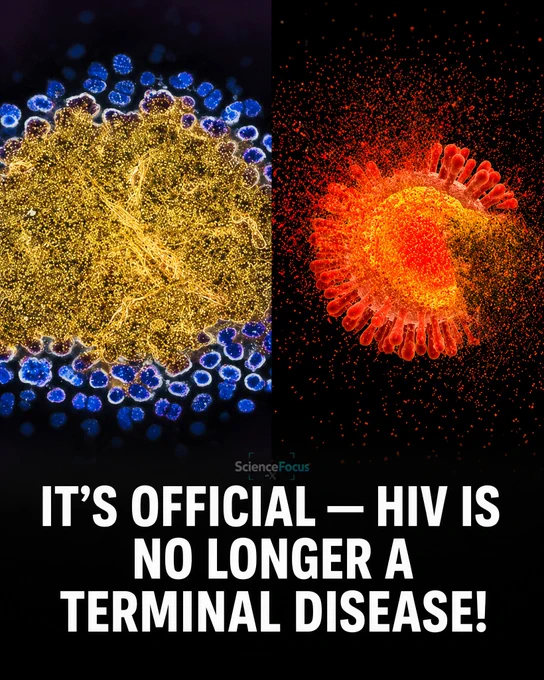
HIV just got dethroned.
What was once a death sentence is now something millions live with — quietly, normally, for decades.
Modern antiretroviral therapy has flipped the script. People diagnosed today, who take their meds consistently, can expect a near-normal lifespan. The virus stays buried. Undetectable. Untransmittable.
Let that sink in.
A diagnosis that wiped out a generation in the 80s and 90s is now a manageable condition — closer to diabetes than to doom.
And the science isn't stopping there.
Gilead's once-daily single-tablet BIC/LEN regimen is under FDA priority review with a decision expected August 27, 2026. One pill. Once a day. That's it.
At CROI 2026 in Denver, the RIO cure trial showed over half of participants kept their viral load undetectable for more than 20 weeks after stopping treatment entirely. Two have been off meds for over a year.
A 62-year-old Canadian man — now known as the Toronto patient — was announced likely cured in April 2026 after a stem cell transplant.
Yale researchers cracked open a hidden mechanism called circHIV that could become the next major drug target. Case Western turned the immune system's own Natural Killer cells into HIV-hunting weapons. Oxford is using broadly neutralising antibodies to keep the virus in check long after pills are gone.
The hunt for a full, scalable cure is no longer science fiction. It's a research pipeline with real names, real patients, and real timelines.
HIV used to mean counting the years you had left.
Now it means living them.
Source: Aidsmap (CROI 2026), Gilead Sciences, amfAR, Weill Cornell Medicine, Yale News, Case Western Reserve University
顯示更多