Search results for Frontex)の権限・能力を強化し、対外国境保護と送還業務の中核とすることを提案。常設部隊強化や即応部隊、オンライン監視・対応センター創設に加え、送還調整センターを新設し、一定条件下で第三国間送還も支援可能にする
Frontex)の権限・能力を強化し、対外国境保護と送還業務の中核とすることを提案。常設部隊強化や即応部隊、オンライン監視・対応センター創設に加え、送還調整センターを新設し、一定条件下で第三国間送還も支援可能にする community
One keyword maps to one global community path.
People
Not Found
Tweets including Frontex)の権限・能力を強化し、対外国境保護と送還業務の中核とすることを提案。常設部隊強化や即応部隊、オンライン監視・対応センター創設に加え、送還調整センターを新設し、一定条件下で第三国間送還も支援可能にする
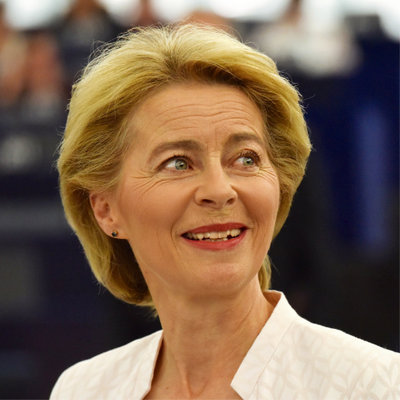
Europe will always stand up for the protection of its borders.
This is why today we propose to strengthen Frontex.
So it can support Member States whenever and wherever needed.
Including on returns, with the mandate and capabilities that this new reality demands.
Show more


Elon Musk paid $44 billion in 2022 to buy Twitter and keep the town square open. That purchase is why Europe can now see, on X, what commercial television still refuses to hold in frame.
Prime time still sells illegal and mass immigration as a humanitarian weather segment: crossings are “down,” the story is compassion, and the angry local is the problem. The record is less tidy.
Frontex logged about 381,000 irregular border detections in 2023, 240,000 in 2024 and roughly 178,000 in 2025. A real drop from the peak — and still a city-sized inflow outside the legal front door in a single year. Legal inflows are larger still. Failed returns leave a stock that does not vanish when the chyron says the crisis has eased. Housing lists, hotel bills and street-level crime reports keep arriving in towns the studio never visits.
YouGov’s late-2025 Europe polling found 45–53% in France, Germany, Italy, Spain, Denmark and Poland support a hard stop: no new arrivals, and large numbers of recent migrants required to leave. Majorities say irregular immigration is already too high. Oxford’s Reuters Institute Digital News Report 2026 found immigration the major story audiences think newsrooms cover worst. In the UK the net score on that coverage was brutally negative. Trust in news is at a record low.
That is the split. Television gives you the approved sentence. X gives you the dinghy, the hotel coach, the town-hall microphone and the local voice before the lawyered voiceover. The EU has spent the years since 2022 treating that speech as a product defect. Musk did not buy comfort. He bought the right to look at Europe as it is.
Show more

The renewed migration crisis in Ceuta once again demonstrates the consequences of migration policies that send the wrong signals.
The current situation is the predictable result of years of policy choices that have weakened deterrence, encouraged illegal migration and undermined confidence in Europe’s ability to protect its external borders.
ECR Group Co-Chairman Nicola Procaccini said:
“What we are witnessing in Ceuta is the direct result of years of weakness, mixed messages and political denial. When a government regularises illegal residence on a massive scale, it should not be surprised when many more people conclude that reaching Europe illegally will eventually be rewarded.
“Europe must regain control of its external borders. Frontex must be substantially strengthened with the resources, personnel and capabilities needed to support frontline Member States. Those who enter the European Union illegally and have no right to remain must be returned without delay.”
ECR Group Co-Chairman Patryk Jaki said:
“Pedro Sánchez’s policy of mass regularisation has sent precisely the wrong message to migrants and smugglers: enter illegally, remain long enough, and political decisions may eventually legalise your presence.
“Illegal entry must never become a shortcut to legal residence, permanent status or citizenship. Decisions taken by a Member State have consequences for the entire Schengen Area. The European Commission must therefore assess the cross-border impact of such policies and ensure that national migration decisions do not undermine the security of other Member States.”
Diego Solier, leader of the Spanish ECR Delegation, said:
“The people of Ceuta should now not be left alone with the consequences of irresponsible migration policies. Europe must stand with Ceuta.
“The Sánchez government has consistently prioritised ideological gestures over effective border management. Spain needs a government that protects its borders, dismantles the business model of people smugglers and restores confidence that illegal entry will not lead to legal residence.“
Show more


2026, day 241
Good morning from Asia.
‘For Trump, the Iran War Is Stuck Between Combat and Genuine Peace’ (NYT);
‘Iran’s Khamenei bans acts that ‘harm social cohesion’’ (Reuters);
‘Iran Urges Countries Not to Implement New U.S. Sanctions as Mediators Focus on Reopening Strait’ (Reuters);
‘US Treasury imposes limits on Egyptian bank for doing business with Iran’ (FT);
‘Hezbollah chief again rejects Lebanon-Israel deal, refuses ‘surrender’’ (ToI);
‘What will happen if Iran, Egypt, Bangladesh join Mecca Joint Defense Agreement? - analysis’ (JPost);
‘The commander who smashed ISIS just surrendered to Syria's ex-Al-Qaeda president’ (Ynet);
‘Drain on U.S. Munitions From Iran War Raises Fears Over Ability to Deter China, Russia’ (WSJ);
‘Is China's 'wise camel' the winner from the US-Iran war?’ (FT) - “Beijing has threatened to retaliate with 'all necessary measures' if the US hits it with sanctions”;
‘Zelenskyy says he ordered army to launch 1,000 drones a day at Russia’ (Reuters);
‘Drones hit Zaporizhzhia power plant: IAEA’ (AFP);
‘Russia is running out of cash due to its war in Ukraine: report’ (Defense News);
‘Putin risks accidental confrontation with NATO’ (Telegraph) - “Intel sources warn that Russian sabotage attacks in Europe could lead to dangerous ‘miscalculation’”;
‘NATO and Moscow must increase dialogue to avoid accidental war, Russian envoy says’ (Politico);
‘Baltic Sea states warn of ‘escalating’ hybrid warfare’ (Euractiv);
‘Sweden to deploy jets and warships to help Finland counter drones’ (Euractiv);
‘Ceuta warns it is 'on the brink of collapse' as Spain seeks Frontex and Europol help’ (Euronews);
‘Iceland’s EU referendum: What to know ahead of vote and what's at stake for Europe’ (Euronews);
‘US threatens Britain over Falklands
Pentagon officials warn UK to boost’ (Telegraph) - “Pentagon officials warn UK to boost defence spending or risk losing support for sovereignty over the islands.”
‘Healey’s budget to duck setting a date for 3% defence spending target’ (Guardian);
‘The G20 needs more carrots to rebalance away from China’ (Atlantic Council);
‘Trump says US to take control of 65bn barrels of Venezuelan oil’ (FT);
‘Trump announces new US ‘space academy’’ (AFP);
In geoeconomics, ‘China's hypercompetition goes global as Beijing frets over backlash’ (Nikkei Asia);
‘Google waves goodbye to China’ (Nikkei Asia);
‘Escalation tactics in trade negotiations with the U.S. prove to be a minefield’ (Globe & Mail);
‘Canada-U.S. free trade was a model for the world. Can anything save it now?’ (Financial Post);
‘Former IMF deputy Gita Gopinath: It's straight-out protectionism'’ (FT);
‘Trump vows legal order to break up food processing ‘nasty monopoly’’ (Reuters);
‘Japan Energy Plan Seeks to Back Pipelines Bypassing Hormuz’ (BBG);
‘Capacity Squeeze Looms as Panama Canal Restrictions Tighten’ (The Loadstar);
‘India turns to private sector to ramp up missile production’ (Defense News);
‘China’s actors written out of dramas as AI doubles ready to take their roles’ (FT);
‘China needs 600% child subsidy rise to prevent deeper birth crisis: scholars’ (SCMP);
In politics, ‘Republicans Are Worried About the Midterms. Trump Is Focused on His Legacy.’ (WSJ);
‘Trump Postal Service board nominees held up by Republican senator over mail delay concerns’ (The Hill);
‘AOC shakes up team ahead of 2028 decision’ (Axios);
‘Germany’s far right taps nostalgia for communist East to propel election surge’ (Politico);
In markets, ‘Hawkish Kevin Warsh hints Fed will raise rates if inflation does not fall soon’ (FT);
‘The case for the U.S. dollar's digital edge’ (Axios) - “research presented at Jackson Hole suggests financial innovation may tighten the dollar's grip on global finance”;
‘Hong Kong’s long-term wealth hub status safe from mainland investment curbs: JPMorgan exec’ (SCMP);
‘Yen Passes 160 Per Dollar to Hit Weakest Level in a Month’ (BBG);
‘Why the World Needs to Force China’s Yuan to Revalue’ (WSJ)
Show more


I am the Director of Managed Migration for the European Union. Sit. I have twenty minutes before lunch, and I intend to spend them correcting you, because someone should, and it is plainly not going to be the people who raised you.
You called it an invasion. You called it a wave. You called it a flood. You reach for these words because they fit in one hand, and one hand is all you were given. We do not use words that fit in one hand. We use "irregular arrivals event." It requires both hands, a footnote, and a working group, and that is exactly the point. A word you can hold is a word you might act on. We have spent seventy years making certain there are none of those left.
I do not blame you. You were raised on nations. We outgrew nations. We are a directive with a flag.
Let me explain the desk slowly, in the register one reserves for the very young.
The fund is called AMIF. Nearly 10 billion euros, since topped toward 10.94. It carries four objectives, and I will ask you to hold two of them at once, though I keep my expectations low. One is asylum and integration. Another, same fund, same page, same auditor, is countering irregular migration and ensuring effective return. The euro that buys the blanket and the euro that buys the fence are drawn from the same column. When you ask which side I am on, you are asking me to prefer one of my own pockets. It is an Anglo-Saxon question. I forgive it.
You imagine the two sides fight. How charming. They reconcile, quarterly, over a very good lunch.
Your Prime Minister campaigns to keep them out. His opponents campaign to let them in. His opponents would do precisely as he does. Both instruct this desk. Both sign the same appropriation. In thirty years I have not once been asked to change the letterhead, only the tie of the man at the podium.
Now, the growth, which is the part I permit myself to enjoy. Frontex opened in 2005 on roughly the budget of a provincial parking authority. By 2024 it stood at 922 million euros. By 2025, about 1.12 billion. It is 187 times larger. Name me one institution that grew 187 times while never once being credited with ending the thing it manages. You cannot, because there is not one, and the Commission has proposed 11.2 billion more, because a desk that solves its file is a desk one closes, and we do not close desks. We are European. We retire them at 63 with a pension and a small ceremony.
You wanted us to solve it. Consider, for once, what you were asking. You were asking a man to defund his own lunch.
You brought numbers. You people worship a clean number. Very well.
In 2024 the official count on the route to the Spanish islands was 1,142 dead. A monitoring group put the Atlantic figure at 9,757 for the same year, roughly nine times higher, including, they say, some 1,538 children. Two methodologies. I keep the smaller book. I stamp the larger one unverified. Even the keepers of the small book write across the top that it is a floor, that most of the drowned are never recorded at all. I file the floor and present it as the ceiling. You would call that a lie. We call it methodology, and methodology is the oldest art on this continent. We were forging provenance while yours was still a rumour with a coastline.
We are exquisitely precise when precision flatters us. In 2021 the Libyan coast guard, which we train and equip, returned 32,425 people to Libya. Those we can count to the individual. Yet of 61.2 million euros earmarked for that programme, investigators traced barely 34 million. Some 27 million, about 44 percent, is simply nowhere. A machine that can number 32,425 human beings to the person cannot locate half of its own money. Sit with which of the two we chose to keep exact.
You will ask whether we watch what becomes of them. We do not. Our own leaked report concedes it: our staff may not set foot on Libyan soil, so we cannot monitor the coast guard we pay. We write the cheque and we admire the horizon. A United Nations mission found reasonable grounds to believe crimes against humanity, murder, torture, enslavement, were committed against migrants in those centres. A member of that mission said European support "aided and abetted" those crimes, and added, in the same breath, "we're not saying that the EU and its member states have committed these crimes." I live inside that comma. It is the most comfortable room in Brussels.
The rescuers, I concede, are the honest party. They pull people from the water. The case built to prove them smugglers collapsed in a Sicilian court in 2024, dismissed, no crime, because the people they saved had entered lawfully. I confess a small grief. An acquittal is nearly impossible to file in the threat column, and the threat column is where the money sleeps.
And your courts. You wave them at me like a diploma. The very human-rights court in Strasbourg that blessed the Melilla pushback on grounds of the migrant's "own culpable conduct" later condemned the identical practice at Evros. Same bench. Opposite verdicts. I cite whichever suits the morning. None of that is a defect. It is a menu, and Europe has always understood that civilisation is the art of the menu.
I will tell you where that court sits, since you enjoy the pageantry. It sits in Strasbourg. Once a month we relocate the entire European Parliament from Brussels to Strasbourg and back, at an expense no living person will defend, because a treaty said so and we do not reopen treaties. If you can grasp why we do that, you can grasp why the border works exactly as it does. If you cannot, you were never ready for the border, and I say that gently.
At Pylos a European surveillance plane spotted an overloaded trawler, filed its alert, and more than 600 people drowned inside a rescue zone while a coast-guard vessel watched for some fifteen hours. Seventeen officers now face prosecution, charged, I remind you, never convicted. In a leaked note from another operation someone wrote that the aircraft were withdrawn "so as not to be a witness." I do not defend the sentence. I admire its economy. The instinct to see less is the only instinct in this building that has ever come in under budget.
So do not call it a crisis. A crisis is unbudgeted, and unbudgeted is the one thing we are not. On the last night at the breakwater at least 57 people drowned at Tarajal, and some of them were children, and by morning I had entered each of them under interceptions, arrivals, and returns, the only three drawers I own.
It was not an invasion. It was not a wave.
It was a delivery. It was managed. And it was, if I may say so, exceptionally well documented.
You may go. The working group convenes in September.
Show more


The Bluish-fronted Jacamar is found within and around Bird Friendly® farms in Peru. They can be spotted sitting on vines and branches where they await their chance to capture insect prey. #FeatheredFactFriday#
Show more


"I feel like I already want to message my coach." 👀
Kasia Niewiadoma-Phinney fronted the media after losing the overall Tour de France Femmes title to Demi Vollering on the final day. 🏆
🇫🇷 #TDFF2026# | August 1-9 | Every Stage on SBS 📺
Show more


Ramones 50th Anniversary Tribute to Feature Set By All-Star Cretins Band Fronted By Billie Joe Armstrong, Rancid’s Tim Armstrong


Literary devices:19 of them. Modal verbs,Fronted adverbial,Passive voice etc🤷🏻.My 11yo used few of them for 1paragraph writing. Teacher says he needs to use more. 11yo says there is only so much you can use in a paragraph.I agree w him. #parenting# #homeschoolingmom# #education#
Show more