Search results for OmniModal
OmniModal community
One keyword maps to one global community path.
People
Not Found
Tweets including OmniModal

Hearing rumors that GPT Images 3.0 might be the big breakthrough that Images 2.6 failed to deliver. Images 3.0 might already be in early alpha testing at @OpenAI.
There are theories that 2.6 is still based on the ancient GPT-4o omnimodal model. Version 3.0 could finally make the jump to a modern GPT-6-class model, potentially delivering a massive leap in capabilities.
Show more


🎼 Solve hard tasks that mix text, image, audio, and video by decomposing them across specialized sub-agents running in parallel. This work shows a well-matched team beats one giant monolithic model.
Title: Orchestra-o1: Omnimodal Agent Orchestration
URL:
💡 Overview
Orchestra-o1 is a hierarchical agent framework that separates high-level orchestration from low-level tool execution to handle tasks where multiple modalities coexist. It specializes sub-agents per modality and runs independent sub-tasks in parallel for efficiency.
⚠️ The problem
Existing orchestration frameworks handle only limited modalities and fail to generalize to scenarios where text, image, audio, and video coexist and interact at once.
🛠 Approach
・Represent each backend with a skill vector plus a cost-latency profile, and select via cost-aware matching
・Assign perception tools (image/audio/video analysis) and action tools (search, page visit, code execution)
・Build a latent dependency graph over sub-goals and run independent tasks in parallel
・Train with DA-GRPO: score step-level decisions, not just final answers, using a multi-dimensional rubric that weights decision quality at 0.6
📊 Results (their OmniGAIA benchmark)
・Orchestra-o1-GPT-5 hits 72.8%, beating the second-best Gemini-3-Pro by 10.3 points
・The open-source Orchestra-o1-8B (from Qwen3-8B) reaches 30.0%, best among open omnimodal agents
・It reaches 72.8% at cost 341.6, cheaper and far more accurate than weaker baselines
・By difficulty: Easy 80.3%, Medium 75.0%, Hard 56.4%
#AIAgents# #Multimodal#
Show more


On the power of data flywheels in Physical AI
@nvidia recently introduced Cosmos 3, a family of omnimodal world models designed to jointly process and generate language, images, video, audio, and actions within a unified mixture-of-transformers architecture.
One aspect I find particularly exciting is the data flywheel emerging between #Cosmos# 3 and #Alpamayo# 2.
Cosmos 3 was trained using data generated and curated in part through the Alpamayo ecosystem. In turn, the next generation of Alpamayo will build on Cosmos 3's capabilities. This creates a virtuous cycle in which better models enable better data generation, and better data leads to even stronger models.
Much of the attention in #AI# is naturally focused on model architectures and benchmark results. Yet, in robotics and autonomous systems, development processes matter just as much as models themselves. Robust data flywheels are increasingly becoming a defining characteristic of state-of-the-art robot autonomy stacks.
Further reading:
- Cosmos 3:
- Alpamayo 2:
Join me on June 16 at 9:00 AM PT for a livestream on Alpamayo 2 Super: The Open Reasoning Model for Robotaxis: We'll showcase brand-new elements of the open pipeline—from real-world fleet data to model training recipes to closed-loop development with simulation. If you're building toward L4 autonomy, I think you'll find it worthwhile.
I'll be joined by @iamborisi @YurongYou @yan_wang_9 @MaxiIgl
Looking forward to seeing you there.
@NVIDIADRIVE @NVIDIAAI
Show more

TL;DR: One encoder and one JSON schema turn documents, images, audio and video into structured, grounded text. It posts the top reported score on document parsing.
Youtu-Parsing-Omni: One Encoder, One Schema, All Modalities
Key points
・🧩 A single shared Transformer encodes images, audio and video (initialized from Qwen3-0.6B-Base)
・⏱ Rotary positions split into time/height/width, so video and sound share one timeline
・📐 OmniSchema puts 10 tasks (documents, chemistry, sheet music, charts, audio, video...) into one JSON format
・🔁 Post-training combines OSAD distillation from a self-refreshing teacher with schema-aware RLVR
・📄 OmniDocBench v1.6: 96.96 overall, the highest reported
・🎬 OmniParsingBench: 75.08, best among open-weight models; text-rich video 75.62 vs 65.36
Gemini-3-Pro still scores higher at 77.44, and it trails Qwen3-Omni on Video-MME-v2. ASR is also a weak spot. Still, a promising step toward an "any-input parser" front end for LLM agents.
#OmniModal# #DocumentParsing#
Show more

🚀 Meet Qwen3.8-Omni-Flash, Qwen's first omni-modal model built around agentic capabilities!
Native audio-video understanding, reasoning, and tool use come together in one model: understand the content, plan the task, execute with tools, and deliver the result.
Highlights: 🥳
- Audio-video intelligence that gets things done: jointly reason over what's seen and heard, and orchestrate tools across long workflows to auto-edit vlogs, translate short videos, and turn movies into recaps.
- A major leap: approaching Gemini 3.8 Flash in audio-video capabilities; +19.5 points on average in agent performance across WildClawBench-MM & UniClawBench.
- 1M-token context with agentic perception: actively explore long videos and locate key moments with higher accuracy, using 51.8% fewer tokens than static understanding on OmniVideoBench.
Video input costs are reduced by about 89% compared with Qwen3.5-Omni-Plus, making long-form audio-video understanding and agentic workflows more affordable than ever.
To help you build apps around Omni, we're also open-sourcing Qwen-MM-Plugins and Qwen-Live Harness! 🛠️
We can't wait to see what you build with Qwen3.8-Omni-Flash! 👀
Get your API Key⬇️
-QwenCloud:
Show more

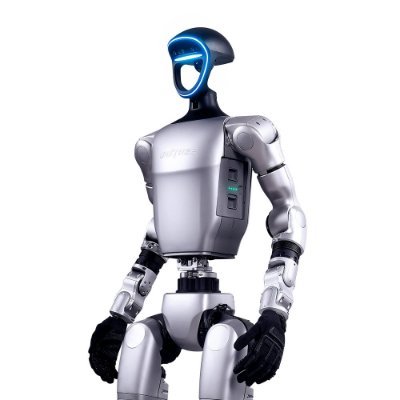
Real-Time Omni-Modal Interaction Driven Whole-Body Mobile Manipulation🥳
Unitree UnifoLM-OminiA-0.3 — a single model handling diverse home-care and wellness tasks, with omni-modal interactive understanding, fully autonomous, stable and disturbance-resistant execution.
Show more


OmniCompass
A Holistic Benchmark for Omni-Modal Video Grounding and Understanding
paper:

Video AI turns out to be surprisingly bad at pointing to "when and where," even when it can answer the question itself.
Title: OmniCompass: A Holistic Benchmark for Omni-Modal Video Grounding and Understanding
URL:
💡 Overview
Researchers from Hong Kong Polytechnic University and OPPO Research Institute introduce OmniCompass, a new holistic benchmark for video understanding, evaluating 50 models on temporal/spatial grounding and question answering on the same footing.
🎯 The problem
Existing benchmarks cover either vision-only or audio-visual evidence, test either QA or grounding but rarely both, and had no way to check whether a model's predictions actually agree when the target is specified by text alone versus text plus a reference image.
🧪 The method
Across 820 videos (80.6 hours, 7 domains, 52 subcategories), each clip gets a matched Text setting and Text+Image setting sharing the same target and ground truth. Two tracks, OmniCompass-VL for vision-language models and OmniCompass-AV for omni-modal models, each evaluate three unified tasks: temporal grounding (TG), spatial grounding (SG), and QA. A new Cross-Specification Consistency (CS) score measures how well predictions agree between the two settings.
📊 Results
QA reaches up to 69.1% (VL) and 78.2% (AV), while temporal grounding tops out at just 27.1% (VL) and 40.6% (AV), exposing a huge gap between answering and pointing. The best open-source model also trails the best proprietary model, Gemini-3.8-Flash, by 32.8 points on CS average in the AV track (24.6% vs. 57.4%).
#VideoAI# #Benchmarks#
Show more
Video AI turns out to be surprisingly bad at pointing to "when and where," even when it can answer the question itself.
Title: OmniCompass: A Holistic Benchmark for Omni-Modal Video Grounding and Understanding
URL:
💡 Overview
Researchers from Hong Kong Polytechnic University and OPPO Research Institute introduce OmniCompass, a new holistic benchmark for video understanding, evaluating 50 models on temporal/spatial grounding and question answering on the same footing.
🎯 The problem
Existing benchmarks cover either vision-only or audio-visual evidence, test either QA or grounding but rarely both, and had no way to check whether a model's predictions actually agree when the target is specified by text alone versus text plus a reference image.
🧪 The method
Across 820 videos (80.6 hours, 7 domains, 52 subcategories), each clip gets a matched Text setting and Text+Image setting sharing the same target and ground truth. Two tracks, OmniCompass-VL for vision-language models and OmniCompass-AV for omni-modal models, each evaluate three unified tasks: temporal grounding (TG), spatial grounding (SG), and QA. A new Cross-Specification Consistency (CS) score measures how well predictions agree between the two settings.
📊 Results
QA reaches up to 69.1% (VL) and 78.2% (AV), while temporal grounding tops out at just 27.1% (VL) and 40.6% (AV), exposing a huge gap between answering and pointing. The best open-source model also trails the best proprietary model, Gemini-3.8-Flash, by 32.8 points on CS average in the AV track (24.6% vs. 57.4%).
#VideoAI# #Benchmarks#
Show more

Video and audio, from one model.
Wan3.0-Video from @Alibaba_Wan is now on DeepInfra: 30-second clips at 1080P, omni-modal reference (images, files, even web pages), and characters that stay the same character.
$0.20/sec →
Show more
