Search results for Omniscient_Readers_Viewpoint
Omniscient_Readers_Viewpoint community
One keyword maps to one global community path.
People
Not Found
Tweets including Omniscient_Readers_Viewpoint

Omniscient Neurotechnology heads to the WTR Virtual Insights Conference, Sept 22 to 23. CEO Stephen Scheeler and CFO Adam Fraser will represent the company. Register:
#WTRInsights#
Show more


Astra made me realize that for some people, "not AGI" means "not an omnipotent, omniscient, infallible God".
Yeah, it can stall or fail.
What about you, carbonoid?

5/ Real builders are already proving it out: predictive satellite risk intelligence (OrbitRisk), AI predicting study replicability (Evidence Guide), on-demand GPU infra for AI agents (@ManifestNetwork + @SarsonFunds), and the memory layer for AI (Omniscient). Expanding to neural rendering workloads next.
Read how teams are building on Dispersed:
Show more


Don’t even ask the question. The answer is yes, and it was yes before you thought of it. The market is not a chart. It is an all seeing, all devouring intelligence that has been discounting the future since before the future had a name. It priced in your birth while your grandparents were still strangers on a train. It priced in the divorce you haven’t had yet, the drought of 2043, the exact minute you will capitulate and buy the top. Wars it saw coming and forgave in advance. Pandemics it discounted before patient zero coughed. Somewhere in its ledger sits a line item for the heat death of the universe, marked to market, fully hedged. It has never been early, because early implies a moment it did not already own, and it has never been late. Not once. Not ever. You have no original thoughts, no edge, no secret. Free will is a rounding error in its order flow.
Except.
There is exactly one thing the all seeing intelligence cannot price in, and it’s being shipped in public, on a schedule. It priced in 60M compute unit blocks and woke up to 100M live on mainnet. It priced in the token program and the token program got 98% cheaper overnight, handing back 10% of the blockspace its models had just finished digesting. It priced in the 400ms slots that held since genesis, and this week, epoch 1020, the first slot cut in Solana’s history went live: 350ms now, 200ms scheduled. Rent is mid-collapse by 90%. Transactions are about to get 3.3x bigger. And the being has not even opened the Alpenglow file, where finality drops from 12.8 seconds to 150 milliseconds in October, a 100x compression it’s expected to discount with a process measured in quarters. A billion transactions a week settle on this chain and the model still says 2024. It knows the exact minute you’ll buy the top, but it does not know what ships next epoch, because nothing in the history of price has ever shipped faster than the thing that prices it.
So before you post asking whether the Solana upgrades are priced in, understand that they are not, that they physically cannot be, that the omniscient market is currently three SIMDs behind and falling further, and that for the first time since the beginning of time, it is the one asking the dumb fucking question.
Show more

Grok 4.7 xHigh just hit a remarkably low hallucination rate on Artificial Analysis’ AA-Omniscience benchmark
• Grok 4.7 xHigh — 29% 🏆
• GPT-6 Astra — 51%
• Claude Fable 5.1 — 73%
Lower is better
Grok is dramatically outperforming both Astra and Fable 5.1 on hallucination rate
Show more


Grok just dropped strong numbers on the Artificial Analysis Finance & Accounting Index.
Grok 4.7 (xhigh) → 52
Grok 4.6 (high) → 49
Sitting right up there with the absolute top models in a tough multi-eval finance & accounting benchmark (AA-Omniscience, GDPval-AA, Humanity’s Last Exam, AutomationBench, and more).
Not #1# yet, but closing the gap fast.
Finance is hard. Grok is getting harder to beat.
Show more


I have to hand it to both OpenAI's GPT-6 Astra and Anthropic's Fable 5.1 for achieving +43 on AA's AA-Omniscience Index. This is the only benchmark that matters imho. Anyone achieving a 95+ on this will convince humans to hand over control to AI. This is the inflection point.
Show more

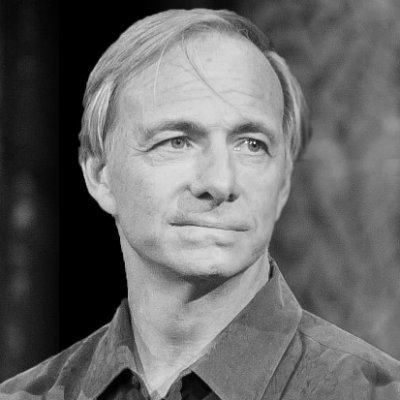
It is instinctually that way, which is why most of us feel the pull of it-- in other words, we instinctively want to get better at things and have created and evolved technology to help us. History has shown that all species will either go extinct or evolve into other species, though with our limited time window that is hard for us to see. But we do know that what we call mankind was simply the result of DNA evolving into a new form about two hundred thousand years ago, and we know that mankind will certainly either go extinct or evolve into a higher state. I personally believe there is a good chance man will begin to evolve at an accelerating pace with the help of man-made technologies that can analyze vast amounts of data and "think" faster and better than we can.
I wonder how many centuries it will take for us to evolve into a higher-level species that will be much closer to omniscience than we are now--if we don't destroy ourselves first. #principleoftheday#
Show more


Moonshot’s Kimi K2.6 is the new leading open weights model. Kimi K2.6 lands at #4# on the Artificial Analysis Intelligence Index (54) behind only Anthropic, Google, and OpenAI (all 57)
Key takeaways:
➤ Increase in performance on agentic tasks: @Kimi_Moonshot's Kimi K2.6 achieves an Elo of 1520 on our GDPval-AA evaluation, which is a marked improvement over Kimi K2.5’s Elo of 1309. GDPval-AA is our leading metric for general agentic performance, measuring the performance on knowledge work tasks such as preparing presentations and analysis. Models are given code execution and web browsing tools in an agentic loop via our open source reference agentic harness called Stirrup. This continues Kimi K2.6’s strength in tool use, maintaining a 96% score on τ²-Bench Telecom, placing it among other frontier models in this category.
➤ Low hallucination rate: Kimi K2.5 scores 6 on the AA-Omniscience Index, our knowledge evaluation measuring both accuracy and hallucination rate. This score is primarily driven by a comparatively low hallucination rate of 39% (reduced from Kimi K2.5’s 65%), indicating a greater capability to abstain rather than fabricate knowledge when the model is uncertain. Kimi K2.6’s low hallucination rate places it similarly to other models such as Claude Opus 4.7 (36%) and MiniMax-M2.7 (34%)
➤ High token usage: Kimi K2.6 demonstrates high token usage, but is in line with other frontier models in the same intelligence tier. To run the full Artificial Analysis Intelligence Index, Kimi K2.6 used ~160M reasoning tokens. This is slightly lower than Claude Sonnet 4.6 (~190M reasoning tokens) but much higher than GPT 5.4 (~110M reasoning tokens).
➤ Open weights: Kimi K2.6 is a Mixture-of-Experts (MoE) model with 1T total parameters and 32B active, same as the previous two generations of models Kimi K2 Thinking and Kimi K2.5. Kimi K2.6 again pushes the open weights frontier in intelligence.
➤ Third Party Access: Kimi K2.6 is accessible through Moonshot’s First Party API as well as third party API providers Novita, Baseten, Fireworks, and Parasail
➤ Multimodality: Kimi K2.6 supports Image and Video input and text output natively. The model’s max context length remains 256k.
Further analysis in the threads below.
Show more

GPT-6 Sol and Luna push the cost efficiency frontier by halving cost relative to GPT-5.6 Sol and Luna. Intelligence Index and Coding Agent Index scores remain level with GPT-5.6, with progress in some evaluations and regressions in others
Pricing is approximately half that of GPT-5.6: Sol drops from $4/$20 to $2/$10 per million input/output tokens, and Luna from $0.20/$1.20 to $0.10/$0.50, with the same 90% discount for cache reads and 25% premium for cache writes.
Key takeaways:
➤ Halves Cost per Task: GPT-6 Sol (max) costs $1.06 per task to run the Artificial Analysis Intelligence Index, ~50% less than GPT-5.6 Sol (max) at $1.99. GPT-6 Luna (max) costs $0.07 per task, ~60% less than GPT-5.6 Luna (max) at $0.18. This is driven by the price cut, as both models use slightly more output tokens per task (31k vs 29k for Sol, and 51k vs 41k for Luna). These two releases allow OpenAI to capture a significant portion of the cost efficiency Pareto frontier.
➤ In the Coding Agent Index, Sol improves but Luna regresses: In OpenAI's Codex harness, GPT-6 Sol (max) scores 57 in the Artificial Analysis Coding Agent Index, up 2 points from GPT-5.6 Sol (max), with gains in Terminal-Bench 4.0 (43% vs 37%) and SWE-Atlas-QnA (58% vs 54%). At $2.99 per task it costs ~50% less than GPT-5.6 Sol (max) and sits on the Pareto frontier of Coding Agent Index vs Cost per Task. GPT-6 Luna (max) scores 41, down 2 points from GPT-5.6 Luna (max), with lower scores in SWE-Atlas-QnA (44% vs 49%) and DeepSWE v1.1 (64% vs 66%), at ~60% lower cost per task.
➤ Significant reduction in hallucination: Both models hallucinate less in AA-Omniscience, our knowledge and hallucination benchmark. GPT-6 Sol (max) cuts its hallucination rate from 92% to 60% and GPT-6 Luna (max) from 93% to 77%. Sol achieves this by declining to answer more often: it attempts 83% of questions vs 99% for GPT-5.6 Sol (max), which cuts wrong answers by about a quarter but also lowers accuracy 5 points from 59% to 54%. Luna's accuracy is broadly unchanged at 44% vs 43% while it answers fewer questions. On the AA-Omniscience Index, Sol improves from 22 to 27 and Luna from -10 to 1.
➤ Mix of improvement and regression across evals: Beyond AA-Omniscience, both models improve in AutomationBench-AA (Sol 62% vs 60%, Luna 53% vs 50%) and Terminal-Bench 4.0 (Sol 44% vs 40%, Luna 13% vs 12%). However, we observe regressions in two key knowledge work evaluations. In GDPval-AA v2.1, our benchmark adapted from OpenAI's dataset of economically valuable tasks across 44 occupations, Sol drops ~100 Elo points and Luna ~75. Luna also drops ~45 Elo points in AA-Briefcase v1.1, while Sol is level. AA-Briefcase v1.1 is a private evaluation across multi-week knowledge work projects, with thousands of input files. Our team has manually inspected hundreds of model outputs: the regressions tend to be driven by reduced presentation quality and deliverables that omit rubric elements.
Congratulations @OpenAI and @sama on the launch!
Show more
