Search results for Space_A_la_mode
Space_A_la_mode community
One keyword maps to one global community path.
People
Not Found
Tweets including Space_A_la_mode

Grok Bot summary of SpaceX CFO Bret Johnsen’s new interview with Tony Kim at SpaceX Mission Control.
Bret’s path
- Came from semiconductors (Qualcomm, Broadcom; was CFO of MindSpeed)
- Barely knew SpaceX / Elon when a board member called
- Thought aerospace sounded “old and stodgy” vs 6-month chip cycles
- Visited the rocket factory, called his wife on the drive home: we’re moving back to LA
- Now sits in the same magical factory: Dragon in the rafters, ~700 launches run from Mission Control, ~40 buildings feeding the campus
- Full circle: semiconductors again via AI / chips
---
Taking on AI complexity (during the biggest IPO ever)
- SpaceX DNA: run toward “impossible” challenges (first booster recovery felt like a rock concert)
- xAI acquisition in January + X + Cursor + Colossus = complexity multi-X in ~1–2 years
- AI is now the biggest business at SpaceX
- Bought time-to-market into the biggest product cycle of their lifetime
- SpaceX leadership DNA applied to that team
- Already feel leading on infra cost and speed
- Products moving: Grok 4.6, 4.7 soon, Grok Bot viral, Cursor strong
- Every week matters; soon every day
---
AI business: the money picture
- ~$100B company ARR exiting this year (annualized on December) — AI is more than half / the majority
- A year ago AI revenue was ~zero
- Capacity: a bit over ~2 GW this year → guidance 5–10 GW by end of next year
- Becoming one of the biggest hyperscalers, fast
Why they move so fast (vertical integration)
- Engineer the data centers themselves
- Act as GC: buildings, power, cooling, networking (plus partners)
- Used to regulators from rockets + telecom
- Removes margin stacking
- Talent transfer: launch-site / pressurized systems people onto data centers — Elon compared it to Yankees vs little league
Hosting model / ROI
- Monetize compute while catching up on software
- Demand knocked: “what are you doing with all that Colossus compute?”
- Short contracts: ~3 months + 3-month out (flexibility for their own future training needs)
- Payback: dramatically less than one year on cutting-edge terrestrial compute
- Hosting customers include tier ones like Anthropic, Google, and others
- Same watts can later flip to their own software at higher $/watt — optionality
Frontier models
- Moving maybe faster than anyone on trajectory
- ~5 serious players; need to be at frontier for recursive improvement
- Coding solutions improving dramatically
- Consumer vs enterprise tools will stratify
- Grok Bot: growing faster than anything they’ve seen; “transformational” user feedback; enterprise coming; expects roll into Cursor
AI safety
- Follow Elon’s self-regulation / peer-review path (like other industries)
- Logical, collaborative, including outside the US
- Hopeful something lands quickly
TAM framing (IPO)
- ~$28T TAM quoted at IPO; AI was ~$25–26T of that (digital AI only)
- Physical AI not even in that number — Bret thinks physical AI eventually bigger than digital
- Launch / space TAM = hundreds of billions (almost rounding vs AI)
- Connectivity (mobile + broadband) ~$2T — still small vs AI
- Differentiation: infra + X content (~500–600M MAUs) + consumer + enterprise push (Cursor etc.)
What to watch: Starship + terrestrial compute
Bret’s prioritization cheat code:
1. Get Starship right
2. Get terrestrial compute right for the next ~2 years until orbital kicks in
→ Transformational financially
Starship status
- Catalyst for all three businesses: space, satellites, AI
- Holy grail: full reusability → another ~10x cheaper $/kg to orbit
- Opens moon boots / lunar base / bigger industry
- Flight 14 later this month: production V3 Starlink broadband satellites — real revenue payload
- One Starship V3 load ≈ ~20× what Falcon 9 flew for Starlink capability
- Each V3 satellite ~1 terabit; ~50–60 per flight = enormous bandwidth per launch
- A couple launches start filling V3 planes; first-half-next-year benefits
- Eventually Starlink as % of global internet traffic
- Connectivity demand from machines (robots, AVs, agents) will dwarf human brains
- Same Starship unlocks next-gen direct-to-cell / direct-to-device
- Same bus + more solar + radiator + compute chips = orbital compute constellation
Reusability timeline
- Flight 15 may attempt catch / bring back first + second stage
- First stage already recovered and reflown
- Flight 13 soft splash best yet; recovered ship like a whale, engineers studied heat shield
- Reliable stage recovery this year; meaningful reflight next year
- Once a few second stages reflight → orbital compute cost can match terrestrial
- Then orbital cost curve goes down (tech / Moore’s law / aircraft-like amortization) while terrestrial gets more expensive (power, labor, regulation, cooling)
- Clean free solar, no community impact
- Industry agrees space compute is the future — debate is timing; others say ~decade; SpaceX flies first ones next year; meaningful compute in ~2028
Scale ambition
- Both cost and speed matter; near-term availability/speed most important
- On track toward ~100 GW/year by end of decade (~20% of entire US grid each year)
- Elon talking terawatt-scale in the 2030s
- Hosting proves staying power + virtuous cycle for industry
- New NVIDIA platforms: just fly the next satellite generation — no whole new terrestrial campus cycle
TerraFab (chips / memory)
- Parallel to orbital ramp, not after
- Not replacing NVIDIA — love the partnership; will buy all they can
- Worry is deeper fab / memory supply chain
- Memory industry ~30%/yr growth vs SpaceX wanting triple-digit — won’t work
- Hard technical challenge; memory may be early focus
- Want volume benefit by late decade (demo next year with Tesla development line → something in ’28 → meaningful ’29+)
Viewer Q&A highlights
**First bottleneck in the AI chain?**
- Chip supply for next year
- Power for infra players (utilities used to ~1% growth; turbines / blades constrained)
- SpaceX standing up investment casting for turbine blades themselves
- Orbital is the big unlock; squeeze every terrestrial watt meanwhile
How to tell durable AI spend vs keep-up spend?
- Bret: durability of revenue; diversified monetization of the same compute; host now, software later at higher $/watt; guided next-year monetization range ~$30–50/watt
- Tony: stack layers have different costs, margins, contract duration; SpaceX spans many layers with <1-year payback on infra
How soon a data center in space?
- First orbital compute satellites end of next year
- Meaningful compute in 2028
- Better phrase: “racks in space,” not giant buildings
- Same V3-like bus + solar + radiator + compute chips
- Already flown ~11,000 sats; launch + inter-sat + ground links already solved
- ~full rack (~72 NVIDIA-class) concept per sat; ~5 MW compute per launch
Tony’s investor wrap
- Still early; trends accelerate into physical AI and beyond Earth
- Connectivity / tokens increasingly for machines, not just humans
---
Bottom line in one breath
SpaceX is using rocket DNA — vertical integration, crazy talent, short-cycle iteration — to become a top AI infra + software player now, while Starship unlocks Starlink V3, direct-to-cell, and orbital “racks in space.” Watch two things: terrestrial compute scale (toward $100B ARR and multi-GW) and Starship reusability. Everything else is downstream of those.
Show more


A TON OF THINGS HAPPENED IN THE STOCK MARKET TODAY.
Here's a full recap:
1. Robinhood $HOOD reported Q3 2026 revenue of $1.4B, up 12% YoY but slightly below the $1.42B estimate, while EPS of $0.51 missed expectations of $0.56, including a $0.07 per-share unrealized investment loss primarily tied to Robinhood Ventures Fund I. Net income declined 14% to $476M, while adjusted EBITDA increased 9% to $808M. Transaction-based revenue grew 19% to $867M, partially offset by a 9% decline in net interest revenue to $415M. Meanwhile, total platform assets climbed 19% to $396B, funded customers increased 7% to 28.7M, and Gold subscribers surged 34% to 5.2M, supported by $15.7B in net deposits. Robinhood now has 14 business lines generating over $100M in annualized revenue, with Rothera surpassing $100M in its first full quarter. CEO Vlad Tenev emphasized that customers are entrusting more assets to the platform as Robinhood expands its financial services ecosystem, although earnings growth continues to lag revenue growth.
2. SoFi $SOFI delivered a strong Q3 2026, with revenue surging 44% YoY to $1.4B, while adjusted EPS increased 64% to $0.18 and adjusted EBITDA jumped 70% to $469.8M, highlighting accelerating growth and improving profitability. Total members climbed 35% YoY to 17.1M, reflecting continued expansion across SoFi's financial services ecosystem. Looking ahead, the company issued bullish FY2027 guidance, projecting $6.4B in revenue versus $6B expected, EPS of $0.90 versus $0.82 expected, adjusted EBITDA of $2.24B, and net income of $1.28B. CEO Anthony Noto emphasized that SoFi is attracting more members, increasing the number of products used per customer, and generating more revenue per product, reinforcing management's confidence in the company's long-term growth and profitability trajectory.
3. Chinese technology giants Alibaba $BABA, Tencent, and ByteDance are reportedly seeking long-term memory supply agreements with Samsung Electronics and SK Hynix, according to Korean media, as demand for AI data center infrastructure continues to accelerate. While traditional memory supply contracts typically span 3–5 years, some Chinese cloud service providers are now requesting 10-year agreements extending through 2035 to secure access to critical DDR5 and LPDDR5 memory. The unusually long contract terms highlight growing concerns over future memory availability as hyperscalers expand AI computing capacity and compete for limited supply. The development could provide Samsung and SK Hynix with greater long-term revenue visibility and reinforces the structural demand outlook for the broader memory industry, including Micron $MU.
4. Meta $META has reportedly upsized its Class A common stock offering to $25B from $22.5B, pricing the shares at $625 each as the company raises additional capital to support its massive AI infrastructure expansion. Notably, NVIDIA $NVDA is investing $3B in the offering, while AMD $AMD is committing another $1B, giving two of Meta's major AI chip suppliers direct equity exposure to one of their largest customers. The expanded offering highlights Meta's increasingly aggressive capital-raising strategy as it prepares to spend $135B–$145B on capital expenditures in 2026. The participation of NVIDIA and AMD also underscores the growing financial interconnectedness of the AI ecosystem, with semiconductor suppliers investing directly in the hyperscalers purchasing their hardware.
5. Qualcomm $QCOM and Anduril are teaming up to launch BlueChip, a new venture focused on manufacturing rugged, waterproof, American-made laptops for the U.S. military, government agencies, law enforcement, and first responders, according to the Wall Street Journal. The devices will be assembled at Anduril's Arsenal-1 facility in Ohio and powered by Qualcomm Snapdragon X processors manufactured by TSMC in Arizona. Anduril founder Palmer Luckey said approximately 90% of the planned components already come from the U.S. and allied countries, with the long-term goal of producing the entire laptop domestically, including displays and other components currently sourced overseas. The initiative prioritizes secure computing, fully traceable supply chains, and reduced dependence on foreign manufacturing for national-security applications. The first laptops are expected in 2027, with pricing estimated at roughly 20% above conventional high-end PCs.
6. President Donald Trump made two major statements, reiterating his administration's decision to replace the terms “Artificial Intelligence” and “AI” with “Super Intelligence” and “SI” in official executive-branch communications, following a September executive order. Separately, Trump suggested that Venezuela could eventually become the 51st U.S. state, floating the possibility of replacing its presidency with a governorship during remarks in Corpus Christi, Texas. Trump also celebrated the U.S. military intervention in Venezuela and its subsequent oil agreement, describing the operation as a historic victory and highlighting expanded American access to Venezuelan oil reserves.
7. Tesla $TSLA rallied approximately 4% on Tuesday to $407.46, extending Monday's 5.2% gain as shares broke above key technical resistance levels. The rally was primarily fueled by Barclays upgrading Tesla to Overweight and raising its price target to $450 from $370, citing improving automotive demand, accelerating energy storage growth, and a potential merger with SpaceX $SPCX that could create a premium for Tesla shareholders. Meanwhile, Tesla's robotaxi expansion continues to gain momentum, with its Texas fleet reportedly exceeding 1,050 vehicles, Cybercabs outnumbering Model Ys, and additional service areas planned, including Dallas. Investors are also responding to improving FSD adoption, strong demand for energy storage from AI data centers, and signs of stabilization in Tesla's core automotive business.
8. Brazil's stock market experienced an extraordinary selloff on October 26, with the iShares MSCI Brazil ETF $EWZ plunging 19.8% in a single session, representing an estimated 8.4-standard-deviation move based on its historical daily volatility. Over the past 20 years, EWZ has averaged a daily return of approximately 0.04%, with a standard deviation of 2.36%, making Monday's decline an extreme statistical outlier. Under a theoretical normal distribution, a move of this magnitude would have an exceptionally small probability, illustrating just how unusual the selloff was relative to historical volatility. However, actual financial markets exhibit fat-tailed return distributions, meaning extreme declines occur more frequently than conventional statistical models predict. The plunge highlights the severity of the selling pressure in Brazilian equities and the risks associated with sudden market shocks.
9. Alphabet's $GOOGL Waymo is expanding its fully autonomous ride-hailing service by nearly 250 square miles across five existing U.S. markets over the next week, further accelerating its commercial robotaxi rollout. In Los Angeles, Waymo is extending service along the coast into the South Bay, including Torrance, while San Diego coverage will expand north to La Jolla, connecting riders to UC San Diego, the VA, and University Town Center. In Nashville, the company is expanding south to include Nashville Zoo, while Orlando will see its eastern service area nearly double alongside improved downtown coverage. The San Francisco Bay Area will also gain additional southern coverage, including a connection to Berryessa BART Station. The expansion increases Waymo's geographic reach and the number of destinations accessible to existing riders, rather than representing launches in five new cities, as Alphabet continues scaling its autonomous transportation network.
10. The top 10 most active options today by contracts traded were $NVDA with 2.4M contracts, $TSLA with 2.3M contracts, $AAPL with 1.2M contracts, $SOFI with 944K contracts, $SPCX with 852K contracts, $AMZN with 833K contracts, $MU with 716K contracts, $META with 709K contracts, $GOOGL with 529K contracts, and $AMD with 529K contracts.
11. Amazon $AMZN is reportedly working to reduce its reliance on Anthropic's AI models as the cost of operating Alexa+ continues to climb, according to Business Insider. Internal projections estimated that Alexa+ cloud computing expenses could reach approximately $1.7B in 2026, nearly triple the prior year's costs, prompting Amazon to explore routing more AI requests through its own lower-cost models and infrastructure. The company also considered delaying or scaling back Moonraker, its advanced AI agent initiative, which was projected to require more than $100M in GPU spending this year. The developments highlight the growing pressure on major technology companies to improve AI inference economics, reduce dependence on third-party model providers, and balance increasingly expensive AI capabilities with sustainable profitability.
12. U.S. stock market breadth is improving significantly, with the S&P 500 Equal-Weight Index outperforming the traditional market-cap-weighted S&P 500 by 4.0 percentage points in October, putting it on track for its second-strongest monthly relative performance since April 2009. The equal-weight index has gained 4.3% this month, compared with just 0.3% for the S&P 500, marking a sharp reversal from September, when equal-weight stocks underperformed by 4.7 percentage points, their worst relative month since March 2020. For comparison, the equal-weight index outperformed by 4.2 percentage points in April. Year-to-date, the Equal-Weight Index is up 13.4% versus 12.1% for the S&P 500, suggesting market leadership is broadening beyond the largest technology and AI companies as more sectors and individual stocks participate in the rally.
WALL STREET IS THE GREATEST SHOW ON EARTH.
Show more

Giant new $450M space center reveals LA opening date - and you can get your hands on a space shuttle


A glimpse from Moonshots Live in LA.
@EMostaque joined @PeterDiamandis, @alexwg, @salimismail and @DaveBlundin to reflect on what may be the most interesting moment in human history.
AI, longevity, space, energy and technologies once confined to science fiction are all beginning to converge at the same time.
The future isn’t something far away anymore. We’re living through its arrival.
Show more


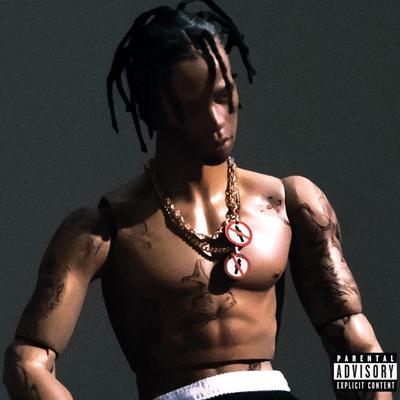
MANN TODAY IS A MARK OF ALWAYS WANTED TO HIT. TODAY LA FLAME RAGERS WE BUILT THIS IDEA WE STARTED WAY BACK INTO SOMETHING AMAZING. AND NOW ITS TIME TO SHOW THE WORLD HOW WE CAN RAGE IN AREANA WITH SPACE. NO SEATING. ASTROWRORLD TOUR IS HERE.’nnn
Show more


A short and rare late night rant from me....
Ya. I didn't forsee this hawkish Fed hike.
Especially with core cpi at 2.4%.
Yet, there is no immediate impending inflationary doom.
They could have waited 6 wks post election. Would not have mattered.
No question this hike and another one will hit sentiment and reduce odds of a strong R showing in mid-terms.
The center of economic and financial power has moved West and resides with the tech crowd. IE Top 10 US billionaires are US tech. Tradfi Wall St/DC guys now small and less relevant in comparison.
Influence and power is shifting. Was very obvious at the All-In Summit I attended in LA that the US economic leaders 10 years from now are the Gen Xers who were in that room.
All futurists..imnovators..space, robots, ai, autonmous vehicles, crypto/blockchain etc etc.
Liquidity funds exploration.
Was Warsh ever really on board with that thesis? Was he ever truly supportive of the Trump agenda?
Strikes me there is a Trojan horse component here but for whose interests I don't know. The East Coast traditionalists? What do they want? To remain relevant? Who knows.
Warsh would not have been appointed had he originally told Trump that his first move 6 wks before mid terms would be a hawkish hike.
Bessent seems fully behind the Trump and the futurist agenda in every regard. If he were Fed chair, would he have hiked 6 wks before an extremely contentious election?
I doubt it.
Oil move has been enough of a negative liquidity shock and now there is a pile on with this newly aggressive and poorly timed Fed posture.
Feels like stock mkt about to get bumpy. The higher the mkt goes the greater justification the Fed will have to hike even more. Mkt weakness will not be able to reverse Fed policy unless it becomes severe and dire... and timing could not be worse to attempt this experiment now.
Show more

🇨🇴🇮🇱 Colombia went from taking Israel to court for genocide to calling it a best friend, in the space of one election.
New president Abelardo de la Espriella says he had a "very warm and enriching conversation" with Netanyahu, thanking him for the humanitarian aid and rescuers Israel sent during a recent disaster.
His words: "Colombia and Israel, always friends and allies."
Under Gustavo Petro, Colombia cut ties with Israel and backed South Africa's genocide case at the ICJ. De la Espriella took office August 7 and flipped the entire foreign policy.
He's already recognized Israeli sovereignty over the occupied Golan Heights, second only to the U.S., and he's moving Colombia's embassy to Jerusalem.
One of Latin America's loudest critics of Israel just became one of its most eager partners.
Source: Abelardo de la Espriella / Writer: Daniyal
Show more


.@BTWFoundation and Cotton On Foundation opened our Kinder Braver Together Pop-Up today at Westfield Century City! I got a sneak peek a few days ago and I love our space of kindness 🥰. If you are in LA, stop by to learn more about the collection supporting our youth mental health work globally, and to add a message to our kindness wall next to mine ☺️! If you can’t make it, visit the @CottonOn website to learn about how you can help build a kinder, braver world together with us.
Show more


On January 25, 2025, on the ride to downtown LA from LAX, “stopped by” SpaceX to chat with SpaceX’s CFO.
What’s new? A LOT!
1. Starlink subscribers more than doubled to 4.6 million in 2024. Could double again in 2025. Planet Earth has more than 8 billion inhabitants. About one third have no broadband internet.
2. United Airlines, Qatar, Hawaiian Air, Air France, and SAS have all recently installed or are in the process of installing Starlink on their planes. A lot more to come.
3. Telco direct to cell texts from Starlink satellites will be available in 2025...initially through T-Mobile and multiple other mobile network operators around the world. We think this is a game changer.
4. In March, SpaceX will launch four more astronauts to the International Space Station and return home two that have been on the orbiting lab for eight months since Boeing flight test last year.
Since SpaceX is privately owned... for most of us, even though its shares are actively traded, it is very difficult to purchase without unusual costs. Purchases of Baron Partners Fund and Baron Focused Growth Fund, two open end, no-load mutual funds with significant holdings of SpaceX, are one way to participate at what we believe are attractive annual management fees. Baron Partners Fund is one of only two equity mutual funds in the United States…of over 2,600 such funds… to outperform the QQQ ETF for the past fifteen years. In fact, Baron Partners Fund was the number one performing fund in that group for this period.
-------------------------------------
Disclosures
Note, the peer group used for this analysis includes all U.S. equity share classes in Morningstar Direct domiciled in the U.S., including obsolete funds, index funds, and ETFs. The individual Morningstar Categories used for this analysis are the Morningstar Large Blend, Large Growth, Large Value, Mid-Cap Blend, MidCap Growth, Mid-Cap Value, Small Blend, Small Growth, and Small Value Categories.
As of 12/31/2024, Morningstar Large Growth Category consisted of 1,088, 952, and 748, share classes for the 1-, 5-, and 10-year periods. Morningstar ranked Baron Partners Fund in the 30th, 1st, 1st, 1st , 1st, and 1st percentiles for the 1-, 5-, 10-, 15-, 20-year, and since inception periods, respectively. The Fund converted into a mutual fund on 4/30/2003, and the category consisted of 678 share classes.
Morningstar calculates the Morningstar Large Growth Category Average performance and rankings using its Fractional Weighting methodology. Morningstar rankings are based on total returns and do not include sales charges. Total returns do account for management, administrative, and 12b-1 fees and other costs automatically deducted from fund assets.
Investors should consider the investment objectives, risks, charges, and expenses of the Fund carefully before investing. The prospectus and summary prospectus contain this and other information about the Fund and can be obtained from the Fund's distributor, Baron Capital, Inc., by calling 1-800-99-BARON or visiting Please read them carefully before investing.
Risks: The Baron Focused Growth Fund and Baron Partners Funds are non-diversified which means, in addition to increased volatility of the Funds’ returns, they will likely have a greater percentage of their assets in a single issuer or a small number of issuers, including in a particular industry than a diversified fund. Single issuer risk is the possibility that factors specific to an issuer to which the Fund is exposed will affect the market prices of the issuer’s securities and therefore the net asset value of the Fund. As of the most recent quarter-end about 41% of Baron Partners Fund’s long positions are invested in Tesla stock. Therefore, the Funds are exposed to the risk that were Tesla stock to lose significant value, which could happen rapidly, the Funds’ performance would be adversely affected. Specific risks associated with investing in small and medium-sized companies include that the securities may be thinly traded and more difficult to sell during market downturns. Specific risks associated with leverage include increased volatility of the Fund’s returns and exposure of the Fund to greater risk of loss in any given period.
For information pertaining to the QQQ ETF, please refer to that firm’s website.
The discussion of market trends is not intended as advice to any person regarding the advisability of investing in any particular security. The views expressed in this document reflect those of the respective writer. Some of our comments are based on management expectations and are considered “forward-looking statements.” Actual future results, however, may prove to be different from our expectations. Our views reflect our best judgment at the time and are subject to change at any time based on market and other conditions and Baron Capital has no obligation to update them.
© 2025 Morningstar. All Rights Reserved. The information contained herein: (1) is proprietary to Morningstar and/or its affiliates or content providers; (2) may not be copied, adapted or distributed; (3) is not warranted to be accurate, complete or timely; and (4) does not constitute advice of any kind, whether investment, tax, legal or otherwise. User is solely responsible for ensuring that any use of this information complies with all laws, regulations and restrictions applicable to it. Neither Morningstar nor its content providers are responsible for any damages or losses arising from any use of this information. Past performance is no guarantee of future results.
MORNINGSTAR IS NOT RESPONSIBLE FOR ANY DELETION, DAMAGE, LOSS OR FAILURE TO STORE ANY PRODUCT OUTPUT, COMPANY CONTENT OR OTHER CONTENT.
Portfolio holdings as a percentage of net assets as of December 31, 2024 for securities mentioned are as follows: Space Exploration Technologies Corporation - Baron Focused Growth Fund (11.4%) and Baron Partners Fund (15.1%*)
As of December 31, 2024, no Fund held shares of United Airlines, Hawaiian Air, Air France, SAS, T-Mobile, or Qatar.
*% of Long Positions.
Portfolio holdings are subject to change. Current and future portfolio holdings are subject to risk.
BAMCO, Inc. is an investment adviser registered with the U.S. Securities and Exchange Commission (SEC). Baron Capital, Inc. is a broker-dealer registered with the SEC and member of the Financial Industry Regulatory Authority, Inc. (FINRA)..
Show more
