Search results for Telescopes
Telescopes community
One keyword maps to one global community path.
People
Not Found
Tweets including Telescopes
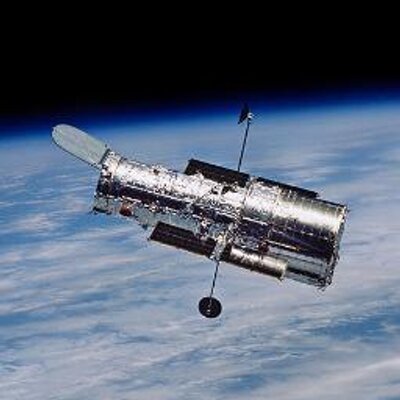
We know our universe is expanding.
But telescopes like Hubble measure an expansion rate that’s faster than predicted, based on models of the early universe.
Here’s how @NASARoman will join the quest on cracking the case of this “Hubble Tension” ⬇️
Show more


Defunding state-of-the-art telescopes and space exploration to instead fund migrant layabouts and benefit scroungers is not a good deal.

Captured by Anduril's network of 400 telescopes deployed around the globe:
The second stage of the Falcon Heavy launch of ViaSat 3-F3 performing a routine thrust event. This produced a spiraled-shaped plume effect, a nominal part of operations for a successful launch of Viasat's latest satellite.
Show more

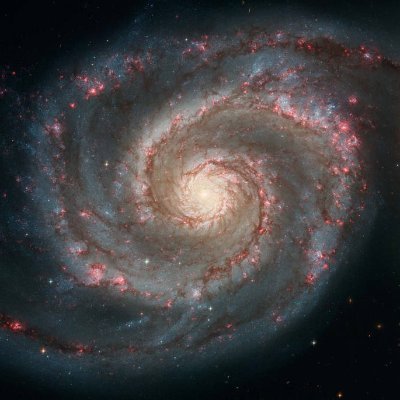
#OTD# in 2017, our telescopes teamed up with @LIGO, @ego_virgo, and @ESA's INTEGRAL to detect light and gravitational wave signals from the same cosmic event for the first time. Curious to know more? Read more about dead stars colliding:
Show more


Falcon Heavy is getting ready to launch one of NASA’s most ambitious space telescopes yet
The Nancy Grace Roman Space Telescope is now encapsulated inside Falcon Heavy’s fairing and has arrived at SpaceX’s hangar at Pad 39A
Launch is targeted for Sunday, August 30 at 7:26 AM EDT
Roman will travel nearly 1 MILLION miles from Earth to L2
Its primary mirror is the same size as Hubble’s, but Roman can see at least 100X more sky in a single view
It will study billions of galaxies, search for thousands of worlds beyond our solar system and help uncover the mysteries of dark matter and dark energy
And one of Falcon Heavy’s side boosters has already flown before on NASA’s GOES-U mission
A flight-proven Falcon Heavy is sending a next-generation observatory nearly one million miles from Earth
Show more


Cooking!! Welcome to Lion Telescope Studio
#NASA# #Telescopes#

Cooking!! Welcome Lion Telescope Studio
#NASA# #Telescopes#
For 22 years, NASA’s Swift observatory has studied the universe's most powerful explosions and teamed up with other telescopes like Chandra and IXPE for breakthrough discoveries.
Even as its mission winds down, its science won’t! Explore its legacy:
Show more


Starship reached orbit for the first time on Monday. One of my favorite potential use cases is launching the next generation of space telescopes faster and with far fewer constraints.
Today, engineers designing the largest space telescopes face extreme mass and volume limits that forces them to make telescopes lighter, foldable, and dependent on incredibly intricate deployment mechanisms, adding years of engineering complexity and increasing the risk of failure.
Starship changes that tradeoff. Thanks to its massive payload capacity and volume, telescope builders could "convert risk into mass": build heavier, simpler observatories instead of optimizing every component around launch constraints.
That could accelerate the next generation of space telescopes, and astrophysics research, by decades!
Show more

Reminder that the U.S. has 20 Hubble Space Telescope sized spy satellites. At least.
The National Reconnaissance Office donated 2 telescopes, one is the Nancy Grace Roman Space Telescope, which launches May 2027, and the other is in storage. They should be strung up into a constellation for distant exoplanet optical imaging.
Show more

