NASA Universe
@NASAUniverse
Your backstage pass to the universe and how NASA studies it. Exoplanets, black holes, dark energy, and more!
80 Following 1.1M Followers
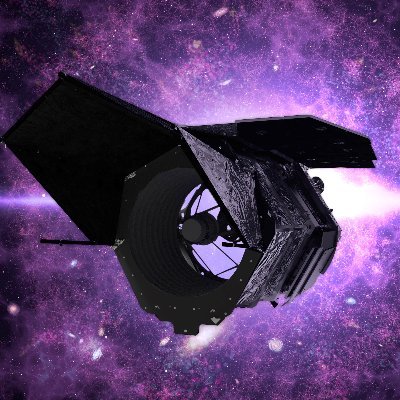
Large file incoming 📡
Ground systems worldwide supporting the Roman Space Telescope have confirmed the ability to receive the 1.4 terabytes
of daily data!
Learn more:
Show more


Big news: NASA selected the PRIMA mission to move to Phase B!
PRIMA, our new far‑infrared space telescope, will explore how planets, stars, galaxies, and black holes form and evolve across cosmic time. Read more:
Show more

If this “.” were a black hole, it would have about the mass of Jupiter’s moon Ganymede crammed into it! To become a black hole, it’s not about how much stuff an object has, but how much it’s been smooshed. That's a lot of gravity, period.
Show more

#TBT# to Sept. 20, 1979, when NASA’s final High Energy Astronomy Observatory, HEAO 3, launched into space. It mapped the sky in gamma-ray light and made detailed measurements of cosmic ray particles, helping us learn about supernova remnants, distant galaxies, and more.
Show more


@NASAWebb @NASAHubble A planetary nebula can be one of the eeriest places in space, haunted by a dead star. This @NASAWebb image of NGC 6072 showcases a mess of gas and dust expelled by the central star at the end of its life.
Show more

Curling up next to a crackling fire? @NASAWebb and @NASAHubble captured this cosmic scale bonfire in the Cigar Galaxy, M82, no matches needed. The galaxy is in the midst of a burst of intense star formation, likely the result of a galaxy merger.
Show more


Today, NASA announced PRIMA, a new space telescope that will explore long-standing mysteries around the formation of planets, stars, black holes, and even how water on Earth came to be.
Show more

Adopt a pixel from one of Roman’s first images! Each pixel will represent a unique piece of the cosmos.
Join over 500,000 of our friends that have already claimed theirs:
Show more

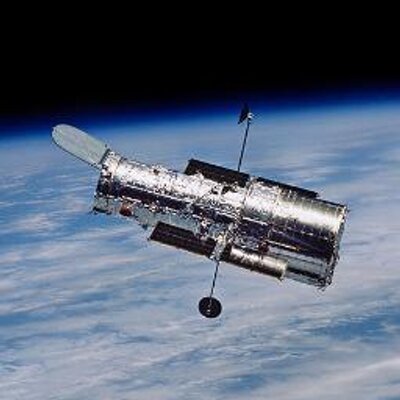
200,000 orbits and counting 🌎
On Sept. 19, Hubble completed its 200,000th orbit around Earth — here’s an observation completed on the big day!
This image shows a cluster of galaxies called MACS J0417:
Show more

Breaking free 💨
M90 is part of the Virgo Cluster of galaxies... for now. Its orbit through the cluster has accelerated so much that it's in the process of escaping the gravitational hold of the cluster entirely:
Show more

Zippy particles called cosmic rays travel at nearly light speed across the cosmos, and astronomers have been searching for sites where these particles get their energy. Thanks to our NuSTAR telescope, we’ve found another candidate: pulsar wind nebulae.
Show more

The Perseus galaxy cluster makes us want to cozy up with a seasonal beverage. Captured by @ChandraXray, the enormous waves of gas making this cosmic latte art likely formed billions of years ago due to the flyby of a smaller galaxy cluster. More:
Show more

Hey!
ICYMI It's been almost a month since Roman's launch and the observatory is currently on its way to L2, a million miles from earth.
Stay up to date on the mission here:
Show more

NGC 7541 is above average! 🏅
This galaxy boasts a higher-than-usual star formation rate. A bar of stars and gas that intersects its center might be the reason why!
This bar likely funnels in the material and fuel needed to create and nurture new stars:
Show more

It’s okay to be different! Omega Centauri is the largest, brightest, and most massive globular cluster in the Milky Way. But it might not even be a globular cluster. It may be the core of a dwarf galaxy captured by the Milky Way and stripped of its outer stars. #MondayMotivation#
Show more

Here’s your pick-me-up from the universe. 💫
Explore this week's Astronomy Picture of the Day images, each paired with a brief explanation from a professional astronomer:
Show more

While our Swift satellite was designed to study faraway cosmic explosions, it has also observes nearby icy comets! These rocky snowballs are leftover from the solar system’s formation, and Swift watched one’s spin slow down: #CollectRocksDay#
Show more

#OTD# in 2017, our telescopes teamed up with @LIGO, @ego_virgo, and @ESA's INTEGRAL to detect light and gravitational wave signals from the same cosmic event for the first time. Curious to know more? Read more about dead stars colliding:
Show more

The universe is full of questions.
@NASARoman is built to help answer some of them. 🌌
Go behind the mission with NASA’s Curious Universe podcast, exploring the science, technology, and people behind this next-generation observatory. 🎧
Show more

A trip down the Milky Way's memory lane...
Our home galaxy's history just got clearer, thanks to Hubble. About 12 billion years ago, a dwarf galaxy known as LKH collided with a young Milky Way and merged with it.
Take a look back with this new discovery:
Show more












