
Anurag Ram Chandran
@AnuragRC
Perpetually caffeinated | Building in age-tech @KuboCare | Alum, @MerakiLabsIndia @DalbergTweet @SchwarzmanOrg @Mizzou
622 Following 1.2K Followers
“Everywhere I go, I see his face” - senior care edition

I wanted to be a Muse hater so bad (don't be an Instinct ride-or-die), but it is unmatched in its speed, accuracy, and tenacity.
Trying to get a refund on a flight - Instinct told me it was non-refundable after emailing the booking platform and getting a negative response; Muse found alt channels we messaged until I was able to get 90% back.
Show more
Any other Instinct power user that have used (and loved) and switched to Muse?
I love Instinct, but I’m also curious AF if Muse is any better?
Turns out, the best way to truly switch over from typing, and increase your @WisprFlow usage is to break your hand…
There’s no going back now!


What’s your fav @AcquiredFM episode? :)

First weekend back in SF was a “crash” course in the US healthcare system ;)
I’m well, and glad to walk away with relatively minor injuries. But boy, is the healthcare system fucked, or what?
Show more


Masterclass in 1300 words. Localization>translation, $1M+ reward for internal innovation, tough calls to flatline one semester for future growth…this is how you build a world class company! Kudos @RohanNayak2 and @PocketFM_App team!
Show more

We grew from ~0 to $500M ARR, adding $250M last year alone while being EBITDA profitable.
1,300-word post on every growth tactic that worked for us:
1. What got us from 0-$400M ARR in the US works in every country.
2. Retention and Monetisation Hacks.
3. Localization > Translation.
4. Experiment with $1M internal seed checks.
5. Pivoting to only AI content production unlocked 100% ARR growth.
Pocket FM is like Netflix for audio-only dramas, with our own pool of one-person studios.
1. Acquisition Playbook for 0-$10M ARR in any country in 6 months
We run a 90 sec video trailer of an audio drama as an Ad and ask users to download the app if they're interested in the rest of the story.
Our core insight after spending >$100M on acquisition is: If the clickthrough rate (CTR) for an ad goes from 2% to 2.25%, our customer acquisition cost (CAC) decreases by ~ 30%.
We remodelled our system around this insight and built an AI-first 2.25% CTR ad manufacturing machine that works in every country.
For every new country, we take our hit shows -> use LLMs to extract and most intriguing moments -> Write a 5-min script combining all the best parts. The first 60 seconds has to have a hook every 5 seconds and needs to end with a crazy cliffhanger to force a download mid-scroll.
If a marketing video is not hitting our benchmarks (2.5% CTR and 55% 3-second through-play), a creative director gets involved to change the hook or cliffhanger to get the numbers there.
AI lets us make 1,000 Ads per show, and in total we do ~17.5k Ads per month. When a business creating scales from 1k to 10k Ads, the normal thing is for CAC to skyrocket. But with what I just shared, we 7-8x'd our User Acquisition budget without increasing our CAC materially.
It took us 8 months to figure this out, but then the timeline from 0-$10M in every country got shorter and shorter:
US revenue grew to $25M in 19 months. (US is now 78% of total)
Germany to 21M in 11 months.
France to $10M in 3 months.
2. Retention and Monetisation Hacks.
We knew we wanted to create an audio entertainment platform, but there was no standard format. For the first 2-3 years, we tried 10 different formats before landing on the winner.
After we got it right with audio drama (8-12min chapters, written for mobile fiction, serialized, episodes have strong hooks and end on cliffhangers), avg daily streaming time went from ~25mins to 150+.
Audio drama made us realize that Pocket FM was creating a whole new medium. There was no playbook for anything that we were doing. Everything had to be thought & built from scratch.
This is what we did for each major bullet:
- Monetization: Users have some free daily minutes to listen; then it's pay per episode. We also added the option for users to unlock episodes by watching ads, which is doing extremely well. Ads scaled from zero to a ~$90M run rate in 12 months.
- Engagement & production: You don't become obsessed with an app you open once a week. To have users engage daily, we make the next episode free every day. Also helps them build the habit.
- Discovery. Huge problem because people consuming Pocket FM enter the app, tap the show, and lock the screen. We fixed it by doing "playlists" of episodes. Once users's free minutes on a show are done, we ask users if they want to pay. If they say no, we play a new show, one where they haven't used their free mins. And we stitch episodes of different shows together that way, creating natural discovery.
3. Localization > translation.
78% of our revenue is still concentrated in the US. Localisation is fixing this: You might write a show for a Spanish audience where language, jokes, folklore, have a certain flavor; if you merely translate the show for, say, a Norwegian audience, that color is lost and hurts the show in the Norway. Listeners would relate more if the show was written by a Norwegian.
That's why, instead of translating, we localize shows to different regions. We use AI to take the spine of stories and adapt their whole cultural layer to the other country.
The results: a US show that was localized for a German audience had 50% higher retention than the translated version.
Localization + our user acquisition playbook led to:
- $10M+ ARR in France within 3 months
- $21M+ ARR in Germany within 11 months.
And this expands writers' addressable market.
We get messages of writers thrilled to have revenue coming from the US, India, EU, LatAm, without them doing much incremental work.
4. Experiment.
We give $1M checks to new internal initiatives, and the team has 12-18 months to prove their thesis. If they prove it, we double down.
This is how Pocket Saga came about, our AI video microdrama app. It's an AI video equivalent of Pocket FM. Same shows and structure, but as a vertical 2-min mobile video series.
We launched it two months ago and it's at ~$15M ARR.
Pocket's broader thesis is to help creators tell their stories to as many people as possible. Start with audio drama -> multiple languages or localize to diff countries -> microdrama -> more formats like movies, TV shows, and games.
Best of all is that writers get revenue streams not only from countries they wouldn't have tapped into, but also from formats they wouldn't have thought possible.
5. Pivoting to only AI content production unlocked 100% ARR growth.
In mid-2024, we pivoted to only AI content production.
Our growth took a very direct hit. Pocket was already at $200M ARR, growing 50% YoY, and we flatlined for a whole semester.
Six months later, the business exploded.
After the switch, we went from ~25k hours of content produced per year to over 2.5M hours, which are also higher quality. Because AI orchestrates the writing and more data is fed into it, more blockbusters come out.
Over 90 titles have $1M+ in lifetime earnings and 13 crossed $10M.
Quality control is done with LLM as a judge, and LLMs are quite tough.
Results are very encouraging:
- 12-month revenue retention went from 44% to 76%.
- In the past year, we added $250M in net new ARR.
__________________________________
Pocket Entertainment (Pocket FM + Pocket Saga) has become the largest AI entertainment platform.
We have the largest storytelling catalog with 770,000 titles, 550k creators, and 5.5B hours of playtime with minute by minute retention & engagement data. We are using all of this data to improve every aspect of our business.
Our Bet: In the next 3 years we will be able to produce Naruto-like series for $1000.
Netflix has to spend $17B to find 100 Blockbusters per year.
What happens when you can produce 1M high quality shows for $1B?
The streaming wars caused a $300B reallocation of market cap.
The AI entertainment wars may be a $1T+ reshuffling of market cap.
We are at a unique spot. Unlike other AI creator tools like Runway or Midjourney, we own both the supply and demand side of AI content.
We've attracted over 550,000 writers who are producing an annualized 2.5M hours of content every year. This pairs with 137B+ minutes streamed.
Because of this, growth is accelerating as we scale further.
We have multiple S-curves inflecting at the same time:
- AI produces better and more ads -> scale faster in new countries
- Writers + AI produce more shows -> more blockbusters
- Localisation -> more reach per blockbuster
- Audio to video format expansion -> larger TAM -> more creators
Every aspect of our business is designed to improve another, and everything is aligned so that the number of blockbusters continues to rise.
If you're interested in building at the intersection of ai, tech and entertainment, DM me.
Show more


Today, I greeted someone with “Good Morning”, and she greeted me back with “Have a blessed day, sweetheart!”
And god, have I been having the most blessed day since 🥹
Passing this forward, and the next person I see is getting a “Have a blessed day, sweetheart” from me
Show more
Congratulations to the Carely team on the launch, and I truly hope it succeeds...but so many reasons why this form factor and framing just does not work in senior care (from someone who has been a caregiver for several years AND has been building a health monitoring company in senior care for the last two years).
1. Adoption and adherence: Adoption rates of wearables are abysmal among older adults, and even if they do purchase one, its adherence is extremely low. A wearable that is intended for continuous monitoring, when not used continuously, is unfortunately, no good.
2. Additional burden on the older adult: The customer seems to be the child or caregiver. Additionally, the alerts and data also seems to not be targeted towards the older adults. So essentially, you are selling something to a non-beneficiary, who then has to encourage/request/force the beneficiary to wear it and remember to charge it, so that the non-beneficiary gets the alerts and updates? Only going to discourage adherence.
3. The design language of the wearable is made to seem "hidden" so that it blends in with the older adult's skin tone. Why? Older adults tend to be, and want to be seen as tech savvy - better adoption and adherence if it is made out to be a cool gadget rather than something like a Life Alert pendant (which is seen with some shame and loss of independence).
Happy to be completely proven wrong, but what am I missing here?
Show more

JUST IN: @meetcarely is turning elder care into passive alerts instead of constant check-ins.
It’s a screenless wearable that learns normal routines, tracks key health signals, and alerts the family when something seems off.
- detects falls, SOS button presses, and safe zone exits
- uses 6 biometric sensors to track heart rate, blood oxygen, skin temperature, and motion
- learns normal sleep, activity, and daily routines over time
- alerts family when patterns change from the usual baseline
- works independently without a smartphone, Wi-Fi, or Bluetooth
- gets up to 10 days of battery life and charges on the wrist
Priced at $249/year with the device included.
Show more

Not going to stand for Bangalore traffic slander anymore. Don’t even try me.
Bombay, you have truly outdone yourself - the best in worst traffic in the country.
It’s not just voice-text. They just shipped out a granola competitor, and I’m fairly certain the path ahead involves a suite of products that will capture a customer’s entire workspace (Notion competitor etc.). And now with distribution they can surge ahead on more wallet share
Show more

am I missing something here?
I really need someone to explain me why it's worth investing 280 million USD in Wisprflow
speech to text has always existed, I myself use some like fluidvoice, works awesome
then there is elevanlabs and so
what cutting edge technology are they building?
Show more
May this be the manifesto for Indian dreamers of today and the future! Take a bow, @shaurya_sinha7. You've captured the essence of our builders in the most magnificent way.
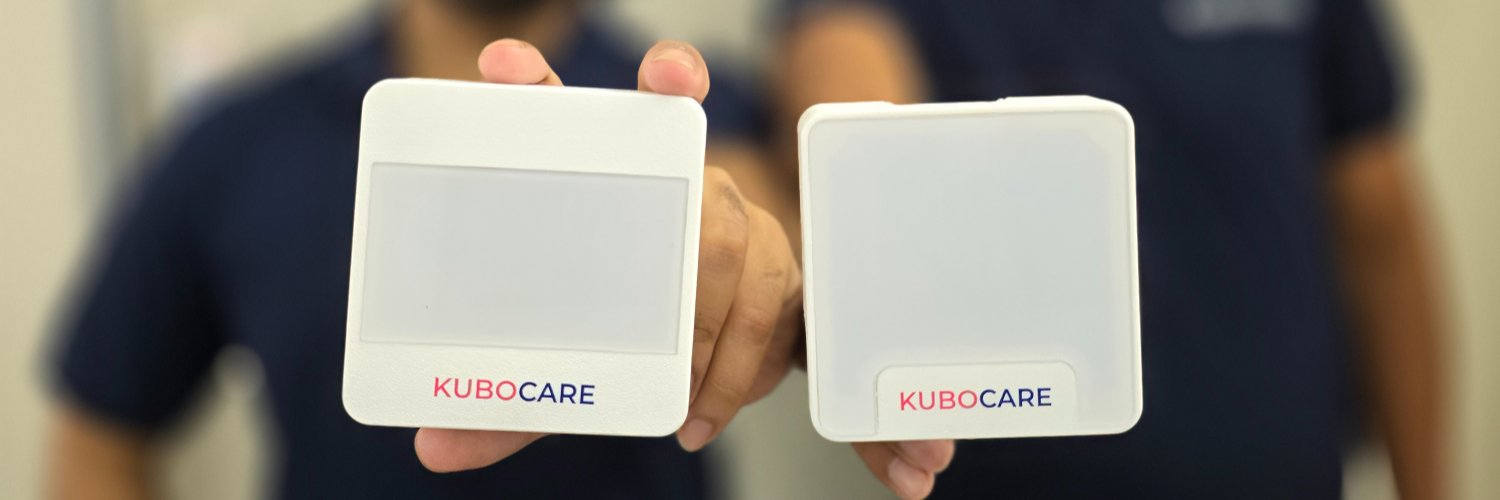
You always have an invite to Kubo Care's lab, and lunch, dinner, and drinks on us! Thank you for highlighting this brilliant ecosystem.
Show more

This Independence Day 🇮🇳, I asked, "What will the next century of young Indians look like?"
$0.01 Drone Deliveries. UAVs that never land. Groceries in under 10 minutes.
Meet The 22nd Century Indian. A Documentary on a New India.
Show more

In yet another day of wild AI-driven cold messages…
Surely, mentions of restraining orders and priests cleansing, is not getting this guy business?
Pls chill GTM bros. You made me go WTF, but will never get a response with this shit.
Show more

At the price point and quality, anama is simply unmatched and can eat the market. Will be curious to see they are able to sustain these prices and quality/maintain them at scale (if they want to scale, that is). Will it make others re-consider their pricing?
Show more

Every visit to my grandparents’ in Kerala is a guaranteed flavor-bomb! I’m 2kgs heavier, and a heck of a lot happier :)












