
Lightspeed India
@LightspeedIndia
Possibility grows the deeper you go. Serving bold builders of the future.
Learn more:
284 Following 24.9K Followers
What makes an AI model "frontier" in 2026? And who actually captures the value?
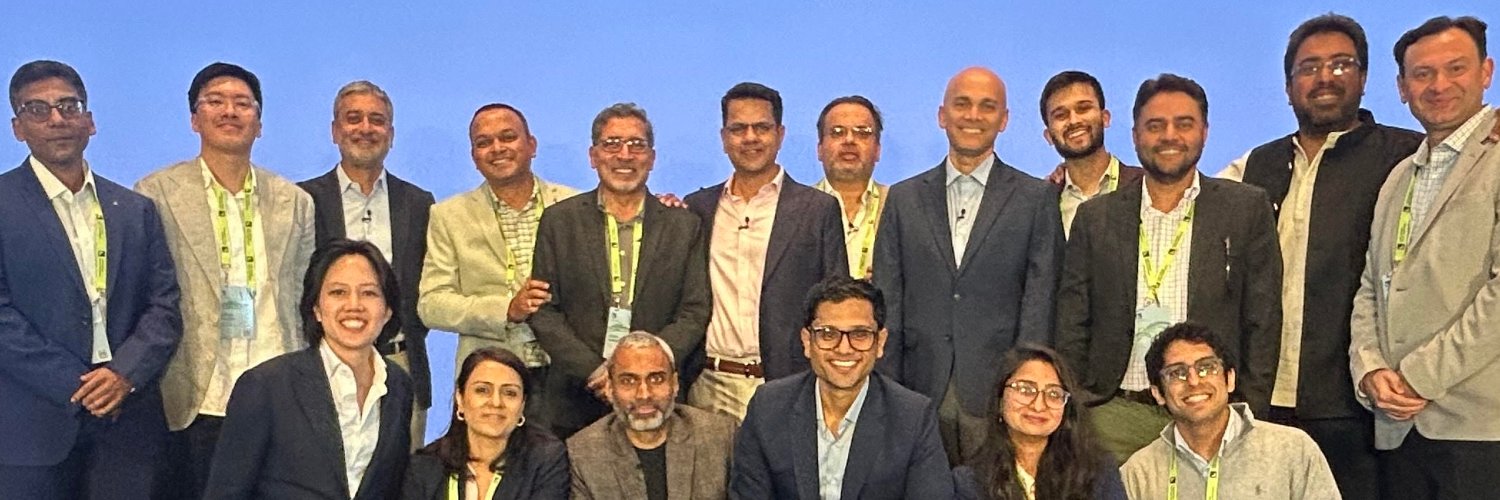
Hemant Mohapatra (@MohapatraHemant) took on those questions at SuperAI Singapore (@superai_conf), on a panel with Geoff Soon (Mistral) and Cherie Shi (MiniMax), moderated by Zixuan Li (
Two arguments he made on stage that builders should take note of:
1. We're still in AI's extractive phase.
• Value sits with whoever extracts intelligence best. So today's frontier is benchmarks and tokens per dollar per watt.
• But the phase will shift to distribution. Then the frontier splits:
• Problems of scale (coding, reasoning) → won on cost and usability.
• Problems of scope (cancer, materials science, robotics) → fractal. They get harder the deeper you go. Winning there takes testing null hypotheses, RL, creating de novo knowledge.
(Hemant has written about this extractive vs. distributive framework in depth — link below.)
2. Open weights exist to commoditize the intelligence layer. That's a good thing.
• If a handful of companies own intelligence, the gains pool the way oil wealth does.
• Commoditize the base layer and value moves up to applications, where everyone can pay to play.
• The trap for open-source labs: positioning as SOTA model companies locks them into selling tokens at market price, without owning the infra to serve them.
• Owning a pond doesn't make you a water business. The money is in cleaning, piping, and delivering the water.
Thanks to the SuperAI team, as well as Alex Fiskum (@AlexFiskum), for hosting.
@MistralAI @MiniMax_AI @ZixuanLi_ @Zai_org
Show more












