

Arnaud Bertrand
@RnaudBertrand
Entrepreneur. Previously HouseTrip (sold to TripAdvisor), now
Subscribe if you like what I write
1.3K Following 411.8K Followers
Classic Macron doublespeak.
At the exact same UN conference Denmark signed away Greenland's sovereignty to the US (fact: and Macron literally called it "a good thing" (fact as well:
When the US attacked Iran back in February, he also issued an utterly Orwellian statement together with Merz and Starmer condemning... Iran (!) and calling Iran to "cease its indiscriminate military strikes" ( There was not a word about the US-Israeli aggression when they, of course, were the "empire abusing their powers" and "threatening the sovereignty" of Iran.
Show more

Emmanuel Macron: "My message is to stand firm. Do not yield to the situation which is developing. The world is slowly becoming more divided. The rhetoric of defeat that is giving way to empires abusing their powers, threatening the sovereignty of some nations."
Show more

That's a good one 😅

@RnaudBertrand Waiting for the first Greenland collision video, except this time it’s dog sleds and Russians 😂

«Long story short - which may surprise some - the Danes lied the most: Trump is pretty much correct in saying that this new deal grants the US control of Greenland»
Fun fact: investors are so enthusiastic about France that its borrowing costs are now the highest in the Eurozone.
Macron, the so-called "Mozart of finance", has somehow achieved the feat of making France so toxic that investors now treat Greece as the safer bet.
Show more
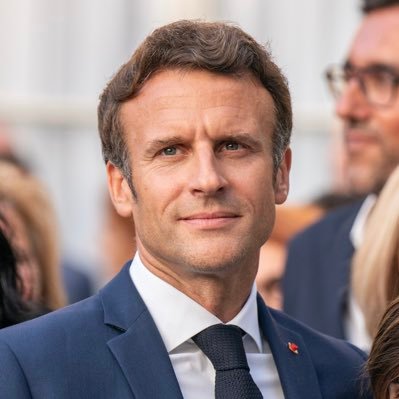
À chaque fois que j’en ai l’occasion, j’adresse aux investisseurs un message simple : choisissez la France !
Pour eux, ce sont les talents et le savoir-faire français. Pour nous, des emplois et la vie des territoires.
À New York, avant de me rendre à l’Assemblée générale des Nations unies, je retrouve les représentants de vingt banques et fonds d’investissement.
Show more

Ok, we now have the actual text of the Greenland deal ( so we can say how it compares to the existing 1951 arrangement and who, between Trump and Denmark, lied the most in their framing of it.
Long story short - which may surprise some - the Danes lied the most: Trump is pretty much correct in saying that this new deal grants the US control of Greenland.
Let's look into what changed compared to the 1951 deal.
1) This is now a permanent arrangement: whereas the existing 1951 deal only lasted as long as NATO existed, this one "does not have an end date and may only be amended by mutual consent."
It even survives a hypothetical future independence of Greenland: in that event, Denmark and Greenland must ensure that the independent Greenlandic state "affirmatively assume[s] all of the rights and obligations of the Kingdom of Denmark specified in this Agreement."
2) In the 1951 agreement, the US could set up bases only where both governments agreed, and only on the basis of NATO planning. The new deal locks in three bases: the US can "modernize and expand its activities" at Pituffik, its only base in Greenland until now, and "shall be allowed to establish an additional Defense Area at Narsarsuaq and Mestersvig." Further bases beyond these 3 can be justified by the defense of "the American continent," a US interest rather than a NATO one.
Also, quite subtle but this is interesting: Article IV(iii) says that "the United States may establish additional defense areas in Greenland" and that consultations are then held "to decide implementation details based on mutual agreement." What this means is that the principle of a new base is automatically granted and only the implementation details require agreement.
Article VII also gives the US "the right to raise concerns regarding construction, or change of use" of any building near a US base, after which the parties decide together what to do. Which means that the US has a say over civilian planning around its bases.
3) On US military movement across Greenland, the wording change between the 1951 agreement and this new one is quite funny.
The 1951 text said (Art. V(3)): the US "may enjoy... the right of free access to and movement between the defense areas through Greenland, including territorial waters, by land, air and sea," but only "in accordance with general rules mutually agreed upon and issued by the appropriate Danish authority in Greenland."
The new one says: "the United States of America shall enjoy... the right of free access to and movement between the Defense Areas through Greenland, including the Territorial Waters, by land, air and sea."
That's it: "May" becomes "shall," and the US military movement no longer has to follow rules "issued by the appropriate Danish authority in Greenland." The US also gets something new on top: "undersea access to and movement within the Territorial Waters," i.e. submarines.
4) Non-NATO exclusion: non-NATO states are barred from military installations or a persistent presence in Greenland unless all three parties approve, giving the US an effective permanent veto. The 1951 deal had no equivalent clause.
5) Investment screening: this is entirely new. "States or investors from a state that is not a member of NATO, a NATO partner, or an EU member state" (i.e. Russia, China, India, the Gulf States, etc.), "shall not be allowed to have (i) control, (ii) significant influence, or (iii) access to non-public information...within Particularly Sensitive Sectors or Activities in the territory of Greenland (including the Territorial Waters), unless agreed between the Parties."
Again, it basically means that the US has a permanent veto over who can invest in strategic sectors in Greenland, as far as non-NATO or EU states are concerned.
6) Lastly, in stark contrast with the 1951 deal, the framing of the deal changes significantly: this new deal is largely framed around the US.
The 1951 agreement existed only "for the benefit of the North Atlantic Treaty Organization." The new one lists the defense of "the American continent" as an objective, celebrates "the irreplaceable role" of the United States military as well as "the United States' indispensable historical and ongoing contributions to the security and defense of Greenland," and names the establishment of Trump's "Golden Dome" missile defense system as a key goal.
So, to sum up:
- The US secured a permanent military foothold that even an independent Greenland would inherit whether it likes it or not
- The US now has veto power over any non-NATO military presence in Greenland, and over who can invest in its strategic infrastructure and resources (beyond NATO and the EU)
- Denmark signed away its say over the principle of new US bases, with only the right to discuss the "implementation details"
- Danish authorities no longer set the rules for US military movement across the island
- And all of it is now justified by the defense of "the American continent"
I don't know in which universe this even remotely "recognizes the sovereignty and territorial integrity of the Kingdom and the Greenlandic people's right to self-determination," as Danish PM Mette Frederiksen put it (
Yes, the preamble of the text cynically "reaffirms" Danish sovereignty but, in my book, when you let a foreign country put bases on your soil, move its troops without following your rules and veto who else can come in, in perpetuity, after it spent two years threatening to take you by force, the word for that is anything but "recognized sovereignty" 🤷
Show more

It's always strange how the US uses its unparalleled military and economic power to strangle and suffocate the economies of small nations it dislikes, then points to the intended devastation as proof that those countries are bad and don't work, with no reference to the US role.
Show more

I know it feels forever ago, but Mistral really did have a moment there.

This blew my mind: between 1403 and 1407, the Ming Dynasty emperor commissioned an encyclopedia - now called the Yongle encyclopedia, after the emperor - that was so vast in scale (around 400 million Chinese characters) that the only other encyclopedia that finally exceeded it was Wikipedia in 2007, 6 years after its launch!
This is yet another example of West-centric our sense of intellectual history is: in French education we're taught that encyclopedias as a concept started with Diderot and d'Alembert's "Encyclopédie" in the mid-18th century, which we're told was the first attempt in history to gather all of human knowledge in one place.
Not only was the Yongle encyclopedia completed 350 years earlier, and not only is it 20 times larger than L'Encyclopédie, but it was itself a very late entry in a Chinese tradition of encyclopedias which started with the Huanglan - more than 8 million characters in length - compiled around 220 AD (
Unfortunately much of the encyclopedia has been lost: out of the original 11,095 volumes, only around 400 are known to have survived (300-ish of which are in China). But we sometimes find new ones, like two volumes that surfaced in 2020 in the attic of a French family, descendants of a naval officer who had received them as a gift from corrupt Chinese officials in the 1870s.
They went to auction in Paris with a starting price of 5,000 euros and sold for 8.12 million to a Chinese textile entrepreneur, Jin Liang, who donated them to China's National Archives of Publications this summer (
Show more

Tomorrow’s @DohaDebates episode asks who is best positioned to lead the world or at least offer the best example going forward. We have great guests including @RnaudBertrand @HuiyaoWang @avilarenata and @isabelhilton and moderated by @sosalam. Tune in to watch the extended cut version on Doha Debates YouTube channel beginning 9 AM ET/4 PM Doha/9 PM Beijing.
Show more

This is what the Chinese built for the same price and over the same period


Footage of the economic and trade talks between China and the US.
Both sides used very positive words to describe the talks.
🇨🇳 China's side said: 不错 (it's quite nice).
🇺🇸 US side said: very, very successful.
Show more


There's still this bizarre contingent of Obama-era millennial liberals who cannot leave that period behind, even though the world is showing them it is gone. I'd imagine many are still squeezing into skinny jeans and listening to The Strokes. It's a rough aging process for them.
Show more
Putting Canada and France in there is like when leader of Albania once said: "Remember, together with the Chinese, we comprise a quarter of the world's population"

Canadian PM Mark Carney:
There are only four countries at the forefront of AI: France, Canada, China and the United States.
We must join forces to ensure an appropriate framework so that AI is safe and effective.
Show more


LOL! Best Hitler-bunker-scene rendition so far!
“You didn’t tell me these were the same Persians that defeated the Romans.”
"Have Bari Weiss write why high oil prices are actually a good thing..."
Show more

I'll save you the read: Noah Smith's "argument", if you can call it so, is that the U.S. has lost any moral superiority over China, is building "a sort of gulag archipelago", attacks weaker countries and is run by people "far less competent" than the Communist Party.
His conclusion: "we" can still beat China, and the trick is "to let them beat themselves." Because it's China, you see, that apparently suffers from internal contradictions.
And all this after admitting, at the very start of his piece, that that he basically doesn't know anything about China.
You genuinely couldn't make this up. Puzzles me how anyone can still read this guy's slope unironically.
Show more

Noah Smith is a national treasure.


On this topic, I just stumbled upon an extraordinary number released by China's National Radio and Television Administration (NRTA): 430,000 micro-dramas (short TV series) went online in China in the first 8 months of 2026, and over 90% of them were AI-made ( 🤯
And micro-dramas aren't a micro-phenomenon in China: still according to the NRTA, they're watched by 800 million people - a good majority of the population - and the market passed 100 billion yuan last year, about twice China's cinema box office (
Which means that, that's it, we're there: the majority of new TV-style series in the world's largest market are made by AI.
I knew anecdotally that AI entertainment content was big in China (hence my casual take last night 👇) but I'm genuinely awed by the scale and speed of it: AI dramas were virtually non-existent at the beginning of last year and, fast forward a year, it's now human-made dramas that are the exception!
To be clear, this is about what gets made: many of these AI dramas are - like YouTube videos - made by everyday folks and don't that much viewership. But that's how every creator economy works: a long tail few people watch, and a handful of hits that reach hundreds of millions.
This might possibly become China's answer to Hollywood. We're talking immense production cost advantages: the cost per minute of footage for AI micro-dramas is roughly 1,000 yuan ($140, while your typical Netflix drama costs $5M to $10M per hour-long episode, so $85,000 to $170,000 a minute. In other words, it's roughly a thousand times cheaper to produce.
And there are other advantages too: with AI, it's ridiculously easy to re-render the footage with local faces, languages and other local cultural characteristics for every single international market at near-zero cost. Which would be something Hollywood never had: a culture-neutral fiction factory.
All the more because we're also starting to see full-length AI dramas appear.
In fact, just 3 weeks ago, Hunan TV, one of China's biggest channels, began airing in prime time "Hou Xiyou Ji" ("The Later Journey to the West"): a 30-episode series of 40 minutes each, entirely AI-generated, without a single human actor. You can watch the first episode here in full: and see for yourself that it looks remarkably well made.
It went from approval to broadcast in just under 4 months and, according to the series' director Li Dongshen, costs about 900,000 yuan per episode to make ($135,000), or 50 times less than your typical Netflix series (
And it did very well: it topped its time slot among provincial satellite channels five nights running, passed 150 million plays on Mango TV in its first five days, and sent Mango Excellent Media's stock up 44% in two days, adding over 11 billion yuan to its market value (
Bear in mind that at the beginning of 2025 the technology could not do this at all (back then, no-one could produce more than a few seconds of coherent AI video, let alone a 40-minute episode with consistent characters) so it's an understatement to say that things are moving fast. Imagine where this will be in another 18 months: today is the worst AI dramas will ever look.
Interestingly, this technology is overwhelmingly Chinese. Where China is roughly on par vs the West for frontier LLMs, it is clearly ahead in AI video: on the main blind-test leaderboards ( out of the 10 top spots, 9 are held by Chinese models (ByteDance's Seedance, Alibaba's Wan, MAGI-2, Minimax), with Google the only Western lab still in the race.
And they've clearly unlocked some sort of flywheel which gives them a considerable advantage: the companies building the models are the same ones that own the platforms where the content gets watched.
ByteDance makes Seedance and owns Douyin and Hongguo, China's biggest micro-drama app. Alibaba makes Wan and owns Youku. Kuaishou makes Kling and owns, well, Kuaishou. So hundreds of thousands of AI dramas get made with their models, then watched by 800 million people on their app. Better models make better dramas, better dramas bring more viewers and more creators, and round it goes.
No Western lab has anything like it: OpenAI had a model - Sora, being discontinued this very week ( - but no audience, and Netflix has an audience but no model.
Only Google has Youtube but, so far, it strangely doesn't seem to have connected the pieces: it has the best video model in the West and the biggest video audience in the world, but no serialized drama format built on top. If anyone in the West can replicate the Chinese flywheel, it's them. But for now, they haven't.
In any case, long story short, what this all means is that the entertainment industry, in Hollywood and elsewhere, is on the cusp of being seriously disrupted, and its epicenter is China.
Humans won't disappear from the process - even in China, the regulator's line is that "AI is a tool, humans are the creators" ( - but it matters a great deal which humans, and whose tools, and it looks increasingly like the next generation of storytellers will either be Chinese or using Chinese tools.
Show more

Those are absolutely hilarious 😂
Also shows how advanced AI video generation is in China: it's actually a big subject in the country, AI vids such as these ones are overtaking real ones on Chinese social media - to an even bigger extent than in the West.
Show more
Those are absolutely hilarious 😂
Also shows how advanced AI video generation is in China: it's actually a big subject in the country, AI vids such as these ones are overtaking real ones on Chinese social media - to an even bigger extent than in the West.
Show more


Interesting detail when you read the piece: according to their statement, the Saudis left mBridge in May 2025 but they're only going public about it the very weekend Trump is reportedly in Camp David to decide whether to bomb the Houthis for them.
Impeccable sense of timing.
Show more


By now, it's amply clear that the big bosses of US frontier AI labs are really, really scared of China.
And, fascinatingly, part of the answer why might be a tiny place in Inner Mongolia that you've probably never heard of: Ulanqab prefecture.
Heard of it? Didn't think so.
Even myself, who's traveled to Inner Mongolia twice, had never heard of it before researching this story.
This is because, at first glance, this place is pretty unremarkable. Check its Wikipedia page ( and you’ll see the only thing it’s famous for is being the birthplace of He Pingping, who briefly held the Guinness record for world’s shortest man.
That’s it, that’s the list!
Otherwise, it's just a sparsely populated - 1.5 million people, minuscule by Chinese standards - stretch of windswept grassland on the Mongolian plateau.
Except there is one number that tells you there is more to this place that meets the eye: this tiny prefecture consumes nearly 1% of all of China's electricity - and that number is growing by double digit numbers every year.
And yes, I did write **consume**, not produce.
In fact, when you divide Ulanqab's electricity consumption by the number of households living there, each household in this remote corner of Inner Mongolia "consumes" about 105,000 kWh in electricity, roughly 10 times the U.S. average. Insane electricity consumption numbers.
So what are the Ulanqabese doing? Are they all running 10 American households' worth of appliances?
Here is another number that might clue you in on the answer: over the past few years, this unremarkable prefecture has quietly signed over half a trillion yuan (and, yes, that’s trillion, with a "T") worth of investment deals from all the major Chinese tech giants.
What is going on, you'll have guessed by now, is the most ambitious data center buildup anywhere on earth - and it's really surprising this hasn't been talked about more because the scale is beyond anything else, and by an immense margin.
Take Elon Musk's so-called "Colossus" datacenter in Memphis, Tennessee which he pitches as "the world’s largest AI supercomputer."
According to their own numbers ( Colossus has 200,000 chips, which, let's be clear, is already super impressive.
In datacenter lingo, this converts to roughly 5000-6000 "racks": you know, the fridge-sized cabinets full of blinking lights you see in every movie scene set in a server room.
How many racks are they building in Ulanqab? Over 5 million.
Yes, about one thousand times the scale of "Colossus" 🤯
I tripled-checked the number: it is indeed the official number published by authoritative sources such as "Science and Technology Daily", the official newspaper of China's Ministry of Science and Technology (
This is an absurdly large amount of compute.
What we see appearing in this Inner Mongolian steppe may be the closest thing to a world brain humanity has ever built - a place where a large share of the world's thinking will physically happen.
And - as we'll see - what makes this story so fascinating is not just the scale, but why it's getting built in this particular patch of Inner Mongolian grassland which combines a number of characteristics unlike anywhere else.
If you believe, as I do - and as both China and the US obviously do as well - that AI will be the defining technology of the 21st century, this makes Ulanqab one of the single most relevant geopolitical places in the world right now.
The full story - the Chinese government plan Ulanqab is part of, energy prices, chips and the strategic questions this raises - is here:
Show more

This very much sounds like a West-only AI cartel proposal and, in fact, if you read Dario's essay - under the very telling "pacing within democracies" chapter - he specifically says he'd need the US government to issue an "antitrust waiver" for this.
The plan transparently looks like this: agree among themselves not to compete too hard, get an antitrust waiver to make it legal, and while they're at it, get Washington - under the veneer of "safety" - to kneecap Chinese competitors because only "democratic" models can be in this "safe pacing" club.
I'm not even exaggerating: Dario pretty much writes this explicitly.
There are 3 steps to his plan and step 2 is literally: "Frontier AI companies within democratic countries coordinate to establish common safety standards as well as limits on the rate of unchecked AI progress" -> the "unchecked AI progress" that would need "limits" is simply AI progress that happens outside their agreement. Another word for it is simply competition 🤷♂️
He also explicitly writes that "a key part of pacing within democracies is to keep democracies’ AI lead over autocracies as large as possible." You can't possibly be clearer than this...
Show more












