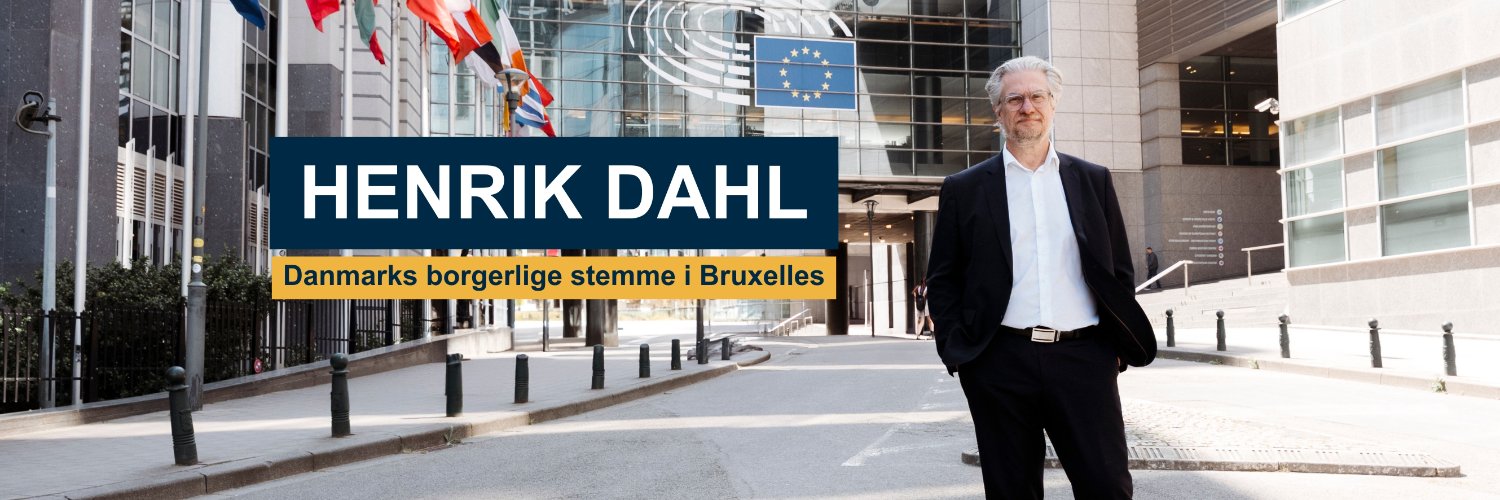

Henrik Dahl
@SociologenHD
Medlem af Europa-Parlamentet for Liberal Alliance.
455 Following 22.6K Followers
In a brilliant essay in The Sunday Times, Matthew Syed writes the following: “If extremism is defined as acting out of proportion with context, history or consent, I suggest Merkel’s tenure represented the high point of postwar European extremism.”
I agree with Syed’s analysis. But there is one aspect of Merkel’s legacy to which we need to pay particular attention.
In Merkel’s own country, Germany, the political centre is collapsing. Nationwide opinion polls suggest that the three establishment parties that rebuilt Germany after the Second World War now command the support of only around a third of the electorate between them.
Nor is Germany the only country where the political centre is collapsing. The same is happening in France - a development that puts the future of the centre at issue in next year’s presidential election.
In my view, Angela Merkel bears a grave responsibility for the collapse of the centre and the growing ability of the political extremes to set the agenda.
The almost one-third of voters who would support Alternative für Deutschland in a national election are not fascists or Nazis. A substantial proportion are disillusioned CDU voters.
What has disappointed these voters? First, what I see as Merkel’s failures on so many fronts: immigration. Security. Energy. A sustainable strategy for business and economic growth. Digitalisation. Infrastructure maintenance. The list is almost endless.
Second, the extraordinary denial of reality that, in my assessment, Merkel allowed to take hold when it came to immigrants’ responsibility for antisemitism, violence against women, terrorism and gang crime.
Coming from Denmark, where we have reliable statistics on all these matters, I find it frankly shocking to listen to the nonsense coming from Germany’s political elite.
But I would also trace back to Merkel the rise of what is often called “Islamo-leftism” - a tendency that has recently gained ground in Sweden and is also growing in Germany. In Sweden, polls have indicated that 85 per cent of Muslim voters support parties to the left of centre, with almost one in five supporting the Left Party, Vänsterpartiet - a party tainted by antisemitism and the glorification of terrorism. I see no compelling reason to assume that the pattern in Germany is fundamentally different.
My argument, then, is that it is not only the rise in support for the AfD that can be traced back to Merkel. The same applies to the growing support for parties on the German left that promote the political and religious views of a significant proportion of the people, Merkel invited to Germany. Not least on the Gaza question.
Merkel’s role in Europe’s political destabilisation deserves far closer scrutiny.
We need to discuss this openly and honestly. Otherwise, we cannot understand why the political centre is collapsing in so many countries today.
Show more












