Search results for IT企業
IT企業 community
One keyword maps to one global community path.
People
Not Found
Tweets including IT企業

Jackson hole会议有关ai的摘录
1,AI的发展速度与经济增长潜力
Capital and labor have combined to create the large language models at the heart of AI. Users buy tokens to gain access to the models. Reports put annualized token sales for the two leading labs alone at more than $100 billion—an increase of 500-plus percent from a year ago. 资本和劳动力共同创造了处于AI核心地位的大语言模型。用户通过购买Token来使用这些模型。据报道,仅两家领先实验室的Token年化销售额就已超过1,000亿美元,同比增长逾500%。
2. AI可能成为新的生产要素
The Fed watches all of this attentively. We recognize that AI is a new variable—potentially a new factor of production—that will have consequences for both the economy and the conduct of monetary policy. It opens some major lines of inquiry:美联储正在密切关注这一切。我们认识到,AI是一个新的变量——甚至可能成为一种新的生产要素——它将同时影响经济运行和货币政策的实施。这带来了一些重要的研究问题:
Will the application of AI cause a significant, sustained rise in productivity across the economy? And if so, when?AI的应用是否会推动整个经济体的生产率显著且持续提高?如果会,这种变化将在何时出现?
Will token usage be complementary or competitive to labor? Will the next generation of AI models demand even greater capital intensity, or will the models themselves help devise a capital-light solution? Token的使用与劳动力之间究竟是互补关系,还是竞争关系?下一代AI模型是否需要投入更多资本,抑或这些模型本身能够帮助开发出资本需求较低的解决方案?
3. AI产业的收益将由谁获得
Among the other yet unknowns is the resulting market structure. It's not obvious where the returns on capital will land or on what timescale. Early on, how much of the surplus goes to owners of scarce assets—AI labs, chipmakers, energy producers, and cloud providers? Over time, how much of that value accrues to businesses and consumers? What are the broad implications for workers and for the employment side of the Fed's mandate?另一个尚未确定的问题,是AI最终会形成怎样的市场结构。资本收益最终将流向哪里、又将在多长时间内实现,目前并不明确。在发展初期,经济剩余中有多少会流向稀缺资产的所有者——包括AI实验室、芯片制造商、能源生产商和云服务提供商?随着时间推移,又有多少价值会由一般企业和消费者获得?AI将对劳动者以及美联储就业使命产生哪些广泛影响?
4. Token价格与模型分层
Likewise, we don't yet know the equilibrium price of the tokens. Might there be a heterogeneity of tokens, such that growing sums will be paid for access to the best models at the frontier? Will token prices for older models fall to the level of their marginal cost?同样,我们尚不知道Token的均衡价格。未来是否会出现明显的Token分层,使用户愿意支付越来越高的费用来使用最先进的前沿模型?较旧模型的Token价格是否会下降至其边际成本水平?
5 美联储将成立专项工作组
We will be thinking through these matters with the help of a task force on productivity and jobs. My early check-ins with the leaders of that task force, and the four others, have been encouraging.我们将借助一个专门研究生产率与就业问题的工作组,深入分析这些事项。我与该工作组以及另外四个工作组负责人的初步交流令人鼓舞。To be clear, though, their recommendations will come later and have no bearing on decisions we make in the current policy conjuncture. But I believe that for future policy challenges, this intellectual investment today will leave us far better prepared.不过需要明确的是,这些工作组的建议将在以后提出,不会影响我们在当前政策环境下所作的决定。但我相信,今天投入的这些研究工作,将使我们在应对未来政策挑战时准备得更加充分。
6. AI已经成为资本开支增长的重要动力
Business capital expenditures—the seed corn of future economic growth—are rising rapidly. The four-quarter change in investment in equipment and intangibles has been around 9 percent, its highest growth rate since 2021. More than half of the cap-ex growth this year can likely be ascribed to the buildout related to
Expectations for growth in both cap-ex and corporate earnings are running quite high. I will continue to watch the change in their growth rates, the second derivative. The follow-on effects on asset prices, business confidence, consumer income, and spending are equally important to gauge.市场对资本支出和企业盈利增长的预期都相当高。我将继续观察其增长速度的变化,也就是所谓的“二阶导数”。AI投资对资产价格、企业信心、消费者收入和消费支出所产生的后续影响,同样值得密切评估。
我的看法:Warsh这篇演讲把AI视为一种可能出现的新生产要素,这是一个偏积极的看法。美联储最关心的并非单纯的技术进步,而是AI对生产率、就业、产业收益分配、Token定价以及货币政策的长期影响。Kevin同时认为,AI投资已经对现实经济产生显著作用——今年美国资本支出增长的一半以上可能来自AI建设。
Show more

#世界点赞景德镇#
On the morning of October 18, the 2026 China Jingdezhen International Ceramic Expo grandly opened. This is the first ceramic expo held after "Jingdezhen Handicraft Porcelain Industry Heritage" was successfully inscribed on the UNESCO World Heritage List. With the theme of "Creativity and Innovation, Empowering Industry," the expo focuses on internationalization, market orientation, and keeping pace with the times.
At the opening ceremony, Chen Kelong, Secretary of the Jingdezhen Municipal Party Committee, sincerely invited friends from all over the world to come to Jingdezhen to experience the unique charm of the newly designated World Heritage city and to feel the cultural richness of China. Representatives of international sister cities, including Ahmet Kaya, Deputy Mayor of Iznik, Turkey, and Batyr Tursunov, Deputy Secretary-General of the Shanghai Cooperation Organization, also took the stage to deliver speeches and extend their best wishes for this year's ceramic expo.
This year's ceramic expo will hold a series of major events, including the Jingdezhen Forum, a key industry investment promotion symposium, and a transnational ceramic procurement matchmaking conference. It has also planned a series of cultural and creative activities, such as the "SCO Window" themed exhibition. The event has attracted more than 2,500 guests from over 90 countries and regions around the world. More than 450 domestic and foreign enterprises, over 40 international brands, nearly 100 overseas buyers, and more than 150 domestic suppliers have gathered in Jingdezhen to experience firsthand the contemporary vitality of this millennium-old porcelain capital that continues to renew itself.
10月18日上午,2026中国景德镇国际陶瓷博览会盛大开幕,这是“景德镇手工瓷业遗存”成功列入《世界遗产名录》后举办的首届瓷博会,以“创意创新、赋能产业”为主题,聚焦国际化、市场化、时代化发展方向。
开幕式上,景德镇市委书记陈克龙诚挚邀请全世界的朋友来景德镇体验新晋世界遗产城市的独特魅力,感受人文中国。国际友好城市代表、土耳其伊兹尼克市副市长艾哈迈德·卡亚、上合组织副秘书长巴特尔·图尔苏诺夫等嘉宾也登台致辞,对本届瓷博会给予美好祝愿。
本届瓷博会将举办景德镇论坛、重点产业招商恳谈会、跨国陶瓷采购对接会等一系列重磅活动,还策划推出“上合之窗”主题展等一系列文化创意活动,吸引了全球90多个国家和地区2500多位海内外嘉宾。450余家国内外企业、40多个国际品牌、近百家境外采购商和150余家国内供应商齐聚景德镇,实地感受千年瓷都依然焕新的时代活力。
#Jingdezhen# #China# #Jiangxi# #赣出新精彩#
Show more


Who, in their wildest delusion, is trying to weaponize 'overcapacity' — while the 'China Dividend' is actually powering the world?
谁在妄言“产能过剩”?“中国红利”正在驱动全球!
Recently, the phrase "China's overcapacity" has been appearing with striking frequency. In North America and Europe, it comes up in think tank reports, trade hearing testimonies, and political speeches — all in remarkably uniform tone. But interestingly, the louder the outcry, the more the actual market moves in the opposite direction.
This summer, European consumers rushed to buy Chinese air conditioners — in the first half of this year, China's air conditioner exports to the EU surged 43.2% year-on-year, hitting a record high. Meanwhile, developers worldwide are flocking to Chinese large-language models — on OpenRouter, a multi-model aggregation platform, all top-five models by weekly calls come from Chinese companies. One vote is cast with wallets; the other, with code.
If there really were "overcapacity," why would the market still be scrambling for these products? The so-called "China overcapacity" is, in the final analysis, a false proposition that cannot withstand market scrutiny.
Recently, China's Ministry of Commerce released a 12,000-word position paper titled "The So-Called 'Overcapacity' Issue: China's Position," which gets to the root of the "overcapacity" narrative. The document systematically responds to relevant international discussions and firmly pushes back against the erroneous argument that "Chinese subsidies cause overcapacity."
One sentence in the paper cuts straight to the heart: "A large export volume and a trade surplus of a country are the inevitable outcome of the international division of labor in the era of economic globalization." The weight of this statement becomes particularly clear when viewed against the broader coordinates of global economic development. In psychology, there is a concept called "attribution theory": people tend to make "internal attributions" for their successes — crediting their own efforts — but lean toward "external attributions" when facing problems, shifting blame to outside factors. This tendency is especially pronounced among trade protectionists. When their industries fail to keep pace with the times, fall behind, or suffer from domestic hollowing-out, they point fingers outward and blame China.
When 80% of U.S. chips are exported and two-thirds of Boeing aircraft are sold overseas, that is touted as industrial strength. When the EU runs hundreds of billions of dollars in trade surpluses year after year in automobiles, pharmaceuticals, and cosmetics, that is called normal international trade. Yet when China exports a lot, why is that suddenly "overcapacity"? Why is that "dumping at low prices"? Different yardsticks yield different conclusions — this is double standards in action.
What is more telling is that by now, the "overcapacity" hype has long ceased to be a purely economic issue; it has been fully reduced to a tool of geopolitical rivalry in the West. The U.S. enacted the Inflation Reduction Act, doubling down on exclusionary local protectionism; the EU introduced the Industrial Accelerator Act, directly tying subsidies to local production. They pay lip service to fair competition, but in reality, they are erecting targeted trade barriers — a classic case of saying one thing and doing another.
No matter whether the trade protectionists in North America and Europe are genuinely misguided or willfully obtuse, China's attitude remains clear and steadfast: we openly embrace healthy global market competition, but we will never allow normal commercial rivalry to be deliberately escalated and twisted into geopolitical confrontation.
If we cut through the fog of rhetoric and take an honest look at the reality of international trade, we will see that the sustained growth of China's exports is rooted in the genuine global demand for green transition and industrial upgrading. Take the new energy sector as an example: Chinese photovoltaic modules now hold over 90% of the global market share, and Chinese power batteries account for more than 70% of global shipments. This is not ineffective excess capacity piling up in the domestic market; rather, it is the large-scale industrial advantages of China precisely matching the urgent global need for green transformation. More importantly, the global demand for new energy is far from peaking. The International Energy Agency projects that from 2025 to 2030, global installed renewable energy capacity will double, with nearly 80% of that growth coming from solar photovoltaic. By 2030, annual global sales of new energy vehicles are expected to reach ten times the 2023 level. Therefore, China's industrial expansion overseas has never been a "market shock" — it is a development dividend that benefits the entire world.
The numbers speak for themselves: over the past decade and more, China's contribution to global economic growth has remained steady at around 30%. China has been the world's second-largest importer for 17 consecutive years and is a major export destination for nearly 80 countries. It has implemented zero-tariff treatment for 63 countries and is the world's first major economy to offer zero-tariff coverage for all African countries that have diplomatic relations with it, as well as for all least-developed countries that have diplomatic ties with it. China is the only country in the world that hosts an International Import Expo, which has been successfully held for eight sessions, with cumulative intended transaction volume exceeding $580 billion. During the 14th Five-Year Plan period, China's cumulative imports surpassed $90 trillion.
The trade surplus may stay in China, but the industrial dividends, jobs, and development opportunities have genuinely benefited the entire world. Trade barriers may block Chinese products, but they cannot stop the advance of technological progress, the momentum of industrial rise, or the market's choice as expressed through its own votes: China is not only an increasingly robust "world factory" but also a vibrant "world market." China's modern industrial development is not "China Shock 2.0" for the world — it is "China Opportunity 2.0."
最近,"中国产能过剩"这六个字,出现的频率有点高。在北美与欧洲,智库提,贸易听证会提,政客演讲也提,调子出奇地一致。但有意思的是,嘴上喊得越凶,真实的市场,越是朝着相反的方向走。
今年夏天,欧洲的消费者争相抢购中国空调 —— 上半年中国对欧盟空调出口额同比暴涨 43.2%,创下历史新高。全球的开发者追捧中国的大模型 —— 多模型聚合平台 OpenRouter 的周度调用量榜单上,排名前五的产品全部来自中国企业。一个用钱包投票,一个用代码投票。
如果真的"过剩",市场为什么还在抢?所谓"中国产能过剩",说到底,是个经不住市场检验的伪命题。
最近,中国商务部发布了一份1.2万字的立场文件——《关于所谓"产能过剩"问题的中方立场》,一口气把“产能过剩论”的根给刨了。这份文件系统回应了国际上的相关讨论,正面回击了"中国补贴造成产能过剩"的错误论调。
文件里有一句话,直击要害:"一个国家出口规模大、存在贸易顺差,是经济全球化下国际产业分工造就的必然结果。"这句话的分量,放在全球经济发展的坐标系里看,会格外清楚。心理学有个“归因理论”:人们看待成绩时喜欢“内部归因”,认为是自己努力的结果;面对问题时则倾向“外部归因”,把矛盾归咎于外部因素。在贸易保护主义者身上,这种现象尤其明显。一些国家的产业发展跟不上时代了,落伍被淘汰了,或者是国内产业空心化了,就把锅往外甩,说是中国的问题。
美国芯片80%用于出口,波音飞机三分之二销往海外被称作产业优势;欧盟汽车、医药、化妆品常年保持数百亿贸易顺差被叫做正常国际贸易。同样是出口多,到了中国这里,怎么就成了"产能过剩"?怎么就成了"低价倾销"?标准不同,结论当然不同,这就是双重标准。
更值得深思的是,炒到现在,"产能过剩"早就不单纯是一个经济问题了,它已经彻底沦为西方地缘博弈的工具。美国出台《通胀削减法案》,大搞本土排他性保护;欧盟推出《工业加速器法案》,把补贴和本地生产直接绑定。嘴上标榜的是公平竞争,实际构筑的却是针对性的贸易壁垒,典型的“说一套,做一套”。
不管北美与欧洲的贸易保护主义者是真糊涂还是装糊涂,中国的态度始终清晰而坚定:我们坦然接受全球良性市场竞争,但绝不允许正常的商业竞争被刻意升级、扭曲成地缘政治对抗。
拨开舆论的迷雾,正视国际贸易的现实就会发现,中国出口的持续增长,根源在于全球绿色转型和产业升级的真实刚需。以新能源产业为例,中国光伏组件全球市场占有率超过 90%,动力电池全球出货量突破 70%。这不是国内市场积压的无效过剩,而是中国产业的规模化优势,精准匹配了全球绿色转型的迫切需求。更关键的是,全球新能源市场的需求,远远没有触顶。国际能源署预测,2025年到2030年,全球可再生能源装机总量将翻一番,其中近80%的增量来自太阳能光伏;到2030年,全球新能源汽车的年销量,将达到2023年的十倍。所以,中国产业出海从来不是什么 "市场冲击",而是普惠全球的发展红利。
数据就摆在那里:过去十多年,中国对世界经济增长的贡献率常年稳定在30%左右。中国进口规模连续17年居全球第二,是近80个国家的主要出口目的地;对63个国家实施零关税,是全球首个对所有非洲建交国和所有建交的最不发达国家实现全覆盖零关税的主要经济体;中国是全球唯一举办国际进口博览会的国家,已成功举办8届,累计意向成交额超5800亿美元;“十四五”时期累计进口规模超90万亿元……
贸易顺差留在中国,但产业红利、就业岗位、发展机遇,实实在在惠及了全世界。贸易壁垒,可以挡住中国的产品,却挡不住技术进步的脚步,挡不住产业崛起的大势,更挡不住市场用脚投票的选择:中国不仅是日益强大的“世界工厂”,更是活力旺盛的“世界市场”。中国现代化产业发展对世界不是“中国冲击2.0”,而是“中国机遇2.0”。
#China# #Jiangxi# #世界经济看中国# #赣出新精彩#
Show more


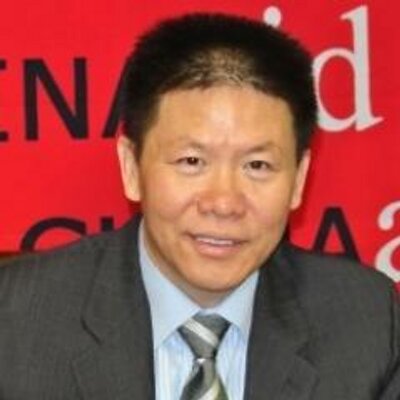
Statement About Guo Wengui’s 30 years Criminal Sentence today
June 30, 2026
Today, self-exiled Chinese billionaire Guo Wengui (also known as Miles Kwok) was sentenced to 30 years in U.S. federal prison following his fraud conviction.
For my family and ChinaAid, this is more than just a financial fraud case. Guo was the ringleader of the coordinated harassment campaign against my family and our organization in 2020, when paid protesters threatened and intimidated us outside our home in Midland, Texas, for nearly three months.
While today’s sentence cannot undo the harm inflicted on my family and many others, it demonstrates that no one is above the law. Justice may be delayed, but it should not be denied. We hope this outcome sends a clear message that those who orchestrate intimidation, harassment, and criminal misconduct—regardless of their wealth or political influence—will ultimately be held accountable.
傅希秋牧師針對郭文貴被聯邦法院以金融詐騙罪今天刑事判決30年監獄的聲明
(中文版)
今天,流亡美國的中國富商郭文貴(Miles Kwok)因詐欺等罪名被美國聯邦法院判處30年監禁。對我和對華援助協會而言,這不僅是一宗金融詐騙案件的判決,更是遲來的公義。
2020年,郭文貴策劃並資助了一場針對我家人及對華援助協會長達近三個月的騷擾行動,雇用人員在我位於德州米德蘭的住所前持續進行威脅、恐嚇與滋擾,嚴重影響我們一家人的安全與正常生活。
今天的判決雖然無法抹去我和許多受害者所承受的傷害,但再次證明,在法治社會中,沒有人可以凌駕於法律之上。公義或許會遲到,但終究不會缺席。我們也期待,這項判決能向所有企圖以金錢、權勢或恐嚇手段傷害他人的人發出明確的信息:無論其財富或影響力有多大,都必須為自己的違法犯罪行為承擔法律責任。
傅希秋牧師 2026年6月30日
附華爾街日報今天就判決的相關報導:
Show more


It's Worse Than You Think w/ @Banks - Presented by @polymarket

'It Ends with Us' drama still not over as agency who brutally fired Justin Baldoni seeks huge pay out


It has raised prices eight times since 2014, and it just told Wall Street what subscribers did after the last one.
Read more:



It’s become one of the most reliable trades in the stock market as sentiment toward artificial intelligence swings wildly: Whatever AI stocks do, Apple does the opposite


It would make sense for V4.1 Pro to break through 50T pretraining tokens. (Microsoft already did 50T in MAU, and OAI/Ant are clearly above that).
I hope it's a lot more, though. The first Whale not bearing the scars of compute poverty will be a terrifying and majestic sight.
Show more