Search results for SMBCapital
SMBCapital community
One keyword maps to one global community path.
People
Not Found
Tweets including SMBCapital
Robinhood Earnings LIVE - With @smbcapital @MikeMKTs

SEPT '26 @SMBCAPITAL TAKEAWAYS
1. The team led by Max Ganik has been absolutely crushing it for a few months now, while other teams have been struggling. This caused me to step back, have convos w Jeff Holden and @mikebellafiore, and reflect on why that is.
-Culturally this team has an incredible sense of urgency and dissatisfaction with underperformance. Despite how fast they've grown, they are never satisfied. Max leads from the front by pushing risk and helping the team with idea generation.
-A team is ultimately made up of its individual members and every single person on their team is obsessed with trading, works their butt off, and wants to put up the big $$ that Max puts up. There is no C or D player on this team.
-They don't make excuses. They look for solutions and implement them faster than others. There is no blaming the market, only full accountability that you alone are responsible for your performance.
-On the couple special opps each month, they take on massive risk (that they've earned the right to). This team is taking exponential bet sizing to an extreme.
-They're predominantly using options to express their ideas w maximum convexity which keeps their losses contained when a trade doesn't work.
2. The teams that are struggling are not hitting the brakes fast enough when the market environment is not conducive to their strategies. Similarly, most traders do not slam on the gas hard enough when the market is highly conducive to their strategies.
3. Not everything can be codified yet. I see teams overlying relying on AI and simplistic models rather than trusting the decades of collective experience they have as human discretionary traders.
I know I've been harping on this for a while, but AI is not the answer if it is distracting you from solving the actual constraints to your trading. I genuinely see that the traders struggling the most are the ones diddling away their time the most on vibe coded projects while avoiding doing the deep hard work that will actually fix their trading.
4. It's funny... Team Max has been the massive outperformer on the desk this year. I'm not sure I've ever heard their team mention AI to me. I don't know that they even use AI (plz correct me if I'm wrong). All they've done is doubled down on their best setups and grown their risk to incredible levels.
For how much the world is changing, I don't see the path of the discretionary trader having changed much thus far.
Show more

Congratulations @robertoclaroar1 on your invitation to @smbcapital Miami! 👊

Later today we are having a firm-wide trader meeting at @smbcapital. A few teams and a couple handful of traders have been struggling. This aligns with what I’m hearing from other desks as well as those on the retail side.
Only fair for me to highlight both the successes AND the struggles of the traders I work with as I try to convey the authentic truth of being a trader.
On the SMB call we will discuss what has been working well, what hasn’t been, and how best to adapt. Soliciting feedback across teams and individuals.
Here is the main message I will be conveying to their traders which I think is useful for all to hear:
IMO, the most common issues I’m seeing is that traders are getting overly involved and over-allocating risk to situations that had potential but never unfolded optimally.
$BWET is a name that got extended, but never enough to take a real stand.
The breakouts in $QQQ or certain single-stock names had solid charts but the breadth beneath the market was awful. We still had yellow lights flashing in certain areas.
The recent AI sell-off was extended and had its moments, but it lacked the intraday flush or intraday setups to size into anything.
When these setups have unfolded suboptimally, traders have continued to stay involved and allocate risk in a refusal to acknowledge that the setup is not as good as it had the potential to be.
I’d argue this comes down to maintaining an objectively high level of subjectivity. Selectivity is staying in your lane and waiting for the setups in your playbook that match the current regime.
Unlike w poker, nothing is forcing you to play or to take a subpar setup. Essentially, you have a good hand and want to place a bet, but if the flop pans out suboptimally, you fold. A lot of traders have not been emotionally willing to fold and not play the hand.
Good trading is recognizing that there might be some positive signs, but then avoiding or sizing down when it doesn't fully line up.
Show more
THE 10 RULES THAT CATCH BIG REVERSALS
This was my talk from the ‘26 @smbcapital conference where I dive deep into my framework for capitulation trades. An honor to be part of the event w such incredible speakers & attendees!
Show more

Here is a phenomenal resource for peak performance in our personal and professional lives: research-backed practices for maximizing mind and body: @hubermanlab @smbcapital
Show more

When many traders struggle with performance, it's a good sign that markets have changed--and that we need to adapt! Here's a best practice for mastering shifting markets: @MikeBellafiore @smbcapital @sspencer_smb @TheOneLanceB @SMBrecruiting
Show more

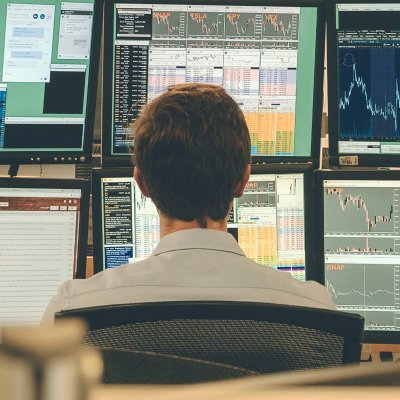
Guests visiting for Jeff Holden's Trader Development SMB Inside Access meeting today at 11AM. Jeff shared the importance of adding new strategies to your PlayBook and how our traders do @smbcapital
Show more

Love seeing my talk from the SMB Capital Summit crush it on YT! Every year a bunch of the talks from the @smbcapital conference go viral.
The attendees and environment are even more amazing in-person. Get your butt there live next year!
Show more
Want to know the ultimate test of a trader?
Hint: It isn’t how much you make when the market is easy. It’s what you do after a devastating loss that completely defines your career. [02:39]
This month, one of our top trading desks at SMB Capital took a tough loss. They were long a position when an unexpected, intervening event dropped out of nowhere and hammered the stock.
The damage? Down over $3 million. [00:13]
In prop trading, that plunges a desk straight into what we call "the hole" [00:13]. Before these guys see another dollar of payout, they have to grind back every single dollar of those millions just to get back to flat [00:23].
Bad beats happen. Losses happen. It flat-out sucks, you feel it right in the pit of your stomach, and the pain lingers [02:32].
It is what you do after the loss that matters—not the loss. [09:10] The $3M deficit matters very little in the long run compared to how the team and its individual contributors respond right now [02:49].
In our latest video, I broke down the exact 6-step blueprint this elite desk is using to climb out of their hole [03:26]:
1. Run a Forensic AAR (After Action Report): Stripping emotion from P&L [03:42]. The team leader didn't bury the loss in a large pepperoni pizza and a bottle of red wine [04:47]. He delivered a candid, constructive autopsy: owning his mistakes, analyzing hedge execution, and praising the quick-thinking put purchases that saved another $2M in damage [04:20].
2. Collaborate Across the Desk: As Ray Dalio observed, viewing the market through one pair of eyes means missing critical information [05:04]. On our desk, an impressive junior 7-figure producer respectfully pushed back on the star's self-critique, arguing the entry add was technically sound and purely hit by an exogenous intervening shock [05:32]. That open debate is where real edge compounds [06:01].
3. Bring the Trade to the Firm Crucible: The desk brought the trade to partners, risk managers, and mentors like @theonelanceb [06:13]. Risk reviewed limits, senior partners coordinated tech solutions for faster news execution, and coaches challenged the floor [06:23]. A painful rip becomes rocket fuel when your entire firm has your back [06:50].
4. Chip Away with One Good Trade: As Market Wizard Marty Schwartz famously said, greatness isn't hitting home runs; it's stringing together singles and doubles [07:02]. No desperate YOLO swings. The team leader set the tone: "I am just going to chip away at these losses." One Good Trade. And then One Good Trade. And then One Good Trade [07:25].
5. Grounded Veteran Optimism: As Colin Powell noted, "Perpetual optimism is a force multiplier." [07:49] The senior leader reminded the desk that drawdowns are temporary, he's clawed out of every hole before, and each slump made him a better trader [08:09]. Veteran leadership eliminates panic [08:26].
6. Game Plan High-Conviction Catalysts: Don't predict—anticipate [08:37]. The team mapped out high-opportunity environments ahead (like the Anthropic IPO and potential Q4 momentum) to deploy asymmetric risk when the setup aligns [08:48].
The market will knock you down, but your career isn't defined by the brutal blow—it is defined by the grit, discipline, and character you display when you stand back up.
It is what you do after the loss that matters.
#DayTrading# #PropTrading# #SMBCapital# #TradingPsychology# #OneGoodTrade#
How to Recover from a big loss (as quickly as possible) via @YouTube
Show more