Search results for Upskilling
Upskilling community
One keyword maps to one global community path.
People
Not Found
Tweets including Upskilling

Over the years, our education, upskilling, and training initiatives have grown alongside our operations, helping develop generations of talent and supporting lifelong learning


Hundreds of millions of people will likely lose their jobs because of AI, but new jobs will also be created.
@mercor is uniquely positioned to fund free AI upskilling for the hundreds of millions of people trying to navigate this new economy.
How humans fit into this new economy is the most important problem to solve in the world.
Show more

Even if India’s IT companies remain a source of opportunities for more experienced engineers, the underemployed young face intense competition for good jobs. Graduates have noticed and are upskilling
Show more


The most important agentic workflows are the ones where you collaborate with the agent, verify its results, and encode them as a skill or verifier for reuse.
This works for things like writing, researching, coding, and other tasks.
Domain expertise, in the form of human verification, is a crazy moat. Don't let anyone or any company tell you otherwise.
And you can build incredibly valuable services and products with that. Protect it and don't give it away for free.
Keep upskilling yourself and leverage the AI agents along the way. But don't forget how crucial it is to develop and hone taste, judge quality, and critical thinking.
In simpler terms, don't offload understanding to your AI systems. Offload all the rest (boring and repetitive tasks). Careful automation goes a very long way.
A lot of the narrative today is around eliminating the need/replacing domain expertise. But if you work on hard problems, which you should be doing with AI, you realize quickly how primitive AI models are in their "intelligence", capabilities, and adapting to extremely hard and important domains. There is a reason why math problems continue to be solved only by folks with deep math backgrounds. Learn from that. I am not saying the models won't get better. They will get better, but so will humans (it's important to be an optimist in human intelligence for this to be crystal clear), and so the agent-to-human relationship and interactions are the real moat and where all the value and discovery will come from.
Show more
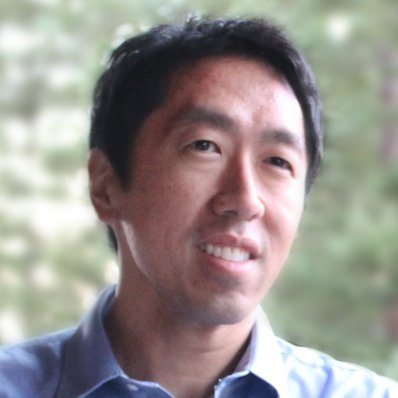
I recently spoke at the Sundance Film Festival on a panel about AI. Sundance is an annual gathering of filmmakers and movie buffs that serves as the premier showcase for independent films in the United States. Knowing that many people in Hollywood are extremely uncomfortable about AI, I decided to immerse myself for a day in this community to learn about their anxieties and build bridges.
I’m grateful to Daniel Dae Kim @danieldaekim, an actor/producer/director I’ve come to respect deeply for his artistic and social work, for organizing the panel, which also included Daniel, Dan Kwan, Jonathan Wang, and Janet Yang. I found myself surrounded by award-winning filmmakers and definitely felt like the odd person out!
First, Hollywood has many reasons to be uncomfortable with AI. People from the entertainment industry come from a very different culture than many who work in tech, and this drives deep differences in what we focus on and what we value. A significant subset of Hollywood is concerned that:
- AI companies are taking their work to learn from it without consent and compensation. Whereas the software industry is used to open source and the open internet, Hollywood focuses much more on intellectual property, which underlies the core economic engines of the entertainment industry.
- Powerful unions like SAG-AFTRA (Screen Actors Guild-American Federation of Television and Radio Artists) are deeply concerned about protecting the jobs of their members. When AI technology (or any other force) threatens the livelihoods of their members — like voice actors — they will fight mightily against potential job losses.
- This wave of technological change feels forced on them more than previous waves, where they felt more free to adopt or reject the technology. For example, celebrities felt like it was up to them whether to use social media. In contrast, negative messaging from some AI leaders who present the technology as unstoppable, perhaps even a dangerous force that will wipe out many jobs, has not encouraged enthusiastic adoption.
Having said that, Hollywood is under no illusions that AI will change entertainment, and that if Hollywood does not adapt, perhaps some other place will become the new center for entertainment. The entertainment industry is no stranger to technology change. Radio, TV, computer graphics special effects, video streaming, and social media transformed the industry. But the path to navigating AI’s transformation is still unclear, and organizations like the new Creators Coalition on AI are trying to stake out positions. Unfortunately, Hollywood’s negative sentiment toward AI also means it will produce a lot more Terminator-like movies that portray AI as more dangerous than helpful, and this hurts beneficial AI adoption as well.
The interests of AI and Hollywood are not always aligned. (Every time I speak in a group like this as the “AI representative,” I can count on being asked very hard questions.) Most of us in tech would prefer a more open internet and more permissive use of creative works. But there is also much common ground, for example in wanting guardrails against deepfakes and a smooth transition for those whose jobs are displaced, perhaps via upskilling.
Storytelling is hard. I’m optimistic that AI tools like Veo, Sora, Runway, Kling, Ray, Hailuo, and many others can make video creation easier for millions of people. I hope Hollywood and AI developers will find more opportunities to collaborate, find more common ground, and also steer our projects toward outcomes that are win-win for as many parties as possible.
[Original text: ]
Show more


One thing I find striking in the discourse between AI 2040 and its detractors is that the two seem to be locked in to totally incompatible worldviews of how fast and how much of a big deal AI progress is:
* In AI 2040, every scenario sees superintelligence of some kind emerging by 2040, unless a herculean effort is made to completely stop it
* Detractors say things like "AI 2040 is naive about human coordination ability and a threat to freedom", but don't seem to see any naivety in assuming that the ASI transition will just go well by default, don't seem to see ASI itself as a massive power concentrator risk, and don't seem to feel fear of humanity's "hard power" dropping to zero if ASIs can do literally every task better than we can. This stance makes total sense in a "AI is normal technology" world, zero sense in a world where superintelligence is possible by 2030 and almost guaranteed by 2040
I think my beliefs are:
- If I was confident that (present-day-style) AI is normal technology, I would be in the detractor camp
- If I was confident that superintelligence is coming in 2030 by default, I would be closer to the AI 2040 camp - it's naive, but every other option is naive squared?
But my problem is that I feel great uncertainty and have no idea which of the two worlds (or some other third thing) we're living in?
Hence why I continue to be open-minded about slowdowns/pauses, but also I feel very uncomfortable with the "open source bad, the good outcome is the one where our guys have controlling global dominance" push coming from some major AI companies and intellectuals - in a "normal" world that's the sort of thing that triggers every political alarm bell at the same time.
A big reason why I have been advocating and trying my best to support the d/acc platform (rapid up-skilling in formal verification, cryptography, secure and open hardware, pandemic resistance and other defensive biotech, food and basic resource security, public epistemics, non-power-concentrating versions of physical security) is that these things are clearly worth doing in both worlds.
The 2040 plan is already much more open source friendly (even mandating it! yay). It also includes "mutually assured compute destruction" ideas which (if they work) effectively give one of 2-5 actors the ability to trigger a global compute winter - as opposed to giving 1-5 actors the ability to selectively disenfranchise people they consider baddies while exempting themselves. This is also a big improvement. So I can see the earnest attempts to improve along the dimensions detractors criticize on ("does this concentrate power in big AI labs and superpower governments?"), and I appreciate this. I think many people don't appreciate enough the differences between different "kinds" of pause buttons, and how some concentrate power far more than others. Probably we can think harder and improve even more here.
But on the "slowdown/pause or not" topic, there isn't a magic "escape the tradeoff" button.
The Hansonian in me says: the winning deal is a deal which, from the perspective of both sides' present-day beliefs and knowledge, both sides would accept, though for different reasons. If the crux is AI progress speed, then identify a set of pre-agreed triggers for "okay, serious shit is happening" [super-pandemics? >25% unemployment? something involving slaughterbots?], and pre-agree that we become much more open-minded to the slowdown or pause thing if enough triggers come to pass within some timeframe. 2040 detractors (who clearly implicitly think that we'll see amazing speedup of progress from AI but think that what I call the "serious shit" category is overhyped) will accept expecting that the triggers don't come to pass, and AI worriers will accept expecting that they will. Pre-agreeing on the specific triggers means that once the triggers either hit or don't hit, there is stronger legitimacy around the idea that one side's worldview turned out more correct and we should be more inclined toward their program.
If I were @elonmusk (or zuck, or...) I would re-tool twitter much more heavily into being a platform for helping to identify and make these kinds of grand win-win deals, so that we can bypass big-country governments and big-company CEOs and big nonprofit intellectuals and give more people a voice in the discussion. It's possibly one of the best things that social media _could_ do for humanity if it wanted to.
But again, maybe this is also naive. Actually, probably it's naive.
But currently, I see zero plans for how to deal with an ASI transition that are not naive. Perhaps humanity is stuck with a choice between naive and naive squared (or maybe even naive squared and naive cubed), so I feel inclined to cut some slack to people who are trying.
Show more

The Latest CRO Confidential with @samdblond s out! "$0 to $600M in Under 4 Years. The ElevenLabs GTM Playbook"
Carles Reina was the fourth employee and first GTM hire at ElevenLabs. Four years later: $600M+ ARR and an $11B valuation. Today he's a Partner at Baobab Ventures, helping the next generation of startups scale.
In the latest CRO Confidential, hosted by Sam Blond (CEO and Co-Founder of Monaco), Carles breaks down exactly how they built it. The revenue ramp alone is jaw-dropping:
$0 to $100M ARR in 20 months
$100M to $200M in another 10 months
$200M to $330M in another 5 months
$330M to $600M+ in another 6 months
#1#. Distribution from day one
ElevenLabs never bet on a single channel. Every market got its own thesis: why launch here, direct or reseller, what does GTM look like in the first 90 days? Core markets were sold direct; everywhere else, resellers got the technology into market fast. Distribution plus relentless experimentation was the whole game.
#2#. The grants program that killed the competition
Carles came back from holiday with one question: how do I kill my competition? The answer: give startups with 25 or fewer employees free credits for 3 months. They gave out tens of thousands of grants, made a ton of noise about it, and pulled demand away from every competitor in the market. Over 10% of ElevenLabs' enterprise revenue eventually came from upselling those grant recipients as they grew.
#3#. The 20X quota model
This one's controversial. At ElevenLabs, a $100k base salary meant a $2M quota — 20x — with uncapped commissions. Reps regularly hit 300-600% of target, and average attainment across the entire GTM org ran 167% every single quarter. Carles' theory: he'd rather have a lean team of killers crushing quota than a bloated team missing it and complaining. And when a market genuinely broke, they'd grant quota relief — the commitment was that comp would always stay fair.
#4#. Only pay commissions on recurring revenue
Sign a giant one-off or a 2-month POC? Zero commission — because it added nothing to valuation. Roughly $1M of real recurring revenue was worth ~$33M in valuation, and reps were paid generously on that. Incentivize the outcome that matters, not the inputs.
#5#. What he'd do differently: enablement and senior sellers, earlier
Two regrets. First, sales enablement came too late — it's always underinvested until the team is too big to onboard properly. Second, hire senior sellers earlier. Hungry young reps are great, but people with 20 years of relationships who know procurement compress timelines dramatically. Either regret fixed might have gotten them to a billion faster.
#6#. Wire AI into GTM, but sell the team on productivity, not replacement
Carles pitched the founders on building an AI SDR, an AI AE, and an AI customer success manager. The team's first reaction: "am I going to get replaced?" They proved the opposite. The AI SDR answered inbound emails in minutes and improved conversion rates. The AI CSM worked long-tail and mid-market upsells automatically — and the human account owners still got paid the commission. Productivity story, not replacement story.
#7#. Test 100 things. You only need one to work
Carles told the team he only needed one experiment to hit to add another $100M in ARR. So run everything in parallel, kill what fails fast, and treat a failed experiment as a win — you learned something. Add to that: make it insanely easy to do business with you, from pricing to onboarding to time-to-value.
👉 Distribution is everything, incentivize recurring revenue (not meetings), be famously fair to your salespeople — reps who get rich make everyone around them believe — and let AI do the work agents are best at while humans do the relationships and the creative bets no agent would ever come up with.
Watch the full episode:
Show more