
Jijith Nadumuri Ravi
@Jijith_NR
Ex-Scientist ISRO | TV Panelist | Author of 4 books on Rgveda and Itihasas | Founder:- AncientVoice & Dharma Digital
Joined April 2010
227 Following 8.8K Followers
Archeologists dropped a new bombshell!🔥
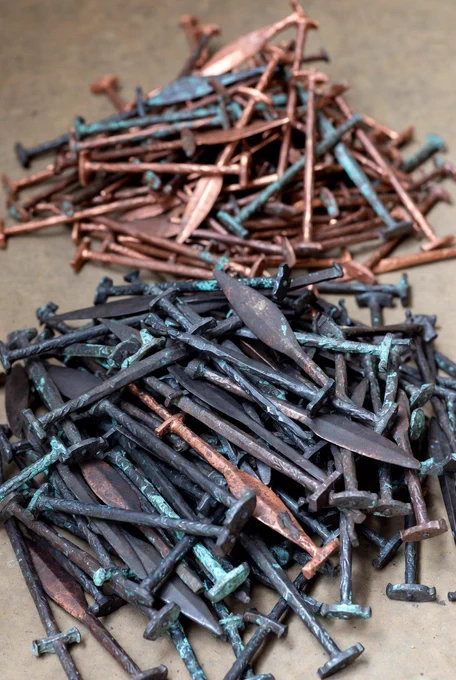
A newly analysed, directly dated OCP Copper Hoard weapon has revealed something explosive: it contains up to 30% iron and belongs to around 2000 BCE. 1🔥🔥🔥🔥
This single finding overturns decades of textbook claims about when iron use began in India.
For years we were told that the subcontinent only entered the Iron Age around 1000 BCE and that all Vedic references to iron must therefore be late.
But this darker, copper–iron alloyed weapon, far removed from the typical reddish hue of pure copper, fits astonishingly well with the metallurgical vocabulary of the later Vedic texts.
The Yajurveda and Atharvaveda repeatedly speak of Kṛṣṇa Ayas and Śyāma Ayas, terms meaning dark, blackened, or dusky metal.
Scholars struggled to explain these references under the 1000 BCE Iron Age model, but the OCP weapon’s composition finally resolves the puzzle.
A copper–iron alloy with about 30% iron naturally produces a darker, harder metal, precisely matching the textual descriptions.
Even in Rāmāyaṇa and Mahābhārata, the weapons described as dark or blackened never aligned well with the narrative of a late-arriving Iron Age.
Now, with actual artefacts reflecting this alloy at 2000 BCE, the material record and the textual record are unmistakably aligned.
Ṛgveda, in contrast, mostly uses the simple term Ayas meaning “metal”—which in early contexts overwhelmingly refers to copper.
This is exactly what one expects from a text whose composition ends before widespread copper–iron alloying, that is, by around 1900 BCE during the final phase of the Sarasvatī civilisation.
Later Vedic texts describing darker metals fit chronologically after 2000 BCE, while the Ṛgvedic use of generic Ayas fits a copper-dominant world.
This single discovery therefore collapses the long-held assumption that iron in North India appears only after 1000 BCE.
With directly dated alloyed weapons from 2000 BCE, and with Vedic literature already distinguishing between reddish copper (Ayas) and darker copper–iron alloys (Kṛṣṇa Ayas, Śyāma Ayas), the entire colonial chronology begins to melt.
The archaeological record is now catching up with what the texts had always preserved.
Show more