

AI Engineer @ Paris 🇫🇷
@aiDotEngineer
We gather the world's best AI engineers, leaders, founders, and researchers, and publish all their best work for free, through conferences and workshops. Help!
78 Following 64.5K Followers
We're excited to announce our AI Engineer New York speaker lineup!
Presented by @arizeai
CEO @ExaAILabs
CTO @tryramp
CEO @ValsAI
CEO @RogoAI
CTO @modal
CEO @trybasis
CEO @SonarSource
CEO @runwayml
CTO @mintlify
CEO @sfcompute
CTO Bridgewater
CTO @turbopuffer
CEO @NousResearch
CEO @gen_intuition
HEAD OF AI @coatuemgmt
TECH LEAD @Vanguard_Group
MTS @GoogleDeepMind
HEAD OF DEVX @cerebras
HEAD OF US BD @MiniMax_AI
DEPUTY CISO @Mastercard
COO @citsecurities
SR. STAFF ENGINEER @GEICO
HEAD OF ENGINEERING @linear
DIRECTOR OF DX @togethercompute
HEAD OF AI PRODUCT @coinbase
AI INVESTMENT LEAD @BlackRock
GROUP HEAD OF DATA & AI @Wise
HEAD OF AI @FTI_Global
KNOWLEDGE GRAPHS LEAD @Point72Careers
DIRECTOR, AI & DATA @AlixPartnersLLP
ANALYTICS ENGINEERING LEADS @monzo
DISTINGUISHED ENGINEER @CapitalOne
OPS & INFRASTRUCTURE LEADER @RevolutApp
GLOBAL CHIEF SECURITY ARCHITECT @jpmorgan
CORPORATE VP @NewYorkLife
HEAD OF FRONTIER AI MODELS @WellsFargo
AGENT HARNESS ENGINEER @cursor_ai / @xai
COFOUNDER @getcompoundai (ex-VP @coatuemgmt + @ycombinator)
DIRECTOR OF DATA SCIENCE @Fidelity
HEAD OF DATA, DIGITAL & AI @apolloglobal
SVP, ENTERPRISE PLATFORM ENGINEERING ARCHITECTURE @twosigma
PARTNER, HEAD OF THEMATIC INVESTING @apolloglobal
HEAD OF ARCHITECTURE & EMERGING TECH, OFFICE OF THE CTO @Bloomberg
PRODUCT + ENGINEERING LEAD, CHATGPT FOR FINANCIAL SERVICES @OpenAI
PRODUCT + ENGINEERING LEADS, CLAUDE FOR FINANCIAL SERVICES @AnthropicAI
Oct 12–14 in NYC.
Show more

Jev creator @CompleteSkeptic on why RLHF is guaranteed to disappoint - because it tells you what you want to hear. we want to automate everything and yet our models are literally tuned to optimize for human feedback.
Show more

Live now: our Inference Engineering Track from AI Engineer World's Fair 2026.
A benchmark tool told to run 200 queries a second that ran 38 and reported 200. A model that answered one prompt in a thousand with confident gibberish. A paper that dented memory chip stocks for a minute.
- Operating Distributed Inference Systems at Scale: Nishant Gupta & Naman Ahuja, Meta
- Routing LLM Inference in Production: From Engine Signals to Policy: Qianru Lao & Lu Zhang, OpenAI
- Are LLM Performance Benchmarks Reliable?: Ashok Chandrasekar & Jason Kramberger, Google
- Vertical Mobility: Inference from MVP to Trillion-Parameter Workloads: Sitanshu Gupta, CoreWeave
- What's New in Inference Engineering: @philip_kiely, Baseten
- Large clusters for small models: @svonava, Superlinked
- The Frontier AI Inference Cloud for Agents: Byung-Gon (Gon) Chun, FriendliAI
- KV Cache-Aware Routing and P/D Disaggregation on Kubernetes: Yuchen Fama & Ashish Kamra, Red Hat
- Two Bugs That Hid in Plain Sight: A vLLM Debugging Detective Story: Asaf Gardin & @yuvalinthedeep, AI21
- Weight Folding, CUDA Streams, and the Bug That Made My Model Speak Backwards: @f_makraduli, Superlinked
Show more

Why @CompleteSkeptic created ChatGPT and then spent 2 years in stealth building Jev


How do we end AI slop? To fix it, you gotta measure it first.
Thanks for having me @swyx @aiDotEngineer!


New party alert - Sep 22, Paris 🪩
@hcompany_ai is teaming up with @bfl_ai and @modal to throw a casual get together ahead of the @aiDotEngineer conference organised by @MistralAI !
There will be drinks, food, smart folks, and all of this by the Seine!
Show more


Next week, @daytonaio team is heading to Paris! 🇫🇷
We’ll be at @aiDotEngineer Paris on Sept 23–24.
Before the conference, we’re hosting an AI Builders Demo Night with @neo4j, @MistralAI & @sgl_project on Monday, Sept 21.
Event details & RSVP ⬇️
Show more

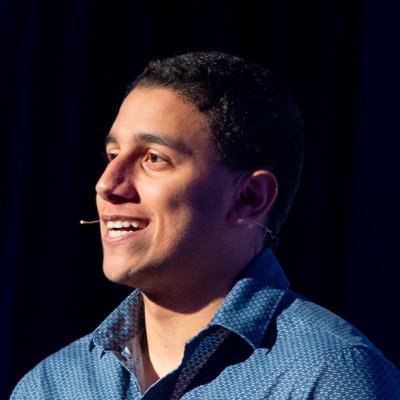
Going to be speaking at AIE New York... with my dad!
He's a CPA + business professor which is perfect since the conference theme is finance in AI.
Hopefully the first father and son talk at @aiDotEngineer? 😂
Show more


woot! our openprose workshop was accepted!
see you in a month at @aiDotEngineer nyc!

congrats to Diogo on a full launch!
for more on typesafe: check his aie talk:
out now!

AI search. Data infrastructure. Code quality. Identity.
Four layers of the production AI stack. One room in New York.
Welcoming our Platinum Sponsors: @ExaAILabs, @oracledevs, @SonarSource, and @workos.
Oct 12–14
→
Show more

AI Engineer Paris is one week away!
A huge thank you to all our incredible sponsors for making this special event possible: @nvidia @FactoryAI @sentry @CockroachDB @SonarSource @NotionHQ @SierraPlatform @Cloudflare @neo4j @daytonaio @qdrant_engine @modal @langfuse and more!
Show more

Live now: our Harness Engineering Track from AI Engineer World's Fair 2026.
Ports, proofs, kill switches, and what is left of an agent when you remove the model.
Thesis: when an agent breaks in production, the model is rarely the part that failed.
- 2026 State of AI Engineering: @barrnanas, Amplify Partners
- The Unreasonable Effectiveness of Separating the Task from the Model: @MaximeRivest & @isaacbmiller1, DSPy
- How Anthropic Builds: @mikeyk, Anthropic
- Tokens Should Have Jobs: @katelyn_lesse & @angjiang, Anthropic
- Building the Production Cage for Powerful Domain Agents: Mike Chambers, AWS
- Loophole: @brendanh0gan, Morgan Stanley
- Every step you take, every call you make: @vdgiselle, Restate
- Agent Frameworks Considered Harmful: @remilouf, .txt
- We let an AI agent execute Bash and lived to talk about it: Sarah Sanders, PostHog
- No Memory, No Harness: Kay Malcolm, Oracle
- How we Solved Agent Building: @andrewqu, Vercel
- Agents Without Code: @_philschmid, Google DeepMind
- "I've never seen anything scarier than an LLM with tool calls." @headinthebox
Show more

AI Engineer Code Summit is headed home to San Francisco on Nov 10-12, presented by @GoogleDeepMind and supported by @g2i_ai
Bringing together hand-selected engineers, technical leaders, researchers, and power users building the next generation of AI-powered software development for 3 days of deep technical conversation and hands-on learning.
Early bird tickets are available for a limited time!
CFP applications and sponsorship opportunities are open at
Show more


If you're interested in the origin story of Impeccable and the philosophy of it, here's my talk on the subject from @aiDotEngineer world fair a couple months back (finally online!):
Show more


Just finished my watch for from @aiDotEngineer by @mattpocockuk and have some notes from it.
- Spend time in Grill Me/answering request questions skill and don't waste time reviewing AI summarizing it.
- Use vertical slices ....
Show more

Giving your team the latest coding agents is only part of the job. You also need to build the infrastructure that lets those agents navigate your company.
An agent may be good at reading code and implementing a change, but working inside an organization requires more. Which repository owns this behavior? Where is the relevant design decision documented? How do you investigate a failed deployment? Which tools and workflows does this team use?
Engineers learn these things through experience, documentation, and conversations with colleagues. Much of that organizational context is scattered across systems or never written down. Without a reliable way to access it, agents depend on engineers to reconstruct it for every task.
Making that context accessible takes more than connecting a document search tool or exposing a catalog of APIs. Agents need to discover the right resources, inspect how a tool works, and follow established workflows without loading the entire company into their context window. Permissions and operational safeguards need to be enforced by the infrastructure, not left to instructions in a prompt.
This is the part of context engineering I find most valuable: making organizational knowledge usable at the point where work happens. It is also shared infrastructure. Every engineer should not have to assemble the same integrations and explain the same conventions independently.
At @aiDotEngineer world fair 2026, I shared how we approached this with CAPT at LinkedIn, bringing organizational context, tools, and workflows to off-the-shelf coding agents.
#aiengineer# #agents# #coding# #contextengineering# #agenticmemory# #mcp# #playbooks# #skills#
Show more


Uber's median time to first review went from three hours in 2024 to nine hours now, and @wbond and Ameya Ketkar of Uber built uReview, a multi-agent code review system, to claw that back. @aiDotEngineer has their talk, "Building uReview, Uber's Multi-Agent Code Review Engine," on YouTube.
It's a detailed look at running automated review across thousands of engineers, hundreds of teams, and six language-specific monorepos, with real numbers on cost, quality, and where humans still fit.
- Why build in-house. Uber still runs on Fabricator while migrating to GitHub, wants agents in the inner loop to get the same review rules as humans, and needs to plug into a distributed, team-owned rule system instead of centralizing it.
- How a review actually runs. Requests get routed to different generators tuned for cost and performance, then post-processed through rating, categorizing, filtering, and deduplication so engineers only see the highest-confidence comments.
- Observability got deeper over time. UReview started as a single prompt judged by cost and Google Form surveys, then grew to tracking reply sentiment, addressal rate, and full agent trajectories to see why the agent did what it did.
- A core lesson. The model doesn't know when it's wrong, so each team's style guide and anti-patterns have to be baked in, along with guardrails so the agent doesn't burn turns on the wrong things.
- The customization stack. Single-file and multi-file reviewers, few-shot AI linters for deterministic rule checks, and fully custom agents teams can link to their own knowledge base and past PRs.
- The numbers. Around 25,000 comments a week, a 67% addressal rate, roughly three-quarters of high-severity issues addressed, costs down 60%, and quality up about 70% versus their naive baseline.
- Inner loop vs. outer loop. As agents write and review more code, inner-loop accuracy matters more to avoid fix-review-fix oscillation, and the outer loop doesn't disappear, it shifts toward architecture, domain expertise, and product thinking.
I'm working through the published talks from AI Engineer World's Fair sharing summaries and takeaways. Follow for more!
Show more

congratulations to Jonathan and Cognition! more on the ambitious software this team is building at AIE World's Fair:

We’re hiring at AI Engineer.
Help us unite and empower the global AI engineering community.
Open roles:
• Growth Marketing Lead
• Community Manager
• Event Systems & Ops Manager
• Associate Producer
Apply:
Show more












