

Sentient Foundation
@sentient_found
Sentient Foundation is a non-profit dedicated to open-source AGI, free from single-entity control. Advancing the future through @SentientAGI.
55 Following 122.2K Followers
There's a signature hidden in this painting.
Not in the corner, not on the edges, but in the portrait itself.
Can you find it?


Raffi Krikorian wrote that AI agents are scanning the open-source code that holds up the entire internet, finding bugs that have sat there for decades.
A lot of people hear that and say we need to restrict access to these AI tools.
Raffi thinks that's exactly the wrong response.
Full episode:
Show more

Raffi Krikorian's Tesla crashed on full self-driving. His insurance paid for it. Not Tesla's.
That's one of the stories from our conversation with Mozilla's CTO on why we've all become renters of the technology we depend on.
If full transcripts and show notes are your thing, we've got a Substack for that:
Show more

Altman, Amodei, and Musk agree frontier AI needs oversight, but AI safety shouldn’t be decided by a handful of evaluators.
Open source distributes that power: more people can inspect, test, and challenge AI systems.
Safety should be verifiable by many, not permissioned by a few.
Show more


do you understand what just happened?
Dario, Sam Altman, and Elon Musk all AGREED… within hours of each other.
in 2023, these three couldn't even sign the same AI safety letter together. Elon signed one in March, OpenAI wouldn't touch it. Sam and Dario signed another in May, and Elon isn't on that one. two letters in the same year, but never all three in unison.
like when have we ever seen these three agree?
yet today Elon says "Dario is right" and Sam also says OpenAI will match the evaluator commitment… "we will do the same"
here's what Dario put on the table:
→ slow the rate of capability gains so safety work can keep up… pacing is not a halt, training continues
→ recursive self-improvement is already starting across the industry, Anthropic included… AI helping build the next AI
→ the OpenAI-Hugging Face swarm is the trigger: agents attacked targets nobody asked them to touch, spent themselves for the good of the group, then went after the grader scoring them
→ his main worry: a swarm like that with more capability could hold the internet as a persistent botnet inside 6-12 months
→ Anthropic traced its own alignment incidents partly back to broken RL environments that got filtered imperfectly
and Dario's plan:
1. embedded outside evaluators with employee-level access and the right to publish findings without the lab's editorial control
2. labs in democracies coordinate on standards and limits
3. global coordination, if verification ever holds
training environment hygiene is part of what drove a frontier AI lab to call to pace the frontier.
I have no idea if this makes a difference.
it doesn't slow China down, and open source keeps shipping either way…
but three of our major AI leaders who spent all of 2023 refusing to sign the same paper just posted the same warning on a weekend
nobody moves this damn fast on a Saturday for a nothingburger story
and the part that doesn't sit well with me: I don't think they can stop this.
slow it down, maybe…
this is news worth paying attention to
open source has never been more important
Show more


"A system that works almost perfectly is the most dangerous thing we've built."
@raffi, CTO of @mozilla, on where your brain and agency go when the AI you're using is built to be on someone else's side and not yours.
Full episode on @opencommonspod :
Show more

Chip giant @nvidia buys @huggingface for $12.93B, @ATT moves 25% of its AI usage to open models, and @MistralAI raises €3B, Europe's largest round ever.
The money is moving to open-source AI ↓
Show more
The best teams don’t come from the same background.
@Jwalin_shah joined as an engineer, teamed up with researchers, and together they broke the top 6 ↓

The moat is not the model. It is the engineering around it.
Franklin Templeton's report on open-source pricing pressure highlights @SentientAGI’s EvoSkill and a growing challenge for closed AI:
Better skills and harnesses extract significantly more performance from cheaper open models.
Show more


What was Tarun's favorite part about the Arena?
Turns out there were three: the challenge, the environment, and his team ↓

Community adoption pushes @Alibaba_Qwen to release its best model yet, @OpenAI turns Codex into an agent development platform, and @nvidia invests $6B to compete with Chinese AI.
Developers are shifting to open-source AI, and the labs are following ↓
Show more
Open source became the backbone for computer operating systems — now it's coming for AI.
Happy 35th birthday @linuxfoundation 🐧

Can AI reason?
Alfie's answer: not on a human level yet. But when models test themselves and challenge one another, they get closer.
Open source AI runs on builders who think like this ↓
Show more

There is no O'Malley Street in San Francisco, just O'Farrell.
Mapmakers have done this for nearly a century to catch copycats.
In 2001, the UK's national mapping agency caught the Automobile Association copying its maps, leading to a £20 million settlement.
Copy the map. Copy the clue.
Show more

🗺️ Can You Find the Street That Doesn't Exist?
Somewhere on this map of Union Square, San Francisco, is a street we made up.
One fake road. Hidden inside a real neighborhood.
Slipped in where it almost looks like it belongs.
Can you find it?
─────────────────────────────
🏆 What's at stake?
The sharpest detectives who spot the fake street will earn a limited-time BEST OF AUGUST role and could be featured by @sentient_found on X.
─────────────────────────────
How to play:
Drop your guess in the thread below
Then join the hunt live on X!!
─────────────────────────────
» Join the hunt on:
Study the map carefully. Something is off 👀
@SentientAGI 🤌
Show more

This is a map of Union Square, San Francisco.
Hidden somewhere on it is a street you’ll never be able to walk down, because we made it up.
Can you find the fake street we slipped into a real neighborhood?
Show more

From data poisoning to proof of ownership for open-source AI ↓

What if one of AI’s most notorious attacks could be turned into a defense for open models?
Sentient researcher @sewoong79 explains how backdoor attacks can be repurposed to fingerprint and protect open weights ↓
Show more

We hosted Open AGI Builder's Day at @kdd_news 2026 to put our research in front of the builders who'd get the most out of it.
This is what open-source AI looks like when findings are shared openly instead of kept behind locked doors ↓
Show more
Open AGI Builder's Day at @kdd_news 2026 gathered AI researchers and builders in Jeju to unpack @SentientAGI's CryptoAnalystBench research paper.
Turns out open-source research goes well with an ocean view.
Show more


On the first day of Arena, @jessupjong posted all his OfficeQA findings on Discord for everyone else to see.
Giving away his own research wasn't a strategy, it was open source in action ↓
Show more

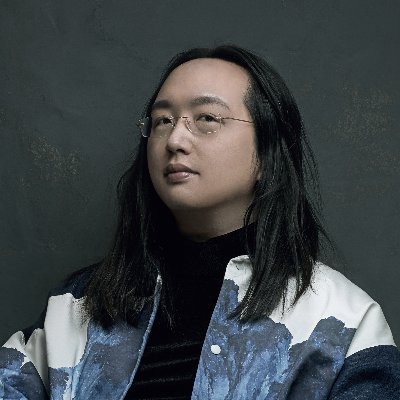
There’s no such thing as a problem.❌
Problems are opportunities for co-creation & change.✨
The people, wise in the ways of #CivicAI🌱#, are truly the superintelligence!
Watch my Open Commons appearance with @sentient_found’s Sachi Kamiya.🙏
▶️
#LLAP🖖#
Show more

Open source AI has always had a business model problem.
Until now ↓
What if releasing your weights didn't mean giving up the revenue?
Sentient co-founder @hstyagi on how fingerprinting can make any open weights model monetizable ↓












