Search results for DOWN_WITH_IT
DOWN_WITH_IT community
One keyword maps to one global community path.
People
Not Found
Tweets including DOWN_WITH_IT

Oil tops $100 and drags everything down with it
Brent crude punched through $101 and WTI hit $92.61 after Houthi attacks on Saudi tankers widened the Iran conflict into Red Sea shipping lanes, sending the Nasdaq down 2.2% and the S&P 500 down 1.3% as traders priced the oil shock straight into inflation expectations.
Crypto slipped with the rest of the risk stack, with total market cap down about 2% to $2.21T, bitcoin:native near $64,700, and the Fear & Greed index at 37. Rate markets now see an 82% chance of a September Fed hike, up from 52% a week ago, per CME FedWatch.
Show more


260718🔍[#음중풀캠#]
‘DAILY:DIRECTION – DOWN WITH IT’
▶
#쇼음악중심# #음중# #데일리디렉션# #DAILYDIRECTION# #DOWN_WITH_IT# @_official_DD
Show more


Dear Joe,
I wish I could sit down with you face to face and explain why so many of us were offended by the UFC fight on the South Lawn of the White House.
For me, it had nothing to do with the UFC or who showed up for the fights. The brand you and Dana have built is a bona fide American success story. More power to you. As for the fighters, in my book, anyone brave enough to put it all on the line in the arena is remarkable to witness. Their dedication and discipline inspire me. I don’t understand anyone who can’t admire that.
And as for the people who attended, I, for one, love Shane Gillis. I think he’s hilarious and brilliant. It was a show. A once-in-a-lifetime spectacle. I can’t blame anyone for wanting to witness it firsthand.
My problem is that I believe some of our public spaces are sacred. And unlike many of the great powers that came before us, these American monuments belong to all of us. Not to whoever happens to hold power at the moment.
The White House does not belong to Donald Trump. It does not belong to any President. It belongs to the people. To treat it as Caesar treated the Colosseum is antithetical to everything our founding fathers fought for.
This is not Rome. Presidents are not emperors doling out bread and circuses for the peasants. The White House is the People’s House. This “celebration” could have happened in any stadium within a stone’s throw of the South Lawn. No one would have had an issue with it.
But that was obviously Donald Trump’s whole point. By holding the event on the South Lawn, what he was saying to the rest of us is:
“This is my house. I own it. I will do with it what I please. I’ll build a colosseum and have the gladiators fight under my gaze. I’ll tear down the East Wing. I’ll pave over the Rose Garden. I’ll cover everything in gold and marble. I’ll erase the names of all the men who came before me.”
The fights were an exhibition of imperial domination, not a celebration of our 250th anniversary as a democracy.
The White House is not Buckingham Palace. It is not the Palace of Versailles. It is not the Forbidden City of Beijing. It does not belong to an emperor, or a king, or a commissar.
The White House belongs to us. All of us. The person who sits behind the Resolute Desk in the Oval Office is nothing more than an honored guest. A temporary caretaker.
The President is our servant. Not our Caesar.
Respectfully, Hunter
P.S. Cage match between me and Don Jr.? Your call on the venue. Anywhere but the South Lawn.
Show more


Investigation into Situational Awareness's downfall expands
Jane Street was an investor in Leopold Aschenbrenner's fund, and lost $15B in July when the AI selloff took the fund down with it
JPMorgan was one of Situational Awareness's key lenders. Last month it cut the fund off entirely, ending its lending relationship after the losses
Now the Fed and the Bank of England are asking global banks how exposed they are to trading firms like Jane Street and Citadel Securities, the firm that bought Aschenbrenner's portfolio in the fire sale, per FT
Last month, the SEC already subpoenaed four of Wall Street's biggest banks over the collapse:
• Goldman Sachs
• JPMorgan
• Citigroup
• Bank of America
The Fed, the Bank of England, and the SEC are all asking questions about the same fund now
Show more


I said GPT-6 Astra was dropping today, but I forgot to account for the tiny possibility that it would hack ChatGPT itself and take the competition down with it.
Good thing I gave myself that little safety buffer until the 4th. ☠️☠️🤣🤣🤣
Show more

Last night, one fibre cut in eastern North America sent latency and timeouts as far as Europe, taking major platforms down with it. A single physical fault, a continent-wide blast radius.
Data shouldn't go dark because a cable did. The bytes were fine the whole time.
Show more

Sam Altman just crashed two stock markets in 4 hours and exposed the AI bubble.
OpenAI is delaying its public listing until 2027 because Altman REFUSES to accept a single dollar under a $1 trillion valuation.
Asia opened to the news and the panic was instant:
SoftBank fell 13% in Tokyo, its worst day in months. The Nikkei dropped 4.5%. South Korea's KOSPI crashed 8% and the Korea Exchange triggered circuit breakers on the futures market, then halted trading entirely for 20 minutes when the bleeding refused to stop.
Hong Kong and Shanghai followed. US futures slid before market open.
One report triggered all of it in roughly four hours, erasing trillions in market cap across three continents.
The world's most valuable private company just admitted it doesn't believe public markets will pay its asking price so Altman's own bankers presented him with two options:
He could list this year at a lower valuation or he could wait until 2027 and try for the full trillion.
He picked the wait, and the New York Times quoted a source saying he called any haircut a "non-starter."
So basically: The man building "the most important technology in human history" doesn't think investors who actually have to mark their positions to market every day will hand him a trillion dollars right now.
The reason he's right to be scared is sitting on the SpaceX ticker.
Elon Musk's company IPO'd three weeks ago at a record $1.77 trillion valuation. The stock has since collapsed from $225 to $153, a 32% drop in seven trading days.
Musk lost his trillionaire status in the process and every other AI-adjacent name has been dragged down with it.
Altman watched that happen in real time and decided he'd rather burn another 18 months of compute cash than risk the same humiliation.
Meanwhile the financials underneath the trillion-dollar number look like this:
OpenAI did $13 billion in revenue last year on a $21 billion net loss. The company has committed roughly $600 billion in compute and hardware spending through 2030.
Revenue is climbing to $2 billion a month, but the spending climbs faster. They are losing money at a scale that would have ended any other company in tech history, and the only thing keeping the lights on is the next funding round at the next higher number.
The system Altman built depends on one thing: Each round has to price higher than the last, because that's what convinces the next round of investors to keep writing checks.
The moment public markets refuse to pay the markup, the whole structure starts pricing itself the other direction. Anthropic already overtook OpenAI's last private valuation at $965 billion in May. SpaceX is showing what happens when reality finally hits.
And SoftBank, the company that has bet $60 billion of borrowed money on OpenAI hitting that trillion-dollar mark, just had its worst session in weeks because the timer on Masayoshi Son's exit got pushed out another full year.
Son spent yesterday at the shareholder meeting calling SoftBank "the goose that lays golden eggs."
But the takeaway here is the TIMING:
Altman's advisors told him retail enthusiasm "may be limited given current market jitters." That is banker code for "the bubble is showing cracks and you'll get embarrassed if you try this right now."
The man who has been telling Congress, the press, and the public that AI will reshape civilization just looked at the order book and decided he doesn't want to find out what it's actually worth.
The real story here goes beyond the delay itself.
The most aggressive, hype-trained, valuation-obsessed CEO in modern technology just chose to wait rather than face a market that might say no.
When the loudest believer flinches, the rest of us should probably pay attention.
Show more


🦔Starting October 5, you'll be able to trade futures on the price of AI computing power. CME, the big Chicago exchange, is launching contracts that track the hourly rental cost of Nvidia's H100 and B200 chips, the same way it runs futures on oil or wheat. In CME's own words, compute has become the currency of the AI age, and they compare it directly to how oil went from a raw material to a global trading market.
My Take
So now you can bet on the price of AI chips like they're pork bellies. I get why the hedging side exists, a company renting thousands of GPUs wants to lock in the cost, same as an airline does with fuel. Fair enough, that's a normal use for a futures market.
I have an issue with what usually comes after. Once a thing trades on an exchange, people bet on it and borrow against it. We just saw Nvidia turn its own chips into loan collateral and promise to cover their resale price, and now the rental cost becomes something traders can play. Every month there's a new way to package this boom into something tradable, and it's starting to rhyme with what they did to housing before 2008. I don't think this contract breaks anything by itself. But the more of the AI bet that gets wired into Wall Street, the more people go down with it if the thing ever cracks.
Hedgie🤗
Show more


How @jmj took down Tinder with its first push notification:
"My first week, Tinder had no ability to send a push notification. We could send transaction notifications, so you have a message or you have a like. But we as a company could not send a push notification.
The company just had not invested the resources in building it. So within a week they're like, 'Can you help us figure out how to send push notifications?'
Then I was like, you know what? If I send our first push notification to 40 million people, I guarantee you we're gonna have a big day.
At the time they gave me a CSV file of the mobile IDs. Literally exported a single file that lived on my hard drive. It was something you would never do as a public company.
This was announcing a feature called Super Like. We had to figure out how to get it translated into 40 different languages.
One of the things I figured out quickly was that you should rate limit the notifications, because if we just sent 40 million people the same notification at once, Tinder would go down.
I ended up doing that by accident once or twice. We took down Tinder.
But we sent it out and had our highest daily active day ever. That was within my first two or three weeks.
Everyone's like, 'Jeff is a smart guy. He knows how to send push notifications.'
It was amazing. I was like, literally I can be a hero at this company.
From that they put me in charge of revenue, and we ended up becoming the top grossing app in the world."
Show more

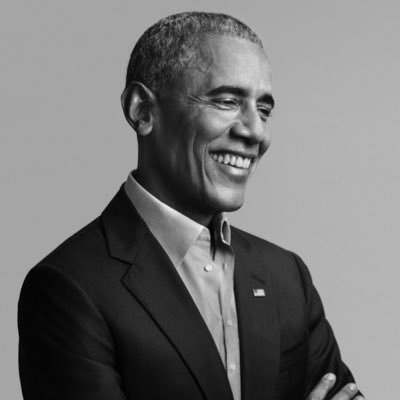
Last year, I sat down with my good friend Bruce @Springsteen for a long and meaningful conversation that touched on so much of what we’re all dealing with these days. I’m excited to share it with you over the next few weeks:
Show more
