Search results for TOKYO_ISSUE
TOKYO_ISSUE community
One keyword maps to one global community path.
People
Not Found
Tweets including TOKYO_ISSUE

2026, day 226
Good morning from Asia.
‘US eyes indefinite Iran naval blockade as oil supply shortfall deepens’ (Reuters);
‘US Treasury Secretary Bessent says US to apply measures 'never seen before' on Iran’ (JPost);
‘U.S. Sending Fresh Aircraft Carrier to Middle East Amid Iran War Strain’ (WSJ) - “USS George Washington is set to replace USS Abraham Lincoln, which has been deployed for more than 250 days”;
‘U.S. military has lost roughly 25% of its Reaper drones as Iran war depletes arsenal’ (WaPo);
‘Houthis claim drone attack on Saudi Aramco refinery’ (Gulf News);
‘MBS meets top US general for Middle East to discuss defense cooperation, reducing tensions’ (Al Arabiya);
‘Saudi Arabia considers backing Yemeni ground offensive to retake
Houthi-held Red Sea coast’ (JPost);
‘Prince Khalid meets Iraq’s top general to discuss Saudi-Iraqi defense ties’ (Al Arabiya);
‘Board of Peace confirms Kushner to visit Israel and Egypt next week to discuss Gaza plan’ (ToI);
‘Fidan: Türkiye will take radical steps if Israel insists on Gaza stance’ (ClashReport);
‘US military launches first-ever multinational attack drone task force’ (Gulf News);
‘Trump Orders Navy to Restore Older Tech on Aircraft Carriers, Costing Billions’ (WSJ);
‘US floats prospect of joint strikes on Colombian armed groups’ (Reuters):
‘Oil, Hunters and Dr. Phil: How a Long-Shot Project Is Shaking Up Greenland’ (NYT);
‘Covert CIA program said to be behind mysterious attacks on Galápagos boats’ (WaPo);
‘What Venezuela's renewed ties with Israel could mean for Iran’ (JPost);
‘Britain warned it lacks firepower needed to defend shipping from Russia’ (Telegraph);
‘’Much faster than originally planned': Ukraine warns of Russian rival to Musk's Starlink’ (Politico);
‘Flight-tracking data shows continued Russian air bridge to sub-Saharan Africa’ (Defense News);
‘Tokyo issues angry response as Putin makes his first visit to the disputed Kuril Islands’ (Euronews);
‘Japan needs deterrence and renewal — not managed decline’ (FT);
‘Sirens blare and the streets empty out. Taiwan prepares itself for war’ (Telegraph);
‘Satellite images show 50 per cent boost to China's Type 054B missile capacity’ (SCMP);
‘Inside North Korea’s Operation to Conquer the American Job Market’ (WSJ);
‘North Korea slams joint US-South Korea drill: 'Will respond to new threat level'’ (Reuters);
In geoeconomics, ‘Are global oil stocks big enough to weather another six months of US-Iran war?’ (Reuters);
‘Russia’s Diesel Exports Crash to Multiyear-Low amid Tight Global Market’ (OilPrice);
‘Can Takaichi's $2.3tn bet on industrial policy revive growth in Japan?’ (Nikkei Asia);
‘Japan’s Inflation Paradox Is Creating Its Own Winners and Losers’ (BBG);
‘Trump enlists US tech groups for cyber privateering push’ (FT)
‘US accuses Chinese exporters of masterminding 'Great Transshipment Scam'’ (SCMP);
‘Trump administration to impose tariffs on drone imports, White House says’ (Reuters);
‘Bangladesh seeks homegrown drone industry with Turkey, China partnerships’ (Nikkei Asia);
‘Microsoft retreats in China, but Al boom helps it keep a window open’ (Reuters);
‘Brazil opens reciprocity process against US over tariffs’ (Reuters);
‘US also wants trade deal before August 19 tariff deadline, Canadian source says’ (Reuters);
‘US court backs Trump's power to close 'de minimis' tariff exemption’ (Reuters);
In politics, ‘Older Democrats walloped by midterms anti-establishment revolt’ (Axios);
‘Top Democrat Targets Supreme Court for Changes’ (WSJ);
‘China ‘funding pro-Palestine marches in UK’’ (Telegraph);
In markets, ‘Diesel Crack Spread Tops $98 a Barrel to Hit Record High’ (BBG);
‘US sells 30-year bonds at highest borrowing costs since 2001’ (FT);
‘Anthropic investors bet on $2tn valuation in record IPO’ (FT);
‘Chinese banks test repo-linked corporate loans to make pricing more market-based’ (SCMP)
Show more


I just met Mads Mikkelsen in Tokyo and I think I might have daddy issues


The smart, working man’s suit can be a range of silhouettes from loose, trim, double-breasted or even—gasp—a short suit.
Our fall men’s style issue took to the streets of Tokyo for a look of how the young working set go from cubicle to club. 🔗
Show more


In this month’s newsletter, read AMRO’s 2025 Annual Report, the latest ASEAN+3 regional economic outlook, and assessments on Cambodia, Brunei Darussalam, and Singapore.
This issue also features commentaries on Asia’s energy resilience, AI and dollar dominance, Tokyo's property boom, the Philippines at mid-year, and more!
Subscribe:
Show more

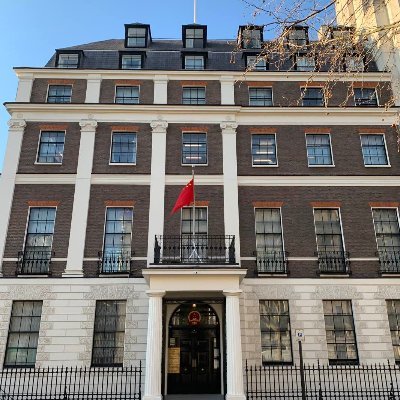
Global Times: It’s reported that since the Takaichi administration came to power, a total of 82 local assemblies across Japan including those in Hiroshima and Nagasaki have submitted written opinions to the central government or the parliament urging the administration to uphold Japan’s three non-nuclear principles or enshrine them into law. The Japan Innovation Party of the governing coalition advised to the Japanese government to discuss the revision of the three non-nuclear principles. What’s China’s comment?
Lin Jian: Japanese local assemblies strongly call for upholding the three non-nuclear principles — a clear sign that the people want peace. Tokyo’s rush to abandon the pacifist Constitution and remilitarize the country at a faster pace is out of step with the public. We urge the Japanese authorities to stop going further down the wrong path and not to stubbornly go against the overwhelming trend on the nuclear issue.
Since Takaichi came into office, Japanese right-wing forces have laid bare their intention of reviving militarism, breaking free from the three non-nuclear principles, seeking to possess nuclear weapons and speeding down the wrong path. If the Japanese authorities stick to their miscalculation on the nuclear issue, push to revise the three non-nuclear principles, and deploy allies’ nuclear weapons in Japan, they not only gravely challenge the postwar international order and the international nuclear non-proliferation regime, but also breach the commitment to peace, defy what the Japanese people want and will eventually pay heavy price for it.
As a non-nuclear-weapon party state to the NPT, Japan bears indisputable, undeniable and non-negotiable obligations under international law to refrain from receiving, manufacturing, acquiring or transferring nuclear weapons. Takaichi in February this year reiterated the commitment to the three non-nuclear principles. Japanese delegates attending the Review Conference of the Parties to the NPT this May reaffirmed the stance of making no changes to the three non-nuclear principles. The world will wait and see whether Japan could honor its words that are still ringing in our ears.
China calls on the international community and all peace-loving people in Japan to urge the Japanese authorities to earnestly abide by its NPT obligations, completely abandon remilitarization and the intention to possess nuclear weapons, stop pushing to revise the three non-nuclear principles, stop the so-called “extended deterrence” cooperation with other countries, not to seek the introduction of allies’ nuclear weapons to Japan and immediately take effective steps to address the great imbalance between the supply and demand of sensitive nuclear materials so as to earn trust from its Asian neighbors and the international community with concrete actions.
Show more


The SEC accepted Situational Awareness' Q2 13F at 4:26pm New York time on Thursday. A summary was circulating 18 minutes later, and it was accurate.
I checked all twenty-six lines against the filing. What no summary of that filing could contain is 6,374,823 shares.
On 22 June Leopold Aschenbrenner's fund filed a Form 3 on SharonAI Holdings ($SHAZ), declaring itself a ten percent owner. That filing disclosed 1,696,127 common shares and 6,374,823 pre-funded warrants, exercise price $0.0001, no expiration, exercisable at any time.
The 13F shows the common. By 30 June it had grown to 5,396,127 shares, $456.8 million. The warrants are not in it, because pre-funded warrants issued in a placement are not 13(f) securities. Same manager, same issuer, eight days apart, and only one of the two filings carries the other half of the position.
Four things a 13F structurally cannot show you:
- Securities that are not 13(f) securities, which is where
the SharonAI warrants sit
- Anything not listed in the United States
- Which entity is reporting. In Q1 two affiliated filers reported an identical book, so anyone who summed them counted $13.7bn twice. The deadline for Q2 was Thursday and only one of them has filed. I do not know why
- Timing. The 13F arrives 45 days after quarter end. The Form 3 arrived in seven. And in the 45 days between the reporting date and this filing, the fund was margin called out of its entire public book and sold it to Citadel.
The list everyone is reading today is a portfolio that no longer exists
The second one is the one I work on. This fund's two largest positions are $SNDK at $5.67bn and $MU at $5.57bn, together about 55% of the reported book. It is a memory bet. The equipment and the consumables that memory gets made and tested with are also not listed in the United States.
Here is what that means in practice. On 29 June, one day before the quarter closed, the same manager filed in Tokyo disclosing 5.99% of Taiyo Yuden (TSE: 6976), 7,808,800 shares, ¥136 billion committed. By 21 July it was 16.61%. By 3 August it was 4.41%.
So on the reporting date of this 13F, there was a nine-figure dollar position in a Japanese passive component maker sitting on the same book. The filing has no line for it. It never could have.
Look at those Tokyo dates again. 21 July at 16.61%, 3 August at 4.41%. That window is the same window in which the public book was being unwound. The Tokyo filings show the exit in near real time. The 13F, filed eleven days after it was over, shows the book at its peak.
Whether those warrants were still outstanding on 30 June, and what the 19.99% ownership cap does to them, is the part I have not finished. The Form 4 filed on 2 July covers that window.
If you want to know what a fund is doing, a 13F is where you start reading. It is not where the position ends.
Sources:
SEC EDGAR, Situational Awareness LP (CIK 0002045724), 13F-HR for period ended 30 June 2026, filed 14 August 2026
Same filer, Form 3 on SharonAI Holdings Inc., period 22 June 2026, filed 29 June 2026
Same filer, 13F-HR for period ended 31 March 2026, filed 15 May 2026
Situational Awareness Partners LP (CIK 0002038540), 13F-HR for period ended 31 March 2026, filed 15 May 2026
EDINET large shareholding reports, Situational Awareness LP on Taiyo Yuden, nine filings between 29 June and 3 August 2026
CNBC, reporting on the unwind of the public book, 30 and 31 July 2026
Show more

Top Overnight News
The top US commander for the Middle East said that American forces have cleared Iranian mines from the Strait of Hormuz, after Washington’s allies expressed doubts about similar claims by President Donald Trump.
Qatar's prime minister visited Tehran on Thursday in an effort to revive stalled diplomacy six months into the war, as U.S. President Donald Trump said Washington was not currently talking to Iran. RTRS
Venezuela is considering whether it should quit OPEC, according to people familiar with the matter, potentially delivering a fresh blow to the oil cartel it helped create more than six decades ago. BBG
Jackson Hole Preview: Warsh to speak at 10am & GS econ expects him to reiterate his commitment to the 2% inflation target, expand on the rationale behind his approach to Fed communication and offer thoughts on some bigger picture topics such as productivity growth or shocks to the global economy that he alluded to at his last press conference. He's likely to acknowledge the better recent inflation news but is unlikely to provide any policy guidance. Full Preview here
Howard Lutnick accused Canada of scuttling trade talks by adding last-minute demands, saying PM Mark Carney had political incentives to kill an emerging deal. BBG
A federal judge issued a temporary restraining order that prevents the Postal Service from inserting itself into the election process while litigation continues: NBC
Nippon Life Insurance Co., Japan’s largest life insurer, said it is open to becoming a net buyer of government bonds next fiscal year as it finds current interest rates attractive. BBG
Japan spent a record $96.4 billion over the past month to support the yen, underscoring the authorities’ willingness to deploy increasingly aggressive tactics to put a floor under the currency. BBG
Tokyo’s key inflation gauge accelerated for a third month even as the government took steps to reduce energy costs, bolstering the case for another Bank of Japan interest-rate increase as market expectations mount for a move in September. RTRS
Spanish inflation surged to 4.5% in August, more than double the ECB’s target, while France’s 2.7% reading exceeded expectations, strengthening the case for a rate increase next month. BBG
US President Trump's administration is mulling a 500mln gallon boost to 2027 biofuel quotas to offset exemptions
Show more

I want devolution to be a success. It would addresses many of the legitimacy challenges which central government faces, and done well would create much better incentives for growth. But I see four big risks which devolution advocates need to address:
1.Devolution expands the welfare state
Pushing power down to regional government creates the scope for a fresh start on many problems, particularly incentives for economic growth. If local areas can see the benefits of infrastructure being built, because their government can retain some of those benefits locally, it will go a long way to creating goodwill for data centres, nuclear facilities and FDI. But they’re also a chance to start again on social policy. If areas have to pay for the constant expansion of the welfare state out of their own pockets, then they might think twice about it.
My worry though is that if we design the system badly then it’ll just recreate all the worst tendencies of the centralised welfare state. Particularly if fiscal devolution isn’t set up so areas carry the consequences of financial mismanagement. Westminster has to be prepared to let parts of local government fail badly, and go through significant fiscal contractions, or the system will just create endless moral hazard. And in areas where that’s unrealistic, we shouldn’t be pursuing devolution. For example, funding social care locally out of council budgets has been a huge political failure, and there’s a strong consensus that it shouldn’t be the job of local government to finance care spending. Need is distributed relatively randomly throughout society, and it’s an area where the public have a strong sense that fairness is important. Because of this, my colleagues at Re:State have come up with an excellent alternative model for a prefunded social insurance system for social care, pooling risk at a national level. Social care is an example of where a local approach has failed, there are similar areas we should avoid devolving so we don’t just shifting a large welfare state to local areas to continue funding.
2.Devolution gets confused with redistribution.
I expect that governments in the foreseeable future will want to do much more financial redistribution away from London to the regions. Not just to get “good growth in every postcode”, but to try to equalise or ‘level up’ economic opportunity across the regions in part by increasing transfers from London’s economy. Even doing this in isolation would be a mistake - the economy already has massive inter-regional transfers, though most are done through the NHS, welfare system and other public services rather than grants to local government. But even there, there is significant redistribution. Continuing the trend of taxing the South East more to pay for the rest of the country will deepen the divide politically. And it risks killing the growth engine of London so that it can no longer support the rest of the country even at current levels - London isn’t competing with Manchester and Glasgow for investment, but with Paris, New York and Tokyo - if it loses that race then we all lose out.
But if more inter-regional redistribution is done in conjunction with a big devolution programme, then devolution will end up tarred with the same brush, and it will feel like ‘devolution for them but not for us’.
3.Devolution gets caught up in national efforts to improve local government
Andy Burnham’s leadership has started with lots of moves to improve local government, but driven by Westminster. Policies like unilaterally capping bus fares, cutting business rates for some businesses, and committing to act on garish shop signage are all decisions about issues which should be made locally, not in Westminster.
Burnham can’t go from being the Mayor of Manchester to the Mayor of Great Britain, he has to let other areas make decisions for themselves. That isn’t just a point about local legitimacy, though I think that’s does play a role. On lots of issues, we’ll make better decisions locally than nationally. Take Canada’s federal Housing Design Catalogue - the standardised housing designs made to smooth planning decisions at a national level are unattractive because they’re a compromise trying to have as wide an appeal as possible. If you make decisions about the built environment locally, they’re likely to be more tailored and thoughtful.
4.Devolution loses a cross-party consensus
If some combination of issues 1-3 come about, many people may feel devolution has been a failed policy. But even if that doesn’t happen, and the outcomes are mixed, any of these scenarios and more seem likely to see the breakdown of the cross party consensus in favour of devolution.
An increasingly patchy landscape of regions with strategic authorities and regions without them will make governance pretty tricky. Lots of areas don’t want a mayor. On balance I think they should all want one, and it’s worth trying to standardise the regional tier in the medium term. But imposing it against people’s will, particularly if it also seems to come with big costs, will likely mean the end of the strong cross-party consensus in favour of devolution that we’ve enjoyed for well over a decade. You can already see challenges between national and regional leaders that we didn’t used to have, for example the governments insistence that the retained income tax model for fiscal devolution can’t be used by conservative and reform mayors to give local rebates. More of these breakdowns along political lines seem likely in the future.
Show more

ONE ANNOUNCEMENT FROM THE US TREASURY ADDED $1.2 TRILLION TO PRECIOUS METALS AND CRYPTO IN 3 HOURS.
Bond yields, the dollar, gold, silver and crypto all moved violently at the same moment today. Every one of those moves traces back to a single press release.
THE TREASURY DOUBLED ITS BOND BUYBACKS
The US government runs a program where it buys back its own older bonds from dealers. It started in May 2024 to fix a specific problem.
When the government issues a new 30 year bond, that bond trades actively. But the ones issued before it, called off the run bonds, barely trade at all.
They make up about 98% of all Treasuries outstanding. Dealers hold them, struggle to sell them, and demand a higher yield to take on new ones.
Today the Treasury said it will at least double its buybacks in the 10 to 30 year part of the market, from $2 billion per operation to at least $4 billion, running from September 9 to November 4.
Bond prices and yields move in opposite directions. A buyer that size lifts prices, so yields fall.
The 30 year yield had hit 5.337% yesterday, the highest since 2007. Within an hour of the announcement it crashed to 5.18%.
Treasury framed it as routine support for market liquidity. But this is because they fear the pain of 5% or higher yields on the long end, and that with three months until the midterm elections they have had to grab into the toolkit.
WHY THE US CANNOT AFFORD THESE YIELDS ?
The US has spent $1.4 trillion on interest alone over the last 12 months. Borrowing costs have more than doubled since 2020.
On the current path that bill hits $1.7 trillion a year by November 2028, at which point interest becomes the single largest item in the federal budget, larger than Social Security.
For those costs to simply stop rising, the US 5 year yield needs to fall to 3.25%.
That is a 110 basis point drop, and it would only freeze interest at $1.4 trillion. It would not cut a dollar.
The reason is refinancing.
The OECD expects governments to borrow a record $18 trillion in 2026, and 78% of that is not new spending. It is replacing debt that already exists. Those old bonds carry interest rates from a cheaper era, roughly 2 percentage points below today's yields.
Every rollover resets the cost higher.
That is the loop. The longer yields stay here, the more of the debt stock reprices upward, and the faster interest costs climb.
AND THIS IS HAPPENING TO EVERY GOVERNMENT AT ONCE
The Bloomberg Global Long Bond Index yield has surged to around 4.2%, its highest since July 2008. Long term government borrowing costs are back at financial crisis levels while governments carry far more debt than they did then.
German long dated yields hit a 15 year high. France hit an 18 year high. The UK is at its highest since 1998. South Korea set an all time record. Canada is at its highest since 2010.
JAPAN IS THE PART NOBODY IS PRICING
Japan's 10 year yield pushed toward 3%, a level not seen since 1996. Its 2 year is at a 31 year high and its 5 year set a record.
For three decades Japanese yields were near zero, so Japanese pension funds, insurers and banks sent enormous amounts of money abroad chasing returns.
That money bought US and European government debt. Japan is now the largest foreign holder of US Treasuries at roughly $1.2 trillion, ahead of the UK at $897 billion and China at $693 billion.
Now Japanese investors can earn 3% at home with no currency risk. The incentive to hold foreign bonds disappears.
If that money starts coming home, the largest single foreign buyer of US debt steps away at the exact moment the US needs to refinance more of it than ever.
That is why the Bank of Japan's next move matters to yields in Washington and Berlin, not just Tokyo.
WHAT HAPPENED THE MOMENT YIELDS FELL ?
Gold, silver and crypto pay no interest.
When a government bond pays 5.34%, holding them costs you that yield instead. When yields dropped, that cost collapsed, and money rotated straight back in.
The move started within minutes of the announcement.
- Gold rose 3.10% to $4,500, adding $934 billion.
- Silver rose 4.14%, adding $136 billion.
- Bitcoin rose 7.80%, gaining $4,400 in just 50 minutes and adding $103 billion.
- Ethereum rose 10% to a two month high, adding $22 billion.
The dollar index fell 0.71% to below 98.77, its first time there since May.
Because all of these assets are priced in dollars, a weaker dollar pushes them higher again.
The buybacks do not start for three more weeks but markers are already pricing lower yields.
Show more


Metaplanet issuing their prefs to buy only 200 BTC/day would be absolutely psychotic.
I ran the CEBE math on this scenario (no common stock issuance or crazy mNAV expansion, and only 1,400 Bitcoin per week)
Starting point:
40,177 BTC
0.97x EV mNAV
$297M debt
$149M preferred
2,463 raw sats per diluted share
~2,157 CEBE sats/share after senior claims
Now imagine Metaplanet buys 200 BTC/day for 3 years using preferred equity only.
No common issuance.
That adds 219,200 BTC.
Total stack becomes 259,377 BTC
Yes, a quarter-million Bitcoin treasury built by feeding yield addicts into the preferred equity wood chipper.
At 0.97x CEBE NAV, projected Metaplanet share price:
Year 1:
BTC to $100k: $1.97
BTC to $150k: $2.73
BTC to $200k: $3.49
BTC to $300k: $5.00
BTC to $500k: $8.04
Year 2:
BTC to $100k: $2.62
BTC to $150k: $4.86
BTC to $200k: $7.11
BTC to $300k: $11.60
BTC to $500k: $20.59
Year 3:
BTC at $100k: $3.58, +73%
BTC at $150k: $8.03, +288%
BTC at $200k: $12.49, +503%
BTC at $300k: $21.39, +934%
BTC at $500k: $39.21, +1,794%
The bear case is literally “what if Bitcoin only goes to $100k and Metaplanet only goes up 73%.”
Horrifying stuff.
At $300k BTC, common equity CEBE rises to ~7,351 sats/share even after the preferred claims.
At $500k BTC, it hits ~8,084 sats/share.
Preferred investors get their yield. Metaplanet gets Bitcoin.
Bitcoin goes up.
The dollar senior claim shrinks in BTC terms.
Common equity eats the residual like a starving rat behind a Tokyo 7-Eleven.
Remember, this is with ZERO common shares issued or mNAV expansion.
BULLISH ON THE JAPANESE HOTEL COMPANY:
:::
Show more
