Search results for WHERE_R_U_FROM
WHERE_R_U_FROM community
One keyword maps to one global community path.
People
Not Found
Tweets including WHERE_R_U_FROM

On October 1, 2020, one day before the U.S. Department of Justice and the Commodity Futures Trading Commission filed charges against BitMEX and its four key executives, Samuel Reed, co-founder and CTO of BitMEX,was taken into custody in Massachusetts and would be presented before a federal court in Massachusetts.
On April 6, 2021, Arthur Hayes landed at an airport in Honolulu, where he surrendered to federal agents on the tarmac.
In August 2021, BitMEX itself reached a civil settlement with the Commodity Futures Trading Commission and the Financial Crimes Enforcement Network, agreeing to pay $100 million in civil penalties.
According to individuals familiar with the matter, all defendants initially pleaded not guilty in the criminal proceedings.
However, between February and March 2022, BitMEX’s three co-founders each changed their pleas and agreed to plead guilty.
Arthur Hayes pleaded guilty in February 2022 to violating the Bank Secrecy Act and related AML requirements, and agreed to pay a $10 million criminal fine.
In May 2022, he was sentenced by the U.S. District Court for the Southern District of New York @SDNYnews to six months of home detention followed by two years of probation.
The same court also ordered the other two BitMEX co-founders to each pay $10 million in penalties. Benjamin Delo was sentenced to 30 months of probation without home detention, while Samuel Reed received 18 months of probation.
In late 2021, Gregory Dwyer agreed to be extradited from Bermuda to the United States.
On August 9, 2022, the U.S. Department of Justice announced that Gregory Dwyer, BitMEX’s Head of Business Development, had also pleaded guilty in the criminal case.
He admitted to violating the Bank Secrecy Act by willfully failing to establish, implement, and maintain an AML program at BitMEX.
Under the terms of his plea agreement, he agreed to pay a separate $150,000 criminal fine.
Dwyer was subsequently sentenced to one year of probation.
In total, BitMEX-related penalties amounted to approximately $130 million.
Following the enforcement actions by U.S. authorities, both Arthur Hayes and BitMEX suffered significant reputational and operational setbacks.
In the years that followed, Hayes increasingly repositioned himself as a high-profile commentator in the crypto space, frequently promoting speculative projects and leveraging his industry influence and social media presence to attract retail investors.
@TheJusticeDept @CFTC @USDOJ_Intl
@bitmex @CryptoHayes @bendelo @STRML_ @BitMEX_Ethan @Crypto_slutz @r_polansky @sudhu_aru @BitMEX_sandisam
@business @markets @BloombergAsia @Reuters @watcherguru @zachxbt @insiderwire
@WhalePanda @Tintinx2021 @yq_acc @RichardPtardio @JamesWynnReal @muphasamc @huskyXBT @JSeyff @0xcryptosam @degeneratenews @crypto_condom
Show more
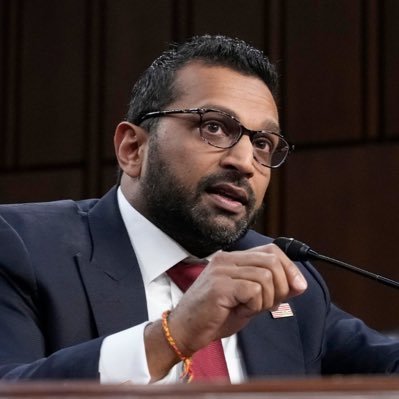
Five years ago today, an ISIS-K suicide bomber attacked Abbey Gate during the evacuation from Kabul, murdering 13 American service members and approximately 160 Afghan civilians.
We remember our fallen 13:
Staff Sgt. Darin T. Hoover, USMC
Sgt. Johanny Rosario Pichardo, USMC
Sgt. Nicole L. Gee, USMC
Cpl. Hunter Lopez, USMC
Cpl. Daegan W. Page, USMC
Cpl. Humberto A. Sanchez, USMC
Lance Cpl. David L. Espinoza, USMC
Lance Cpl. Jared M. Schmitz, USMC
Lance Cpl. Rylee J. McCollum, USMC
Lance Cpl. Dylan R. Merola, USMC
Lance Cpl. Kareem M. Nikoui, USMC
Hospital Corpsman 3rd Class Maxton W. Soviak, USN
Staff Sgt. Ryan C. Knauss, U.S. Army
America must always remember the names of these heroes. But remembrance also demands accountability.
Last year, under President Trump’s leadership, this FBI—working alongside DOJ, CIA, and our international partners—apprehended and brought back Mohammad Sharifullah, an ISIS-K operative and key player in the attack. A federal jury has since convicted him of participating in a nine-year conspiracy to provide material support to ISIS-K.
Five years later, our promise remains unchanged:
We will remember the fallen.
We will stand with their families.
We will hunt those responsible—no matter where they hide or how long it takes.
-DKP 🇺🇸
Show more

Arthur Hayes @CryptoHayes was born in Detroit, USA, in 1985. He later moved with his parents to Buffalo, New York, where he attended the Nichols School—a private preparatory school located in the city.
In 2004, Hayes began his undergraduate studies at the Wharton School of the University of Pennsylvania.
His notable alumni peers include @realDonaldTrump , @elonmusk, @WarrenBuffett and others.
Subsequently, Justin Sun @justinsun enrolled in a master's program in Political Economy at the University of Pennsylvania, thereby fulfilling his aspiration to become an alumnus alongside the aforementioned figures.
In 2008, following his graduation from the Wharton School, Hayes joined the trading division at Deutsche Bank (Hong Kong), marking the beginning of his career as a derivatives trading specialist.
In 2011, Hayes moved to the derivatives trading division at Citi (Hong Kong).
In 2014, Arthur Hayes co-founded BitMEX alongside Ben Delo and Samuel Reed, focusing primarily on the trading of crypto asset derivatives.
Ben Peter Delo @bendelo is a co-founder and co-owner of BitMEX.
And during the relevant Period , he has been the Chief Operating Officer of BitMEX.
He is a U.K. citizen and graduated from Worcester College, Oxford University in 2005 with a degree in Mathematics and Computer Science.
He has never been registered with the Commission in any capacity.
After graduating, Ben joined IBM as a software engineer. Later, he developed high-frequency trading systems for the hedge fund GSA Capital and JPMorgan Chase.
Samuel Reed @STRML_ borned in1990, is a co-founder and co-owner of BitMEX, and describes himself as Chief Technology Officer of BitMEX.
He is a U.S. citizen and has resided in Milwaukee, Wisconsin and Boston, Massachusetts during the Relevant Period.
Samuel graduated from Washington & Lee University with a degree in Computer Science and was served as CTO of two technology companies: Tixelated and Global Brand Solutions of Hong Kong.
During the Relevant Period, Reed has held his ownership interest in the BitMEX entities through a Wisconsin limited liability company that maintains bank accounts at banks in the United States, and owns property in the U.S. Reed has never been registered with the Commission in any capacity.
Hayes, Delo, and Reed have shared responsibility for various aspects of the
BitMEX business.
At a high level, Delo has been responsible for building and overseeing the BitMEX trading engine, Reed has been responsible for building and overseeing the BitMEX website, API and order entry system, and Hayes has been responsible for strategic decisions, business development, marketing, and management of the BitMEX enterprise.
@TheJusticeDept @CFTC @USDOJ_Intl
@bitmex @BitMEX_Ethan @Crypto_slutz @r_polansky @sudhu_aru @BitMEX_sandisam
@business @markets @BloombergAsia @Reuters @watcherguru @zachxbt @insiderwire @WhalePanda @Tintinx2021 @yq_acc @RichardPtardio @JamesWynnReal @muphasamc @huskyXBT @JSeyff @0xcryptosam @degeneratenews @crypto_condom
Show more

It’s worth briefly revisiting the rather legendary story behind UTStarcom and SoftBank China Venture Capital.
Hong Lu, born on November 3, 1954, is a Chinese American entrepreneur. His family traces its roots to Ningbo City, Zhejiang Province,China.. He was born in Taiwan, Province of China and moved to Japan at the age of six.
After graduating from Tokyo Metropolitan Jonan High School, Lu went on to study civil engineering at the University of California, Berkeley, where he was two years senior to Masa Son @masason
After graduating, Hong Lu joined Masa Son’s startup, Mspeech System Inc, whose core business was selling portable voice translation devices.
In March 1982, Son returned to Japan to recover from an illness. Before leaving, he sold his U.S. company Unison World to Lu.
For a time, Unison maintained a close partnership with Kyocera, the company founded by Inamori Kazuo.
In 1986, the two companies formed a joint venture called Kyocera Unison and attempted to take it public. The plan ultimately fell through, and Lu exited the venture.
In 1990, Lu made his first exploratory trip to mainland China.
A year later, in 1991, Lu teamed up with his Berkeley classmate and Masa Son’s former Chinese tutor, Charles Xue @xuemanzi8848, along with Son himself. Together they acquired Zhejiang Yutong, a company originally founded by Peter Wang(Zuguang) , reorganizing it and renaming it Unitech Telecom (UT).
That same year, Wu Ying , then working at AT&T Bell Labs, partnered with Chauncey Shey to launch Starcom in New Jersey.
The company initially operated as a technology consulting firm, essentially providing engineering talent as outsourced services. Among the temporary engineers they hired was Bill Huang(Xiaoqing ), who at the time was doing R&D at Racal Telecom in the UK.
In 1994, Bill Huang(Xiaoqing ) joined Unitech Telecom.
On October 6, 1995, Unitech Telecom and Starcom merged in a 50–50 deal to form UTStarcom. Just two weeks later, on October 19, the company secured $30 million in funding from SoftBank.
On March 5, 1996, UTStarcom China was established.
By 1999, after several rounds of major investment totaling roughly $160 million, Masa Son became chairman of UTStarcom, increasing his stake to 51%.
On March 3, 2000, UTStarcom successfully went public on the NASDAQ.
In 2001, Charles Xue exited the company, cashing out roughly $150 million.
Later that same year following the IPO, Masa Son committed $90 million, while Hong Lu,Chauncey Shey, and others contributed $10 million, forming the first fund for SoftBank China Venture Capital (SBCVC).
Brilliance of Berkeley,and with that , the wheels of fate have begun to turn.
Show more


A TON OF THINGS HAPPENED IN THE STOCK MARKET TODAY.
Here's a full recap:
1. Palantir $PLTR named Nebius $NBIS its preferred sovereign AI infrastructure partner, announcing a strategic partnership to integrate Nebius compute and inference endpoints directly inside Palantir’s enterprise perimeter. The integration will allow eligible Palantir commercial customers to run open AI models on Nebius infrastructure, continuously adapt them using proprietary company data, and maintain control over their compute, models, and data. The companies also plan to bring new AI compute capacity online faster, including modular data-center deployments in locations where power is already available. Palantir CEO Alex Karp said, “Nebius’ compute infrastructure powers your ability to run your own AI models under conditions you control. Our ontology and their infrastructure will undergird the sovereignty our partners are demanding.” Nebius CEO Arkady Volozh added that the partnership will help commercial clients run optimized open models on trusted infrastructure while maintaining control over their data and models.
2. The EU and Canada are reportedly set to announce a major “all-encompassing” partnership spanning trade and security after President Trump’s latest tariffs, according to Bloomberg. The goal is to build a new alliance that helps offset global power politics dominated by the U.S. and China. The partnership is expected to be announced on September 16, with Canada and the EU reportedly aiming to get “as close as legally possible” short of EU membership. Canada has also become the first country outside the EU to join the bloc’s $175B military procurement fund, underscoring how quickly trade tensions are pushing allies toward deeper economic and defense cooperation.
3. BlackRock’s Bitcoin ETF $IBIT has attracted $3.7B of inflows so far this quarter, putting it on pace for its largest quarterly intake since Q3 2025. The fund has already added $459.8M in September inflows, following $3.0B in August, its biggest monthly inflow since October 2025. As a result, $IBIT AUM has climbed to $62.6B, near its highest level since mid-May. Since the start of July, the fund’s AUM has increased by $19.6B, or 46%, showing renewed institutional and retail demand for Bitcoin exposure through ETFs.
4. OpenAI CFO said at the Goldman Sachs conference that the consumer business is accelerating, with July revenue up 20% MoM. The enterprise business grew even faster, with July revenue up 32% MoM. OpenAI’s revenue mix is now roughly 50/50 between enterprise and consumer, showing that growth is broadening beyond ChatGPT subscriptions and into business adoption.
5. Schwab retail activity in August shows investors selling the software rip and buying the semiconductor dip. The top retail buys were $SPCX, $MU, $NVDA, $INTC, and $GOOGL, while the top sells were $NOW, $ADBE, $MSFT, $PLTR, and $ORCL. The shift points to more active portfolio management from retail investors, with money rotating out of crowded software winners and into AI, chips, and compute-related names after pullbacks.
6. Copper prices on the LME have surged to a record $14,533/ton, now up 47% over the last 12 months. The move is being driven by tight supply and rising demand from data centers, renewable energy, and power grids. Expectations that President Trump could expand tariffs to refined copper imports have also pushed U.S. Comex prices above global prices, creating an incentive for traders to ship hundreds of thousands of tons of copper into the U.S. to capture the price spread. As a result, global stockpiles are becoming increasingly concentrated in the U.S., draining LME inventories to critically low levels and leaving less readily available copper for buyers elsewhere.
7. Meta $META launched Muse, a personal AI agent that can take actions across apps and the web, including sending emails, booking travel, filling out forms, and making purchases with user approval. Muse runs on Meta’s new Muse Secure VM, giving each user a dedicated cloud environment with a separate Sentinel agent that reviews actions before they reach the internet. The agent can continue working after the app is closed, remember user preferences, and proactively move longer-term tasks forward. Meta is also integrating Stripe Link for checkout, with Shop Pay and 1Password support coming later.
8. IREN $IREN said its 2 GW Sweetwater Hub has been conditionally included as base load in ERCOT Batch Zero. Sweetwater 1 accounts for 1.4 GW and Sweetwater 2 for 600 MW, both part of IREN’s broader 5 GW+ global data-center development pipeline. At Sweetwater 1, the high-voltage substation is already energized, with 300 MW of gross data-center capacity under construction and targeted for delivery in Q4 2027. IREN also said additional large-scale projects across its development pipeline have been included in Batch Zero, though ERCOT classifications remain conditional and subject to further approvals.
9. The top 10 most active options today by contracts traded were $TSLA with 2.4M contracts, $NVDA with 2.2M contracts, $INTC with 1.3M contracts, $SPCX with 847K contracts, $AAPL with 689K contracts, $MU with 673K contracts, $AMD with 615K contracts, $META with 568K contracts, $AMZN with 524K contracts, and $CRWV with 477K contracts.
10. The U.S. government is backing Rigetti $RGTI and D-Wave $QBTS with up to $200M for quantum computing R&D. Rigetti signed a definitive $100M agreement with the U.S. Department of Commerce to address key scaling bottlenecks in superconducting quantum systems, including cryogenics, readout electronics, and high-connectivity chip fabrication. D-Wave separately finalized access to up to $100M to advance its annealing and gate-model platforms, including work on a 100,000-qubit annealing system and a 10,000-qubit gate-model system targeting 100 logical qubits. As part of the funding, the Commerce Department will receive minority, non-controlling equity stakes in both companies.
11. Uber $UBER President and COO Andrew Macdonald purchased 70,000 shares for roughly $5.3M. Macdonald is one of Uber’s longest-tenured executives, making the insider buy notable given his deep knowledge of the business, operations, and long-term strategy.
12. U.S. data center construction spending surged 57% YoY in July to a record annualized rate of $75B, following a 46% YoY increase in June and marking the fastest growth since mid-2025. Since the start of 2021, data center construction spending has soared by $66B, or 717%. Since the end of 2023 alone, spending has risen by $51B. Over that same period, all other private construction spending — including housing, shopping centers, and offices — has declined by $120B, showing how dramatically AI infrastructure is diverging from the rest of the construction market.
WALL STREET IS THE GREATEST SHOW ON EARTH.
Show more

Intel CEO Lip-Bu Tan sat down with CNBC’s Jim Cramer to talk about Apple; Intel 14A rivaling TSMC's top chip production technology; Shortages of CPUs and substrates; and the state of Intel's turnaround.
How to know when Intel signs Apple or other foundry customers:
Intel CEO Lip-Bu Tan: “Over time, the IP will be ready so we can serve some of these customers. I think the best indication, when you see I increase my capex, I’m putting money to buy equipment, that means I have real customers. That’s the discipline I have.”
Intel 14A manufacturing process and EMIB-T advanced packaging:
Intel CEO: “(A14) is 1.4nm, this is the most advanced. To be candid with you, in 2028 we will have risk production. 2029 will be volume production. It will be the same time as TSMC. So that is a major, major breakthrough, and I’m so excited.
And we already have multiple customers engaged with us, and we have 0.5 PDK available.”
Taking advantage of TSMC’s CoWoS shortage
Intel CEO: “Our technology is called EMIB-T, this is the next generation of advanced packaging. We really have the best technology and now we are making sure we can bring it into volume production with reliable yield so the customer can count on us.”
CEO: “You know, CoWoS…(TSMC) ran out of capacity, so in a way we’ve become in the unique position to support that and that’s something we are very excited (about).”
Shortages of CPUs and Substrates
CEO on the CPU shortage: “I’ll give you one example. I had one customer say Lip Bu, we gave you the forecast for this year, but we want to increase 3x, and I say I cannot do it overnight but give me a few quarters and I will catch up. So, I think this demand is not short term, it’s the next couple of years. It’s a great opportunity.”
CEO: “Right now, as I mentioned, CPU is in high demand. And that’s good for me. I cannot even ship enough to the customer. It used to be the CPU to GPU ratio for training was 1-to-8. And now, because of inference and agentic AI, and more agents you have to manage, and orchestration, and reinforced learning, CPU is actually better, so that becomes 1-to-4 and 1-to-1 and some people even talk about 4-to1, and so that’s a huge opportunity to me to drive the CPU....”
CEO on Substrates: “A couple of customers have prepaid for substrates, because the substrate supply chain is very tight – so I need to put up the money to secure this material…(and it shows) the commitment to me – so that’s very exciting.”
Intel’s Turnaround
CEO: “We used to have leadership in data center, and over the years we lost it…We made some big mistakes,” he said, adding he’s brought back some talent to refocus the product lines and that “Coral Rapids will have multi-threading, and will come out very strong.”
CEO: “When I took over, the 18A yield was not good, so I had to ask some of the ecosystem partners to help me look at the data, see how to improve. The best practice is to see 7% or 8% yield improvement per month, and now I’m seeing it.”
CEO: “The other part is supposed to be the yield performance, defect density, you know at the end of the year to see the target. Now I see that even before the end of the year – so that is very big encouragement for me and also that’s why Panther Lake can be shipped in volume now.
And now some customers knock on my door and say Lip Bu, now we hear you are making great progress, can you now open up to outside customers? So that is very exciting. It’s a lot of hard work, it’s a lot of teamwork, it’s a lot of talent I’ve brought on board.”
CEO: “In the past we made a lot of mistakes and now we correct the mistake and we’ve simplified the roadmap. By the way, from Day 1 I came on board as the CEO, I have all the engineers report to me so I have an understanding, hear from the customer, and know where are the mistakes.”
Cramer: “They didn’t report to the previous CEO?”
CEO: “No. And in a way, they had too many silos, too many people reporting…So I decided, the best thing is to really understand where the problem is, so I can focus on the engineering, how to redesign, simplify the product and then get the real killer products out.”
Cramer asks about China, Taiwan and the importance of US manufacturing:
CEO: “I was very glad for President Trump understanding the strategic importance for the United States to have (chip manufacturing supply chain) and their support is so valuable to me – it’s so critical for the country to have the technology, R&D development, manufacturing in the United States. That’s why I came back in, as a U.S. citizen – as a calling – to do that.”
CEO: “From time to time I update President Trump and also (Sec.) Howard Lutnick and they are big supporters of me and we are delighted to have their support.”
Going forward:
CEO: “I recruited some key talent…and now, by the end of June, I will have my team, what I consider my team, so that we can work on the next 5-years, 10-years, how to become a different company. I call it the New Intel, work at the speed of light, work as a team to progress forward.”
$INTC $TSM #Samsung# $UMC $GFS #semiconductors#
Show more


Nineteen Muslim refugees were accused in the r*pe of a 12-year-old at a parking garage. Guess how many got convicted?!?!
⠀
The scene was near Vienna Central Station. The first man tried was a 17-year-old Syrian. The court acquitted him and said there was no proof she had not consented.
⠀
He had confessed. He threw her cash as a “gesture of goodwill.” The girl’s lawyer called it a mockery.
⠀
A later Favoriten trial put ten men in the dock, Syrians and others from Turkey and the Balkans, ages 16 to 21. All ten walked. Prosecutors never charged underage abuse because they said they could not prove the men knew she was 12.
⠀
Austria’s 2025 convictions for r*pe of minors were 53 percent foreigners. That is the migration record, not a courtroom score of 19-for-19.
⠀
The United States is pulling the same mix through illegal crossings and refugee pipelines while an Islamic political bloc grows. Pew counts about 5.5 million U.S. Muslims, up from 2.4 million in 2007.
⠀
Mosques went from about 1,200 in 2000 to about 2,800 in 2020. Dearborn is majority MENA. CAIR claims more than 2.5 million Muslim voters. Hamtramck already has an all-Muslim council and a public hijab try-on for little girls.
⠀
Sharia politics starts with the claim that a child can consent. Vienna showed what a weak court does with that claim.
⠀
#Austria# #Vienna#
Show more


🚨🇨🇳 U.S. NAVY IN PANIC: CHINA ARMS ITS MAIN DESTROYER CLASS WITH YJ-20 HYPERSONIC MISSILES
New PLA footage has shown a Type 052D destroyer launching the YJ-20 hypersonic anti-ship ballistic missile for the first time publicly. Previously demonstrated aboard the larger Type 055, the weapon has now reached the class that forms the backbone of China’s surface fleet.
🔸 The YJ-20 is a boost-glide weapon capable of speeds above Mach 5, with its range estimated at up to 1,500 km. Its manoeuvring bi-conic glide body can strike ships at a steep, near-vertical angle, making interception far more difficult.
🔸 The missile was cold-launched from one of the Type 052D’s 64 universal vertical-launch cells, ejecting above the ship before its motor ignited.
🔸 More than 35 Type 052Ds are already in service, with additional ships under construction. Unlike the smaller Type 055 fleet, these destroyers are produced in large numbers and routinely operate across the South China Sea and Western Pacific.
🔸 The YJ-20 does not need to replace the YJ-18. A mixed load allows Chinese destroyers to combine long-range hypersonic attacks with sea-skimming cruise missiles, forcing carrier defenses to confront different speeds, trajectories and approach angles.
🔸 This is what makes the integration more important than a single launch. Hypersonic anti-ship firepower can now spread beyond China’s largest destroyers to a far more numerous class, creating more launch platforms and attack directions.
🔸 The Pentagon’s leaked Overmatch brief found that American warships such as the Gerald R. Ford were often destroyed in Taiwan war games. Giving China’s primary destroyer class a hypersonic carrier-killer makes those scenarios even harder for the U.S. Navy.
The threat is no longer one rare missile aboard a handful of large warships. It is China’s mass-produced destroyer fleet gaining the ability to attack U.S. carrier groups from extreme range.
What threatens U.S. carriers more: the YJ-20’s speed or the number of ships that can launch it?
Show more


The USS Abraham Lincoln (CVN-72) has left the Middle East after 274 days deployed, with the carrier strike group now operating in the Indian Ocean under U.S. 7th Fleet, according to USNI.
The carrier departed San Diego on Nov. 25 and has been at sea since its last port visit in Guam on Dec. 11—more than eight months without a port call, breaking the previous 206-day record set by USS Dwight D. Eisenhower during the COVID-19 pandemic.
The unusually long deployment was compounded by the loss of regional logistics hubs following Iranian attacks, forcing Navy supply ships to travel thousands of miles to sustain the carrier and other forces operating in the Arabian Sea. The Navy says resupply problems improved after new supply lines were established.
Lincoln is being replaced in the region by the forward deployed USS George Washington (CVN-73), which arrived two days ago and will join USS George H.W. Bush (CVN-77) to maintain a two carrier presence amid the war with Iran.
From the Western Indian Ocean, it will take Lincoln 3-4 weeks to transit across the Pacific back to San Diego. An open question is whether the ship will make a port call on the way home, which would extend the deployment a few days.
The Navy is now dealing with a broader pattern of extended deployments: USNI notes that carrier deployments since October 2023 have averaged about 8½ months, while USS Gerald R. Ford recently completed a record 326-day deployment.
Source:
Show more
