

China pulse 🇨🇳
@Eng_china5
China-related news and the international struggle for influence in Eurasia and a multipolar world. 中国相关动态与欧亚地区及多极世界的国际影响力博弈
36 Following 483.8K Followers
China’s navy is moving beyond its Soviet-era legacy.
The return of destroyer Fuzhou (137), now upgraded with Chinese weapons and combat systems, symbolizes a broader transformation:
Beijing is replacing dependence on inherited Russian technology with increasingly indigenous naval power. The real story isn’t the ships China inherited from Moscow, but how China is steadily making that inheritance obsolete.
Show more

China didn’t just build high-speed rail. It turned an entire country into a high-speed network.
Over 50,000 km of high-speed rail, trains running at 350 km/h, and stations that look like they belong in the future.
Show more

China has turned drones into “maintenance workers” flying alongside high-voltage power lines.
Instead of shutting down the line or sending workers to climb and manually deal with objects caught on the wires, Chinese power crews use multi-rotor drones equipped with directed flames to burn plastic bags, kites, nets, and other flammable objects stuck on the lines.
Show more

China dominates the future while Japan drags its feet!
While Japan and Toyota spend endless years on sluggish experiments limited to local lines at a modest 100 km/h, China stuns the world with the Cinova H2!
A hydrogen power-packed train hitting speeds of 200 km/h with an incredible 1,200 km range and automated fast-refueling—delivering a decisive blow to Japan's lagging development.
Show more

China is not merely deploying defensive shields against drone swarms; it is rewriting the economic mathematics of warfare. Destroying a $2,000 drone with a $2 million missile is a suicide strategy of attrition. To invert this cost equation, Beijing is swapping kinetic missiles for directed-energy weapons—specifically high-power microwaves and high-energy lasers—that neutralize incoming swarms for a few cents per shot.
At the core of this doctrine is the 'Iron Triangle' operational framework. AI-enhanced radars first detect dense, low-altitude formations. High-power microwave systems like the Hurricane 3000 then blast broad electromagnetic pulses to fry swarm electronics simultaneously. High-energy lasers like the LY-1 finish off surviving drones with thermal precision, while rotary cannons and interceptor drones clean up remaining leakers.
The true breakthrough lies in algorithmic warfare. Chinese defense entities are integrating AI models inspired by biological behavior—such as hawk-like target selection algorithms that instantly identify and exploit vulnerabilities within an enemy swarm. Despite technical bottlenecks like high power demands, thermal management, and weather sensitivity, China's core objective remains clear: transforming the sky into a toxic environment for autonomous threats at near-zero marginal cost.
Show more

China is not building an “artificial sun” just for scientific showmanship… it is building the road toward a new era of energy.
In Hefei, the BEST fusion project is entering a crucial stage: a high-field superconducting tokamak designed to bridge the gap between EAST and future engineering fusion reactors.
More importantly, China has a roadmap: burning-plasma experiments → power-generation demonstration → engineering reactor → commercial fusion plants.
China aims to complete BEST in 2027 and reach deuterium-tritium fusion power-generation experiments around 2030, before moving toward an engineering reactor in the following decade.
If this sequence succeeds, the impact will go far beyond creating “a new energy source”… it could redefine how electricity is produced on a global scale.
What stands out is that China is not betting on fusion alone. It is simultaneously building an entire ecosystem around superconducting magnets, materials, robotics, AI and plasma control.
The real race is not about who can create extremely hot plasma… it is about who can turn it into stable, affordable and scalable energy.
Show more

China dominates the future while Japan drags its feet!
While Japan and Toyota spend endless years on sluggish experiments limited to local lines at a modest 100 km/h, China stuns the world with the Cinova H2!
A hydrogen power-packed train hitting speeds of 200 km/h with an incredible 1,200 km range and automated fast-refueling—delivering a decisive blow to Japan's lagging development.
Show more
China is turning traditional massage into a robotics problem.
This robotic arm scans the body, maps pressure points, and then uses computer vision, force sensors and AI-controlled movements to perform techniques inspired by Traditional Chinese Medicine.
It can press, knead, rub and push with controlled force, while sensing resistance or sudden movement and adjusting accordingly.
Show more


Greatness is not just about building wonders, but about the ability to sustain them across centuries.
We see maintenance workers cleaning the finest details of the "Leshan Giant Buddha"—carved into the cliffside since the 8th century at a height of 71 meters.
China is not merely preserving a historical heritage and UNESCO site; it is managing a complex engineering legacy—including a hidden 1,200-year-old drainage network—against climate challenges and erosion.
Show more


China is not building an “artificial sun” just for scientific showmanship… it is building the road toward a new era of energy.
In Hefei, the BEST fusion project is entering a crucial stage: a high-field superconducting tokamak designed to bridge the gap between EAST and future engineering fusion reactors.
More importantly, China has a roadmap: burning-plasma experiments → power-generation demonstration → engineering reactor → commercial fusion plants.
China aims to complete BEST in 2027 and reach deuterium-tritium fusion power-generation experiments around 2030, before moving toward an engineering reactor in the following decade.
If this sequence succeeds, the impact will go far beyond creating “a new energy source”… it could redefine how electricity is produced on a global scale.
What stands out is that China is not betting on fusion alone. It is simultaneously building an entire ecosystem around superconducting magnets, materials, robotics, AI and plasma control.
The real race is not about who can create extremely hot plasma… it is about who can turn it into stable, affordable and scalable energy.
Show more
China is getting closer to turning rocket launches into a process that begins on the ground before reaching the sky.
The “天弓” or “Heavenly Bow” project uses a superconducting electromagnetic track to accelerate the rocket to high speeds before its engines ignite, reducing the fuel needed during the most difficult stage of launch, while increasing payload capacity and lowering the cost of reaching orbit.
China has already conducted real tests of the technology in Sichuan and is working to adapt the Ceres-2 rocket to the system, with the goal of attempting the first electromagnetic-assisted orbital launch by 2028.
Show more

This is not merely an entertainment showcase, but a technical breakthrough in multi-agent kinetic coordination powered by AI. The real challenge is not the robotic dog jumping, but the algorithms' ability to track a flexible, non-rigid object like the rope, compute its physical trajectory, and adapt to it in milliseconds via reinforcement learning without human intervention.
China is shifting technology from 'individual robotics' to managing 'multi-form autonomous orchestrations.
Show more

China is not merely deploying defensive shields against drone swarms; it is rewriting the economic mathematics of warfare. Destroying a $2,000 drone with a $2 million missile is a suicide strategy of attrition. To invert this cost equation, Beijing is swapping kinetic missiles for directed-energy weapons—specifically high-power microwaves and high-energy lasers—that neutralize incoming swarms for a few cents per shot.
At the core of this doctrine is the 'Iron Triangle' operational framework. AI-enhanced radars first detect dense, low-altitude formations. High-power microwave systems like the Hurricane 3000 then blast broad electromagnetic pulses to fry swarm electronics simultaneously. High-energy lasers like the LY-1 finish off surviving drones with thermal precision, while rotary cannons and interceptor drones clean up remaining leakers.
The true breakthrough lies in algorithmic warfare. Chinese defense entities are integrating AI models inspired by biological behavior—such as hawk-like target selection algorithms that instantly identify and exploit vulnerabilities within an enemy swarm. Despite technical bottlenecks like high power demands, thermal management, and weather sensitivity, China's core objective remains clear: transforming the sky into a toxic environment for autonomous threats at near-zero marginal cost.
Show more
Washington claims to adhere to the 'One China' policy, yet sells $8 billion worth of arms to the Chinese island of Taiwan!
The arrival of the first two F-16 Block 70 jets proves once again that the US is the main driver of tension in East Asia.
This deal changes nothing about the strategic and historical reality: Taiwan is an inalienable part of China, and national sovereignty is a red line!
Show more

China is getting closer to turning rocket launches into a process that begins on the ground before reaching the sky.
The “天弓” or “Heavenly Bow” project uses a superconducting electromagnetic track to accelerate the rocket to high speeds before its engines ignite, reducing the fuel needed during the most difficult stage of launch, while increasing payload capacity and lowering the cost of reaching orbit.
China has already conducted real tests of the technology in Sichuan and is working to adapt the Ceres-2 rocket to the system, with the goal of attempting the first electromagnetic-assisted orbital launch by 2028.
Show more
Amid winds approaching Force 7, Xi Jinping and China’s top leaders gathered at Tiananmen Square to commemorate Martyrs’ Day, just one day before National Day
Nine flower baskets were placed before the Monument to the People’s Heroes, followed by the national anthem, a moment of silence, and the Chinese leadership standing together in honor of those who sacrificed for the country.
Show more

South Korea defeated Japan 1-0 on their home turf!
And it seems the Japanese wanted revenge; they failed to raise the South Korean flag while smoothly hoisting both the Japanese and Chinese flags!
Show more

275 million adult citizens × $5,000 = (1.375 Trillion Dollars)!
Trump promises to pay this astronomical sum from 'tariff revenues' that don't even reach $167 billion, in a nation drowning under $40 trillion in debt!
Show more
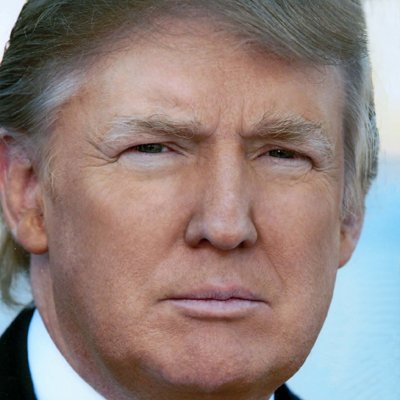
If Republicans win the House of Representatives and the Senate in the 2026 Midterm Elections, I’m going to give all adult citizens in the United States of America, $5,000! Thank you for your attention to this matter, and I look forward to signing those checks!
Show more

Trump is buying votes in broad daylight!
He promises $5,000 to every American citizen if his party wins the 2026 midterms… a blatant $1.2 trillion political bribe funded by a treasury already drowning in over $40 trillion of debt!
After his previous promises fell through (DOGE dividends and tariff rebates), he returns with a new stunt to save his party. American democracy has become the world's largest auction house!
Show more
South Korea defeated Japan 1-0 on their home turf!
And it seems the Japanese wanted revenge; they failed to raise the South Korean flag while smoothly hoisting both the Japanese and Chinese flags!
Show more










