

RamenPanda
@IamRamenPanda
2017年入圈加密的老OG。老粉们从推到微博(15万粉)再到推,跟我很多年了
现在:半导体➕区块链
634 Following 93.6K Followers

At 10 AM, US Secretary of Defense Donald Rumsfeld held a press conference and announced that the Pentagon has “lost track of” $2.3 trillion, which is “unaccounted for.”
He goes on to highlight a number of other glaring inefficiencies in the Department of Defense.
Show more

oh fuck fuck fuck

Good to see the low multiple semiconductor stocks take off... Natural born leaders!!!

This is GPT-6 Astra.
Anything you can do on a computer, Astra can do for you. Fast.

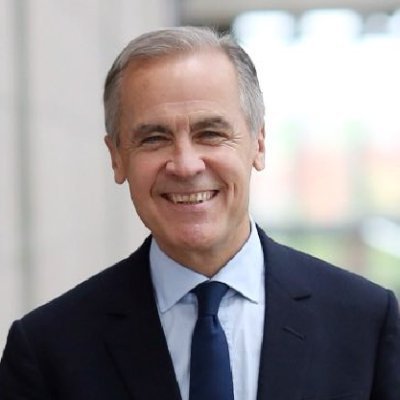
The name Lake Ontario comes from the Wendat word Ontari’io, which, appropriately, means “the lake is beautiful, the lake is big”.
The name is more than 400 years old, predating both the Confederation of Canada and the Declaration of Independence of the United States of America.
We know that America is changing. Their trading relationships, their foreign policies, their national monuments, their hydronyms.
Canadians also know that naming reality means calling it Lake Ontario – then, now and always.
Show more

🚨 BREAKING:
US Congressman Ted Lieu makes a shocking allegation:
"Epstein files are being blocked because they show that Trump raped children."


Chinese American Members of Congress Condemn MAGA Podcast Advocating for Chinese American Incarceration:


KFC CHINA guys

KFC is releasing a new Oreo chicken burger
The collab features cookie-style buns, mashed potatoes covered in crushed Oreo pieces, a fried chicken fillet and launches in China on August 28
Show more


JUST IN: 1 in 9 Americans are now millionaires, underscoring how dramatically asset ownership has compounded wealth.

Journalist, "You're against vaccines?"
Trump supporter, "Absolutely, 100%"
Journalist, "All vaccines?"
Trump supporter, "Every single one of them, they're poison"
Journalist, "All vaccines are poison?"
Trump supporter, "Yes they are"
Journalist, "What about the polio vaccine?"
Trump supporter, "There hasn't been a case of polio since 1960"
Journalist, "Since the vaccine"
Trump supporter, "Yeah"
Show more


we made a chip and it is fast
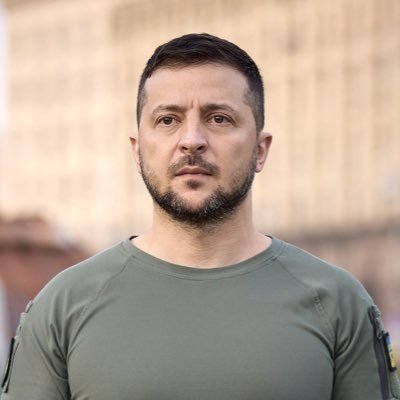
I thank Chinese leader Xi Jinping for his congratulations to Ukraine on our most important national holiday. Independence is an unconditional value for Ukrainians, as it is for all other sovereign nations. We appreciate that over these 35 years, we have built relations with China based on mutual respect and full recognition of the values of our peoples. We count on further cooperation and on China playing a strong diplomatic role in bringing Russia’s war against our country to an end. Peace can be our shared achievement.
Show more


JUST IN: Xi Jinping to reportedly visit India next month with a 400-person delegation for the BRICS summit.

Wow.
Citadel said the quite part out loud:
Bessent's bond buyback program amount to “financial repression”.
This will weaken the dollar and send inflation surging.
In this era, you need an escape through hard assets.
Show more

I think the market ultimately has no choice but to go sell memory, long optical in the "short term." Actually, some hedge funds already seem to have this position on.
There are three main reasons.
1. With Korean leveraged ETFs effectively dead, LPs are in a redemption rush, which could bring out additional sell on flow.
2. Nvidia is nerfing Rubin Ultra's HBM and responding with optics, tying multiple racks together, so that even if Rubin Ultra's per rack performance is not superior to Rubin, at the cluster level optics let the Rubin Ultra cluster hold an edge over the Rubin cluster. This holds even if Rubin Ultra's HBM nerf is a supply problem rather than a demand problem.
3. Consensus is forming that memory prices will peak within the next two quarters.
Medium to long term I am still a memory bull, but short term I am somewhat bearish on memory. I currently have no memory position.
Show more

BREAKING: US Senate passes bill allowing 100% tariffs on India

🇺🇸🇮🇷 Trump admits why he had no choice but to end the war:
"We would have run out of [oil] reserves in about 4 weeks."
Writer: Mhedi

🇺🇸🇸🇾🇱🇧 Trump is openly floating Syria as a force that could go after Hezbollah in Lebanon.
He says Syria’s president has “done a tremendous job” putting the country together, even after people warned him the man was violent and tied to Al Qaeda.
Writer: Sol
Show more


🚨 BREAKING: The European Union has just PASSED a measure to surge mass deportations across the region — its officially law of the EU
LFG! WAKE UP and take your countries back, don't slow down and keep pushing! 🔥
President Trump has been clear: NO MORE 3rd world mass migration, or Europe will no longer be Europe! 🇪🇺🇺🇸
Show more


Done deal: Mass deportations from Europe will soon become reality✈️


New reports that $AMD is scrambling for CW laser supply.
And is negotiating large-scale purchase orders for CW Lasers to ensure its production capacity is not constrained by $NVDA (Trendforce)
Obvious CW laser beneficiaries:
- $SIVE (AMD went to GFS for CPO, Sivers reference laser level)
- $AAOI (Rosenblatt analyst checks)
Lumentum/Coherent are kinda booked out way into 2028 as well.
Lumentum is especially constrained for CW capacity already from existing EML contracts (so they probably are buying from Sumitomo/Furukawa and co).
Maybe Macom and Japanese giants still have spare capacity. (disclosure, own aaoi/sivers).
I predicted this last year and said hyperscalers should go more upstream to secure capacity... at laser levels, epiwafer levels, or even inp substrate levels.
To not get bottlenecked by Nvidia.
Show more


🚨TRENDING: Peaceful celebrations from
Mexican fans in the streets are being compared to the celebrations of Knicks fans in the streets of New York.


When the #WorldCup# presented the host cities, FIFA fan fest attendees booed USA 🇺🇸, celebrated Canada 🇨🇦 and Mexico 🇲🇽 #FIFA# #USA# #Canada# #Mexico#










